EGR valve · 2026-06-19

EGR Valve Infiniti Supplier for B2B Sourcing

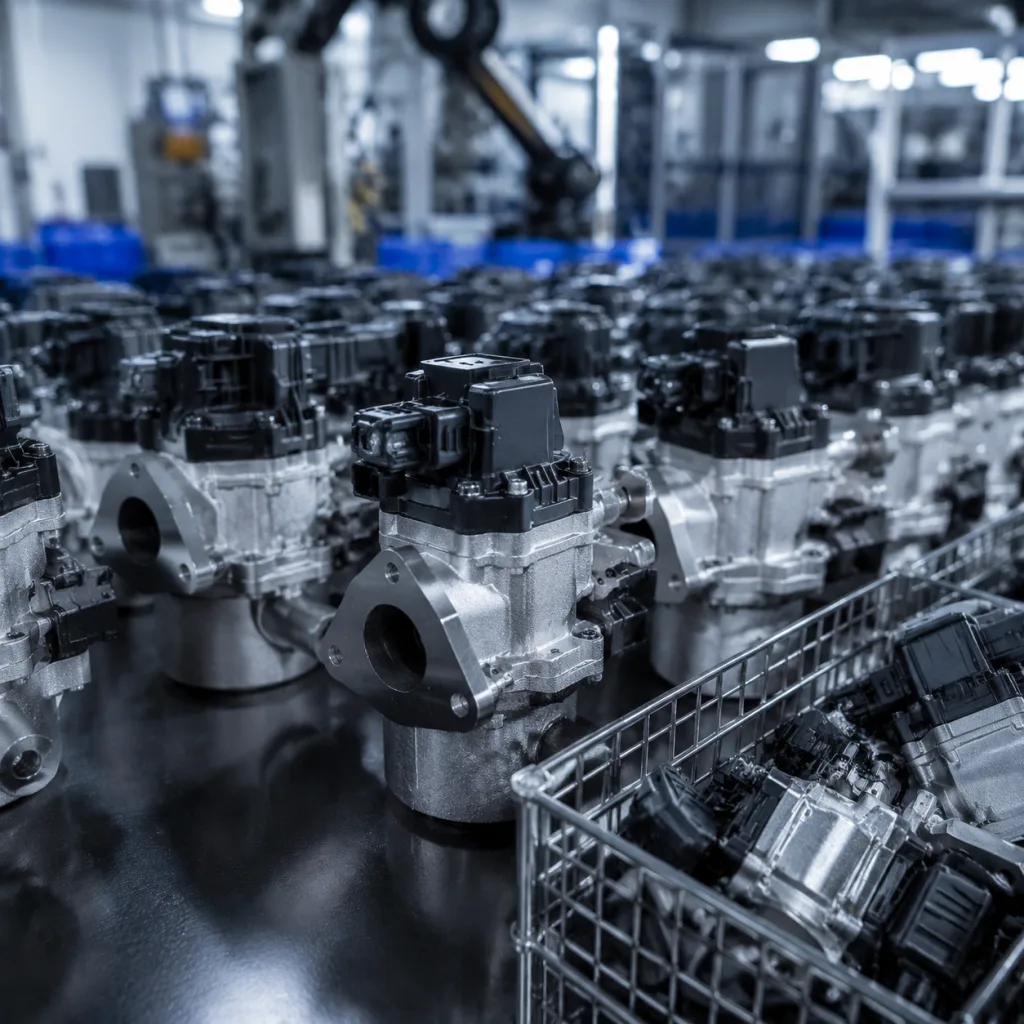
Procurement teams sourcing EGR valves for Infiniti applications need more than a price list. They need fitment accuracy across engine variants, repeatable flow and sealing performance, clear inspection records, and a supplier that can handle mixed-model aftermarket demand without creating avoidable warranty exposure. Driventus manufactures engine and powertrain components in Taizhou, Zhejiang, and exports to more than 60 countries for distributors, wholesalers, OEM/Tier-1 programmes, and multi-location repair chains. When evaluating an egr valve infiniti supplier, buyers should confirm housing accuracy, actuator response, valve-seat sealing, connector compatibility, packaging discipline, and batch traceability. This guide outlines practical sourcing criteria, audit points, commercial terms, and validation expectations for Infiniti-fitment EGR valves. Driventus is an independent aftermarket manufacturer; brand names are referenced for fitment only.

Sourcing Scope for Infiniti-Fitment EGR Valves

EGR valve demand is rarely concentrated in a single reference. It is usually split by engine family, destination market, emissions level, fuel system, connector type, and vehicle age. For distributors, the sourcing question is not simply whether one part fits one vehicle. The practical requirement is whether the supplier can maintain reliable coverage across fast-moving and slower-moving references while applying the same engineering controls to each item.

A clear purchasing file should define:

  • Vehicle fitment range by target market, such as the EU, UK, US, Canada, Australia, Brazil, GCC, or other sales regions.
  • Engine family, displacement, fuel type, model year range, emissions configuration, and left-hand/right-hand drive relevance where packaging or pipe routing differs.
  • Valve design: vacuum-operated, electronically actuated, stepper-motor type, solenoid type, position-sensor feedback type, or integrated EGR module.
  • Electrical interface: connector housing, terminal count, pin orientation, latch design, seal colour, keyway position, and sensor feedback type.
  • Mounting interface: flange geometry, bolt-hole centre distance, gasket face flatness, pipe alignment, fastener access, and gasket specification.
  • Critical dimensions to control at RFQ stage, such as bolt-hole position tolerance, flange flatness target, valve bore diameter, pipe OD/ID, connector-to-flange distance, and overall envelope height.
  • Commercial package: MOQ, annual volume forecast, private-label packaging, barcode rules, master-carton quantity, palletisation, and service-part labelling.

For mixed aftermarket coverage, separate references into A/B/C demand groups before quotation. A-group references may justify 300–500 pcs per order or scheduled quarterly releases, while C-group coverage parts may need 50–100 pcs per reference if tooling exists and mixed-SKU packing is accepted. This split helps the supplier price machining, testing, packaging, and inventory risk instead of averaging all references into one unrealistic unit price.

For aftermarket programmes, Driventus can quote by sample, drawing, buyer specification, or OE part-number cross-reference where supplied by the customer. If the buying team is building coverage across multiple engine categories, start with our catalog and engine-related references at /products/engine-components.html.

Manufacturing and Quality Controls to Verify

An EGR valve meters recirculated exhaust gas into the intake system to support emissions control and engine calibration. Small variations in sealing, actuator movement, bore geometry, or sensor feedback can lead to drivability complaints, diagnostic trouble codes, excessive deposits, or repeat returns. Supplier approval should therefore review process capability, in-process gauges, and end-of-line validation rather than relying only on visual comparison.

Driventus operates under IATF 16949:2016 and ISO 9001:2015 management systems. Buyers should still request part-specific documentation before nomination, including control plans, inspection reports, material declarations, calibration evidence, and test records. The quality system page summarises our general approach, and a programme-specific PPAP-style package can be discussed for larger contracts.

Key production controls usually include:

  • Incoming inspection for castings, machined bodies, shafts, springs, solenoids, sensors, seals, gaskets, connectors, and fasteners, with supplier lot numbers recorded.
  • Material verification for aluminium or iron housings, stainless shafts, high-temperature seals, plated fasteners, and connector plastics suitable for engine-bay exposure.
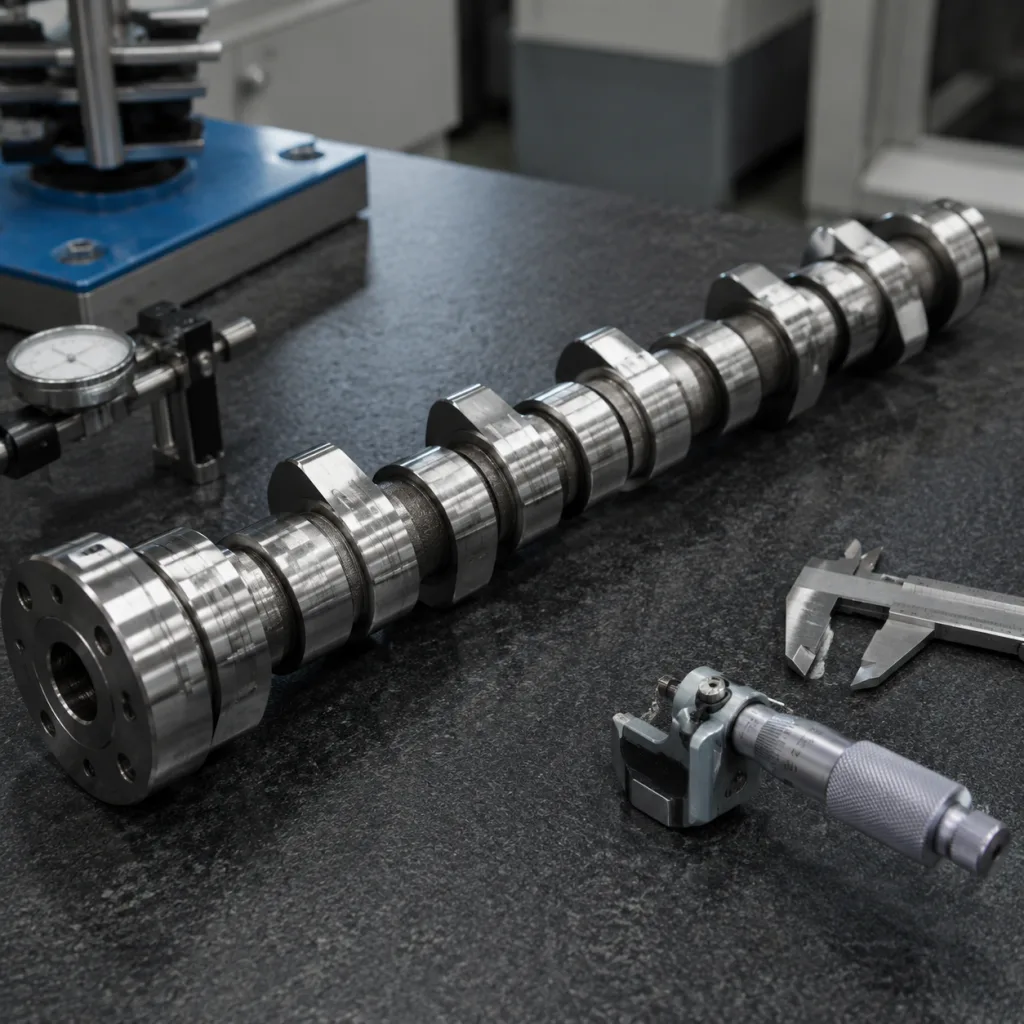
  • CNC machining checks for flange location, bore diameter, gasket face finish, perpendicularity, and mounting-hole tolerance; buyers may specify CMM reports for pilot lots and critical-to-quality features.
  • Assembly controls for valve seat contact, spring preload, actuator travel, sensor alignment, screw torque, staking depth, and electrical continuity.
  • Leak testing under defined pressure, temperature, and time limits, with acceptable leakage stated in cc/min or kPa decay rather than “OK/NG” only.
  • Functional response testing across commanded open, 25%, 50%, 75%, and closed positions where the design supports electronic control.
  • Electrical checks for coil resistance, insulation resistance, terminal retention, sensor output voltage, and connector polarity.
  • Final visual checks for casting defects, burrs, contamination, connector damage, marking accuracy, gasket inclusion, and packaging condition.
  • Batch traceability linking material lot, production date, operator station, torque record, test result, inspector, and final inspection status.

A buyer-ready inspection plan should state sampling level and acceptance criteria. For example, use 100% end-of-line leak and function testing, then apply AQL 1.0 for critical external dimensions and AQL 2.5 for packaging appearance unless the customer specification requires tighter control. For launch orders or new tooling, request first-article inspection on at least 5 pieces per cavity or fixture position, plus retained samples from the approved lot.

Where target markets require chemical compliance, procurement teams should request declarations aligned with REACH (EC) No 1907/2006. For emissions-related replacement components, buyers should also review the regulatory environment in the sale region, including frameworks such as ECE R-83 for vehicle emissions requirements, without assuming that an aftermarket component carries vehicle-maker approval.

Commercial Terms: MOQ, Lead Time, and Audit Readiness

For an EGR valve Infiniti supplier selection, commercial reliability is as important as unit price. A low quotation can become expensive if the supplier cannot hold tolerances, maintain label accuracy, protect parts in transit, or keep lead times stable during seasonal demand peaks.

</tr></thead><tbody> </tbody></table>MOQ and lead time depend on whether the reference is already tooled, requires a connector variation, needs a calibration adjustment, or uses customer-specific packaging. As a pricing rule, repeat references with existing tooling are mainly driven by material, machining time, electronic actuator cost, 100% testing time, packaging, and exchange-rate exposure. New references add sample build cost, fixture verification, artwork setup, and extra engineering review, so the lowest first-order price is rarely the lowest landed-cost option.

Buyers should ask suppliers to break quotations into unit price, tooling or fixture charge, sample fee, packaging surcharge, and freight basis. If the annual forecast is credible, negotiate price tiers such as 100 pcs, 300 pcs, 500 pcs, and 1,000 pcs per reference, with clear rules for mixed-SKU consolidation. For private-label programmes, confirm whether the MOQ applies per printed box design, per part number, or per total shipment; this detail often determines whether slow-moving references are commercially viable.

Repair-chain buyers may also request staged shipments to multiple warehouses, while wholesale distributors often consolidate sea freight to reduce landed cost. In both cases, the forecast should separate high-rotation references from slower-moving coverage parts so production and inventory planning remain realistic. Driventus supports factory audit preparation with organisation charts, process-flow information, equipment lists, calibration control records, sample inspection formats, and production traceability examples where commercially appropriate.

Commercial Terms: MOQ, Lead Time, and Audit Readiness

Technical Validation for Buyer Approval

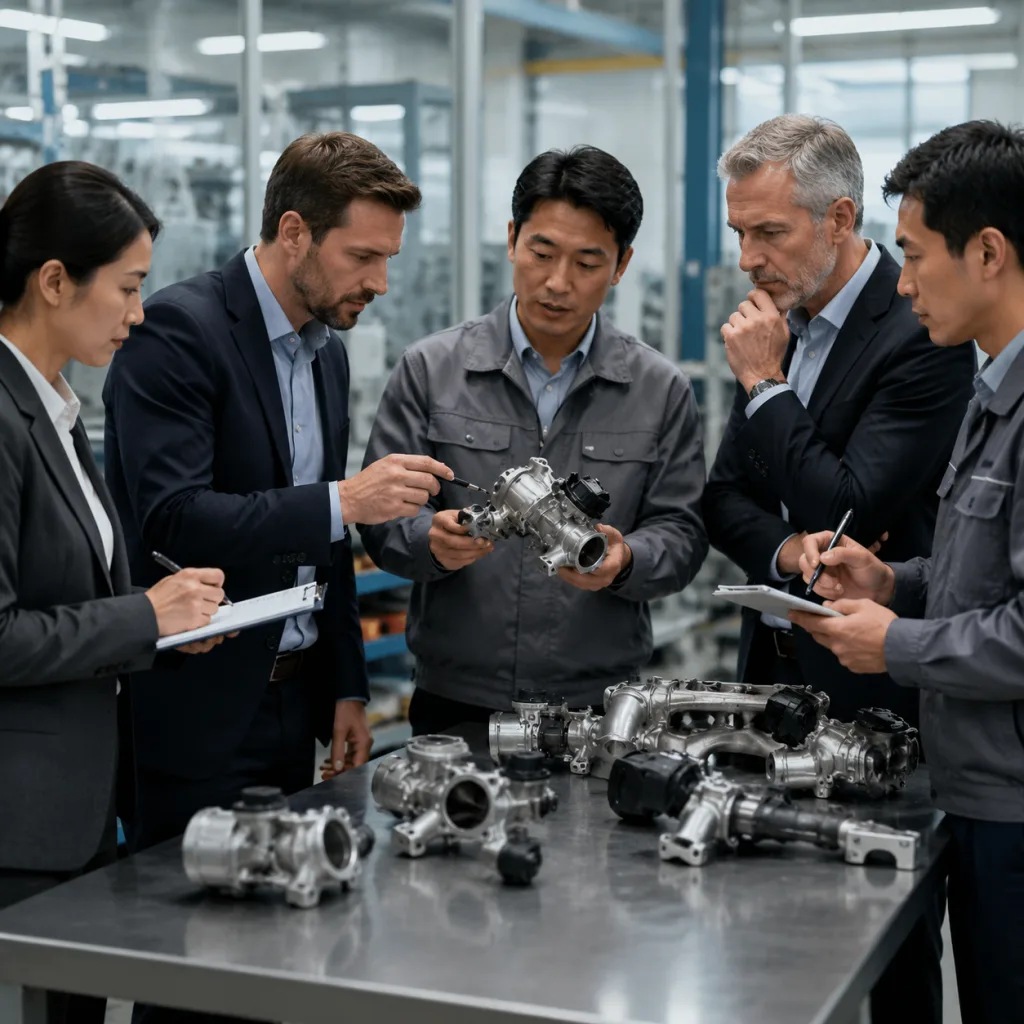
A sourcing engineer should not approve an EGR valve by external appearance alone. Infiniti-fitment applications can be sensitive to actuator calibration, connector integrity, valve-seat sealing, and thermal stability. A robust validation plan compares the proposed part against the buyer’s master sample or drawing, then confirms functional performance after thermal, vibration, and corrosion-related exposure where relevant.

Recommended validation checkpoints include:

  • Dimensional inspection of mounting flange, bolt pattern, valve bore, gasket face, pipe interface, and connector position, using the buyer drawing or master sample as the baseline.
  • Connector verification for terminal position, latch engagement, seal fit, insertion force, pull resistance, pin plating condition, and polarity.
  • Electrical checks for coil resistance, insulation resistance, signal continuity, sensor output, and voltage sweep where applicable.
  • Valve movement testing for commanded travel, hysteresis, sticking, response time, return-to-seat behaviour, and repeatability over multiple cycles.
  • Leakage testing in the closed position under agreed pressure and time conditions, with the allowable leakage limit written into the inspection report.
  • Thermal cycling to assess housing stability, seal retention, actuator response, and post-test leakage after cold-start and hot-soak simulation.
  • Vibration checks for connector retention, fastener stability, solder integrity, and internal component movement.
  • Salt-spray or corrosion-resistance checks where the valve location is exposed to road spray, humidity, or winter road chemicals.
  • Fit-check installation on a representative manifold or fixture to confirm gasket compression, fastener clearance, and pipe alignment before shipment release.

For practical approval, buyers can specify a staged plan: 3–5 dimensional layout samples for engineering sign-off, 10–20 pilot pieces for function and packaging confirmation, then a pre-shipment inspection on the first mass-production lot. Typical measurable items include flange flatness, bolt-hole centre distance, bore diameter, connector offset, closed-seat leakage, actuator current draw, sensor output range, and response time. Acceptance limits should come from the buyer drawing, reference sample, or agreed engineering specification; if no drawing exists, document the master-sample measurements and approved deviation band before tooling release.

For brake components, SAE J2527 is often cited for inertia-dynamometer friction evaluation; it is not an EGR valve validation standard. This distinction matters because sourcing files should cite relevant standards only. For EGR valves, the buyer’s drawing, vehicle emissions obligations, IATF 16949:2016 process controls, ISO 9001:2015 document control, internal leak/function test methods, and applicable chemical compliance requirements usually form the practical approval basis.

Driventus can also support custom manufacturing for distributor-owned references, including housing changes, connector matching, packaging specifications, marking rules, and inspection-plan alignment.

Supplier Comparison Criteria for Procurement Teams

When comparing suppliers, avoid reducing the decision to FOB unit price. EGR valves are warranty-sensitive because failures can trigger diagnostic trouble codes, idle instability, increased NOx emissions, poor fuel economy, or customer returns. Import managers should score suppliers on documented evidence rather than verbal assurances.

Sourcing item Practical planning range What to confirm before order
MOQ, stocked reference50–100 pcs per referenceWhether mixed references can share one shipment and one export booking
MOQ, active production reference100–300 pcs per referenceWhether machining and test fixtures are already released
MOQ, new or modified reference300–500 pcs per referenceTooling cost, sample charge, fixture lead time, and first-order commitment
Sample lead time10–20 days for stocked/tooling-ready; 25–45 days for modified referencesWhether samples are from trial build, pilot run, or current production
Mass production lead time30–45 days for repeat orders; 45–70 days for new packaging or new toolingCapacity plan, inspection schedule, and export booking window
Price basisFOB Ningbo/Shanghai commonly quoted; EXW or CIF by agreementCurrency, validity period, tooling amortisation, and carton/pallet cost
PackagingNeutral, private label, or distributor brandInner-box strength, barcode format, country-of-origin marking, master-carton quantity
DocumentationInvoice, packing list, inspection report, material declarationBatch traceability, certificate validity, and document retention period
Factory auditRemote or onsite auditIATF 16949:2016 certificate, process flow, calibration records, gauge list, EOL test method

</tr></thead><tbody> </tbody></table>A qualified egr valve infiniti supplier should be able to explain how it controls variation between similar references. This is especially important where the same basic valve architecture uses different connector indexing, actuator calibration, gasket profiles, pipe angles, or mounting bosses. Buyers should request first-article samples, record all approved deviations, and keep sealed master samples for later comparison if a claim or fitment dispute arises.

A practical supplier scorecard can weight quality system and test capability at 40%, fitment accuracy at 25%, commercial reliability at 20%, and claims support at 15%. During quotation comparison, normalise each offer to the same Incoterm, packaging level, inspection scope, and MOQ. A supplier quoting 8–12% lower but excluding private-label cartons, 100% leak testing, or batch-level inspection reports may be more expensive once rework, warranty reserve, and delayed launch risk are included.

Supplier Comparison Criteria for Procurement Teams

Order File Checklist Before Purchase Order Release

Before issuing a purchase order, align engineering, quality, logistics, and commercial information in one controlled file. A complete order file reduces the risk of shipment delay, incorrect private-label execution, missing compliance documents, or disagreement over inspection criteria.

Minimum order file checklist:

  • Confirm part description: Infiniti-fitment EGR valve, valve design, target vehicle applications, engine family, model-year range, and destination market.
  • Provide drawings, samples, photos, connector close-ups, gasket details, or an approved cross-reference list if available.
  • Define measurable inspection criteria for flange flatness, bolt-hole location, bore size, connector position, leakage limit, actuator response, and electrical output.
  • Define marking requirements for the part, inner box, master carton, pallet label, and shipping documents, including batch code format.
  • Confirm MOQ, unit price, Incoterms, payment term, price validity, production lead time, and shipment schedule.
  • Approve packaging artwork, barcode format, carton dimensions, inner protection, language requirements, country-of-origin marking, and pallet height limit.
  • Request a pre-shipment inspection report covering quantity, appearance, critical dimensions, leakage, function, electrical checks, labels, and packaging.
  • Confirm compliance documents required for the destination market, including REACH (EC) No 1907/2006 where relevant.
  • Agree warranty claim process, evidence requirements, failure-analysis method, response time, and corrective-action format.
  • Confirm retained-sample rules, document retention period, and whether buyer approval is required before shipment of the first production lot.

Driventus is an independent aftermarket manufacturer; brand names are referenced for fitment only. We do not claim approval or endorsement by any vehicle manufacturer. For buyers building an Infiniti-fitment EGR valve programme, early specification review is the most efficient way to confirm feasibility, tooling status, validation scope, MOQ logic, price tiers, and commercial assumptions before purchase order release.

Frequently asked questions

Please provide the target application list, valve photos, connector close-ups, a sample part if available, annual forecast, MOQ target, packaging requirements, and any OE-style cross-reference supplied by your team. Drawings, leakage limits, actuator or sensor criteria, and inspection requirements help shorten quotation and sample confirmation.

Yes. Packaging can be neutral or customer-branded, subject to artwork approval, MOQ, and destination-market labelling rules. Buyers should confirm barcode format, carton size limits, language requirements, country-of-origin marking, master-carton quantity, pallet labelling, and whether MOQ applies per box design or total shipment.

No. Driventus is an independent aftermarket manufacturer; brand names are referenced for fitment only. Product approval is based on buyer specifications, sample comparison, validation records, batch traceability, and agreed inspection criteria, not endorsement by a vehicle manufacturer.

If you are qualifying an egr valve infiniti supplier for distribution, repair-chain, or programme supply, send your application list, target references, forecast, MOQ target, packaging plan, and inspection requirements to [request a quote](/contact.html).

Request a Quote
Evaluation area Lower-risk supplier evidence Higher-risk warning sign
CertificationCurrent IATF 16949:2016 and ISO 9001:2015 certificates matching the factory nameExpired certificate or unrelated trading company certificate
Fitment controlCross-reference review, sample comparison, revision tracking, and application notesOne generic photo used for many references
Dimensional controlCMM or fixture report for flange, bore, bolt pattern, and connector positionOnly handheld caliper photos with no tolerance record
Testing100% leak/function testing plus electrical and final inspection recordsNo end-of-line functional test data
TraceabilityBatch code on part or package linked to production, material, and test recordsNo date code or lot reference
PackagingDrop-resistant carton, clear labels, barcode option, pallet planThin cartons and inconsistent labels
Claims handlingDefined RMA process, failure-analysis feedback, and corrective-action timingReplacement only, no root-cause review