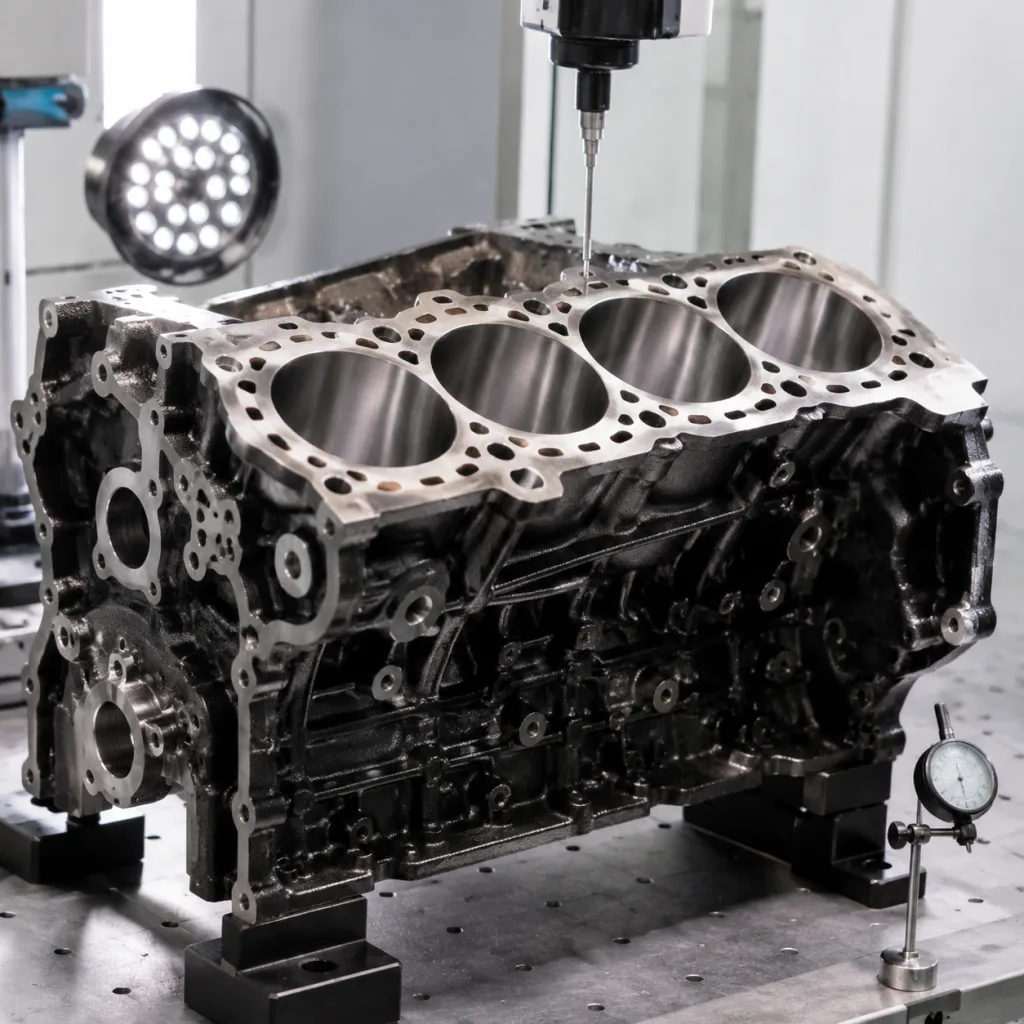
Engine Bearing Dimensions: Procurement Spec Guide
Engine bearing dimensions are a procurement control point, not just a catalog attribute. For main bearings, connecting rod bearings and thrust bearings, a few microns of wall-thickness drift or a 0.01 mm change in installed clearance can change hydrodynamic film formation, heat transfer and crankshaft service life. Buyers comparing suppliers should ask for measured data, drawing references, material stack-up, gauge method and process capability before approving samples. A practical RFQ should state nominal dimensions, tolerance bands, measurement condition, undersize logic, MOQ, target price basis and lead-time expectation by part family. This guide focuses on the questions that actually decide fit, risk, and supplier readiness: which dimensions matter most, where programs fail, how to compare shell constructions, and how to write an RFQ that forces measurable answers. It is written for distributors, Tier-1 sourcing teams and repair-chain buyers that need repeatable specifications across multiple engine families. Driventus is an independent aftermarket manufacturer; brand names are referenced for fitment only.
Start With the Dimensions That Control Fit
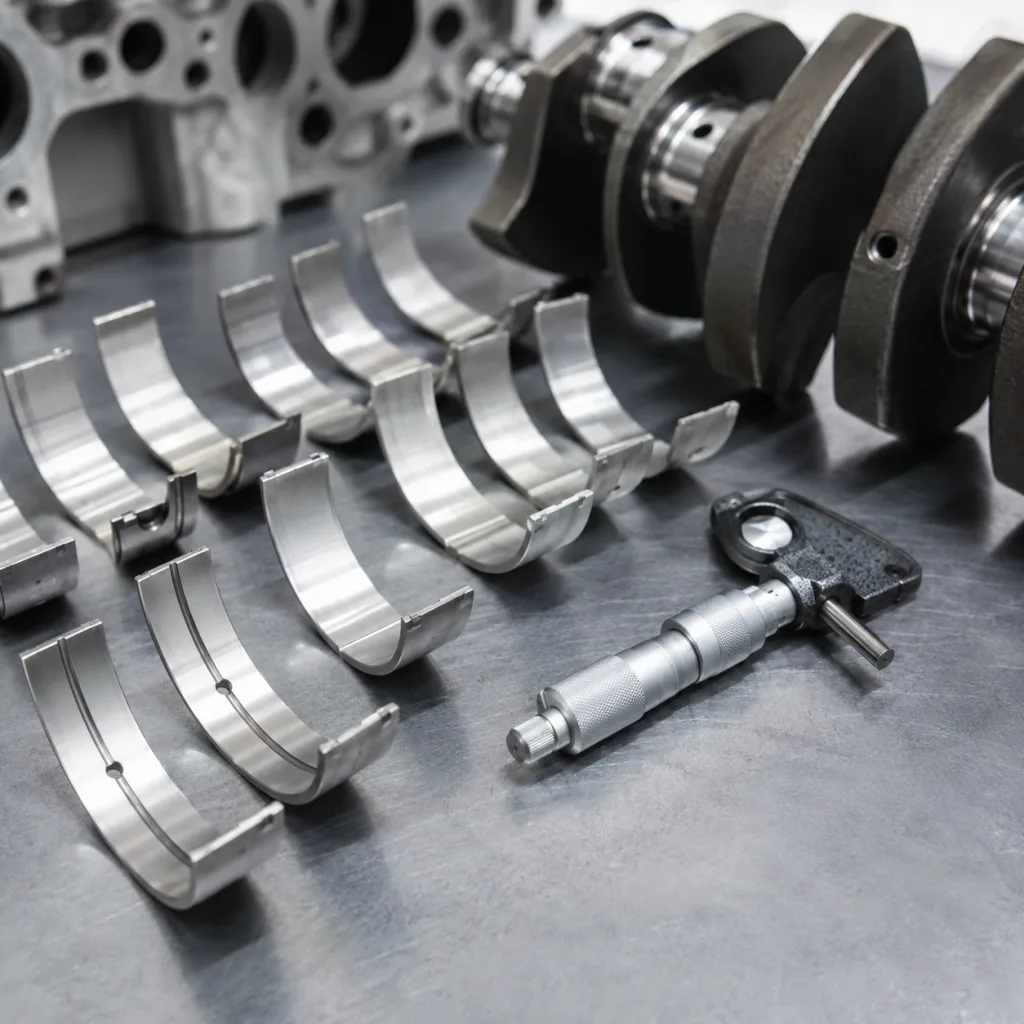
Engine bearings are thin-wall precision parts, so the purchase specification should define both the nominal value and the measurement condition. A shell measured in free state can differ from one held in a fixture or installed in a torqued housing bore; without that context, supplier data can look comparable while representing different conditions.
Typical dimensional fields include:
| Dimension | Why it matters | Procurement note | |
|---|---|---|---|
| Inside diameter after installation | Controls oil clearance with the crank journal | Verify using the specified housing bore, cap torque and bore temperature, typically 20 ± 2 °C | |
| Wall thickness | Sets bearing contribution to running clearance | Measure at named clock positions, commonly crown, ±25°/30° and near parting relief; request readings in 0.001 mm resolution | |
| Bearing width | Affects load area and side clearance | Confirm chamfer, relief and locating lug position; typical width tolerance is often held within ±0.05 mm unless drawing says tighter | |
| Crush height | Provides retention and heat-transfer contact in the housing bore | Request the supplier method, load condition and fixture drawing; do not compare values taken under different fixture loads | |
| Free spread | Affects shell seating before cap assembly | Define maximum outside width in free state and inspection force, because handling can distort thin shells | |
| Eccentricity | Supports oil wedge formation and parting-line relief | Specify the profile tolerance, not only maximum thickness; ask for polar chart or point readings | |
| Locating lug geometry | Helps prevent assembly error and shell movement | Match position, height, width and radius to the application drawing; include go/no-go gauge criteria | |
| Oil hole and groove dimensions | Controls lubricant delivery and alignment | Check hole diameter, groove width/depth, edge break and alignment to block, cap or rod feed holes | |
| Thrust flange width | Controls crankshaft end float | Applies to flanged main bearings and thrust washers; require flange parallelism and face roughness |
| RFQ field | Main bearing shell | Connecting rod bearing shell | Thrust bearing or washer |
|---|---|---|---|
| Journal diameter reference | Required; state STD and undersize bands | Required; state STD and undersize bands | Required where combined with main journal |
| Housing bore reference | Required with cap torque and bore class | Required with rod bolt torque/stretch condition | Required for flanged designs |
| Wall thickness | Required at crown and profile points; report to 0.001 mm | Required at crown and profile points; report to 0.001 mm | Required on running and thrust faces |
| Shell width | Required; include chamfer and relief | Required; include chamfer and side relief | Required |
| Crush height | Required with fixture load and drawing | Required with fixture load and drawing | Required for flanged shell |
| Free spread | Required with max/min and handling note | Required with max/min and handling note | Usually not applicable to washer |
| Oil groove | Common on upper main shell; define width, depth and arc | Application-specific | Not typical |
| Oil hole location | Common on upper main shell; define diameter and angular position | Application-specific | Not typical |
| Flange width | Flanged designs only; include parallelism | Not typical | Required; include total thrust width |
| Oversize or undersize options | Standard, 0.25 mm and 0.50 mm where applicable; 0.75 mm if market demands | Standard, 0.25 mm and 0.50 mm where applicable; 0.75 mm if market demands | Application-specific |
| Sample quantity for approval | 10–30 sets or agreed PPAP lot | 10–30 sets or agreed PPAP lot | 10–30 sets or agreed PPAP lot |
| MOQ and price basis | Quote by engine set, pair or shell; separate tooling/NRE | Quote by engine set, pair or shell; separate tooling/NRE | Quote by set or washer pair |
| Lead-time expectation | Tooling 6–10 weeks, samples 3–5 weeks after tooling, production 30–60 days after approval as a planning range | Tooling 6–10 weeks, samples 3–5 weeks after tooling, production 30–60 days after approval as a planning range | Confirm by stamping/coining and coating route |