connecting rod · 2026-06-16

Connecting Rod Toyota Supplier Sourcing Guide

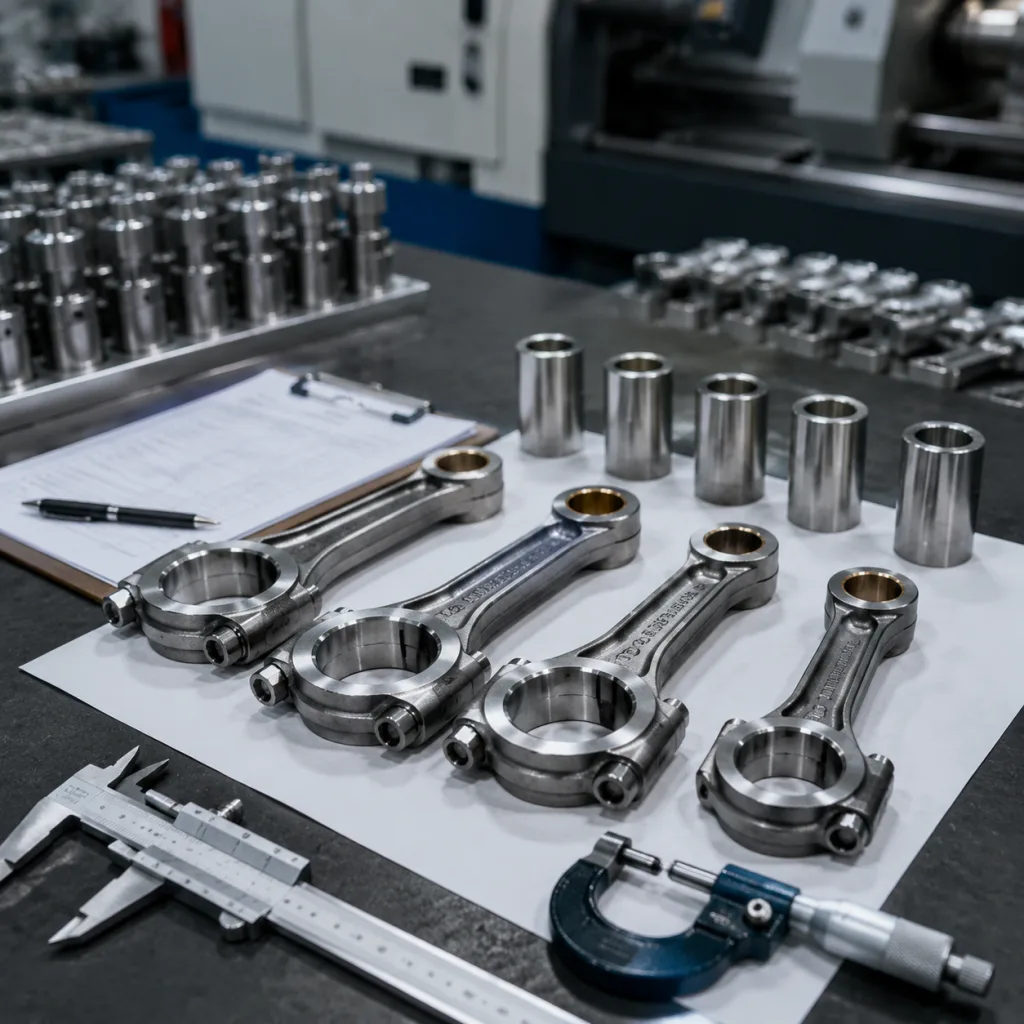
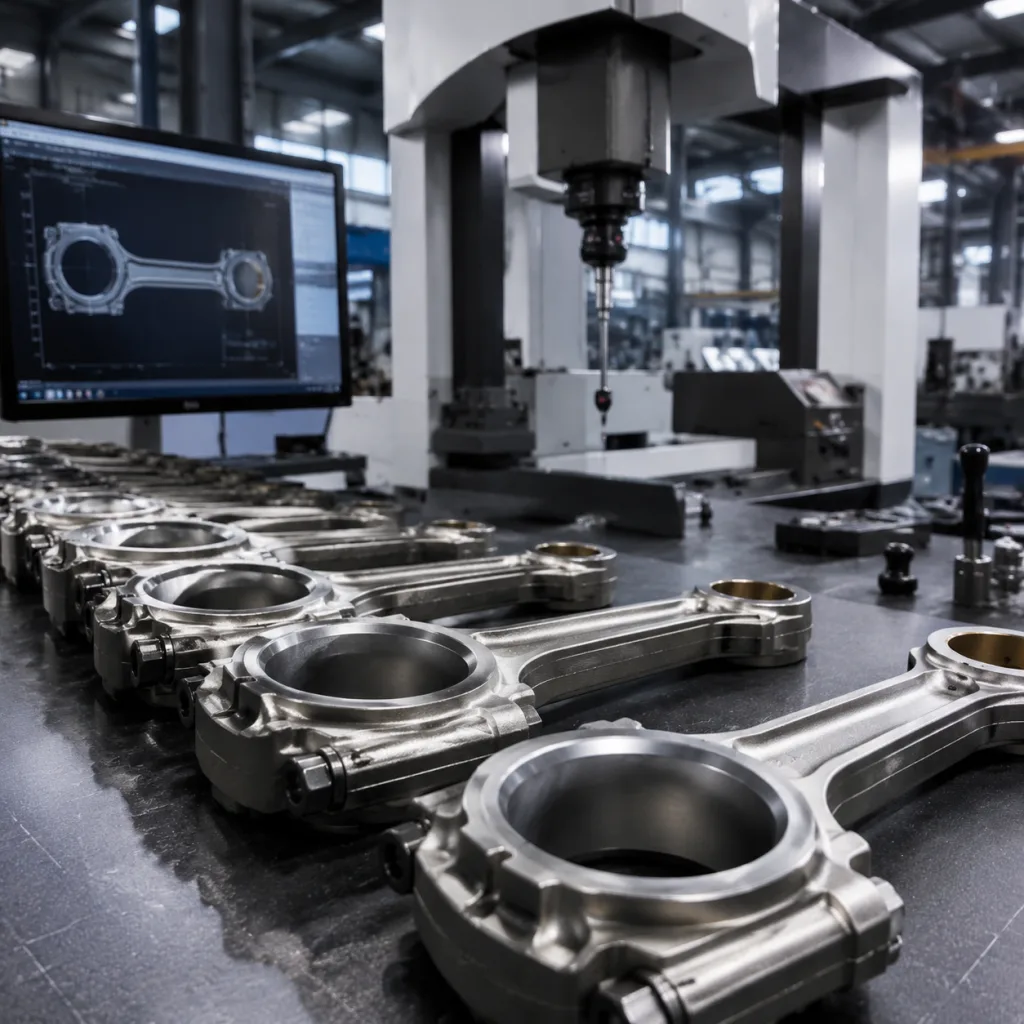
Choosing a connecting rod Toyota supplier is a sourcing decision that affects engine durability, warranty exposure, and inventory reliability. Buyers need more than a unit price; they need material traceability, machining capability, dimensional control, packaging standards, and a supplier that can support aftermarket and private-label programmes without implying vehicle manufacturer approval. Driventus manufactures engine and powertrain components in Taizhou, Zhejiang, and exports to distributors, wholesalers, OEM/Tier-1 customers, and repair-chain supply programmes in 60+ countries. For Toyota-fit connecting rods, our sourcing discussions typically cover forged steel grade, heat treatment, big-end roundness, small-end bush fit, bolt specification, balancing tolerance, MOQ, lead-time, PPAP-style documentation, and shipment planning. Driventus is an independent aftermarket manufacturer; brand names are referenced for fitment only.

What to Verify Before You Price a Toyota-Fit Rod

A connecting rod carries compressive and tensile loads at high cycle frequency, so Toyota-fit sourcing starts with fitment plus process control. If the specification is vague, the quote will be cheap for the wrong part.

Verify these items first:

  • Application scope: engine code, displacement, model year range, and whether the rod is for naturally aspirated, turbocharged, hybrid, petrol, or diesel use.
  • Material route: forged steel, powder metal, or billet, depending on the target programme and cost structure.
  • Critical dimensions: centre distance, big-end bore, small-end bore, pin diameter, bearing width, side clearance, and bolt seat geometry.
  • Mass control: total weight and end-to-end balance tolerance, set by programme rather than assumed.
  • Traceability: heat number, batch number, inspection records, and packaging lot identification.
  • Documentation: drawing review, control plan, material certificate, hardness report, dimensional inspection, and sample approval record.

For catalogue-driven sourcing, buyers can review our catalog and the engine component range at /products/engine-components.html. For non-catalogue drawings, Driventus supports custom manufacturing after drawing and sample review.

When a Low Quote Is the Wrong Quote

Procurement teams often compare suppliers on price alone, but connecting rod risk is driven by process capability. A low-cost quotation is a liability if the supplier cannot control forging consistency, heat treatment distortion, cap separation, bore geometry, or bolt clamp load.

Common failure modes to watch for:

  • Bore distortion after bolt torque.
  • Small-end bush looseness or poor interference fit.
  • Cap misalignment or mismatch after machining.
  • Incorrect rod length or beam geometry.
  • Weak thread engagement or poor torque retention on rod bolts.
  • Inconsistent weight matching across batches.
  • Cosmetic-only inspection that misses cracks, burrs, contamination, or dents.

The practical response is simple: compare suppliers on repeatability, not sample appearance. A part that looks correct can still fail under load if the big-end roundness shifts after assembly or the small-end fit drifts outside the drawing.

Supplier Comparison: Capability, MOQ, and Lead Time

Procurement teams need a comparison frame, not a generic checklist. The right connecting rod Toyota supplier is usually the one that can hold the drawing, support the launch schedule, and absorb your packaging and documentation requirements without improvisation.

Typical B2B supply parameters are shown below. Final terms depend on drawing complexity, raw material availability, packaging, annual volume, and destination port.

</tr></thead><tbody> </tbody></table>For new development, Driventus normally begins with a technical file review. The buyer provides drawings, engine application data, annual demand, target price level, and inspection requirements. If an original sample is provided, reverse measurement can support quotation, but production dimensions should still be confirmed against the buyer’s specification.

A supplier audit should cover machining centres, honing equipment, CMM or equivalent measuring capability, torque and angle control for rod bolts, hardness testing, cleaning process, rust prevention, and final packaging control.

Supplier Comparison: Capability, MOQ, and Lead Time

Step-by-Step RFQ and Launch Path

A clear RFQ shortens quotation time and reduces engineering loops. For Toyota-fit connecting rods, the cleanest path is to lock the specification first, then let the supplier quote against controlled inputs.

Use this sequence:

1. Confirm the engine application and target market. 2. Share the drawing or physical sample. 3. Define material grade, heat treatment, coating, and bolt specification. 4. Fix inspection requirements, traceability needs, and packaging format. 5. Request MOQ, sample lead-time, and mass-production lead-time. 6. Review the sample against dimensional and functional requirements. 7. Approve production documents before launch. 8. Run pre-shipment inspection and confirm export paperwork.

If the buyer is replacing an existing supplier, defect history is useful because it helps focus inspection and validation on known failure modes. For distributors, mixed engine-component orders can improve container utilisation. For OEM/Tier-1 or repair-chain programmes, documentation depth should match the sourcing manual.

Spec Points That Actually Matter

Toyota-fit connecting rods span many engine families, so no single tolerance table applies to every part. The correct specification must come from the buyer’s drawing, sample approval, or agreed aftermarket standard.

Lock these items before price comparison:

  • Engine application and target market.
  • OE cross-reference format, if available, using generic references only where supplied by the buyer.
  • Material grade and heat treatment requirement.
  • Surface treatment or anti-corrosion oil requirement.
  • Big-end bore, small-end bore, centre distance, and width dimensions.
  • Rod bolt specification, tightening method, and inspection method.
  • Weight range and balance tolerance.
  • Bearing compatibility and pin bushing material.
  • Marking method, traceability code, and packaging label format.
  • Required inspection documents and sample approval process.

Avoid approving a sample because it looks right. A connecting rod may pass a visual check and still fail on cap alignment, bore distortion after torque, or insufficient small-end bush retention. The supplier should show repeatability with multi-piece inspection, not one perfect sample.

For programmes with multiple Toyota-fit references, group rods by material route, machining process, and annual demand. That makes MOQ planning and tooling allocation easier and reduces duplicate sampling work.

Spec Points That Actually Matter

Quality Controls and Compliance Checks

Driventus operates under IATF 16949:2016 and ISO 9001:2015. Those systems support process control, corrective action, document control, and supplier management, but they do not replace product validation. Buyers can review our quality system before starting a supplier audit or RFQ package.

For connecting rods, validation usually includes material verification, dimensional measurement, hardness testing, surface finish checks, bolt thread inspection, and weight sorting. For more demanding programmes, buyers may request fatigue testing, magnetic particle inspection, salt spray testing for protective coatings, or PPAP-aligned submissions.

A practical inspection plan should include:

  • Big-end bore diameter and roundness after bolt torque.
  • Small-end bore diameter and bush interference fit, where applicable.
  • Centre-to-centre length and parallelism.
  • Bearing housing width and side face finish.
  • Rod bolt thread quality and torque retention checks.
  • Visual inspection for laps, cracks, dents, machining burrs, and contamination.
  • Batch traceability between raw material, machining lot, inspection record, and packing label.

Environmental and material compliance can also matter for EU and UK buyers. Driventus can support buyer-specific restricted substance declarations where applicable, including REACH (EC) No 1907/2006 requirements, based on the material and coating specification agreed for the programme.

How Driventus Runs RFQs and Programmes

A clear RFQ shortens quotation time and reduces engineering loops. For Toyota-fit connecting rods, Driventus requests the part description, application list, drawing or sample, annual forecast, target market, packaging requirement, and requested documents. If the buyer is replacing an existing supplier, defect history is useful because it helps focus inspection and validation on known failure modes.

The normal launch sequence is:

1. RFQ review and confidentiality arrangement if required. 2. Drawing, sample, or application data confirmation. 3. Quotation with MOQ, lead-time, tooling position, and packaging assumptions. 4. Sample production and dimensional inspection. 5. Buyer validation and feedback. 6. Mass production planning after approval. 7. Pre-shipment inspection and export documentation.

Driventus is an independent aftermarket manufacturer; brand names are referenced for fitment only. We do not claim approval or endorsement by any vehicle manufacturer. To begin, send drawings, samples, annual demand, and target delivery schedule through request a quote.

Frequently asked questions

Provide the engine application, drawing or physical sample, annual forecast, target market, packaging requirement, and inspection documents needed. If an OE-style cross-reference is used, include it in the RFQ file. Driventus will confirm feasibility, MOQ, lead-time, and sample process after technical review.

Yes. Driventus can discuss neutral packaging, buyer labels, carton artwork, pallet requirements, and export documentation for private-label programmes. Label control, traceability, and packaging approval should be fixed before mass production to prevent market or customer mix-ups.

No. IATF 16949:2016 and ISO 9001:2015 support process control and quality management, but each connecting rod programme still needs agreed inspection, sample approval, and validation testing based on the buyer’s specification and application risk.

For a sourcing review, send your Toyota-fit connecting rod drawings, samples, annual forecast, and packaging requirements. Driventus can confirm feasibility, MOQ, lead-time, and documentation through /contact.html

Request a Quote
Sourcing item Typical procurement discussion
Product typeToyota-fit connecting rods for aftermarket or private-label programmes
MOQUsually programme-based; lower trial quantities may be discussed for validation orders
Sample lead-timeCommonly 30–60 days after drawing, sample, and specification confirmation
Mass production lead-timeCommonly 45–90 days after sample approval and deposit, depending on volume
PackagingNeutral carton, buyer label, or export pallet packing subject to artwork approval
DocumentationMaterial report, hardness report, dimensional report, and batch traceability record
ShipmentFOB Ningbo/Shanghai or agreed Incoterms for consolidated export orders