engine bearing · 2026-06-04

Engine Bearing Citroen Wholesale: Sourcing Guide

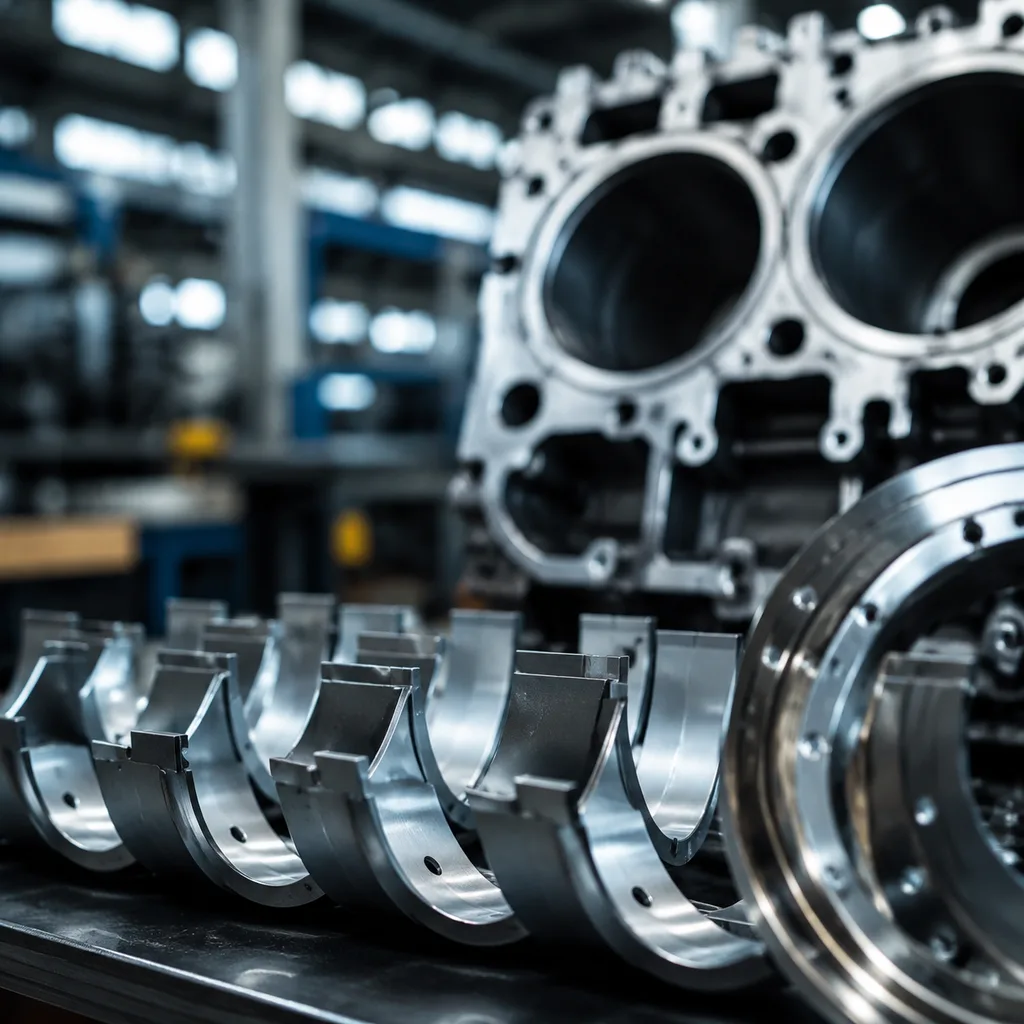
Procurement teams sourcing engine bearing Citroen wholesale need more than a price list. They need controlled wall thickness, crush height, bore geometry, batch traceability, stable replenishment lead times, and a supplier that can support OE and aftermarket cross-reference checks across Citroën engine applications. Driventus supplies engine bearings for aftermarket and OEM-channel buyers from a vertically integrated plant in Taizhou, Zhejiang. We manufacture to controlled specifications and operate under IATF 16949:2016 and ISO 9001:2015. Driventus is an independent aftermarket manufacturer; Citroën and other brand names are referenced for fitment identification only. For buyers in the EU, UK, US, Canada, Australia, and Brazil, the main sourcing questions are practical: does the bearing match the crankshaft journal, housing bore, bearing width, locating lug, oil feed geometry, and thrust arrangement; is the overlay or polymer coating suitable for the duty cycle; and can the factory repeat the same specification over multiple lots? This article explains how to evaluate Citroën applications, what to verify on a sample lot, and how wholesale buyers can reduce mismatch risk before placing volume orders.

What wholesale buyers should verify first

For engine bearing Citroen wholesale enquiries, the first task is fitment control, not brand selection. Bearings must match the engine family, main journal or crankpin diameter, housing bore, shell width, oil hole position, groove layout, locating lug position, and thrust configuration. A small error in wall thickness or housing fit can change oil clearance, reduce oil-film stability, and accelerate overlay fatigue, especially on engines that have been rebuilt, crank-ground, line-honed, or line-bored.

A buyer should begin by defining the exact application path. In practice that means confirming whether the order is for a standard replacement set, an undersize crankshaft repair, a selective fitment programme, or a custom private-label kit. Common repair undersizes are usually expressed in metric or inch equivalents, such as 0.25 mm, 0.50 mm, 0.75 mm, or 0.010 in, 0.020 in, and 0.030 in, but the correct step must be confirmed against the finished crankshaft size rather than assumed from catalog wording.

Minimum data set for a sourcing enquiry:

  • Engine code, OE cross-reference, or aftermarket reference number
  • Bearing type: main bearing, connecting rod bearing, thrust washer, or flanged thrust main
  • Standard, undersize, oversize housing, or selective-grade requirement
  • Measured journal diameter and housing bore where the engine has been machined
  • Bearing set composition, including shell count and thrust pieces
  • Coating requirement: uncoated, lead-free overlay, or polymer-coated bearing surface
  • Packaging, private-label, barcode, and carton labelling specification
  • Target annual volume, first-order MOQ, and preferred Incoterms
  • Market destination and documentation requirements, including material declarations where applicable

If the buyer cannot provide an OE number, the supplier should still be able to confirm dimensions from an application sheet, removed sample, or measured drawing. For catalog browsing, use our catalog and, for broader powertrain sourcing, our engine components page. The faster the buyer narrows the fitment variables, the lower the risk of mixed part numbers, incorrect clearances, and avoidable distributor returns.

Dimensional control and material options

Engine bearings are usually supplied as tri-metal or bi-metal constructions, depending on load, cost target, fuel type, and expected service profile. Procurement teams should not treat these as interchangeable. Typical bearing designs use a steel backing with an aluminium-tin alloy lining for many bi-metal applications, or a steel backing with copper-lead intermediate layer and a thin overlay for higher-load tri-metal applications. Polymer coatings may be specified to improve start-stop wear margin, embed small debris, and reduce seizure risk during boundary-lubrication events.

When a buyer evaluates a supplier, the key is to compare the intended engine duty against the bearing design rather than relying on a generic catalog label. A high-speed passenger engine, a taxi fleet unit, and a rebuilt commercial application can all require different material balances even if the outside dimensions appear similar. For wholesale sourcing, the supplier should identify which dimensions are controlled as critical characteristics, typically wall thickness, spread, crush, bore diameter after assembly, oil hole alignment, and thrust face width.

Typical buyer checks

</tr></thead><tbody> </tbody></table>Where a buyer is consolidating SKUs, it is normal to ask for multiple thickness grades under one part family. That is often the most practical way to support rebuild shops and remanufacturers that need selective sizing without managing a separate supplier for each grade. Custom thickness control is available through our custom manufacturing programme when the application and volumes justify it. The important point is to lock the drawing revision, measurement method, gauge location, and acceptance criteria before sampling so every batch is inspected against the same reference standard.

MOQ, lead time, and export readiness

Wholesale buyers usually evaluate three commercial variables together: MOQ, lead time, and shipment consistency. For engine bearing programmes, an attractive unit price is not useful if the supplier cannot hold the same specification over repeated lots or if the packaging creates sorting problems downstream. For distributors, mixed-SKU cartons, incorrect set counts, missing undersize markings, or inconsistent barcode labels can create as many claims as a dimensional defect.

Driventus supports B2B supply for distributors, wholesalers, engine rebuild networks, and multi-location repair chains. Typical commercial questions include:

  • MOQ per part number, undersize grade, or engine family
  • Sample lead time versus mass-production lead time
  • Carton quantity, inner-box configuration, barcode format, and private-label artwork
  • Palletisation, shipping marks, and mixed-SKU consolidation rules
  • Incoterms, HS code confirmation, packing list detail, and export documentation
  • Lot traceability, production date code, and retained sample policy
  • Annual forecast, call-off schedule, and safety-stock arrangement

Export readiness matters because a bearing programme is not only a manufacturing issue. It is also a documentation issue. Buyers often need a supplier that can produce clean commercial paperwork, keep part-level traceability intact, and package orders in a way that reduces warehouse handling errors. For EU and UK buyers, material compliance and declaration control are especially important. Where required, packaging and material declarations can be aligned with REACH (EC) No 1907/2006 expectations and customer-specific restricted-substance formats. For non-EU destinations, the same document discipline still helps during customer audits, import clearance, and claims review.

Lead time should be assessed in two stages: initial sample timing and repeat production timing. A supplier that is fast on the first order but slow on replenishment can still disrupt a wholesale programme. Buyers should ask whether the same tooling, inspection fixtures, coating process, drawing revision, and packing format can be maintained on repeat runs, because that is what protects fill rates once the catalog item becomes active.

If you are building a supply base shortlist, compare suppliers on repeatability, not only on first-order price. A stable engine bearing programme usually saves more in reduced claims, fewer emergency shipments, lower return handling, and better workshop confidence than it loses in marginal unit cost.

Quality checks buyers can request before release

A serious engine bearing supplier should provide lot-level evidence, not only a sales statement. Buyers should ask for inspection records that cover dimensional sampling, visual finish, coating adhesion where applicable, shell identification, and packaging verification. Those records matter because a bearing can look acceptable at a glance while still carrying a wall-thickness, crush, oil-hole alignment, finish, or traceability problem that only becomes visible after assembly.

Driventus operates a documented quality system aligned with IATF 16949:2016 and ISO 9001:2015. For procurement teams, the practical question is whether the supplier can prove control at incoming steel strip or lining material, forming, broaching, boring, plating or coating, washing, final audit, corrosion protection, and packing. A release package should make it possible to connect the finished goods back to a production lot, material batch, and inspection record without ambiguity.

Useful release documents:

  • Certificate of conformity stating part number, revision, quantity, and lot number
  • Dimensional inspection report for critical characteristics such as wall thickness, width, oil hole, groove, and thrust dimensions
  • Material declaration and coating specification where applicable
  • Batch number, production date code, and packing traceability
  • Sample retention record or golden-sample reference
  • Packaging inspection checklist covering label, barcode, set count, and carton quantity
  • Corrective-action reference if a deviation was previously closed

For larger programmes, it is reasonable to request AQL sampling definitions, inspection frequency, gauge capability, and the specific instruments used for critical dimensions, such as bore gauges, height gauges, micrometers, coating-thickness equipment, and surface roughness testers. Buyers may also ask whether the supplier retains master samples and whether those samples are stored under controlled conditions. That helps when a dispute arises months later and the parties need a common physical reference.

When a programme involves a named vehicle platform, we do not claim manufacturer approval. Driventus is an independent aftermarket manufacturer; Citroën and other brand names are referenced for fitment only. That distinction matters because the sourcing decision should be based on measurable fitment evidence, approved samples, and quality records, not on assumptions about endorsement.

How Citroën applications are normally validated

Application validation should start with the engine code, not the vehicle model alone. Citroën vehicles often share powertrains across Stellantis and former PSA platforms, and the same model name can contain different bearing specifications depending on displacement, production year, emissions package, crankshaft variant, and transmission pairing. A catalogue match that is correct for one version may be wrong for another, even when the badge and displacement appear similar.

The most reliable validation workflow is practical and sequential. Start by identifying the powertrain, then confirm the OE or aftermarket cross-reference, then verify the actual dimensions against a sample, drawing, or measured crankshaft and housing data. That sequence reduces false matches and prevents the common error of using vehicle nameplates as a substitute for engine data.

A practical validation workflow is: 1. Confirm engine code, production year range, displacement, and OE cross-reference. 2. Identify whether the requirement is main bearing set, rod bearing set, thrust washer, or complete repair kit. 3. Measure the removed bearing, crankpin, main journal, or housing bore if the original part is available. 4. Verify bearing width, locating lug position, oil feed hole, groove pattern, and axial thrust requirement. 5. Confirm whether the crankshaft is standard size or ground to an undersize step. 6. Compare material and coating against the intended duty cycle and oil specification. 7. Approve a pilot lot before volume release. 8. Record the approved reference, sample status, and drawing revision in the master catalogue file.

For distributors supporting multiple workshops, the lowest-risk approach is to maintain a master cross-reference file that lists OE numbers, aftermarket alternates, bearing set composition, engine code, undersize options, and kit contents. That reduces picking errors and returns. It also helps when sourcing alternates for discontinued part numbers, superseded OE references, or regional variants sold under different trim packages.

If the application is being rebuilt rather than replaced at OEM dimensions, the validation process should include crankshaft machining data and confirmation of the final oil clearance target. Without that, the buyer may have a bearing that is nominally correct but unsuitable for the finished engine condition. Good validation is not only about matching a part number; it is about matching the final assembly condition after machining, cleaning, trial fitting, and torque-up.

Why buyers source from a vertically integrated factory

Wholesale engine bearing programmes work best when the supplier controls more of the process chain. Vertical integration improves traceability and reduces the number of hand-offs between material selection, shell forming, machining, coating, inspection, preservation, and packing. It also makes it easier to hold a stable reference standard across repeat lots, which is critical for distributors that need long-term replenishment rather than one-off spot buys.

For buyers, that can translate into:

  • More stable wall-thickness, width, crush, and oil-hole repeatability
  • Faster response to drawing changes, superseded references, or private-label set composition
  • Better control of small-series, undersize, or coated bearing requirements
  • Clearer responsibility when a dimensional or packaging non-conformance appears
  • More consistent carton, barcode, and label standards across shipments
  • Easier audit preparation for key accounts and distributor quality teams
  • Stronger traceability from material batch to finished set and retained sample

A vertically integrated factory can usually answer more of the supplier qualification questions that matter in wholesale sourcing. Buyers can ask how incoming strip or lining material is verified, where machining tolerances are checked, how coatings are controlled, what acceptance criteria apply at final audit, and what containment process is triggered when a batch falls outside specification. Those answers are important because they show whether the factory can support ongoing programme health, not just initial quotation activity.

Driventus exports to 60+ countries and supports procurement teams that need a factory audit path before release. If your team is comparing supply options, ask for production flow, control plan summary, inspection points, gauge list, and lot control evidence before committing to annual volume. That evidence should be specific enough to compare one supplier against another on a like-for-like basis, including dimensions, documents, packaging, and replenishment performance, not just on price and carton appearance. For a direct discussion, request a quote.

Frequently asked questions

Yes. We can quote by OE number, engine code, aftermarket reference, drawing, or sample part. Provide the bearing type, shell count, standard or undersize requirement, measured dimensions where available, and any thrust or coating requirements for a correct match. If the OE number has multiple variants, we will check the application details before confirming the quote.

Buyers can request a certificate of conformity, dimensional inspection report, material declaration, batch traceability, packaging specification, and label or barcode details. Additional documents can be aligned to customer audit needs, including carton counts, retained-sample references, inspection frequency, and corrective-action records where relevant.

Yes. For qualified volumes, we support custom manufacturing for wall thickness, undersize grades, coating, packaging, and labelling. Share your engine application data, target annual demand, drawing or sample, and required dimensional targets first so we can confirm feasibility before sampling.

If you are building a wholesale sourcing plan for engine bearings, send your OE cross-reference, engine code, bearing type, undersize requirement, and target volume. Our team can review fitment, sample requirements, documentation, and commercial terms with you at /contact.html.

Request a Quote
Item What to confirm Why it matters
Shell materialSteel-backed aluminium alloy, steel-backed copper-lead, or lead-free constructionAffects load capacity, fatigue resistance, corrosion behaviour, and compliance strategy
Overlay or coatingTin-based overlay, lead-free overlay, or polymer coating with defined thickness rangeInfluences seizure resistance, embeddability, start-up wear, and shelf stability
Wall thicknessMeasured by grade and undersize step, using agreed gauge pointsControls final oil clearance and bearing interchangeability
Crush and spreadFree spread and installed crush height against drawing requirementHelps retain the shell in the housing and maintain heat transfer
Journal clearanceTarget clearance range per engine application and finished crank sizeControls oil-film stability, heat generation, and oil pressure behaviour
Width and chamferPart width, side relief, and edge radius or chamfer matchPrevents edge loading and interference with crankshaft fillets
Thrust faceThrust location, thrust washer thickness, and axial clearance targetReduces crankshaft walk and protects the thrust surface
Surface finishBearing surface condition, coating continuity, and absence of scoring or burrsSupports break-in, wear control, and assembly consistency
Groove and oil hole geometryGroove depth, feed hole diameter, slot position, and alignmentEnsures correct lubrication flow and oil distribution