Choosing an engine bearing Cadillac supplier is a risk-control decision before it is a price exercise. The wrong bearing range can create clearance issues, warranty noise, corroded stock, warehouse confusion, and failed customer onboarding. The right one starts with stable metallurgy, repeatable wall thickness, traceable batches, export-ready packaging, and documentation that can survive receiving inspection in the EU, UK, North America, Australia, Brazil, and other regulated markets.
Driventus manufactures engine and powertrain components in Taizhou, Zhejiang, with IATF 16949:2016 and ISO 9001:2015 systems applied across production, inspection, supplier management, and corrective action. For Cadillac-fit applications, we support main bearings, connecting rod bearings, thrust washer sets, and application-specific bearing kits for aftermarket distributors, wholesalers, repair-chain programs, and OEM/Tier-1 sourcing teams.
A strong RFQ defines the engine family, bearing position, standard or undersize requirement, annual forecast, packaging format, inspection records, and target Incoterms before price comparison begins. Driventus is an independent aftermarket manufacturer; Cadillac, General Motors, and related brand names are referenced for fitment identification only. The sections below show how to qualify a Cadillac-fit bearing source by scope, specification, audit evidence, ordering model, validation routine, and supplier comparison.
Start With the Range Logic, Not the Part Number
A Cadillac-fit bearing program rarely means one fast-moving reference. It usually spans multiple V6 and V8 engine generations used in passenger cars, SUVs, and light trucks. That creates a range-planning problem: standard sizes, repair undersizes, complete set logic, and warehouse-friendly packaging must work together.
A useful program map separates the range into practical buying units:
Main bearing sets for crankshaft support positions, supplied as complete engine sets or position-defined half-shell quantities
Connecting rod bearing sets matched to journal diameter, housing bore, shell width, and locating lug geometry
Thrust washer sets or flanged main bearing designs where axial crankshaft control is built into the bearing system
Standard, 0.25 mm, and 0.50 mm undersize options, with 0.75 mm or 1.00 mm reviewed only when crankshaft-grinding demand justifies MOQ
Bi-metal or tri-metal constructions selected by load, crankshaft finish, oil conditions, warranty expectations, and target price point
Bulk, neutral box, or customer-brand packaging, commonly 1 set per inner box with master cartons planned around 12-20 kg gross weight
Label data covering application, size, batch number, quantity, country of origin, barcode, and customer SKU where required
Before adding references, buyers should compare current coverage against our catalog and broader engine components. If the business case involves private label packaging, special kitting, market-specific labels, or non-standard dimensions, Driventus can review drawings, samples, and annual volume through custom manufacturing.
A lean application matrix is enough for first review: engine code or displacement, production years, bearing position, STD/undersize split, monthly demand, competitor reference, and packaging channel. Keep fitment language clean. No supplier should claim vehicle manufacturer approval unless formal approval exists. Driventus does not claim endorsement by Cadillac, General Motors, or any vehicle manufacturer.
Spec Deep-Dive: Where Bearing Programs Usually Fail
Engine bearings are small, but the failure cost is not. A poor bearing can damage the crankshaft, connecting rods, cylinder block, and complete engine assembly. The RFQ should therefore say whether production is based on catalog specification, sample reverse-engineering, or drawing-controlled requirements.
The highest-risk points are material control, bonding, overlay consistency, wall thickness, crush height, locating features, and oil-hole alignment.
Control point
Common sourcing requirement
Why buyers should care
Bearing construction
Bi-metal or tri-metal
Must match load, crankshaft finish, oil conditions, and market positioning
Steel backing
Controlled strip thickness and hardness
Supports crush, shape stability, and retention in the housing
Intermediate layer
Copper-lead or aluminium alloy, depending on design
Should be checked against application load and regulatory limits
Overlay
Application-specific running layer, often checked in microns by approved method
Affects surface compatibility, embedability, and visible defect control
Wall thickness variation
Common control target within ±0.006-0.012 mm when drawings require it
Drives oil clearance consistency
Crush height
Verified by fixture or calibrated method, commonly controlled in the 0.02-0.08 mm range by design
Helps prevent bearing movement during operation
Oil holes and grooves
Position checked against drawing, with burr-free edges required
Misalignment can restrict lubrication and accelerate wear
Locating lug geometry
Width, height, and position controlled, usually within drawing tolerance of ±0.05-0.10 mm
Supports correct seating during assembly
Packaging
Anti-corrosion paper, VCI protection, desiccant where needed, export carton
Protects stock during sea freight and storage
</tr></thead><tbody> </tbody></table>Drawings and inspection standards should define each critical dimension. Visual comparison with an existing sample is not enough. OE-style part-number cross-references may help identify fitment in a customer file, but they are not proof of brand approval or interchangeability without dimensional confirmation.
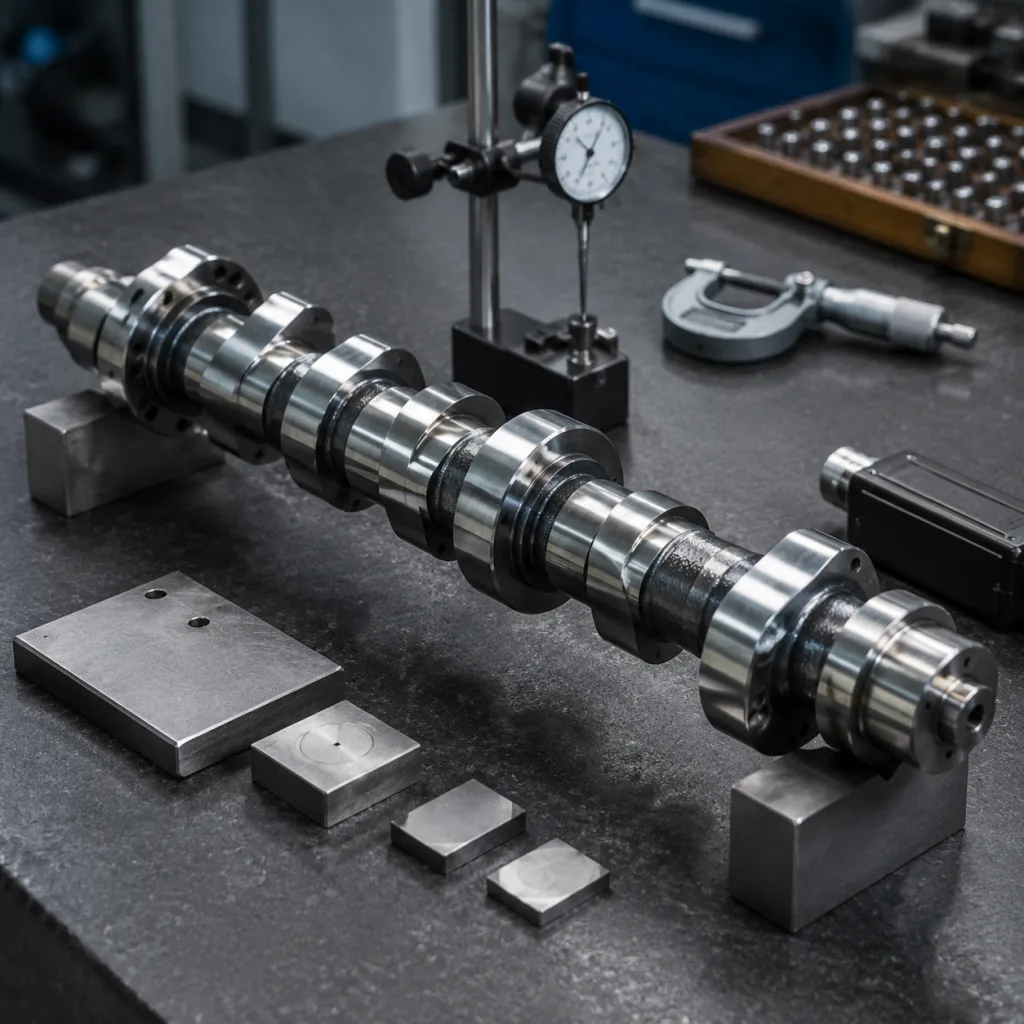
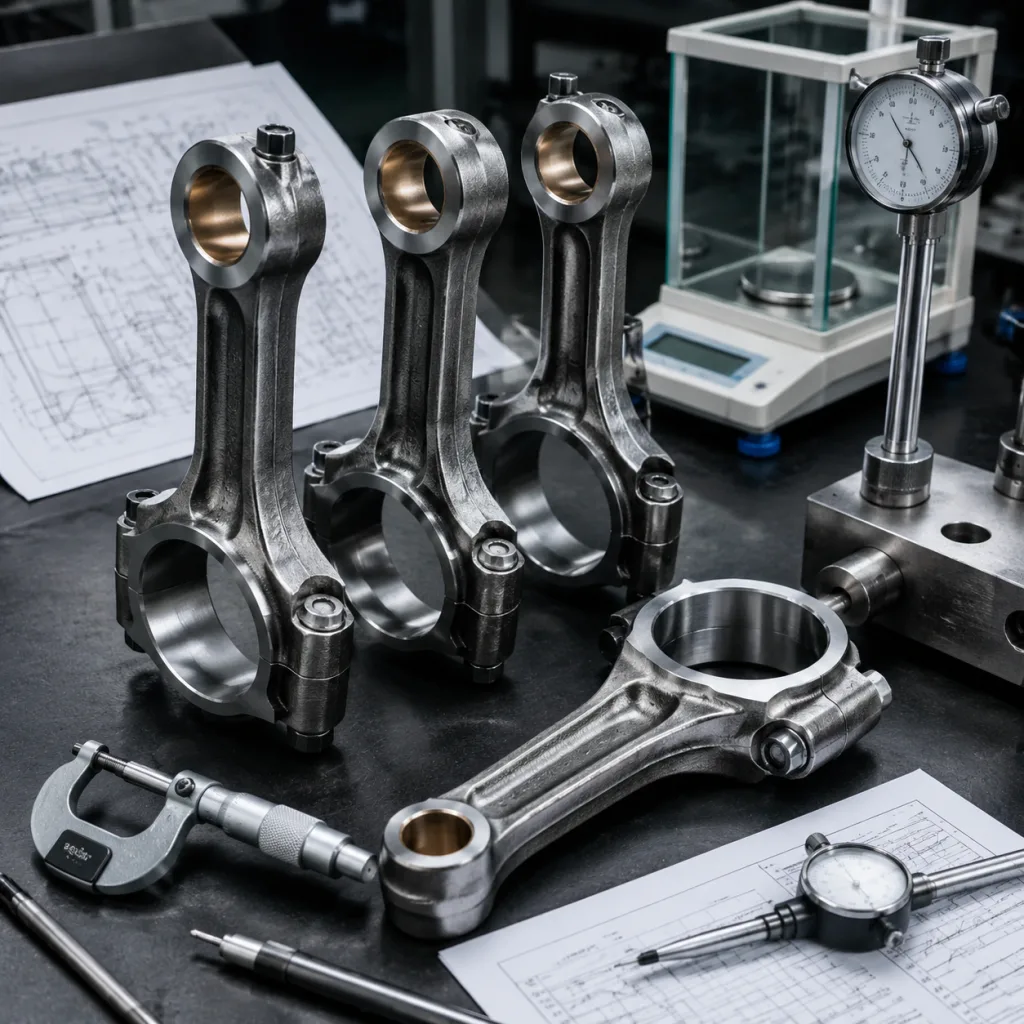
Driventus uses incoming material checks, in-process inspection, and final sampling to reduce lot-to-lot variation. Typical control points include strip certificate review, blanking and forming checks, locating lug inspection, wall-thickness measurement with calibrated micrometers or air gauges, oil-hole verification, visual surface review under controlled lighting, and final AQL sampling before packing.
For larger programs, inspection records can be aligned with customer control plans, AQL expectations such as general level II sampling, reporting formats, and batch-retention rules.
Audit File Checklist for a Serious Supplier Review
A credible supplier file should answer one question: can the factory repeat the same specification after the first approved sample? Product photos and a business licence do not answer that. Importers, wholesalers, repair networks, and Tier-1 buyers usually need documented systems, traceable production records, and corrective-action discipline.
Driventus operates under IATF 16949:2016 and ISO 9001:2015. These standards do not certify every individual bearing reference by themselves. They define requirements for automotive quality management, risk-based process control, document control, internal audits, nonconforming output, supplier management, and continual improvement.
For an engine bearing Cadillac supplier review, request these materials before a launch order:
Valid IATF 16949:2016 and ISO 9001:2015 certificates within scope, with certificate number, expiry date, and issuing body visible
Process flow diagram for bearing manufacturing, cleaning, inspection, packing, quarantine, and shipment release
Control plan covering material, forming, machining, surface treatment, coating, cleaning, and final inspection
Sample inspection report with actual measured values for wall thickness, width, lug dimensions, oil-hole position, and appearance
Gauge list and calibration records for micrometers, height gauges, profile projectors, hardness testers, and dedicated bearing fixtures
Batch traceability procedure from strip material coil or lot to finished carton and pallet label
Nonconforming product control and corrective-action procedure with containment timing, 8D logic, and re-inspection rules
Packaging specification for sea freight and warehouse storage, including VCI material, carton burst strength, palletization, and humidity control where applicable
REACH (EC) No 1907/2006 declaration where required by EU importers, plus RoHS or heavy-metal declarations where requested by the customer channel
Market-specific declarations requested by the importer or end customer, including country-of-origin statement and HS-code support for customs files
For formal vendor qualification, our quality system page is a starting point before remote document review or on-site audit. Additional documents can be shared under the right commercial, confidentiality, and project-scope framework.
Set the rules early: document language, retention period, sample retention, and response timing for nonconformity reports. These details become important when a shipment is already in distribution.
Choose the Ordering Model by Business Scenario
The right order structure depends on the buyer’s situation. A distributor launching a Cadillac-fit range has different risk than a repair-chain group replenishing proven stock. A buyer replacing an inconsistent supplier may need pilot lots and tighter incoming inspection before moving volume.
Use the scenario to shape the quotation.
New range launch: start with a coverage matrix by engine family, bearing position, size, annual forecast, target market, packaging preference, quality documents, and cross-reference needs
Supplier replacement: request side-by-side samples, first-article inspection, packaging review, and a controlled pilot lot before transferring full volume
Mature repair-chain program: set reorder points, safety stock rules, rolling forecasts, and consolidated shipment windows for slow-moving undersizes
Private-label program: lock artwork approval, barcode format, carton strength, language requirements, trademark responsibility, and country-of-origin marking before mass production
Mixed-category shipment: confirm carton compatibility, moisture protection, pallet height, and timing before combining bearings with other engine components
Typical planning ranges are practical, not universal. Catalog items with existing tooling are often planned from 100-300 sets per reference. Private-label boxes or slow-moving undersizes may need 300-500 sets or consolidated family production. Catalog samples can often be prepared in 7-15 days when stock or semi-finished parts are available. New-tooled or private-label items require drawing confirmation, tooling review, and packaging proof approval.
Repeat orders commonly fall in a 30-60 day production window after deposit and artwork approval. New references may require 60-90 days depending on tooling, strip material, and validation scope. Unit price moves with metal structure, order quantity, undersize mix, inspection level, packaging type, exchange rate, and shipment term such as EXW, FOB Ningbo/Shanghai, CIF, or DAP.
A 3-6 month rolling forecast helps secure raw material, reserve production slots, and reduce urgent air-freight requests. Procurement teams can request a quote with sample photos, target applications, annual forecast, target price band, preferred Incoterms, and required OE-style cross-reference data. If a physical sample is available, it should be measured against drawing data before mass production is confirmed.
Incoming Inspection: Catch Problems Before Installers Do
Good validation combines supplier process evidence with buyer-side receiving discipline. Incoming inspection does not need to duplicate the factory laboratory. It should catch the costly basics: wrong size, mixed batches, corrosion, missing pieces, label errors, and obvious dimensional drift before stock reaches installers.
A practical receiving routine looks like this:
1. Match carton label, quantity, size marking, country of origin, and batch number against the purchase order and packing list. 2. Inspect anti-corrosion protection, carton condition, pallet wrapping, and surface cleanliness after sea freight, especially after 30-45 day ocean transit or high-humidity storage. 3. Measure selected samples for wall thickness, width, oil-hole position, groove location, and locating lug geometry using the datum points defined in the drawing or inspection plan. 4. Check for visible overlay defects, scratches, dents, burrs, staining, exposed backing, mixed sizes, and foreign material under consistent lighting. 5. Verify bearing set completeness before releasing stock to regional warehouses or repair networks, including thrust pieces and upper/lower shell orientation where applicable. 6. Retain one reference sample from each shipment lot for future comparison and claim investigation, with batch code and receipt date recorded. 7. Record inspection results in a repeatable format so lot-to-lot trends can be reviewed against agreed acceptance limits.
Repair-chain programs can add controlled engine rebuild trials. Those trials should record crankshaft journal diameter and taper, housing bore condition, installed oil clearance, torque procedure, fastener condition, lubrication method, oil viscosity, oil pressure, break-in conditions, and post-run inspection.
Do not assume every field failure is a manufacturing defect. Bearing distress is often caused by contamination, insufficient lubrication, shaft roughness, housing distortion, incorrect clearance, detonation, overloading, or assembly error. Useful claims include clear photos, measured values, batch codes, installation conditions, failed-part return status, and operating history.
Driventus can support first article inspection reports, lot traceability, and corrective-action communication when evidence is complete. For recurring issues, buyers should request containment stock review, root-cause analysis, corrective action, and verification results before the next shipment is released.
Supplier Comparison: A Scorecard Beats a Cheap Quote
A low unit price can become expensive fast. Dimensional variation creates returns. Weak packaging allows corrosion during ocean freight. Poor labels cause warehouse errors. Missing documents stall customer onboarding. Compare every bidder using the same reference list, size mix, annual volume, packaging requirement, inspection record, and Incoterms.
Evaluation factor
What to ask
Why it matters
Quality certification
IATF 16949:2016 and ISO 9001:2015 scope, expiry date, and audit support
Confirms an automotive quality management framework
Technical data
Drawings, material declaration, inspection plan, and critical tolerance list
Reduces ambiguity in fit and performance claims
Traceability
Batch number, material lot, production date, carton and pallet coding
Supports containment, root-cause analysis, and corrective action
Range coverage
Main, rod, thrust, STD, 0.25 mm, and 0.50 mm options
Simplifies category management and replenishment
MOQ and price
MOQ by reference, size, package type, and annual forecast tier
Prevents misleading quotes on low-volume or private-label items
Lead time
Sample, pilot lot, repeat order, and new-tooling timing
Helps buyers plan launch dates and inventory buffers
Audit support
Remote documents, video audit, and factory visit readiness
VCI protection, label accuracy, carton strength, pallet plan
Protects stock through sea freight and warehouse handling
Engineering support
Sample review, reverse-checking, and controlled custom projects
Useful for low-volume, private-label, or application-specific programs
</tr></thead><tbody> </tbody></table>A qualified supplier should answer technical and commercial questions before the first order is placed. The bigger test is repetition: can the same specification be maintained over repeated lots, not just during sample approval?
A practical scorecard can weight quality system 25%, dimensional control 25%, range and availability 15%, commercial terms 15%, packaging and export support 10%, and corrective-action response 10%. Adjust the weighting if the program is private label, repair-chain focused, or tied to an OEM/Tier-1 sourcing file.
Driventus manufactures engine components for B2B customers in more than 60 countries and can support standard catalog supply, private-label programs, and controlled development projects for distributors, repair-chain groups, and OEM/Tier-1 sourcing teams.
Frequently asked questions
Yes. Driventus can review Cadillac-fit bearing requirements for neutral or customer-brand packaging, subject to MOQ, artwork approval, application coverage, labeling rules, and inspection requirements. For existing catalog references, MOQ is commonly planned by 100-300 sets per item; private-label or slow-moving undersize programs may require higher consolidated quantities. Brand names are referenced only for fitment identification.
Typical documents include IATF 16949:2016 and ISO 9001:2015 certificates, process flow, control plan, sample inspection report with measured values, gauge calibration evidence, traceability procedure, packaging specification, and relevant compliance declarations such as REACH (EC) No 1907/2006 where required.
No. Driventus is an independent aftermarket manufacturer; Cadillac, General Motors, and related brand names are referenced for fitment only. OE-style references may help identify applications, but they do not imply endorsement, authorization, or approval by a vehicle manufacturer.
If you are evaluating a stable engine bearing Cadillac supplier for distribution, repair-chain, or sourcing programs, send your application list, annual forecast, STD/undersize mix, target market, Incoterms, inspection requirements, and packaging rules. Driventus can review the project and respond with practical sourcing options at /contact.html.