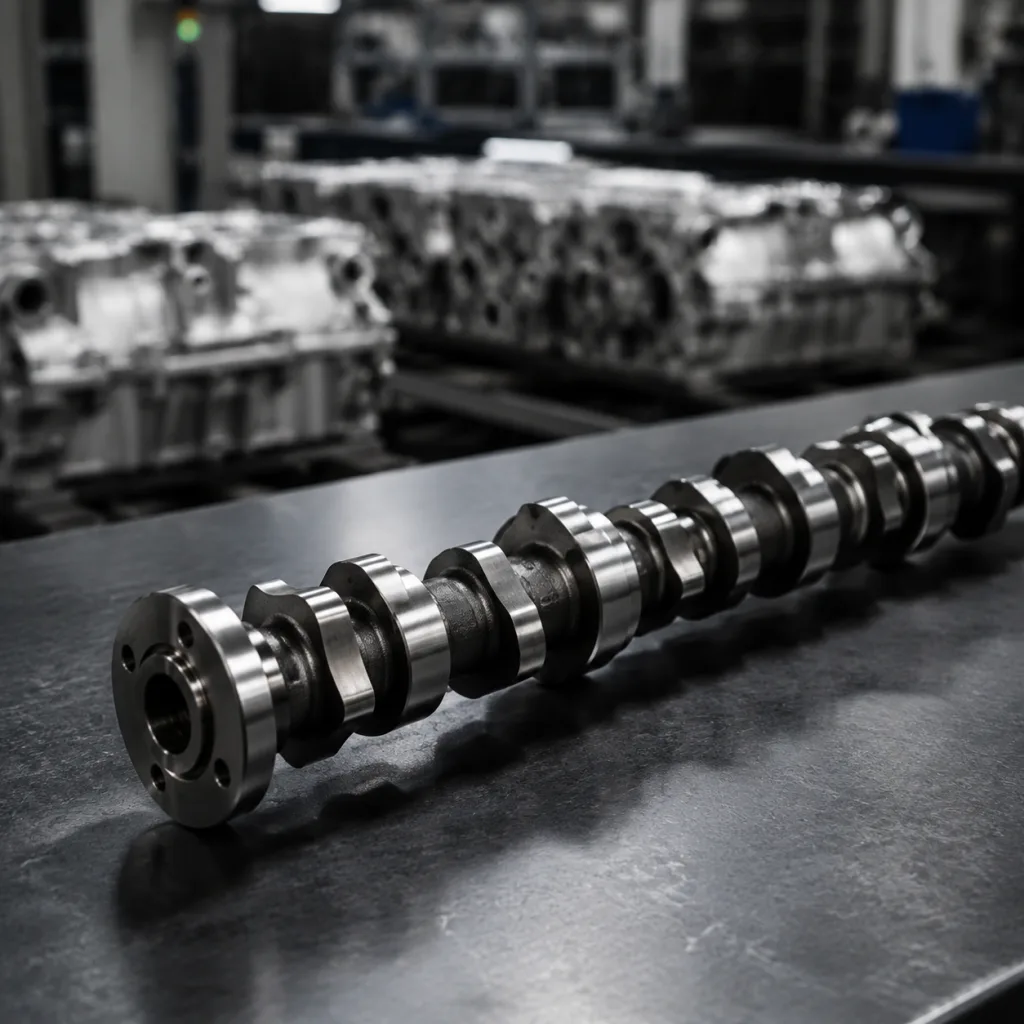
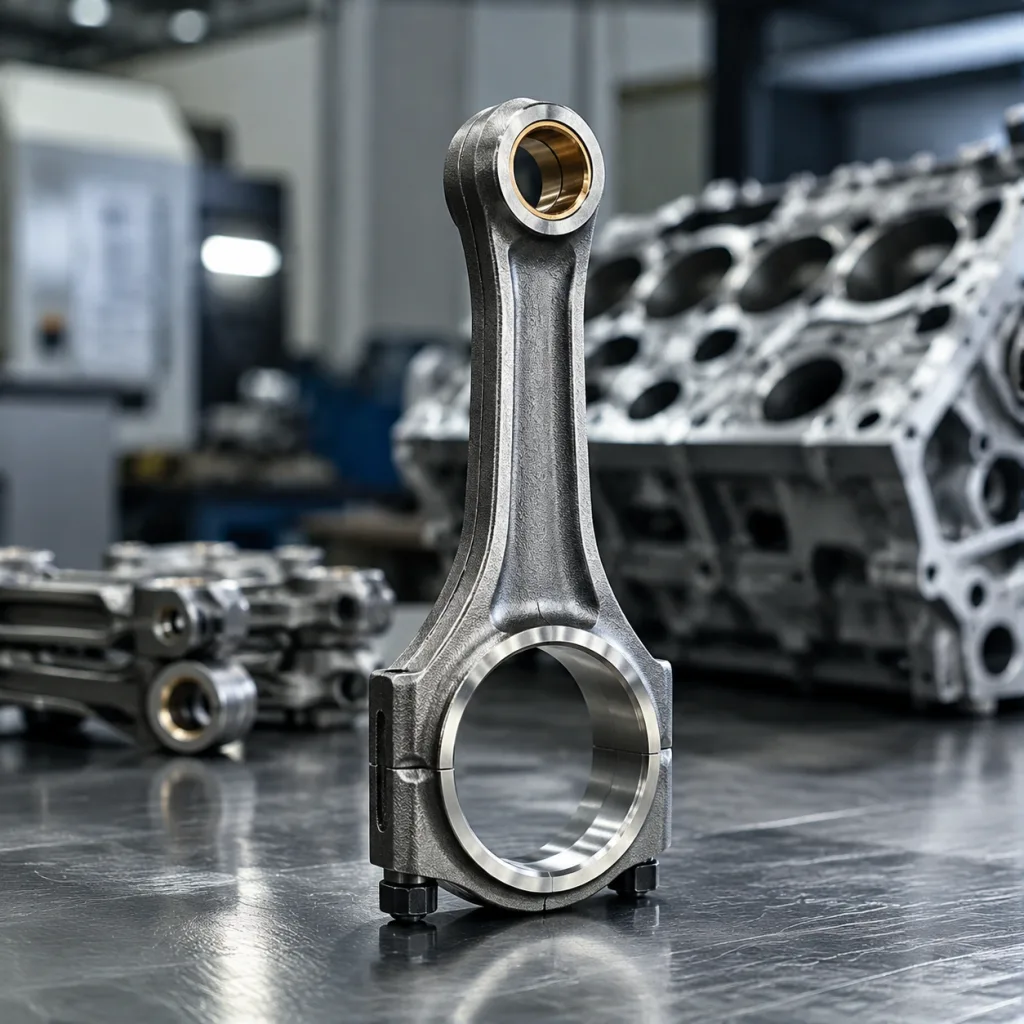
Choosing an engine bearing Acura OEM supplier is not just a matter of matching a part number and negotiating a unit price. Procurement teams need confidence in wall-thickness control, bearing crush, eccentricity, oil-hole geometry, material traceability, lead-time stability, audit support, replenishment planning, and private-label readiness. Driventus supplies engine and powertrain components from Taizhou, Zhejiang, with IATF 16949:2016 and ISO 9001:2015 systems in place for B2B export. For Acura and related Honda-based applications, fitment is checked against OE part-number cross-references where applicable, customer drawings, engine codes, size grades, and sample comparison. Driventus is an independent aftermarket manufacturer; brand names are used for fitment reference only. This guide explains what buyers should verify before awarding supply, which documents to request, how to compare bearing specifications, and how to assess a supplier on both technical and commercial grounds. It is written for sourcing engineers, category buyers, import managers, and aftermarket programme owners serving the EU, UK, US, Canada, Australia, Brazil, and other export markets.
What procurement teams should verify first
When assessing an engine bearing Acura OEM supplier, begin with the control points that influence fit, lubrication, service life, and warranty risk. Engine bearings may look straightforward, but small deviations in wall thickness, crush height, eccentricity, oil-groove geometry, overlay adhesion, or surface condition can quickly affect performance. In production terms, a few microns of wall-thickness variation or an incorrect oil-hole position can change oil clearance, shaft alignment, and hydrodynamic film stability.
Core verification points include:
Material declaration for trimetal or bimetal bearing shells, including steel backing, intermediate lining, and overlay or coating where specified
Dimensional control on wall thickness, bearing crush, eccentricity, free spread, housing bore fit, and calculated oil clearance
Surface finish and overlay consistency across the working face, including burr control at parting lines, oil holes, and chamfers
Backing material, lining material, overlay thickness, plating system, polymer coating, or anti-seizure treatment where applicable
Batch traceability by strip coil, heat lot, plating batch, coating batch, production date, and inspection lot
Packaging suitable for ocean freight, warehouse handling, corrosion protection, and shelf storage
Documented test methods, sampling plans, acceptance criteria, and nonconforming-product controls
Fitment confirmation against OE references, Acura or Honda engine codes, repair size, bearing position, or approved samples
A capable supplier should be able to provide PPAP-style support documents for OEM and Tier-1 programmes, even when full PPAP is not contractually required. Ask for nominal dimensions, tolerance bands, measurement frequency, and the inspection equipment used, such as outside micrometers with ball anvils, bore gauges, profile or contour measuring equipment, surface roughness testers, coating-thickness gauges, hardness testers, and visual inspection aids. For engine bearings, buyers should confirm that every production lot is checked against the control plan, not only first articles or catalogue samples.
It is also important to separate catalogue matching from technical approval. A catalogue cross-reference can point to a likely part family, but release should still include drawing review, sample inspection, packaging review, and fitment confirmation in the target engine family. Where Acura applications share architecture with Honda-based engines, the same discipline applies: confirm the OE number, engine code, production year range, crankshaft journal position, upper/lower shell orientation, oil-hole layout, thrust face requirement, and whether standard or undersize bearings are required.
Driventus can support buyers who need wider engine-family coverage through our catalog and related engine parts at /products/engine-components.html. This gives sourcing teams a way to consolidate bearing requirements with other engine-component lines while keeping technical review tied to each SKU.
Typical bearing specification points for Acura applications
Acura applications commonly use main bearings, connecting rod bearings, thrust washers, and related upper/lower shells. Exact dimensions vary by engine family, crankshaft condition, repair history, market application, and repair size, so each release should be cross-referenced by OE number, engine code, vehicle model range, size grade, and customer sample. For rebuild and aftermarket programmes, buyers should confirm whether demand is for standard size, common undersize crankshaft repair sizes such as 0.25 mm or 0.50 mm where applicable, or a complete engine set packaged for workshop use.
Spec item
What buyers should confirm
Why it matters
Shell construction
Trimetal, bimetal, polymer-coated, or special overlay
Determines fatigue strength, embeddability, conformability, and seizure resistance
Reduces picking, kitting, workshop, and warehouse errors
</tr></thead><tbody> </tbody></table>For Acura and Honda-based engines, fitment review should focus closely on bearing position, shell pairing, and size grading. Upper and lower shells may not be interchangeable, and oil holes or grooves must line up with the block, rod, or crankshaft lubrication path. Buyers should request pack labelling that identifies the supplier part number, OE cross-reference where used, bearing position, quantity per set, production lot, repair size, and grade code if multiple sizes are supplied.
Material selection should reflect the intended channel and engine duty cycle. Trimetal constructions are often chosen where fatigue strength, embeddability, and seizure margin are priorities, especially for higher-load engines or rebuild channels where crankshaft condition may vary. Bimetal constructions may suit cost-sensitive aftermarket applications when the load profile and customer specification allow. Polymer-coated or special-surface versions may reduce start-up wear or improve boundary lubrication in specified programmes, but they should be validated against drawings, bench checks, or customer approval requirements rather than treated as a universal upgrade.
Where needed, Driventus can align dimensional targets to customer drawings and support private-label programmes through custom manufacturing. For regulatory and chemical compliance, request declarations aligned to REACH (EC) No 1907/2006 for the European market, and confirm any additional importer requirements for labelling, packaging materials, corrosion inhibitors, restricted substances, or country-of-origin marking before production release.
How Driventus supports B2B sourcing
Driventus is built for export procurement rather than retail fulfilment. That distinction matters for buyers managing forecast volatility, container consolidation, multi-SKU replenishment, carton standardisation, and audit follow-up. An engine bearing Acura OEM supplier needs to support the commercial rhythm of B2B sourcing as well as the dimensional discipline required for precision bearing shells.
Key supply-side points:
Factory location: Taizhou, Zhejiang, China
Business model: vertically integrated manufacture of engine and powertrain components
Programme support: sample orders, pilot batches, volume supply, private-label packaging, and export documentation
For engine bearings, buyers typically look for consistent lead time, controlled minimum order quantities, stable pack formats, and recurring SKUs that can be managed through replenishment plans. Driventus can quote at sample, pilot, and volume stages, then scale after validation. A typical sourcing path starts with OE reference or sample confirmation, moves into dimensional and material review, proceeds to sample approval, and then converts into batch production with agreed inspection records, labelling, carton marking, palletisation, and shipping terms.
Driventus can also help procurement teams rationalise related engine-component demand. Instead of qualifying a bearing line in isolation, importers often review the programme alongside pistons, rings, gaskets, valve train parts, timing components, oil pumps, or other engine repair items. Consolidating compatible categories can reduce supplier-management workload and freight complexity, while each critical part still keeps its own inspection plan, approved sample, revision record, and lot-traceability method.
If your programme includes multiple engine families, the buying team can request a consolidated package through request a quote and map it against our catalog. To accelerate quoting, provide the OE reference, Acura or Honda engine code, required bearing position, standard or undersize requirement, target annual volume, destination market, preferred Incoterm, packaging format, and any drawing, PPAP, labelling, or compliance requirements.
Audit, traceability, and validation expectations
A credible bearing supplier should be ready for desktop review and, where required, on-site audit. For importers and programme managers, audit readiness is not limited to certificates. The real question is whether the supplier can show how a bearing lot was specified, produced, inspected, packed, shipped, and traced after delivery. The review should connect the control plan to actual production records, measurement data, retained samples, and corrective-action discipline.
Documents procurement should ask for
ISO 9001:2015 certificate and scope
IATF 16949:2016 certificate and scope where applicable
Material declaration and REACH statement
Drawing, OE cross-reference, approved sample record, and revision status
Dimensional inspection report with measured values for critical characteristics, not only pass/fail status
Surface finish, hardness, coating thickness, overlay, adhesion, or material test data where specified
Packaging specification, corrosion-protection method, carton marking, barcode, and labelling format
Lot traceability method, including batch code, production date, material lot, and inspection lot control
Complaint response, containment, 8D or corrective-action procedure, replacement policy, and retained-sample process
For validation, bearing buyers typically review:
1. Dimensional inspection against drawing, approved sample, or OE reference 2. Visual inspection for burrs, scoring, plating defects, edge damage, oil-hole blockage, and contamination 3. Fitment confirmation in the target Acura or Honda-based engine family 4. Assembly checks for bearing crush, cap seating, torque sequence, free rotation, and side-clearance where applicable 5. Oil clearance, oil pressure, lubrication path, and crankshaft journal contact pattern after assembly 6. Used-part inspection after mileage accumulation, dyno testing, or bench validation where the programme requires it 7. Packaging, anti-corrosion protection, carton compression strength, and label durability during transit and storage
The strongest supplier evaluations connect documents with physical samples. For example, an inspection report should correspond to the sample lot received, and the batch code on the bearing package should make that link clear. If the buyer later reports noise, seizure, abnormal wear, low oil pressure, or installation difficulty, the supplier should be able to identify the affected lot, compare retained samples where available, review inspection records, and support root-cause analysis rather than treat the claim as a generic replacement request.
Driventus does not claim vehicle manufacturer approval or endorsement. Driventus is an independent aftermarket manufacturer; brand names are referenced for fitment only. For programmes that need non-standard materials, special coating, laser marking, anti-counterfeit packaging, or packaging changes, custom manufacturing is available subject to technical review, feasibility confirmation, tooling status, and minimum order quantity.
Commercial terms that matter in supplier selection
For a sourcing decision, product quality and commercial control need to be evaluated together. Engine bearings are precision parts with small unit dimensions, but a programme can involve many SKUs, repair sizes, pack formats, size grades, and destination-market requirements. A supplier that appears cheaper on unit price may create higher total cost through sorting work, fitment disputes, slow claims handling, relabelling, mixed-size inventory, or urgent air freight.
Commercial terms to confirm before award include:
MOQ: confirm by SKU family, bearing size, repair size, and pack type, not only by total order value
Lead time: separate sample, pilot, repeat-order, tooling, and mass-production commitments
Incoterms: clarify EXW, FOB, CIF, DAP, or DDP at quote stage where applicable
Packaging cost: confirm whether private label, barcode, inserts, VCI or anti-corrosion material, and special cartons are included
Documentation cost: clarify whether inspection reports, compliance declarations, PPAP files, or special certificates affect pricing
A supplier with controlled process capability can reduce hidden cost by lowering returns, sorting time, emergency freight, customer-service escalation, and inventory quarantine. For import managers, that often matters more than a small unit-price difference. When comparing quotes, make sure the bearing set includes the same components, same shell construction, same coating or overlay, same repair size, same size grade, same labelling, and same pack count across all offers.
Buyers should also pay attention to how the supplier communicates during quote and sampling. Clear responses on dimensions, tolerances, material system, application limits, pack quantities, revision control, and lead times are often a good indicator of how the supplier will behave after the first order. For recurring Acura engine bearing programmes, ask whether the supplier can support rolling forecasts, mixed-SKU shipments, export carton standardisation, repeatable production windows, and batch-level traceability on repeat orders.
If your team is benchmarking multiple sources for engine bearings, Driventus can provide a structured quotation and sample plan via request a quote. Share the OE reference, target Acura application, engine code, required bearing position, standard or undersize requirement, estimated annual volume, packaging expectations, destination market, and any audit or compliance requirements so the quotation can be evaluated on a like-for-like basis.
Frequently asked questions
Yes. Driventus supplies engine bearing programmes for export B2B customers. Fitment is verified by OE cross-reference, Acura or Honda engine application, engine code, customer drawing, size requirement, or sample comparison, subject to sample approval and technical review.
Ask for dimensional inspection data with measured values, material declaration, REACH statement, certificate copies for IATF 16949:2016 and ISO 9001:2015, packaging details, labelling format, and lot traceability information.
Yes. Driventus supports custom manufacturing for specified dimensions, repair sizes, coatings, laser marking, packaging, carton marking, and labelling, subject to feasibility review and minimum order quantity.
If you are qualifying a new source for engine bearings, share the OE reference, engine code, bearing position, standard or undersize requirement, target volumes, destination market, and packaging requirements, and we will prepare a technical quote. Start here: /contact.html