EGR valve · 2026-06-02

EGR Valve Peugeot Wholesale: Supplier Buying Guide

Wholesale buyers of Peugeot EGR valves need more than a matching catalogue image and a low unit price. The real controls are fitment accuracy, calibrated actuator behaviour, sealing integrity, document control, and reliable replenishment. A valve may look right for a Peugeot application and still create commercial problems if the connector keyway, pin count, flange flatness, valve stroke, gasket stack-up, cooler interface, or diagnostic response differs from the target part.

For distributors, repair chains, fleet service networks, and importers, the stronger question is not just whether one valve fits one Peugeot vehicle. It is whether the supplier can repeat that fitment across production batches, packaging formats, and destination-market requirements. Driventus is an independent aftermarket manufacturer; Peugeot and other brand names are referenced for fitment identification only. If you are comparing sources for egr valve peugeot wholesale supply, the checks below will help you separate a basic line item from a controlled sourcing programme.

Why Peugeot EGR valves are a wholesale category

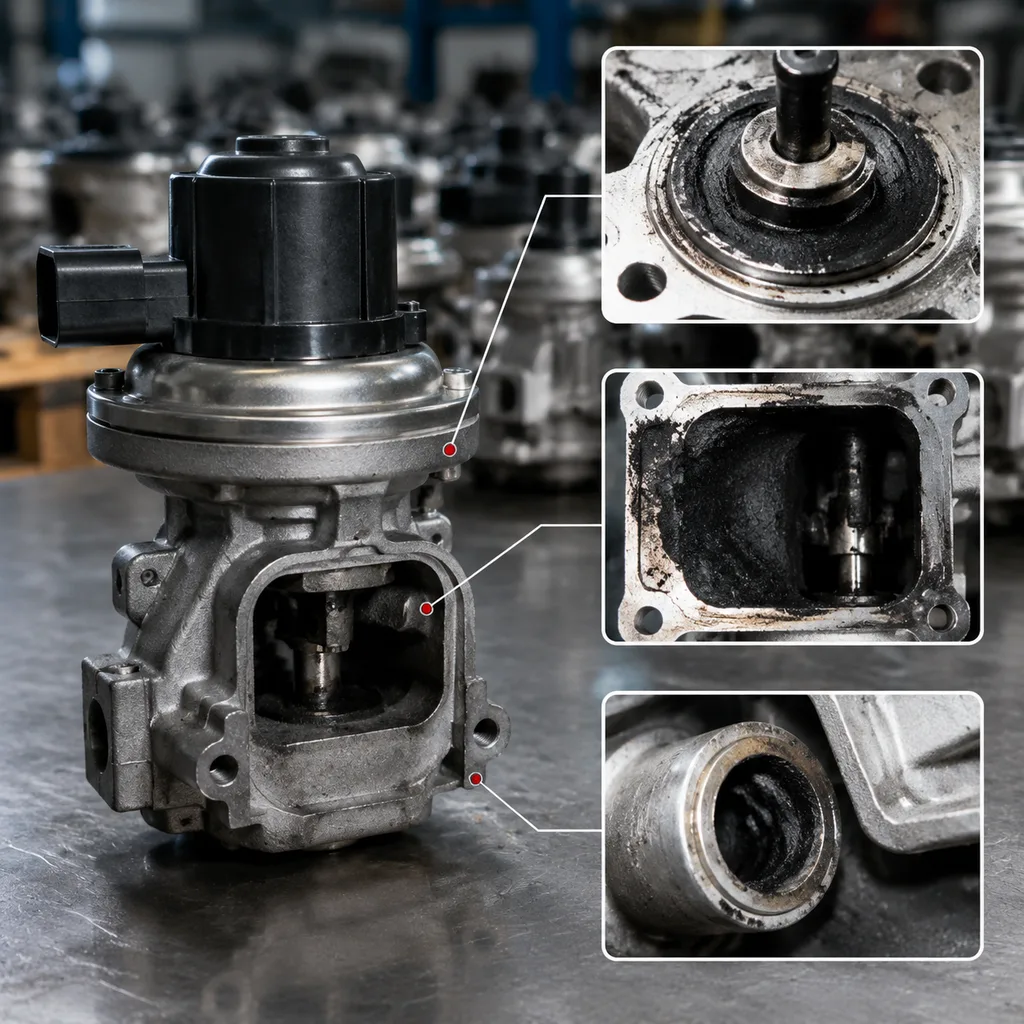
EGR valves are not generic wear items. They work in a hot, soot-laden exhaust gas path and must meter recirculated gas accurately enough for the ECU to manage combustion temperature, NOx formation, boost response, and diagnostic feedback. On many Peugeot diesel applications, especially high-mileage 1.4 HDi, 1.6 HDi, 2.0 HDi, and related PSA engine families, EGR valves are bought as planned replacement stock for garages, fleet maintenance, regional distributors, and parts counters rather than as one-off emergency purchases.

For wholesale procurement, the commercial logic is straightforward:

  • Demand repeats across common diesel platforms and a high-mileage vehicle parc.
  • Failure symptoms are familiar: rough idle, hesitation, loss of power, excessive smoke, limp-home mode, increased fuel consumption, and EGR-position or airflow-related DTCs.
  • Workshops prefer valves that install without reworking the gasket face, harness routing, cooler pipe, or mounting bracket.
  • Fitment errors are costly because a wrong valve can lead to repeat labour, scan-tool complaints, warranty claims, stock returns, and lost workshop confidence.

That is why an egr valve peugeot wholesale programme should be managed as a controlled engine-component category, not as a loose group of similar castings. Many Peugeot applications share family-level design cues, but engine code, Euro emissions generation, cooler layout, electrical connector, vacuum diaphragm, bolt pattern, bypass pipe, and flange geometry can make two valves non-interchangeable. A supplier that treats the part as a simple metal housing may miss the details that decide sell-through and claim rate.

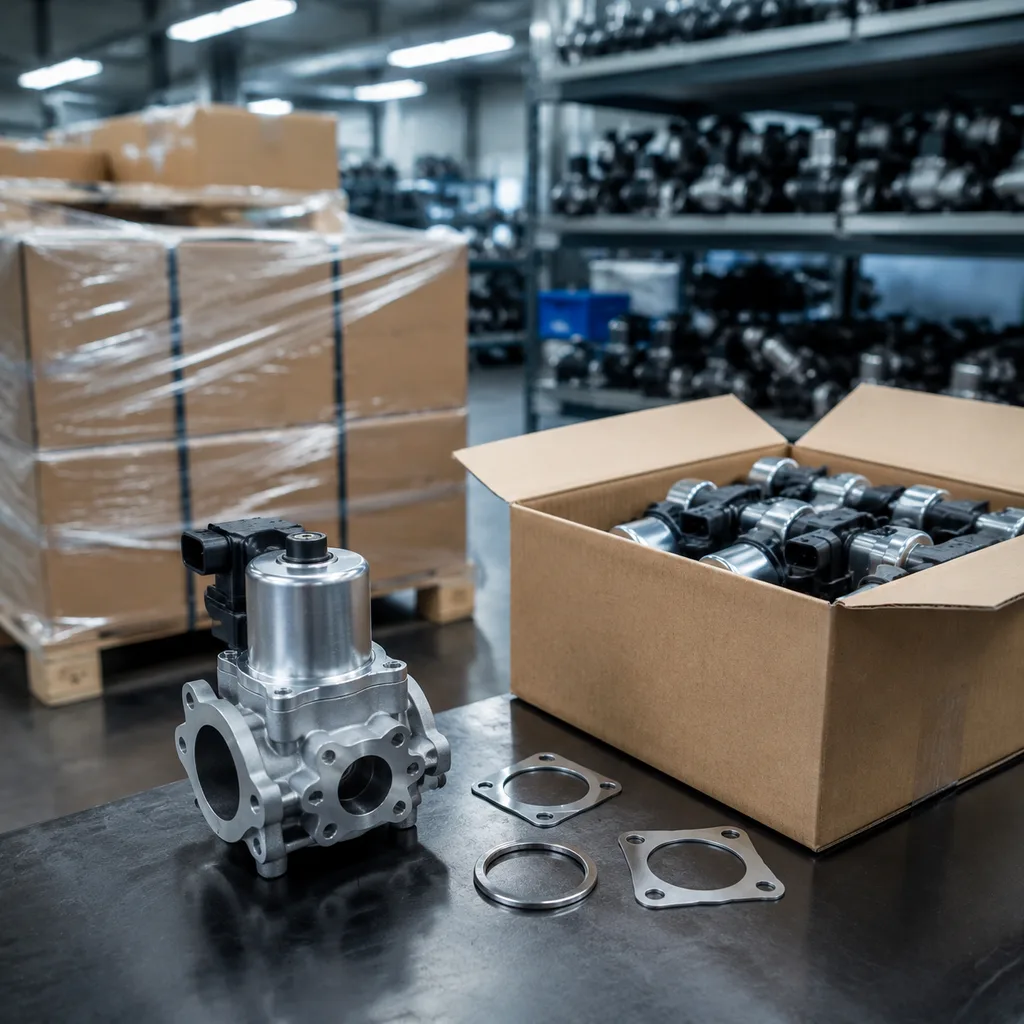
A dependable programme should include stable tooling, batch traceability, controlled packaging, clear OE-reference and TecDoc-style application data, and a parts list that can be matched to the target application without guesswork. Buyers should also check small but operationally important points: whether the gasket is included, whether screws or clamps are supplied, whether ports and connectors are capped, whether the label carries the internal part number and lot code, and whether the production version matches the approved sample. Related sourcing lines are listed in our catalog and engine components.

What buyers should verify before placing a bulk order

Before committing to a wholesale order, ask for the same technical evidence your engineering or quality team would expect for any controlled emissions-related engine component. EGR valves affect intake oxygen content, exhaust-gas recirculation rate, combustion temperature, and ECU plausibility checks, so a visual match is not enough. For Peugeot applications, the minimum check set should include:

  • OE or aftermarket cross-reference numbers, vehicle model, production year range, engine code, and emissions standard where available
  • Mounting pattern, flange shape, bolt spacing, port diameter, gasket interface, and sealing-face condition
  • Electrical connector type, pin count, terminal layout, keyway position, latch orientation, and harness exit direction
  • Actuation method: DC motor, stepper motor, position-sensor electric actuator, vacuum diaphragm, pneumatic-assisted design, or integrated cooler/valve assembly
  • Valve stroke/travel range, return behaviour, end-stop position, and actuator response curve where data is available
  • Seat and pintle geometry, soot-path cross-section, anti-sticking design, shaft sealing, and internal surface finish
  • Housing material such as aluminium alloy, cast iron, stainless steel, or mixed assembly; plus seal material such as FKM or high-temperature silicone where specified
  • Cooler, pipe, bypass, or throttle-body interface if the valve is supplied as part of a larger assembly
  • Dimensional report for critical interfaces, especially flange flatness, bolt-hole position, port alignment, and connector envelope
  • Sample photos of the exact production version, not only a catalogue reference image
  • Included accessories such as gaskets, O-rings, clips, screws, caps, clamps, or protective plugs
  • Labelling, barcode format, inner box, master carton, carton drop protection, and pallet format for warehouse intake

If the valve is intended as an OE-equivalent replacement, ask for cross-reference confirmation by VIN range, engine code, application list, or original part-number reference instead of relying on a short sales description. The Peugeot nameplate covers multiple PSA engine variants, intake layouts, Euro 4/Euro 5/Euro 6 emissions stages, and regional specifications. Those differences often appear at the connector, flange, cooler pipe, gasket land, actuator calibration, or mounting bracket.

For first orders, a sample approval step is worth the time. Inspect the sample against the target vehicle or reference unit, check installation clearance, confirm connector engagement, compare gasket compression area, and confirm scan-tool behaviour where possible. If the application requires ECU adaptation, DTC clearing, or relearn after installation, record that information for your workshop customers. Keep the approved sample, photos, inspection sheet, and packaging specification on file so later replenishment orders can be checked against the same baseline.

Wholesale supply options compared

The right supply model depends on channel mix, inventory strategy, target margin, service expectations, and return tolerance. Some buyers need fast-moving standard replacement units for broad distribution. Others need a private-label line with defined carton dimensions, local-language labels, EAN/UPC barcodes, or marketplace-ready packaging. The comparison below is a practical starting point for buyers managing Peugeot EGR inventory.

</tr></thead><tbody> </tbody></table>For most wholesale buyers, an aftermarket equivalent is the practical baseline. It can provide repeatable availability without core-return uncertainty, and it gives distributors a clearer landed-cost structure. The supplier still has to be qualified on fitment evidence, dimensional controls, leakage testing, actuator movement verification, sample retention, and production consistency rather than on the lowest quoted price alone.

A remanufactured unit can work in markets where core logistics are mature and customers accept remanufactured positioning. The buyer, however, should define core acceptance rules, cleaning standards, wear limits, electronic-actuator test criteria, and warranty boundaries. OE-service sourcing can cover special applications or urgent gaps, but it is rarely the most flexible option for a long-running wholesale programme.

A custom programme becomes more attractive when you need branded cartons, local-language installation notes, marketplace labels, GS1-compatible barcode rules, a defined gasket kit, or a fixed packing quantity for warehouse operations. It can also help when the buyer wants one consistent product presentation across multiple Peugeot engine-component lines. Driventus supports custom manufacturing when the market needs more than a standard shelf part.

Compliance and quality documents that matter

Procurement teams should treat documentation as part of the product. For egr valve peugeot wholesale supply, paperwork is not just a customs formality or an internal record. It is evidence that the supplier controls materials, dimensions, functional testing, traceability, and packaging across repeated shipments. A workable wholesale file should include production controls aligned with ISO 9001:2015 and, where the programme requires automotive-sector process discipline, IATF 16949:2016. Material declarations should support REACH (EC) No 1907/2006 and RoHS-style restricted-substance screening where electronic content is present or where the destination customer requires it.

Useful documents include:

  • Certificate of conformity for the shipped batch, showing supplier part number, lot number, quantity, and shipment date
  • Dimensional inspection report for critical mounting, sealing, connector, and port interfaces
  • Batch or lot traceability record linking cartons to production date, operator or line record, and inspection status
  • Material declaration for housing metal, shaft, valve plate, seals, plastics, electronics, plating, coatings, and surface treatments
  • Packaging specification covering inner box, master carton, pallet pattern, protective caps, anti-vibration support, and moisture control where needed
  • Functional test summary covering leakage, valve actuation, position feedback, response, vacuum integrity, or endurance depending on design type
  • Incoming quality or PPAP-style sample approval record for new part numbers where the buyer requires formal release
  • Label artwork, barcode confirmation, and carton marking rules for warehouse and marketplace systems

For an electronically actuated EGR valve, reasonable release checks include connector continuity, motor movement, position-sensor signal plausibility, stroke verification, and closed-seat leakage. For vacuum-actuated valves, request vacuum-hold and diaphragm movement checks. For sealing interfaces, buyers commonly ask for 100% or sampling-based leak checks and a dimensional-control plan for the machined faces. Exact test limits should be agreed by part number because valve size, actuation type, and OE design vary.

If the buyer needs emissions-related supporting evidence, ask how the part is validated against the target application and whether the vehicle application falls under UN/ECE R83 or equivalent regional emissions requirements. For corrosion-sensitive brackets, fasteners, and external housings, some buyers request cyclic corrosion or salt-spray evidence; methods such as SAE J2527 or ISO 9227 may be relevant depending on the customer specification. For electronics and connectors, ask how the supplier controls terminal retention, connector fit, insulation resistance, vibration exposure, and actuator signal response before release.

The point is simple: the supplier should be able to demonstrate process control, not only make a sales claim. Documents should match the specific production batch, part number, and packaging format being supplied. If a supplier cannot connect the inspection report, carton label, and lot number, warranty analysis becomes slow and uncertain when a field issue occurs. More detail is available in our quality system.

How Driventus supports wholesale buyers

Wholesale buyers usually need a supplier that can handle both standard replenishment and application-specific exceptions. Driventus supports that model with controlled production, application review, document support, and packaging options for different sales channels. The aim is to help buyers build a repeatable Peugeot EGR valve line that moves through warehouse intake, counter sales, workshop installation, and reorder planning with fewer avoidable claims.

Typical sourcing steps are:

1. Confirm vehicle model, production range, engine code, OE or aftermarket cross-reference number, actuation type, and target market. 2. Match the part against the fitment list, technical drawing, approved sample, or reference unit. 3. Review connector, flange, gasket, cooler pipe, actuator, port orientation, and accessory requirements before sampling. 4. Inspect and approve sample units before mass-order release, including visual, dimensional, and functional checks where required. 5. Define inner carton quantity, label format, barcode rules, master carton strength, pallet height, pallet mix, and protection for connectors and actuators. 6. Confirm documentation requirements, including certificate of conformity, lot traceability, dimensional report, material declaration, and functional test summary. 7. Set reorder points, forecast windows, and shipment timing to protect warehouse continuity.

If an exact Peugeot application is not already in stock, the sourcing team can review drawings, sample photos, OE reference numbers, competitor samples, or buyer-supplied technical data through custom manufacturing. For established part lines, the goal is usually more direct: keep the specification stable, reduce returns, protect margin, and avoid stock-outs through predictable supply.

Driventus can also support buyers who need channel-specific presentation. A distributor may need plain bulk cartons for efficient storage, while a repair-chain programme may require branded boxes, scannable labels, consistent gasket packs, and installation-note inserts. Importers may need conformity documents, material declarations, and carton-marking files prepared before shipment for customs clearance and internal quality records. Aligning these details before production helps prevent relabelling, repacking, and release delays after the goods arrive.

If you need to start a quotation, use request a quote and include the Peugeot application, engine code or cross-reference number, annual volume, destination market, packaging preference, and document requirements. For catalog navigation, our catalog is the fastest entry point.

Frequently asked questions

Match the valve to the vehicle application, production range, engine code, OE reference, connector type, pin count, flange shape, gasket interface, actuator design, and any cooler or pipe connection. For bulk buying, request photos of the exact production version, dimensional data, cross-reference confirmation, and a sample before release. VIN-based or engine-code confirmation is safer than relying on a short sales description.

Yes. Packaging, carton quantity, barcodes, label content, accessory kits, protective caps, master carton strength, and pallet format can be specified for wholesale channels. This is useful for distributors, importers, and repair chains that need warehouse-ready EGR valves rather than standard retail packs.

At minimum, ask for a certificate of conformity, lot traceability, dimensional inspection data, and a packaging specification. Depending on the programme, you may also request material declarations, label confirmation, and functional test summaries covering leakage, actuation, position feedback, vacuum integrity, response, or durability.

If you need a controlled Peugeot EGR supply line with fitment checks, batch traceability, functional testing, and wholesale packaging support, send the application details and volume target through [request a quote](/contact.html).

Request a Quote
Supply model Best for Main advantage Main trade-off
Aftermarket equivalentDistributors, workshops, fleet service networks, and importersLower landed cost, scalable replenishment, no core collection, flexible packagingFitment data, functional testing, and batch consistency must be verified carefully
Remanufactured unitPrice-sensitive markets and repair channels with reliable core accessUses an existing core body and may reduce raw-material inputCore quality varies, supply depends on returns, cleaning quality is critical, and claims handling can be complex
OE-service sourcingChannels that require OE-box supply where availableStrong brand recognition and high fitment confidenceHigher cost, limited margin control, restricted availability, and less packaging flexibility
Custom programmePrivate label, regional distributors, buying groups, and large repair chainsControl over label, accessory kit, barcode, carton strength, palletisation, and specificationHigher setup effort, sample approval time, forecast discipline, and MOQ management