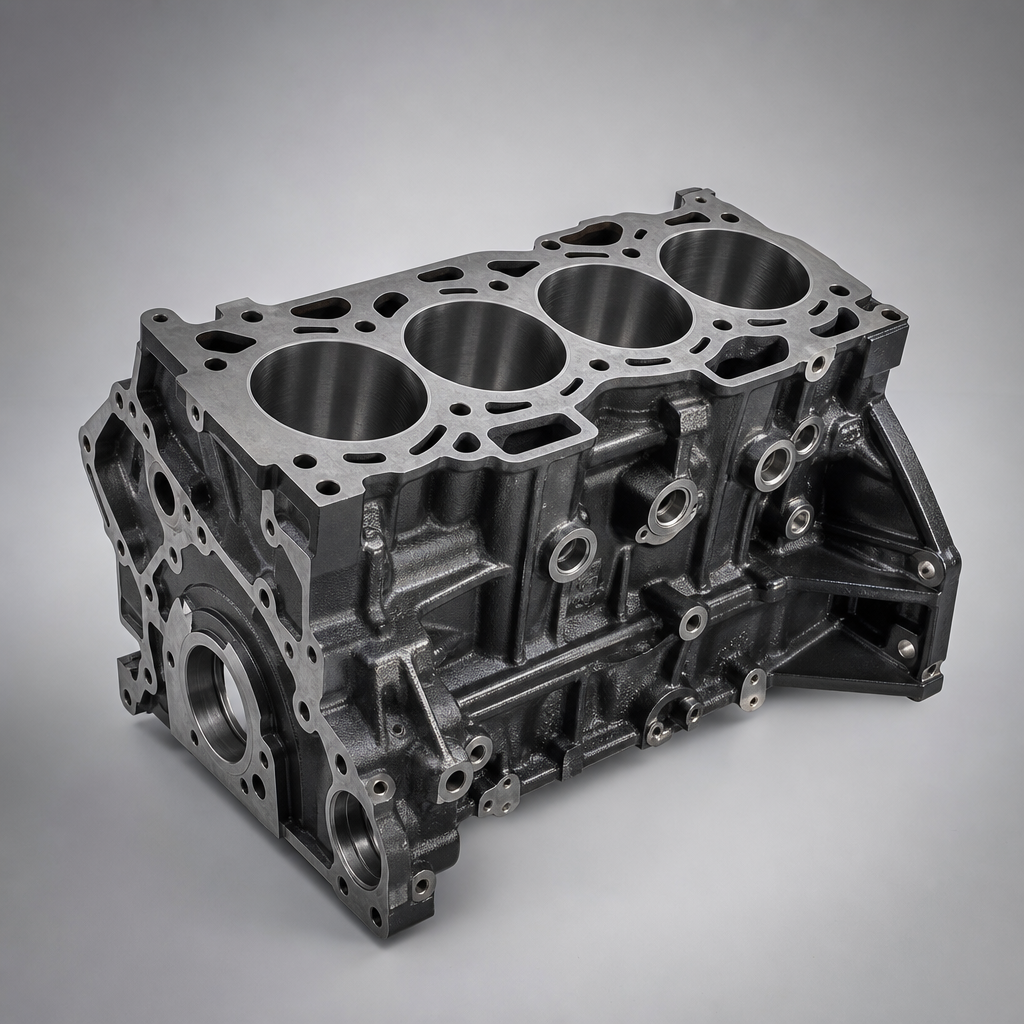
EGR valves live in a hot, wet, soot-heavy path. That makes material choice a reliability decision, not a line-item price decision. In an EGR valve material grade comparison, the wrong alloy can raise leakage risk, accelerate seat wear, promote spindle seizure, and shorten actuator life long before the part looks damaged. The right grade depends on duty cycle, coolant strategy, fuel quality, mounting location, and whether the part is meant to match OE durability or hit a tighter aftermarket cost target. Driventus is an independent aftermarket manufacturer; brand names are referenced for fitment only. We build EGR-related engine components under IATF 16949:2016 and ISO 9001:2015 controls, and we support buyers who need repeatable chemistry, dimensional stability, and documented test data. This guide focuses on the decisions that actually move failure rates and landed cost.
Start With the Failure Mode, Not the Alloy
Material choice in EGR service is driven by failure mode. A housing that survives temperature may still fail from chloride attack. A spindle that resists corrosion may still gall if surface finish and bushing material are weak. That is why the first question is not "which grade is strongest?" It is "what usually fails first in this application?"
Use this decision frame:
Heat first: peak temperature, thermal cycling, and soak time
Motion first: seat wear, spindle friction, and actuator load
Manufacturing first: castability, machinability, weldability, and scrap risk
Validation first: leak limit, corrosion basis, and traceability requirements
The same valve may need different grades for the body, seat, spindle, fasteners, and cover. A usable supplier response names each one explicitly.
Material Grades Side by Side
Material grade
Typical use in EGR valve
Strength and heat behavior
Corrosion resistance
Buyer note
Grey cast iron
Body on cost-sensitive or heavy-duty designs
Good stiffness, moderate heat tolerance
Fair to poor in wet exhaust service
Low cost, but sealing faces need tight machining control
Ductile iron
Body and housing on higher-load designs
Better toughness than grey iron
Moderate with suitable coating
Often the better cast choice when vibration and shock matter
Stainless steel 304
Tubes, flanges, some internal hardware
Good general heat resistance
Good in many exhaust environments
A common baseline, but not the best answer in chloride-heavy service
Stainless steel 316
Fasteners, sleeves, wetted hardware
Similar heat behavior to 304
Better pitting resistance than 304
Often worth the premium in severe-duty mounting locations
Stainless steel 409
Exhaust-side housings and ducts
Strong high-temperature oxidation resistance
Moderate
Useful where cost and heat resistance must be balanced
Aluminium alloy
Actuator housings, non-hot-side covers
Light, easy to machine
Limited for direct exhaust exposure
Keep it away from the hottest gas path
High-nickel alloy
Seats, stems, local hot-zone parts
Strong at elevated temperature
Good in aggressive service
Justified when failure cost outweighs material premium
</tr></thead><tbody> </tbody></table>For procurement, the real comparison is not raw strength. It is which grade meets the duty cycle with the least risk after machining, coating, scrap, and validation.
Where Each Grade Breaks Down First
Every material has a predictable weak point. Buyers who know the first failure location usually avoid overpaying for blanket upgrades.
Body and flange
Grey cast iron can crack when thermal gradients are sharp or when porosity sits around threaded bosses. Ductile iron handles vibration and impact better, so it is usually the safer cast option when the part sees repeated shock.
Seat and sealing face
Soot loading can scar the seat or leave deposits that stop full closure. If leakage control is tight, look for stainless inserts or hard-facing instead of assuming the base casting will carry the load alone.
Spindle and moving parts
A spindle can seize even when the alloy itself is sound. Galling, finish quality, bushing choice, and coating stack all matter. Material grade helps, but it does not replace tribology.
Fasteners and springs
Fasteners often fail from corrosion before the main body shows trouble. In low-mounted parts or splash-prone installations, 316 can be a rational upgrade over 304.
Driventus can build to drawing, match OE-style interfaces, and support custom manufacturing when a programme needs grade changes for local duty conditions.
Spec Sheet Checks Buyers Should Not Skip
A useful supplier spec sheet should go beyond a generic alloy name. Ask for the details that prove the part can be repeated in production, not just sampled once.
Exact grade designation and standard reference
Chemistry range for melt or bar stock, where applicable
Heat treatment or normalising condition
Coating type, thickness, and adhesion method
Hardness range for wear surfaces
Dimensional tolerance on sealing faces and bolt patterns
Leak-test method and acceptance limit
Salt spray or corrosion test basis, if claimed
Traceability method by batch or heat number
Management-system evidence matters too. Ask for IATF 16949:2016 and ISO 9001:2015 status. For EU supply chains, confirm REACH (EC) No 1907/2006 compliance. For emissions-related validation, ask whether the test plan aligns with applicable vehicle- or system-level requirements such as ECE R-83 where relevant. If corrosion durability is being compared, SAE J2527 is a common reference, but it should match the actual environment rather than serve as a standalone approval claim.
OE Replacement, Aftermarket Cost-Down, or Regional Duty Package?
Material decisions change with the programme objective. A part that is acceptable for catalog replacement may not be acceptable for a long-life OE-style build, and the reverse is also true.
Use this three-way split when comparing bids:
1. OE-equivalent replacement: keep housing alloy, sealing material, and coating stack aligned with the validated design. 2. Cost-optimised aftermarket: allow controlled substitutions only after thermal, corrosion, and leak validation. 3. Regional duty package: adapt material choice for fuel sulfur, climate, road-salt load, and vehicle age profile.
That framework keeps the discussion on performance instead of preference. For catalog work, see our catalog and the broader engine components range. For supplier controls, review the quality system.
Buyers’ Quick Answer: Which Grade Fits Which Job?
If the goal is fast screening, this is the shortest practical answer.
Grey cast iron: acceptable when cost matters most and the duty cycle is controlled
Ductile iron: better for housings that need toughness and crack resistance
304 stainless: a reasonable general-purpose choice in moderate exhaust environments
316 stainless: stronger choice when corrosion risk is elevated, especially with chlorides
409 stainless: useful for hot exhaust-side structures where oxidation resistance matters more than wet corrosion
Aluminium alloy: suitable for non-hot-side covers and actuator housings only
High-nickel alloy: reserve for seats, stems, and other local hot spots where failure is expensive
That list is only a starting point. The final answer still depends on geometry, coating, and validation data.
Bottom Line for Sourcing Teams
The most useful EGR valve material grade comparison ties alloy choice to the actual failure mode and duty cycle. Stainless steel is not a universal fix. Cast iron is not automatically a problem. What matters is where heat peaks, where condensate sits, how much soot passes through the valve, and how tightly the assembly must hold its seal over time.
The main sourcing risk is incomplete specification. Require the grade, the coating, the tolerance, and the test basis in writing before sampling. That reduces redesign churn and prevents mixed-batch supply later in the programme. Driventus is an independent aftermarket manufacturer; brand names are referenced for fitment only.
Frequently asked questions
There is no single best choice. Stainless steel grades perform well in hot and corrosive zones, while ductile iron is often better for robust, cost-controlled housings. Durability depends on the full material stack and duty cycle.
Yes, but usually only on non-hot-side covers or actuator housings. Aluminium is not suitable for direct exhaust-gas exposure because it loses strength too early in the thermal cycle.
Ask for the material grade, coating specification, dimensional tolerance, leak-test method, traceability, and management-system evidence such as IATF 16949:2016 or ISO 9001:2015. For EU supply, confirm REACH (EC) No 1907/2006 status.
Review your target application, then compare material and validation data against the vehicle duty cycle. You can start with [request a quote](/contact.html).