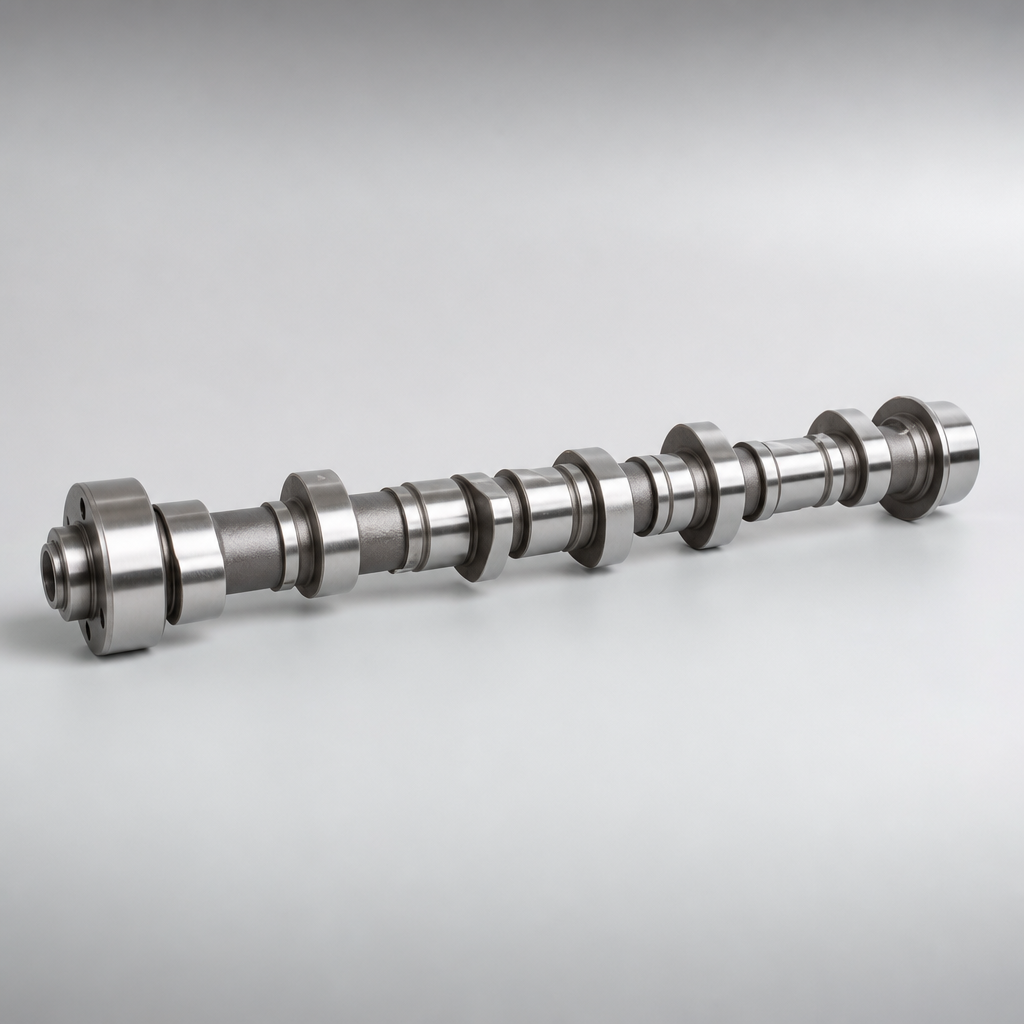
Crankshaft Bearing Wear Rod Bearing: Symptoms and Inspection
Crankshaft bearing wear is often diagnosed only after a rod bearing has already started to damage the engine. For procurement teams, rebuilders, and remanufacturing operations, the issue is not just a worn shell. It is a failure chain that starts with lubrication, clearance, or alignment and ends with a decision: repair the journal, replace the shell, or reject the assembly. This article breaks down how crankshaft bearing wear rod bearing failures develop in service, how to separate symptoms from root causes, and what inspection data actually supports a buying or rebuild decision. Driventus is an independent aftermarket manufacturer; any brand names mentioned are for fitment reference only. Our parts are supplied to B2B buyers who require consistent dimensions, documented material control, repeatable quality, and sourcing terms that can be planned against volume, lead time, and target price under IATF 16949:2016 and ISO 9001:2015 processes.
What the Wear Pattern Is Telling You
Crankshaft bearing wear and rod bearing damage usually move through the same sequence: oil film loss, local heat, then overlay failure. The useful question is not whether the bearing looks worn. It is what the wear pattern says about the rest of the rotating assembly.
Common field symptoms include:
Low hot oil pressure at idle, often below the engine builder’s minimum specification by 5-10 psi depending on viscosity and idle speed
Knock that becomes more noticeable with load or engine speed, especially through the 1,500-3,000 rpm transition
Metallic debris in the sump or oil filter, including non-ferrous flakes from overlay loss
Copper- or lead-colored material in drained oil or on shell surfaces
Scoring on crank journals after teardown, usually as longitudinal lines in the direction of rotation
Uneven wear across one or more rod bearing shells, including edge polishing on only one side
A rod bearing rarely fails in isolation. When one journal is damaged, inspect the matching crankpin, nearby main bearings, oil galleries, and oil pump before approving a shell-only replacement. That broader check is what separates a short-term correction from a rebuild that will actually stay in service.
Failure Modes and Root Causes
The bearing is usually the victim, not the original fault. That matters in sourcing and remanufacturing because the replacement part has to match the corrected system condition, not just the nominal size on the box.
Cause
Typical effect
What to verify
Oil contamination
Abrasive scoring and rapid overlay loss
Filter condition, sludge, coolant traces, and debris source; particle contamination above 10-25 micron can accelerate wear quickly in high-load service
Incorrect clearance
Heat, wiping, and accelerated wear
Journal diameter, housing bore, and bearing thickness; many rebuild programmes target clearance within roughly 0.0015-0.0030 in, but the exact limit must follow the engine specification
Oil starvation
Local discolouration, wiping, or seizure
Pump output, pickup screen, relief valve, and galleries; low pressure at operating temperature matters more than cold-start pressure
Misalignment
Edge wear concentrated on one side of the shell
Rod big-end roundness, cap distortion, and crank runout; even 0.001 in of housing distortion can move load to the edge of the shell in sensitive applications
Overload or detonation
Hammered or pounded bearing surface
Combustion condition, tune, and torque history; repeated knock can flatten the overlay and collapse the oil film even when dimensions still measure within nominal range
</tr></thead><tbody> </tbody></table>In a crankshaft bearing wear rod bearing case, one visible symptom may point to several overlapping causes. A wiped shell can come from low oil supply, excessive clearance, debris, or housing distortion, so diagnosis needs to stay evidence-based. For OE 06A107065-style cross-reference programmes, dimensional verification is still required even when the application is familiar. Driventus does not claim vehicle manufacturer approval or endorsement. For buyer planning, the correct purchasing action is not just selecting a part number, but confirming the repaired stack-up: journal size, housing condition, lubricant grade, and acceptable clearance after machining.
How to Inspect It Step by Step
A reliable inspection sequence starts with measurement, not visual judgment. Surface appearance helps, but it should confirm the readings, not replace them.
1. Clean the crankshaft journals and rod big ends thoroughly using solvent and lint-free wipes; do not measure through oil residue or carbon. 2. Measure crankpin diameter, taper, and out-of-round with a calibrated micrometer at multiple clock positions. For most precision engine work, a taper or out-of-round reading above 0.0005 in is already a warning sign, even if the journal still appears usable. 3. Check housing bore with a bore gauge after the rod cap is torqued to specification. Record both the minimum and maximum values so the clearance trend is visible, not just the average. 4. Record bearing oil clearance, using plastigage only as a secondary confirmation. On rebuild lines, a gauge-based clearance record is more actionable than plastigage alone because it can be repeated and audited. 5. Inspect shell contact pattern for edge loading, wiping, fatigue marks, and embedded debris. A healthy pattern is usually centered and even; heavy edge loading at one end often points to bore distortion or misalignment. 6. Confirm that oil passages are open and free of carbon, sludge, or machining residue. A passage restriction that reduces flow by even a small amount can create a local hot spot under sustained load. 7. Compare all readings against the engine builder’s limits or OE service specifications. If no published target exists, use the rebuild house standard and document it consistently by engine family.
For engines operating under performance, towing, or other high-load duty cycles, many buyers specify tighter process control on clearance repeatability than the minimum field limit would suggest. In those programmes, consistent shell thickness, controlled crush, and stable material quality become part of the sourcing requirement rather than optional details. A practical buyer spec often calls for shell thickness variation within 0.0002-0.0004 in across a matched set, because repeatability is what keeps assembly time and warranty risk predictable.
When Replacement Is Non-Negotiable
Replacement is justified when wear has moved beyond a minor surface defect. The practical question is whether the crankshaft journal and rod assembly can still maintain a stable oil film under operating load.
Replace the rod bearing set when you find any of the following:
Copper showing through the overlay
Heat discoloration or bluing
Transfer of bearing material onto the crank journal
Deep scoring that catches a fingernail
Clear loss of crush or shell movement in the housing
Clearance outside the engine’s service limit
Debris embedded across the load zone rather than only at the edges
If the crank journal is damaged, the shaft should be reground or replaced before new shells are installed. A new bearing on a worn journal does not restore the required geometry or oil control. For buyers sourcing repair stock, this is where OE-equivalent size control, surface finish compatibility, and metallurgy matter more than catalogue presentation alone. A usable resurfaced journal typically needs a controlled finish in the low single-digit Ra range, commonly around 0.10-0.20 micron Ra depending on the engine family, and the radius at the journal fillet must remain intact after machining so the shell is not forced to take edge load. Replacement should also be triggered when measured clearance is still inside a loose service limit but the wear pattern shows repeated hot spots, because fatigue progression rarely stops at the visible damage point.
What Buyers Need to Specify
For aftermarket and rebuild supply, the purchase line should define the part more precisely than the application name alone. That reduces returns, limits fitment disputes, and helps both sides align on inspection criteria.
Use a specification checklist such as:
Engine code and OE cross-reference
Standard, undersize, or oversize journal requirement
Shell material system and overlay type
Radial clearance target and tolerance band
Crankpin finish requirement after machining
Packaging traceability and batch marking
Validation standard used for durability or corrosion checks
MOQ, price breaks, lead time, and approval sample quantity
Relevant published standards depend on the programme and market. In export business, buyers commonly ask for confirmation against IATF 16949:2016, ISO 9001:2015, REACH (EC) No 1907/2006, and application-specific test methods where required by the customer. SAE J2527 is a brake corrosion test method rather than a bearing durability standard, so it should be referenced only when a wider validation package specifically calls for it. For emissions-adjacent components, ECE R-83 may be referenced at system level, but it is not a bearing standard.
For commercial planning, buyers should ask for a clear MOQ/price/lead-time structure before sampling. A practical export programme often uses 300-500 sets for a first production MOQ, 50-100 sets for sample or pilot release, 20-30 day lead times for stocked applications, and 35-45 day lead times for custom or low-volume cross-reference programmes. Price usually moves by tier, with the unit cost dropping as the order moves from sample to production volume; quoting should therefore separate sample price, first order price, and repeat order price rather than presenting one flat number. That keeps the procurement decision tied to actual volume and schedule, not only to part compatibility.
Driventus Supply Approach
Driventus manufactures engine and powertrain components in Taizhou, Zhejiang, with export supply to more than 60 countries. For rod bearing programmes, we support aftermarket distributors, OEM and Tier-1 supply chains, and multi-location repair networks with controlled production and documented inspection.
Our our catalog covers engine-component programmes, and the quality system page outlines certification and process control. Where buyers need a programme built around a specific engine family, custom manufacturing is available for dimensioned, application-specific supply.
For broader engine sourcing, see engine components. If you need pricing, fitment confirmation, or sample planning, request a quote. For sourcing discussions, we can align on target clearance, finish, MOQ, test documentation, and delivery window before the order is released, which helps reduce rework at receiving and assembly.
Frequently asked questions
Only if the crank journal, housing bore, and oil system remain within specification. If the journal is scored, tapered, or out of round, the shaft should be corrected before new bearings are installed. As a practical rule, if measured clearance is outside the target band by more than about 0.0005 in or the shell shows clear heat damage, the repair should not be limited to a shell swap.
Use the engine maker’s service data or the rebuild specification for the exact application. Required clearance depends on journal size, oil viscosity, duty cycle, operating temperature, and the target oil film under load. Many passenger and light-duty rebuilds are assembled in a range near 0.0015-0.0030 in, but the final number should follow the engine family and intended operating load, not a generic target.
Yes, we support OE cross-reference programmes for aftermarket use. Driventus is an independent aftermarket manufacturer; brand names are referenced for fitment only. For commercial orders, we can confirm the cross-reference, recommend sample quantity, and outline the MOQ and lead time before production starts.
If you are comparing replacement options, send the engine code, OE reference, target quantity, and any required clearance or finish target through /contact.html and we will confirm the matching programme with pricing and lead-time guidance.