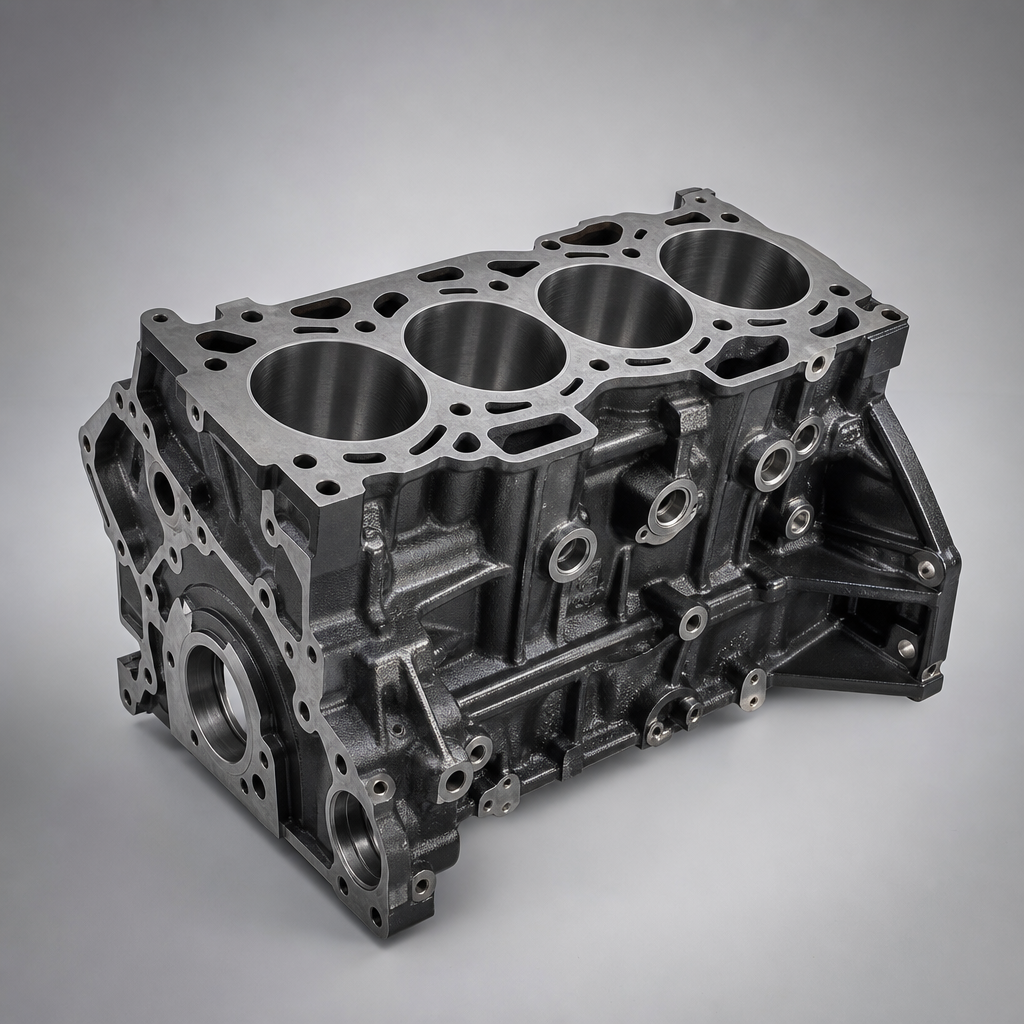
Camshaft for Seat Leon Aftermarket Replacement Guide
A **camshaft for Seat Leon aftermarket replacement** should be judged as a precision valve-train part, not a simple fitment line in a catalog. Procurement teams need proof that the replacement follows OE geometry, material choice, heat-treatment outcome, and running-surface quality closely enough to preserve valve timing, wear behavior, and installation consistency across workshop networks. That becomes more important on high-volume petrol and diesel families used across multiple Leon generations, where one listing may cover several engine codes but still fail if the details are wrong.
The practical question is narrower than most generic buying guides suggest: will this camshaft deliver OE-equivalent function in service without creating noise, follower wear, timing drift, lubrication trouble, or repeat warranty claims? The sections below approach that from different angles: how to make the approval decision, which technical specs actually matter, where projects usually fail, how to validate a new reference, and how to compare suppliers when the quote stage moves into repeat purchasing. Driventus is an independent aftermarket manufacturer; brand names are referenced for fitment purposes only.
Approval first: the decision framework buyers should use
When evaluating a camshaft for Seat Leon aftermarket replacement, start with approval logic, not price. The wrong camshaft can look acceptable on paper, install without drama, and still create wear or timing issues a few thousand kilometers later.
A workable buyer screen has four gates:
1. Application gate: confirm exact engine code, year range, fuel type, and whether the request is for intake or exhaust 2. Geometry gate: verify lobe profile, journal size, concentricity, and timing-interface dimensions against a controlled reference 3. Metallurgy gate: confirm base material, hardening result, and wear-surface condition 4. Supply gate: confirm repeatability, traceability, MOQ, packaging, and lead time
The technical checks behind those gates usually include:
Base material: commonly chilled cast iron or forged steel, depending on engine family and OE intent
Lobe profile accuracy: should track OE lift and duration targets within controlled tolerance
Journal diameter and concentricity: critical for oil-film stability and bearing clearance
Total indicated runout: often expected at or below 0.03-0.05 mm TIR, depending on shaft design and length
Surface finish on journals and lobes: commonly controlled around Ra 0.2-0.8 um by surface and process
Heat treatment or local hardening result: many buyers look for lobe-surface hardness around HRC 52-60 where applicable
Compatibility with related parts: followers, rockers, hydraulic lash adjusters, seals, and timing-drive parts
Oil-hole and lubrication-path cleanliness: burrs and residual debris can trigger early failure even when dimensions pass
If an OE reference appears in the RFQ, the supplier should confirm it with inspection-backed application control, not catalog mapping alone. References in OE 06A... style formats are useful only if they are tied to measured product data.
On the commercial side, set the approval basis before comparing quotations. Typical RFQ terms in this category are:
Sample quantity: 1-3 pcs for dimensional review and workshop trial
Pilot order MOQ: often 20-50 pcs for lower-volume references
Production MOQ: commonly 50-200 pcs per reference, depending on grinding setup, tooling changeover, and packaging format
Lead time: around 2-4 weeks for stocked or semi-finished items, 4-8 weeks for repeat production, and 8-12 weeks when new tooling, private label, or first-article approval is involved
Spec deep-dive: which camshaft numbers matter and which claims do not
Suppliers often say "OE quality." That phrase is not useful by itself. For a camshaft for Seat Leon aftermarket replacement, the decision should rest on measured capability.
Parameter
Why it matters
Typical buyer concern
Lobe lift/profile
Controls valve opening behavior and timing accuracy
Power loss, unstable idle, emissions drift
Journal diameter tolerance
Maintains correct clearance and oil film
Seizure risk or oil pressure loss
Runout/straightness
Prevents cyclic loading and abnormal wear
Noise and premature bearing damage
Surface roughness
Supports lubrication and controlled break-in
Scuffing on lobes or journals
Hardness depth
Determines wear resistance at contact surfaces
Early pitting or lobe collapse
Material cleanliness
Reduces crack-initiation risk
Warranty exposure in heavy-use fleets
</tr></thead><tbody> </tbody></table>The more useful conversation is numeric. Buyers should ask the supplier to state actual control levels such as:
Lobe height / profile checkpoints: often controlled within about +/-0.01 to +/-0.03 mm, depending on drawing and measurement method
Journal diameter: commonly held within +/-0.005 to +/-0.015 mm according to engine design and grinding capability
Coaxiality / concentricity: typically within 0.01-0.03 mm on controlled journals
Runout: usually targeted at <=0.03 mm on critical journals unless the drawing allows more
Surface roughness: many programs specify Ra <=0.4 um on journals and Ra <=0.8 um on lobes after finish grinding
Case depth or hardened layer: often checked in the approximate 0.8-2.0 mm range where local hardening applies
Management-system certification still matters, but in a supporting role. A plant operating under IATF 16949:2016 and ISO 9001:2015 should be able to show traceability, corrective-action handling, and process discipline. That reduces sourcing risk. It does not prove that the camshaft is correct for the Leon application in front of you.
For EU supply chains, buyers may also request declarations aligned with REACH (EC) No 1907/2006 where applicable to the component and its packaging.
These specification choices also explain quote differences. A program with full-profile grinding, 100% runout inspection, lot-based hardness verification, VCI corrosion packaging, and branded cartons will not price like a bulk-packed export offer. Compare like with like: machining route, inspection scope, packaging standard, and claim support should be listed line by line.
Where projects fail: the mismatch and warranty traps to catch early
Most failures in Seat Leon camshaft sourcing do not start with catastrophic material defects. They start with bad grouping, weak validation, or missing related-parts logic.
Common failure modes include:
Wrong engine code coverage: same Leon badge, different valve-train geometry
Incorrect lobe arrangement: intake and exhaust references mixed during cataloging
Journal specification mismatch: enough to upset bearing clearance or oil-film behavior
Unsuitable hardness profile: acceptable initial fit, poor durability in service
Inaccurate timing-interface dimensions: causes assembly issues or phase error
Missing kit logic: worn followers or timing parts left in place and blamed on the new camshaft later
Incorrect sensor or trigger interface: relevant where the shaft includes a dedicated phasing or sensing feature
Packaging mix-up between similar-looking references: especially in private-label or multi-brand consolidation programs
This is why a visual match is not a validation method.
For multi-country distribution, fitment control should cover vehicle application, engine code, production range, and any OE-style references provided by the customer. If private-label packaging, tailored inspection plans, or special export presentation are required, lock those conditions early. Changing them after first-article approval usually adds cost and confusion.
A practical anti-mismatch RFQ checklist includes:
Vehicle model and generation
Engine code
Fuel type and valve-train type
OE-style number if available
Intake or exhaust identification
Whether the order is shaft only or needs related parts logic for followers, bolts, seals, or timing components
Target market and labeling language
There is also a commercial trap here. A grouped reference range may look cheaper at quotation stage, but if later you need separate labels, separate inspections, or distinct packaging inserts, landed cost rises quickly. In those cases, custom manufacturing is often more practical than forcing a generic program to do a specific job.
Step by step: how to validate a new aftermarket camshaft reference
For a new camshaft for Seat Leon aftermarket replacement reference, the cleanest path is staged validation. Skip stages, and the buyer absorbs the risk.
Recommended validation package
Incoming raw-material verification, including chemistry review or mill certificate where applicable
In-process dimensional checks on journals, lobe height, and key datum positions
Hardness testing on critical wear areas, commonly with Rockwell or microhardness methods depending on design
Microstructure review where required by drawing or control plan
Runout and straightness inspection on finished shafts
Surface roughness measurement on journals and lobes
Balance or rotational-stability checks where relevant to the design
Final lot traceability linked to inspection records
Cleanliness and burr inspection at oil passages, keyways, and seal-contact edges
Documentation buyers should request
Drawing or controlled dimensional summary
Material specification and heat-treatment statement
Inspection report by batch or lot
Cross-reference list by engine code and OE-style reference where provided in the inquiry
Packaging specification for export handling and corrosion protection
Nonconformance and corrective-action process summary
Sample approval record or first-article report for new references
A practical launch flow usually looks like this:
1. RFQ review: confirm engine code, production year range, OE-style references, and whether intake or exhaust shaft is required 2. Sample stage: supplier provides 1-3 pcs with core dimensions, hardness values, and runout data 3. Bench inspection: buyer or third party checks journals, lobe geometry, TIR, surface finish, and visual finish condition 4. Trial installation: workshop verifies fit, lubrication-path cleanliness, timing alignment, and initial running condition 5. Pilot order: typically 20-50 pcs using the same route and packaging planned for mass supply 6. Mass release: only after sample and pilot records match the approved specification
If the part is meant for workshop networks, installation repeatability deserves special attention. Keyway alignment, oil-passage cleanliness, burr control, and transit protection are routine details, but they are also common sources of field complaints.
Lead time should be judged against this process. A supplier quoting 15 days for repeat supply but 45 days for first article, carton artwork, and export pallet approval is not necessarily slow. Development lead time and replenishment lead time are different things. Driventus maintains a documented quality system for controlled production and inspection.
Supplier comparison: what separates a usable source from a risky one
Once technical fit is established, supplier comparison becomes a repeatability question. The right source for a camshaft for Seat Leon aftermarket replacement is the one that can hold the same result lot after lot, document it, and respond clearly when a claim appears.
Request control points for lobe geometry, journal size, and runout
Review batch traceability from raw material to final packing
Check corrosion-prevention method for sea freight and warehouse storage
Ask about standard export packaging and palletisation
Verify response time for PPAP-style documentation requests if your customer requires them
Confirm whether first-article samples can be supplied before bulk release
Review complaint-handling lead time and containment procedure
Ask which dimensions are checked 100%, which by sampling, and what AQL or internal acceptance logic is used
Confirm monthly capacity for the exact reference family, not only total plant capacity
A dependable supplier should also be precise about claim language. Fitment scope, inspection capability, and production controls can be confirmed. Vehicle-maker approval should not be implied unless it formally exists. That distinction matters in B2B communication and compliance review.
Commercial comparison usually turns on four levers:
Volume: sample, pilot, and mass-order pricing often differ; breaks at 50 pcs, 100 pcs, or 300 pcs are common
Process content: full-profile inspection, hardness reports, custom laser marking, and private-label cartons increase cost
Material route: forged or more heavily machined variants generally price above standard chilled-cast routes
Lead time commitment: expedited production or reserved safety stock usually carries a premium
Useful questions to settle before nomination:
MOQ by packaging type: neutral bulk, branded box, or full private label
Normal lead time and expedite lead time
Sample cost policy: charged, refundable against bulk order, or free with freight collected
Warranty claim handling window: for example, first response within 48-72 hours and containment proposal within 5-10 working days
Shelf-life / storage guidance for corrosion-protected warehouse stock
For direct sourcing discussions or sample requests, use request a quote.
Frequently asked questions
The main risk is application mismatch combined with weak control of lobe geometry, journal tolerance, runout, or hardness. A part may appear to fit physically but still cause timing deviation, noise, lubrication problems, or accelerated wear in service. In practice, buyers should verify engine code, intake/exhaust designation, and measurable limits such as TIR, journal size, and hardness rather than relying on catalog fitment alone.
At minimum, request a dimensional inspection report, material or heat-treatment declaration, batch traceability information, fitment cross-reference data, and export packaging details. For higher-control programs, ask for sample approval or PPAP-style documentation, including runout values, hardness results, and the control plan used for repeat production. If private label is involved, confirm carton specification and marking approval as part of the launch file.
No. IATF 16949:2016 and ISO 9001:2015 indicate that the supplier operates a controlled management system, not that the product is automatically OE-equivalent. Buyers still need product-level validation for dimensions, hardness, runout, surface finish, and application coverage. The strongest sourcing position combines certified systems with numeric inspection data, approved samples, and clear MOQ and lead-time commitments.
If you are qualifying a new supplier for a camshaft for Seat Leon aftermarket replacement programs, Driventus can provide fitment review, inspection documentation, and export support. Send your inquiry via /contact.html