Wholesale buyers sourcing an `egr valve lexus wholesale` programme need more than a part-number match. They need confirmed application coverage, stable manufacturing, traceable quality, and a supplier that can support repeat orders without dimensional drift. Driventus is an independent aftermarket manufacturer; brand names are referenced for fitment only. For Lexus platforms, the key checks are whether the valve body, actuator response, connector, sealing faces, and flow characteristics align with the original application, and whether the supplier can document inspection data for each batch. Driventus manufactures engine and powertrain components in Taizhou, Zhejiang, and supplies B2B customers in 60+ countries under `IATF 16949:2016` and `ISO 9001:2015` controls. This guide explains what procurement teams should verify before placing a wholesale order, including specification matching, test evidence, commercial terms, and factory support for OE cross-reference workflows where applicable.
How to decide if a Lexus EGR valve is source-ready
For Lexus EGR valve sourcing, start with application fit and build stability rather than unit price alone. A supplier should confirm:
OE cross-reference and VIN/application coverage
Connector style, port geometry, mounting pattern, and gasket interface
Actuation type, feedback signal, and response range
Material stack for the valve body, spindle, seat, and seals
Batch traceability, incoming inspection, and final functional test records
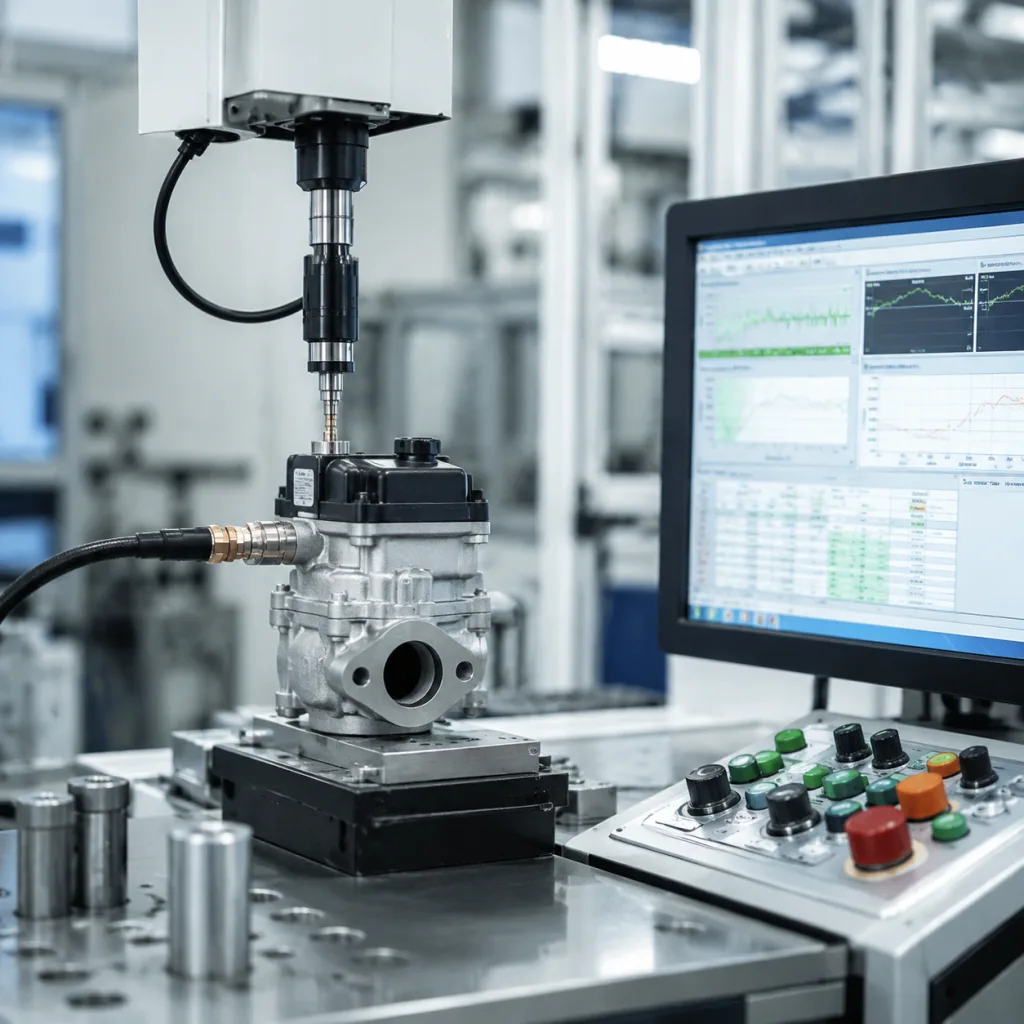
Ask for purchase-critical data before you approve a quote: OE number, Lexus model years, engine family, connector pin count, flange bolt pattern, port diameter, and gasket thickness. Do not release a sample unless the mounting face matches within about ±0.20 mm, the port center distance stays within ±0.30 mm, and the electrical connector keys correctly with zero forced insertion. For actuator-controlled valves, request response-time data across at least 3 open-close cycles, with repeatability held within 5% from unit to unit in the sampled lot.
If the programme is for a distributor or repair chain, ask for pack labelling, carton quantity, and barcode support. A practical wholesale setup is 20–50 units per inner carton and 200–500 units per export carton, depending on valve size and foam protection. For OEM or Tier-1 buyers, confirm change-control discipline and PPAP-style documentation before release. Driventus can align commercial supply with our catalog and broader engine component programmes through [/products/engine-components.html].
The spec checklist buyers should not skip
Below is the minimum data set procurement teams should request before approving a wholesale order.
Item
What to confirm
Typical buyer risk if missing
Fitment
Lexus model, engine code, OE cross-reference, VIN range
Wrong application, returns
Dimensions
Overall length, flange spacing, port diameter, gasket thickness, bolt-hole offset
Leak or misalignment
Materials
Housing alloy, pintle material, seat finish, gasket type
Corrosion or seat wear
Electrical
Connector keying, pin count, terminal plating, resistance range
</tr></thead><tbody> </tbody></table>The most useful quality inputs are leak integrity, actuation repeatability, and seat wear resistance. Ask the supplier to state measurable limits, such as zero external leakage at the specified test pressure, stable actuation through at least 10,000 cycles for sample validation, and no visible abnormal wear after thermal exposure. If the part is electrically actuated, request resistance and continuity readings by batch, plus pass/fail criteria for signal output.
Driventus operates under an `ISO 9001:2015` and `IATF 16949:2016` quality system, which supports controlled process release, incoming material review, and final inspection records. Buyers can review the quality system before audit scheduling.
Where wholesale programs usually fail
Most sourcing problems are not caused by the headline part number. They come from the gaps around it.
A replacement fits the connector but not the flange
The unit passes a visual check but drifts in actuation response
Batch quality looks fine, then changes after the first reorder
Packaging works for pallets but not for warehouse scanning
Lead time is quoted without separating stock, build, and replenishment timing
A practical way to reduce failure is to force every supplier response into three layers: fitment, function, and commercial control. If any one of those layers is vague, the programme is not ready. For example, an EGR valve that matches a Lexus OE number but lacks revision control can create repeat complaints even when the first samples look acceptable.
The same applies to electrical behavior. A connector that seats properly but has inconsistent terminal resistance can produce intermittent fault codes that are hard to trace. That is why wholesale buyers should ask for measured data, not general assurances. If the supplier cannot show batch-level evidence, the receiving team ends up doing the debugging later.
Lead time and MOQ, without the usual guesswork
Wholesale demand is usually driven by distributor fill rate, not one-off replacement sales. That changes how the order should be planned.
MOQ should be tied to carton quantity, surface-finish setup, and test fixture capacity
Lead time should be stated separately for stock items and new builds
Reorder consistency matters more than a low first-order price
Packaging and labelling need to match warehouse handling in the EU, UK, US, Canada, Australia, or Brazil
A workable commercial model is to separate three numbers in every quote: sample lead time, production lead time, and replenishment lead time. For stocked Lexus EGR valve variants, sample shipping can often be 3–7 days, while a fresh production run may need 25–35 days after sample approval and deposit. New tooling, if needed for a non-standard connector, bracket, or casting revision, should be quoted separately and can add 15–30 days before mass production.
MOQ should also be tied to the economics of inspection and packing. Many buyers will find it practical to start at 100–300 units per SKU for trial distribution, then move to 500–1,000 units once sell-through is proven. Ask the supplier to quote tiered pricing at 100, 300, 500, and 1,000 pieces so you can compare landed cost against forecast demand. For rolling programmes, request forecast-based supply, safety stock options, and a clear engineering change notice process. If a customer needs a private-label box, kitting, or a non-standard finish, custom manufacturing should be discussed before sample approval. That is often the fastest way to reduce future sourcing disruption.
What test evidence proves the part is ready
EGR valves are exposed to soot, heat, vibration, and repeated thermal cycling, so procurement should treat test evidence as part of the buy decision. Relevant published standards and references include `IATF 16949:2016`, `ISO 9001:2015`, `REACH (EC) No 1907/2006`, and, when a programme requires emissions-related validation, `ECE R-83`. Surface durability and environmental exposure may also be checked against `SAE J2527` where applicable to related component finishes.
Ask for the following documents:
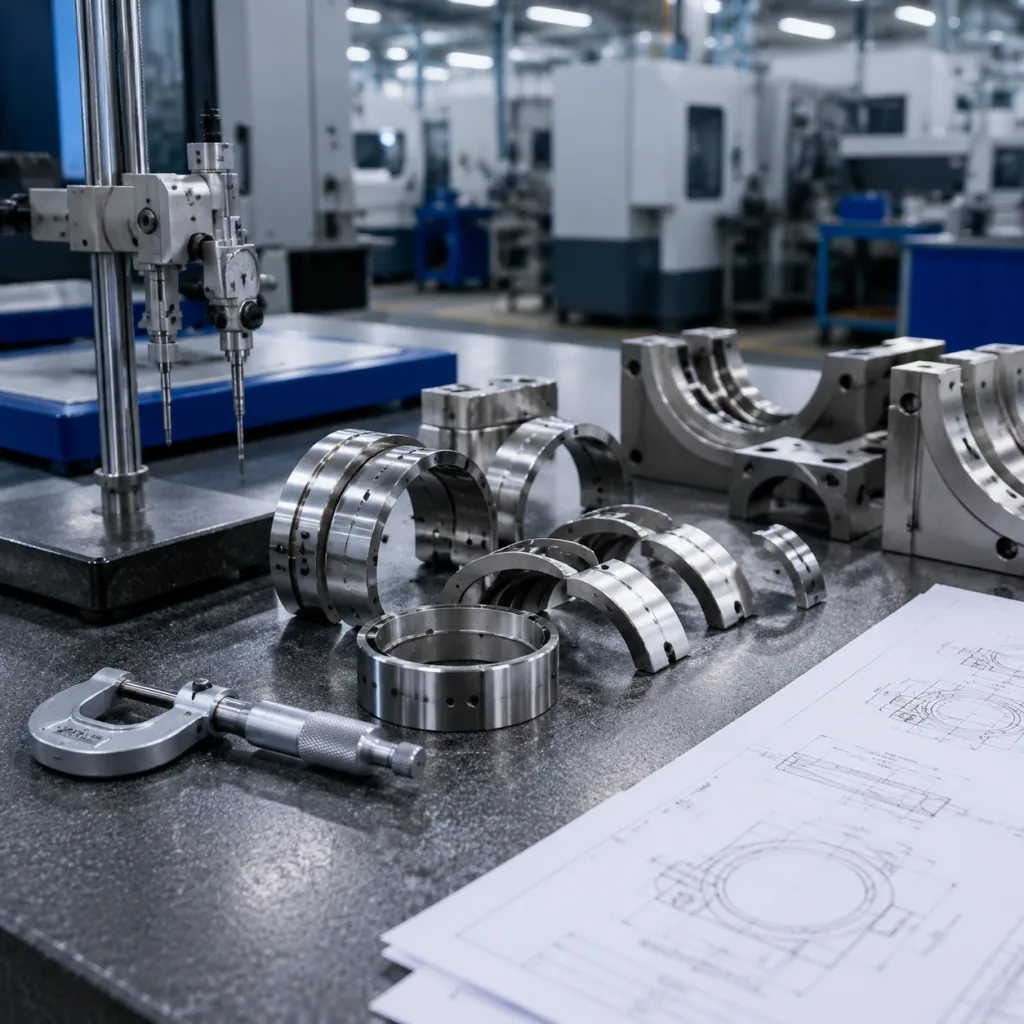
Dimensional inspection report for the sampled lot, including measured values and tolerance bands
Functional test summary, including opening response or control-signal validation
Material declaration for REACH screening
Traceability record with lot or date code
Packaging verification for barcodes and carton count
Leak-test record with test pressure, dwell time, and acceptance result
A good supplier response should state the actual test method, not just “passed.” Buyers should look for specifics such as leak testing at the agreed pressure for 10–30 seconds, response-time capture from command to movement, and acceptance criteria for idle-state sealing. If the supplier cannot provide those numbers, the risk sits with the buyer at receiving inspection or in the field.
Driventus does not claim vehicle manufacturer approval or endorsement. The correct approach is to validate fitment, functional performance, and purchasing conditions against your own programme requirements before release.
Why an independent manufacturer can be the safer route
Independent aftermarket sourcing is often the right route when buyers need flexible volumes, faster replenishment, or a wider fitment matrix than a single-channel OEM supply can support. The commercial advantage is not only cost. It is also the ability to order by model family, to consolidate adjacent engine components, and to keep supplier communication direct.
That matters for:
Multi-location repair chains that need fill-rate stability
Distributors that manage regional inventory by engine family
Importers that want one source for EGR valves and related thermal-management parts
Buyers that require documented QC and repeatable packaging
Compared with a rigid OE-only channel, the better supplier should be able to explain when a standard build is available from stock, when a repeat order can be held at the same revision, and what triggers a price change. In practice, stable wholesale supply should include a revision-controlled drawing, batch-level traceability, and a defined tolerance window for critical interfaces so the same part number does not drift over time. Driventus is an independent aftermarket manufacturer; brand names are referenced for fitment only. For procurement teams building a broader powertrain catalogue, the most efficient path is to map the EGR valve line against adjacent SKUs in our catalog and standardise enquiry data before RFQ release.
Frequently asked questions
Yes. We support B2B wholesale programmes with application matching, batch traceability, and repeat-order planning. Share the OE number, VIN range, target annual volume, and sample part so we can confirm fitment and commercial terms.
Yes. Private label, carton formatting, print approval, and packing quantities can be discussed under [custom manufacturing](/oem-services.html). Final approval should follow sample validation and packaging confirmation.
Buyers can request inspection records, traceability details, material declarations, and test summaries aligned with `IATF 16949:2016` and `ISO 9001:2015` controls. Programmes that need emissions-related references may also review `ECE R-83` context.
If you are building a Lexus EGR valve programme and want a supplier quote, sample review, or fitment confirmation, please [request a quote](/contact.html).