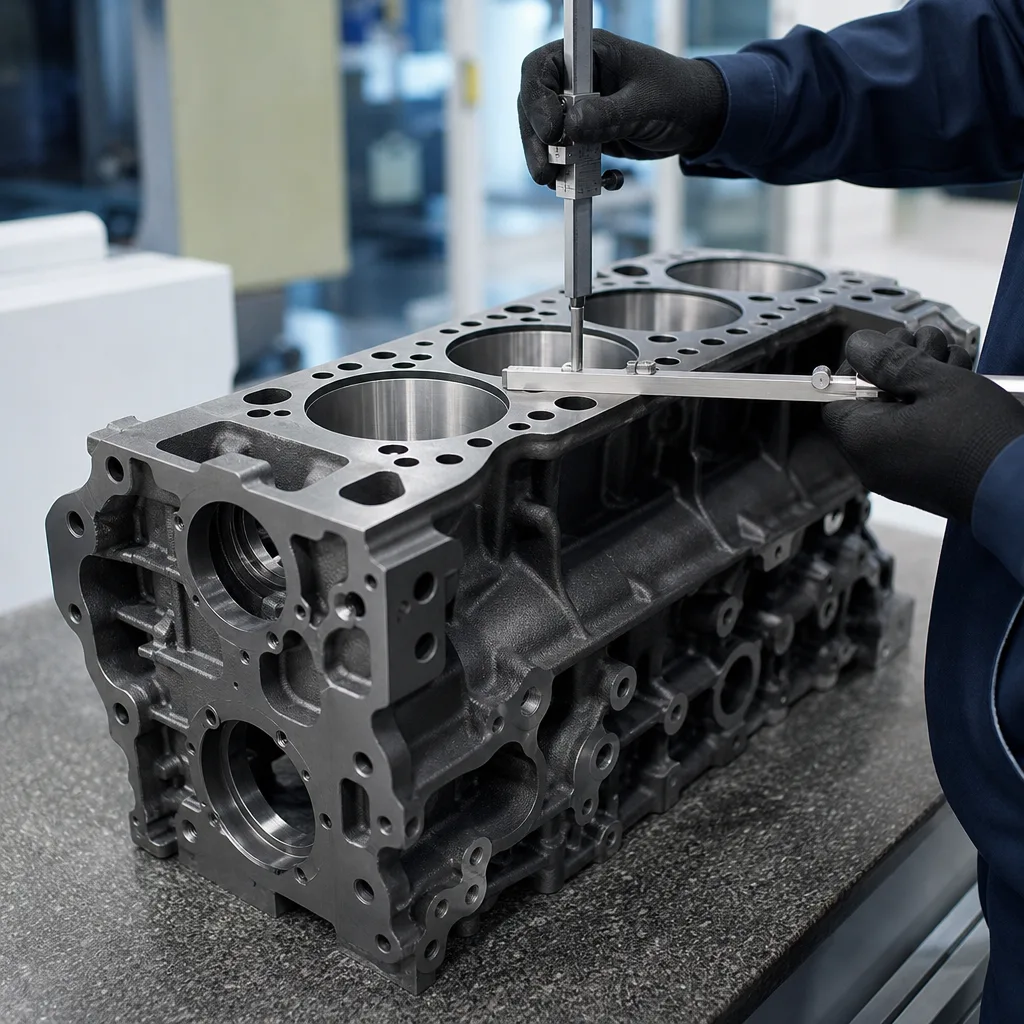
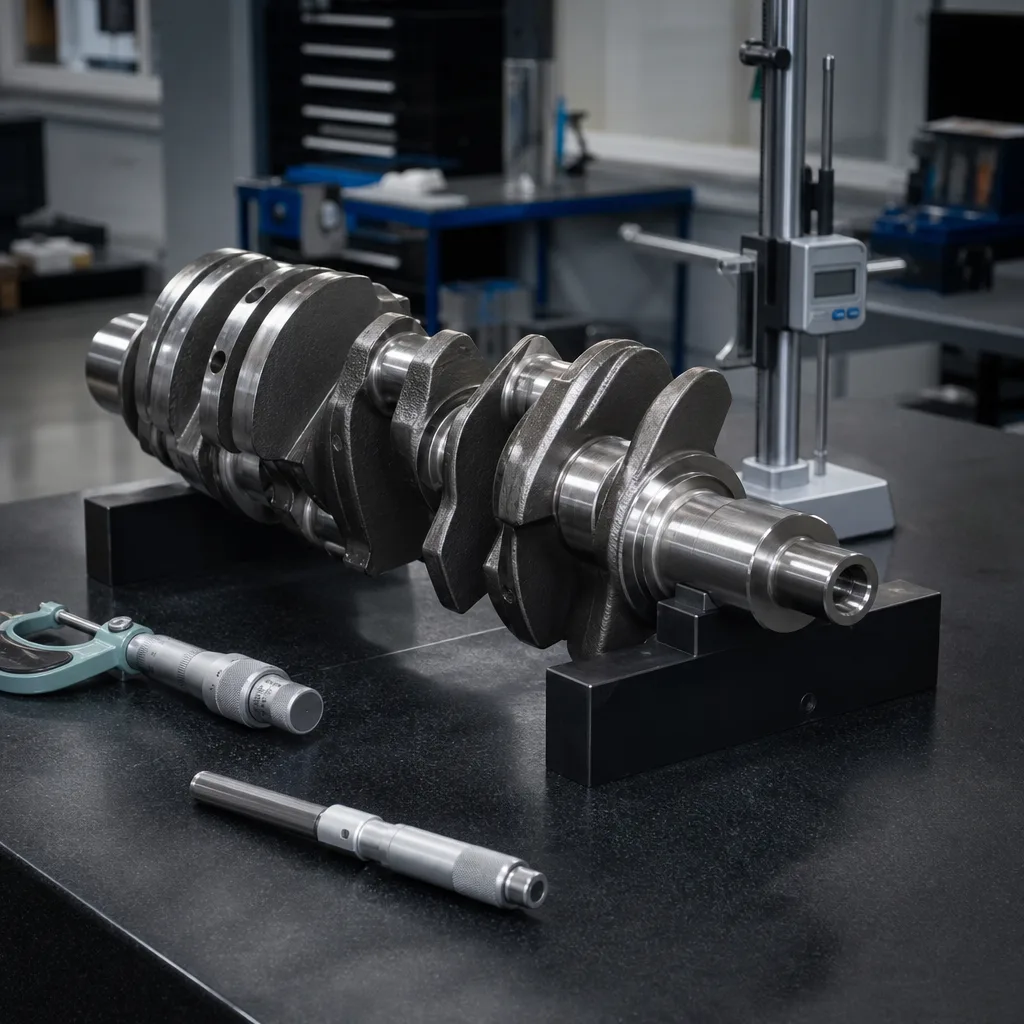
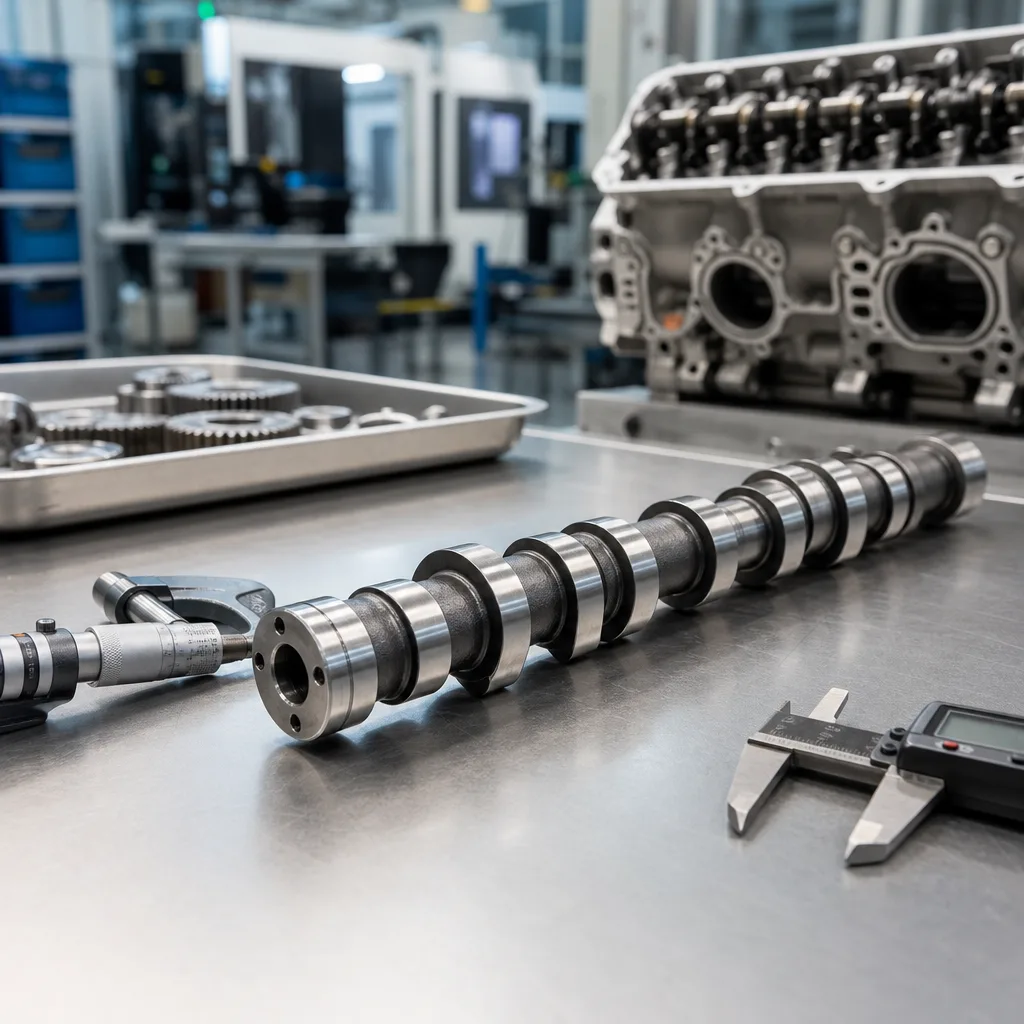
Searching for an egr cooler seat manufacturer china is usually a sourcing exercise, not a catalog search. Buyers need stable geometry, weld or braze consistency, corrosion resistance, and documents that survive factory audits. For EGR cooler seats, a small deviation in sealing-face flatness, bead height, or weld penetration can create leakage, soot loading, and repeat claims after thermal cycling. Driventus is an independent aftermarket manufacturer; brand names are referenced for fitment only. Our process is built for procurement teams that need repeatable supply: IATF 16949:2016 process control, ISO 9001:2015 documentation, REACH (EC) No 1907/2006 awareness, and export packaging that survives long transit lanes. This guide sets out what to verify before you shortlist a supplier, what technical data to request, and when custom manufacturing is justified for your application.
What to verify before you shortlist
Before comparing prices, lock down the drawing set and the acceptance criteria. A seat that looks simple can still fail if the sealing face is out by a few hundredths of a millimetre or if the alloy cannot survive repeated hot-cold cycles.
Check
Why it matters
Evidence to request
Sealing face flatness
Prevents exhaust leakage and soot bypass
CMM report or gauge record
Material grade
Controls creep, oxidation, and corrosion
Mill certificate and heat traceability
Weld or braze integrity
Reduces crack growth at the joint
Sectioned sample or cut-up report
Leak test method
Confirms assembled tightness
Pressure, dwell time, and acceptance criteria
Revision control
Avoids mixed parts in serial supply
Approved drawing and PCN process
Export packing
Protects surface finish in transit
Carton spec, VCI, and pallet plan
</tr></thead><tbody> </tbody></table>For adjacent engine parts, start with our catalog and review the quality system before you issue an RFQ.
Materials and geometry that hold up in service
EGR cooler seats are usually specified as stainless steel or heat-resistant alloy parts with controlled machining on the sealing land. The right choice depends on exhaust temperature, condensate chemistry, and whether the seat sees direct coolant-side interaction or only exhaust-side loading.
Typical buyer specifications include:
Sealing-face roughness: Ra 1.6-3.2 µm on machined interfaces.
Flatness: often held to 0.05 mm on critical seats, with the drawing defining the actual callout.
Burr control: zero loose burrs, with edge break called out on flow-sensitive edges.
Coating or passivation: specified when the downstream assembly spends time in storage or sea freight.
Dimensional stability after heat exposure: verified by post-test inspection, not only as-machined inspection.
If your current design uses a stamped ring, a machined ring, or a welded subassembly, the supplier should show which step controls the final seat geometry. That is where repeatability is won or lost.
Validation package and standards
Validation is where a supplier proves that process control matches the drawing. For export programs, ask for APQP inputs, PFMEA, control plan, gauge R&R where measurement is critical, and first-article dimensions tied to the same revision you approved.
Relevant standards and compliance topics:
IATF 16949:2016 for automotive quality management.
ISO 9001:2015 for documented process control.
REACH (EC) No 1907/2006 for EU chemical compliance and restricted substances.
ECE R-83 when the part sits in a vehicle emissions system context.
SAE J2527 for corrosion testing where exposed hardware or brackets need durability evidence.
Not every seat needs every test, but the validation matrix should match the duty cycle. Thermal cycling, pressure decay, vibration, and corrosion exposure tell you different things. A supplier that only offers photos of the finished part is not giving enough evidence for a sourcing decision.
Sourcing terms, MOQ, and lead time
Commercial terms matter because a seat is a low-mass part but a high-risk part if revisions drift. A production quote should separate tooling, samples, serial unit price, and packing.
Commercial item
What to lock
Why it matters
Sample lead time
Date for first articles and dimensional report
Keeps your launch plan realistic
Production lead time
Serial capacity by month
Avoids stock-outs
MOQ
Pilot lot and annual call-off
Prevents one-off pricing distortions
Incoterms
EXW, FOB, or CIF
Controls landed cost
Change notice
PCN and drawing revision approval
Stops silent substitutions
</tr></thead><tbody> </tbody></table>For buyers running multi-country programmes, the factory audit should include the gauge room, incoming material checks, welding or brazing stations, and final inspection records. If you need a supplier with OEM-style documentation, custom manufacturing is the right route when the drawing is not a catalogue match.
When custom manufacturing makes sense
Custom manufacturing is justified when the part must match a specific cooling path, housing envelope, or emissions package that is not covered by a standard item. The goal is not to invent a new seat. It is to reproduce the functional envelope with controlled revisions, then lock the build standard for serial supply.
Suggested approval pack
Sample inspection and 3D measurement.
Material confirmation and traceability.
Design-for-manufacture review.
Pilot build with dimensional and leak validation.
Sample approval and serial release.
If the part is one piece of a broader service kit, keep the interfaces consistent across the set. That reduces warehouse complexity and lowers the risk of a mixed shipment. For broader assemblies, our products page can help your team map the seat against related engine components.
Driventus supports B2B buyers across the EU, UK, US, Canada, Australia, and Brazil with export documentation prepared for procurement review. The key is to make the drawing, the test plan, and the revision control system agree before volume orders begin.
Frequently asked questions
A drawing, material spec, target volume, annual usage, packaging requirement, and the fitment reference if one exists. If you only have a sample, a dimensional inspection and clear photos can still start the process.
IATF 16949:2016 and ISO 9001:2015 are the baseline. For export work, ask for material declarations, traceability records, control plans, and REACH (EC) No 1907/2006 documentation where applicable.
Yes. The best approach is to separate common geometry from platform-specific dimensions. That keeps tooling stable and reduces revision risk when only one interface changes.
If you need a drawing review, sample plan, or production quotation, use [request a quote](/contact.html)