Camshaft for Hyundai Elantra Aftermarket Replacement
Choosing a camshaft for Hyundai Elantra aftermarket replacement is mainly an engine-code exercise. The Elantra nameplate covers multiple petrol and diesel variants across model years, and the camshaft must match the valve train layout, sensor trigger pattern, journal geometry, and surface finish of the original drawing. For procurement teams, the right question is not whether the part fits the badge, but whether it matches the specific engine family, emissions calibration, and packaging requirements needed for a clean service replacement. Driventus is an independent aftermarket manufacturer; brand names are referenced for fitment only. This article explains the control points buyers should verify before they release an order, and why traceable dimensional and material checks matter when the part is supplied into distributors, repair chains, or export programmes.
Fitment starts with the engine code
Elantra fitment is driven by engine code, emission market, and cam position, not by the badge alone. The same nameplate can cover different petrol and diesel families, different VVT layouts, and different sensor trigger patterns. For a service replacement, buyers should verify:
- engine code and displacement
- intake versus exhaust position
- VVT phaser mounting and oil-feed interface
- cam sensor target wheel or reluctor pattern
- valve cover and timing cover clearance
If the target application is a repair-network stock item, lock the application list before production so every carton maps to one engine family and one side of the head.
What the replacement camshaft must match
An OE-equivalent replacement should reproduce the original geometry, not just the overall length. The main control points are below.
| Control point | What to verify | Evidence to request |
|---|---|---|
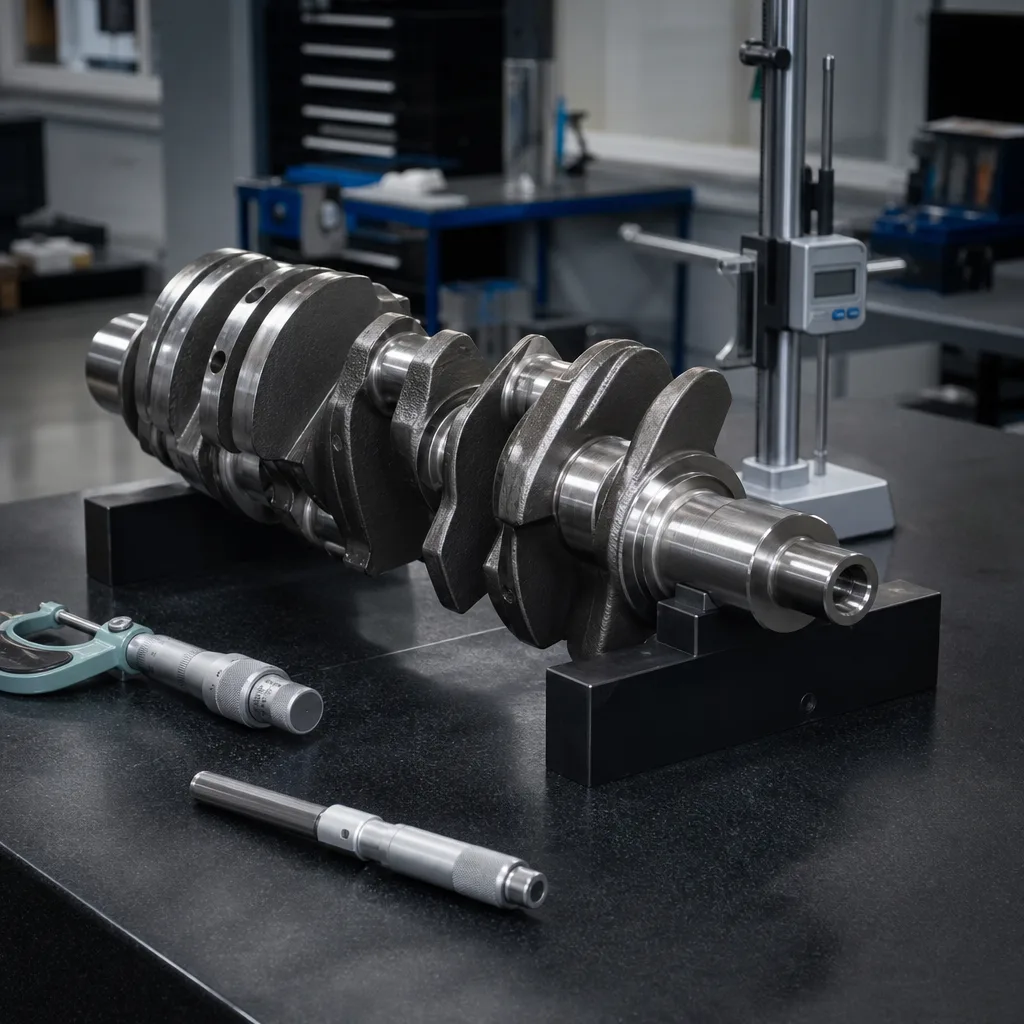
| Journal geometry | Diameter, width, straightness, and thrust face location | First-article report or CMM data |
| Lobe profile | Lift, base circle, and lobe timing match the target drawing | Dimensional inspection sheet |
| Trigger pattern | Tooth count, phase angle, and sensor window alignment | Master sample or CAD reference |
| Surface condition | No scoring, burrs, or roughness outside spec | Visual and roughness record |
| Heat treatment | Hardness and, where specified, case structure on wear surfaces | Material certificate and hardness report |
| Corrosion protection | Oil film, VCI wrap, and carton partitioning for export | Packaging spec and photos |