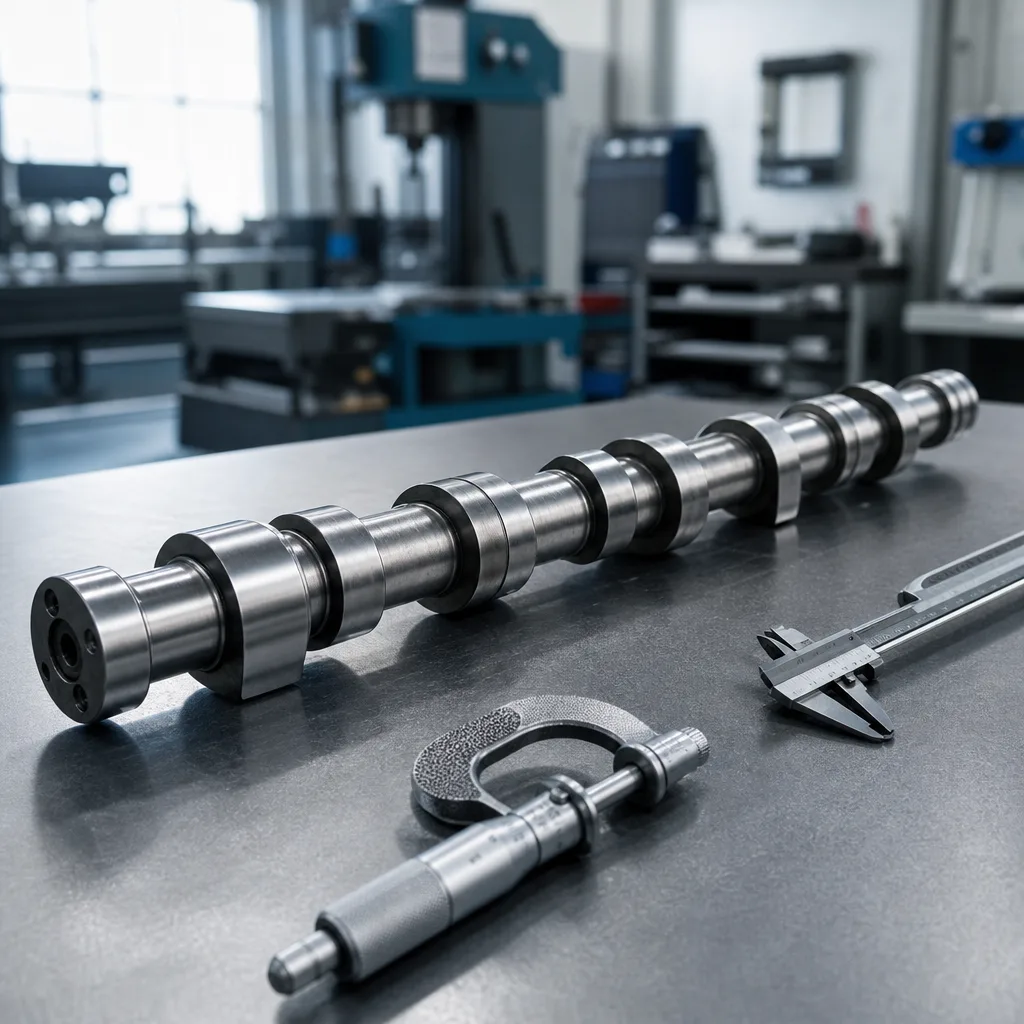
Crankshaft Alfa Romeo Wholesale Sourcing Guide
Procurement teams buying a crankshaft for Alfa Romeo applications need more than a part that fits a catalogue description. The buying decision usually depends on engine code, journal geometry, dynamic balance, surface hardness, and the supplier's ability to repeat those controls across batches. For wholesale sourcing, the key questions are whether the factory can hold dimensional consistency, support OE part-number cross-reference work, and document inspection results in a format suitable for importer, distributor, or workshop network use. Driventus is an independent aftermarket manufacturer; brand names are referenced for fitment only. For buyers comparing suppliers, the practical test is simple: can the factory deliver stable quality, clear traceability, and export terms that match your replenishment cycle without creating avoidable claim risk?
What buyers should verify before placing a bulk order
Wholesale buyers should start with engine identification, not brand name alone. On Alfa Romeo applications, the same platform name can cover different displacement, crank pin layouts, and bearing sizes.
Before issuing a PO, confirm:
- Engine code and variant
- Journal diameters and widths
- Stroke, flange pattern, and keyway details
- Main bearing alignment and thrust location
- Counterweight profile and total mass target
- Heat-treatment method and hardness range
- Packaging and corrosion protection for export
If the supplier cannot define those points in writing, the risk is not limited to return goods. It can also create downtime for the buyer's distribution partners and repair customers. For buyers needing a broader range of engine parts, start with our catalog and engine components to match the crankshaft with related sealing and rotating-assembly items.
Manufacturing controls that affect service life
A crankshaft fails early when material quality, machining, or balance control drifts. For export supply, buyers should ask how the factory manages forging input, machining sequence, and final inspection.
Driventus works to documented controls aligned with IATF 16949:2016 and ISO 9001:2015. For crankshafts, the controls that matter most are the ones that can be measured and repeated:
- Forged or cast substrate verification before machining
- Journal finish control after grinding
- Induction hardening or equivalent surface hardening validation
- Fillet radius consistency to reduce stress concentration
- Dynamic balance correction within defined limits
- Magnetic particle or crack detection on critical lots
If your programme requires custom fixtures, alternative packing, or a new OE cross-reference review, use custom manufacturing rather than assuming a standard catalogue item will cover every application.
Dimensional targets, balance, and inspection records
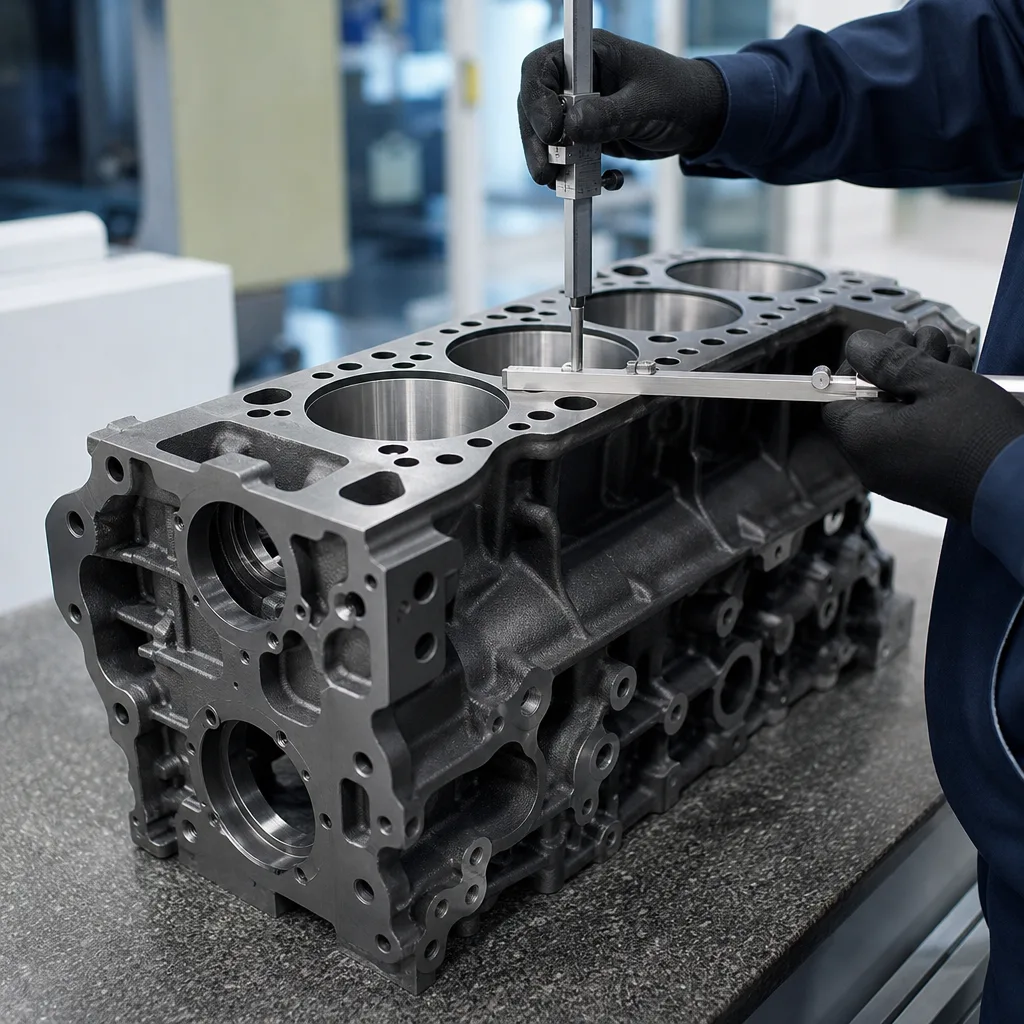
Buyers often compare quotes on price alone, but crankshafts should be compared on measurable controls. The table below shows the type of data a serious supplier should provide on request.
| Control item | What to request | Why it matters |
|---|---|---|
| Main journal diameter | Nominal size, tolerance band, and measurement method | Protects oil clearance and bearing life |
| Crankpin diameter | Nominal size, tolerance band, and batch record | Affects rod bearing fit and load distribution |
| Runout | Measured value at defined points | Influences vibration and sealing stability |
| Dynamic balance | Residual unbalance or acceptance limit | Reduces NVH and bearing stress |
| Surface hardness | Method and reported range | Supports wear resistance |
| Inspection report | Lot traceability and sampling plan | Helps with incoming quality control |