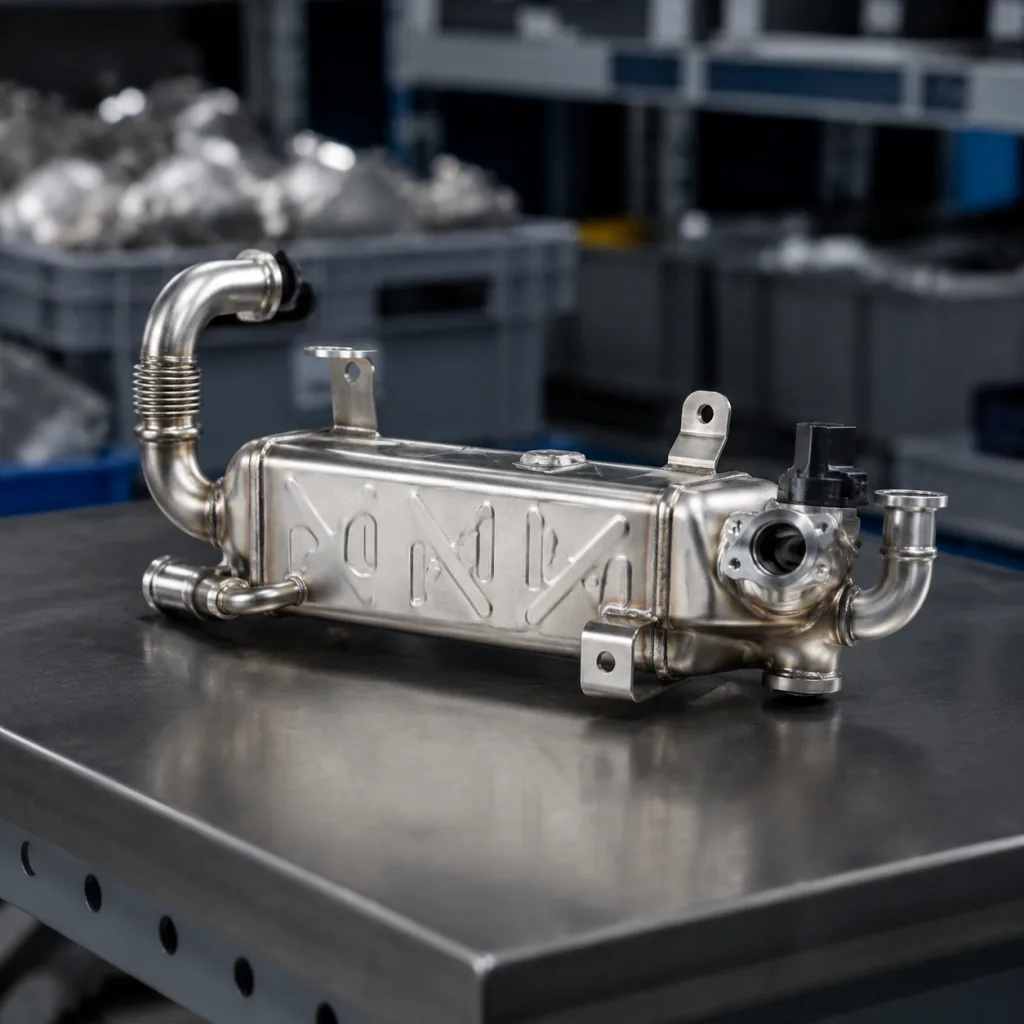
For buyers sourcing an egr cooler Renault OEM supplier, the priority is not marketing language. It is fitment accuracy, material integrity, validation, and repeatable supply. An EGR cooler operates under exhaust heat, coolant pressure, thermal cycling, and soot loading, so procurement teams need a supplier that can hold dimensional control and document test results. Driventus is an independent aftermarket manufacturer; brand names are referenced for fitment only. We supply B2B customers in the EU, UK, US, Canada, Australia, and Brazil, with production controlled under IATF 16949:2016 and ISO 9001:2015. This article explains what to verify when selecting a Renault EGR cooler source, which specifications matter most, and how OEM-style manufacturing supports stable replenishment for distributors, repair networks, and Tier-1 programmes.
What buyers should verify first
For procurement teams, the first filter is supplier credibility. A Renault EGR cooler programme should begin with fitment data, welding consistency, leak performance, and traceable materials. The supplier should provide inspection records, pressure-test evidence, and a clear change-control process.
Key checks:
Material declaration for core, tubes, end tanks, brackets, and gaskets
Coolant-side pressure test and exhaust-side leak test with stated test medium and duration
Dimensional control on mounting points, port centers, flange flatness, and overall envelope
Surface protection data where the design uses exposed brackets or housings, including salt spray if applicable
Batch traceability, carton labelling, and lot coding linked to production date and inspection record
A supplier that aligns documentation with IATF 16949:2016 and ISO 9001:2015 is easier to qualify in purchasing systems and easier to audit before PO release. For buyer-side acceptance, ask for the control plan, PFMEA summary, and the actual sample inspection sheet rather than a generic capability statement.
Typical product requirements
EGR coolers are not commodity radiators. The design must manage high exhaust temperature while protecting the coolant circuit from cross-leakage. For Renault applications, the safest sourcing approach is to define the part by OE cross-reference, installation envelope, and test criteria.
Requirement
Typical sourcing target
Fitment
OE cross-reference verified against vehicle VIN, engine code, and emissions variant
Dimensional tolerance
Critical mounting and port features held to drawing tolerance; confirm ±0.2 mm to ±0.5 mm on key interfaces where the OE print allows
Pressure integrity
Zero visible leakage under coolant-side test pressure, commonly 1.0 to 2.0 bar for production screening depending on design
Thermal durability
Stable performance after repeated heat cycles, typically a minimum of 200 to 500 cycles in validation, depending on programme requirement
Corrosion resistance
Material and coating suitable for exhaust-side exposure; define alloy grade and coating thickness where applicable
Packaging
Damage-free transit with protected ports, capped openings, and separator packaging for gaskets and clamps
Documentation
Inspection report, material list, test summary, traceability code, and carton/label specification
</tr></thead><tbody> </tbody></table>For buyer control, specify the acceptance criteria in the RFQ: leak rate, max pressure drop, allowed warpage, gasket compression range, and visual defect limits. If your programme needs adjacent engine parts, see our catalog and our engine components overview.
Why factory control matters
An EGR cooler can fail for reasons that are invisible at purchase stage: poor brazing, inconsistent weld penetration, internal blockage, warped flanges, or contamination left in the coolant passages. Factory control reduces these risks before shipment.
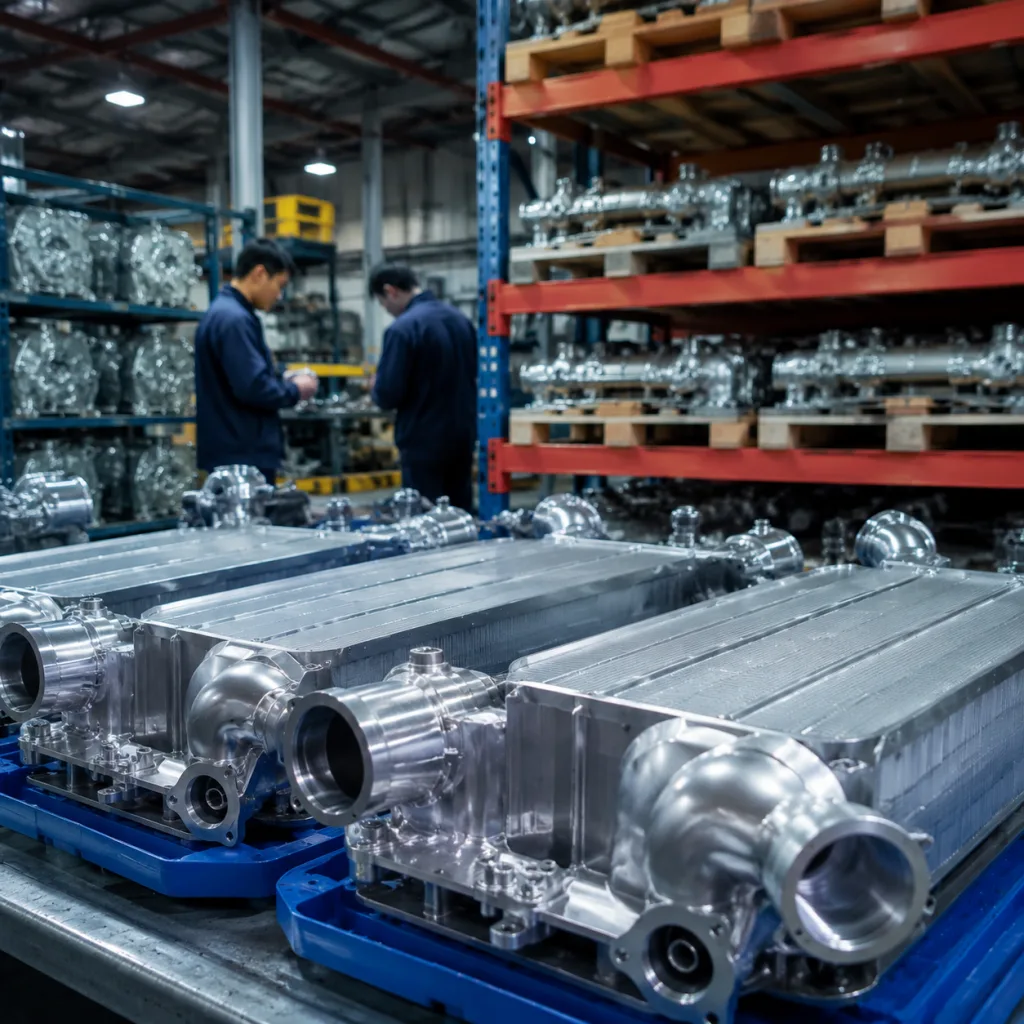
Driventus manufactures in Taizhou, Zhejiang, with vertically integrated control over machining, joining, cleaning, and final inspection. That matters because it limits handoffs between process owners and improves consistency on repeat orders.
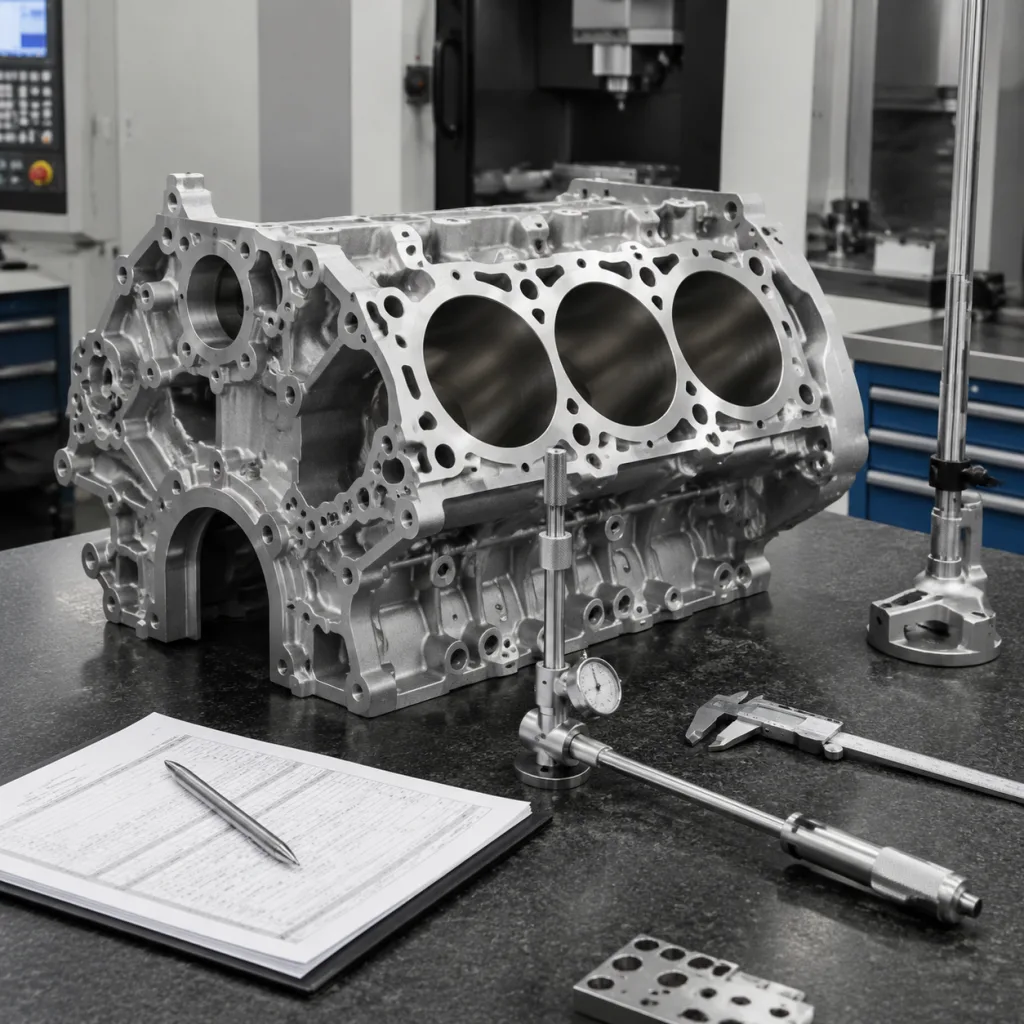
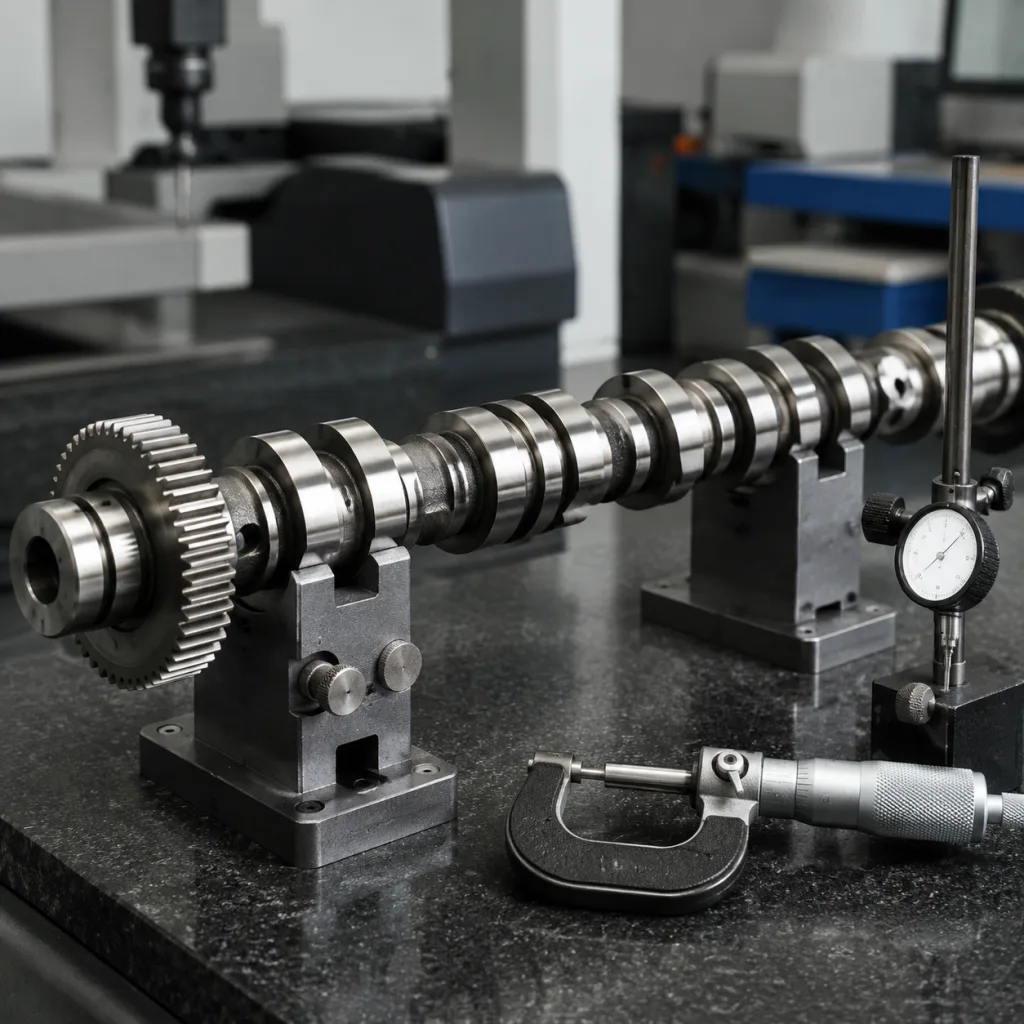
In practice, buyers should look for controlled steps such as incoming tube-wall verification, fixture-based welding, 100% leak screening, and final cleanliness checks before packing. For a Renault programme, ask the supplier to confirm whether critical dimensions are checked by gauges, CMM, or go/no-go fixtures, and whether nonconforming lots are quarantined with documented disposition.
We also support programme-level reviews through our quality system. For sourcing teams, the practical value is straightforward: fewer unexplained deviations, better lot traceability, and clearer corrective action when a nonconformance appears.
Lead times, MOQ, and sourcing models
Buyers often need more than a single part number. They need an export-ready supply model that works for stock, repair-channel replenishment, or private-label programmes.
Common sourcing patterns:
Stock items for fast-moving Renault applications with replenishment by weekly or biweekly call-off
Mixed-MOQ orders for distributors covering multiple engine variants, usually grouped by shared core tooling or packaging family
OEM-style builds for defined technical packs with approved samples before mass production
Custom packaging and label control for regional importers, including barcode format, carton language, and pallet configuration
Commercial planning should be tied to volume. As a guide, lower-volume trial orders are usually priced higher per unit because setup, packaging, and inspection time are spread across fewer pieces, while repeat programmes improve unit economics once tooling and process settings are locked. MOQ depends on whether the SKU is ex-stock, repeat production, or a custom build; buyers should expect separate MOQs for sample approval, pilot lot, and mass-production lot.
Lead time depends on whether the item is in stock, a repeat build, or a custom programme. Typical buyer workflow is: confirm OE cross-reference and application data, request a sample or pre-production unit, approve the sample against the drawing and test sheet, then release the PO and production schedule. For larger programmes, the most efficient path is usually to start with a technical brief, confirm OE cross-reference, then lock the approved sample before mass production. If needed, use custom manufacturing for specification control and programme packaging.
When you request a quote, include annual volume, first-order quantity, forecast cadence, target incoterm, destination market, and whether you need boxed retail, bulk pack, or palletized export cartons. That lets the supplier quote realistic lead time, MOQ, and landed-cost options instead of a generic unit price.
Validation before purchase order release
Before placing volume orders, sourcing teams should validate three areas: dimensional match, sealing integrity, and installation clearance. This is especially important on compact Renault engine bays where bracket position and hose routing leave little margin.
Suggested validation steps:
1. Compare the sample against the OE part reference and installation drawings. 2. Check port orientation, flange thickness, bolt-hole spacing, and overall stack height. 3. Measure critical dimensions with calipers or a CMM and record the actual values against the drawing tolerance. 4. Confirm gasket seating, clamp access, adjacent component clearance, and service-tool access in the vehicle bay. 5. Review pressure-test and leak-test records for the sample lot, including test pressure, dwell time, and pass/fail criteria. 6. Inspect surface finish, weld uniformity, and evidence of residue or debris inside the cooler passages. 7. Confirm carton protection for export lanes and warehouse handling, including corner protection and port caps.
For procurement files, keep the test summary together with the approved sample record, supplier declaration, commercial terms, and any deviation approval. That shortens reorder approval and supports internal audit trails. For a cleaner buy cycle, add the RFQ fields up front: OE number, engine code, model year range, required annual consumption, sample quantity, target first delivery date, and packaging requirement.
If you are ready to move to sourcing, request a quote with the OE reference, engine code, annual volume, and destination market.
Frequently asked questions
Yes. Driventus supplies B2B aftermarket programmes and custom builds. Driventus is an independent aftermarket manufacturer; brand names are referenced for fitment only.
We can provide material information, inspection records, traceability details, sample test summaries, and production controls aligned with IATF 16949:2016 and ISO 9001:2015.
Yes. We work from OE cross-references, engine codes, and application data, and we can support custom packaging, carton marks, and labelling for export programmes.
Send your OE reference, application details, target volume, desired MOQ, and first-order lead-time target, and we will confirm the sourcing path for your programme. Start here: /contact.html