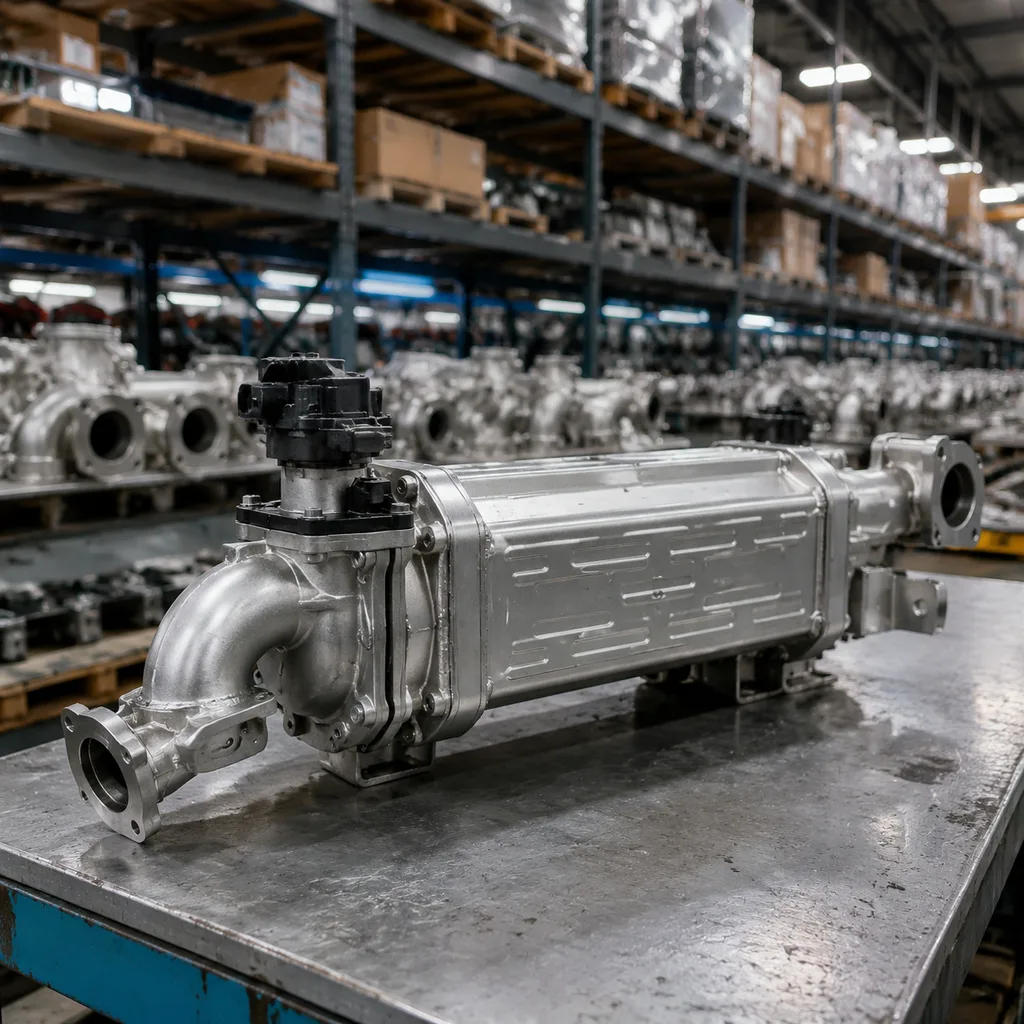
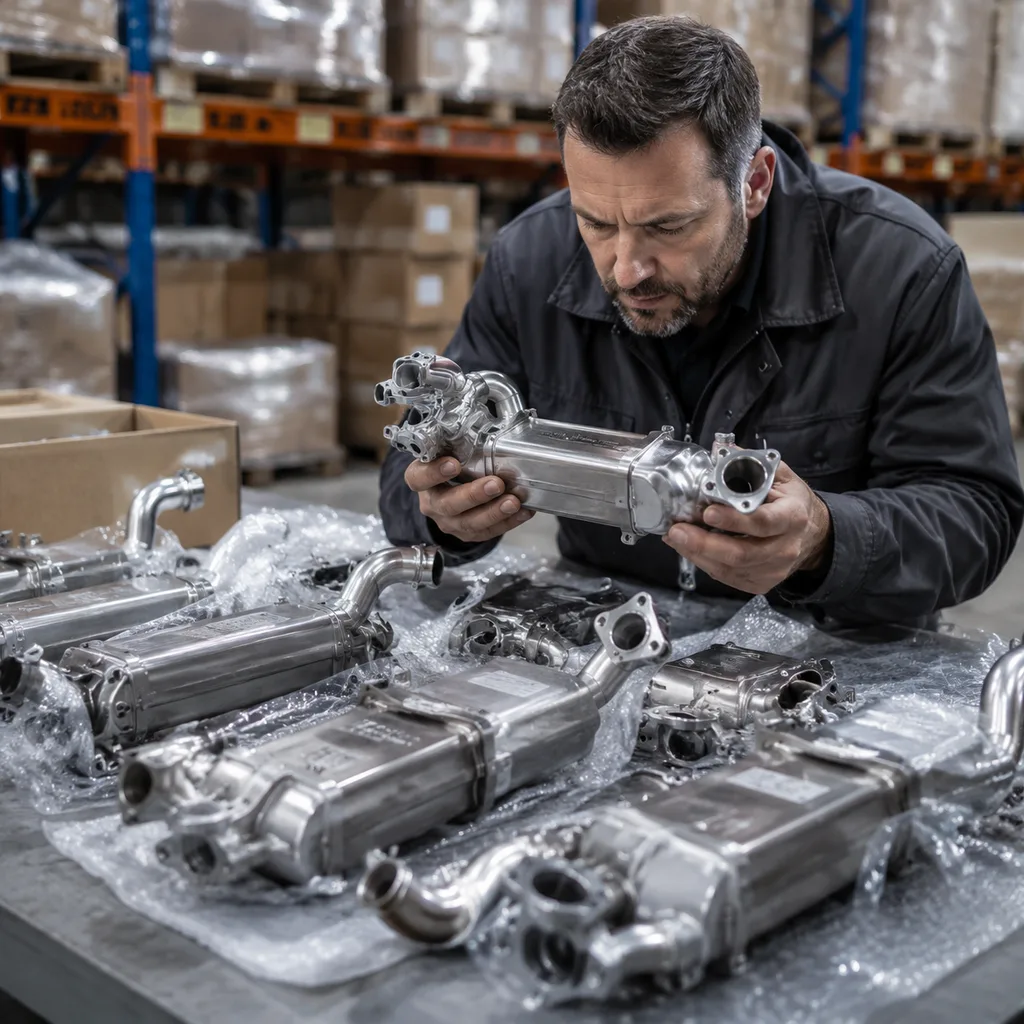
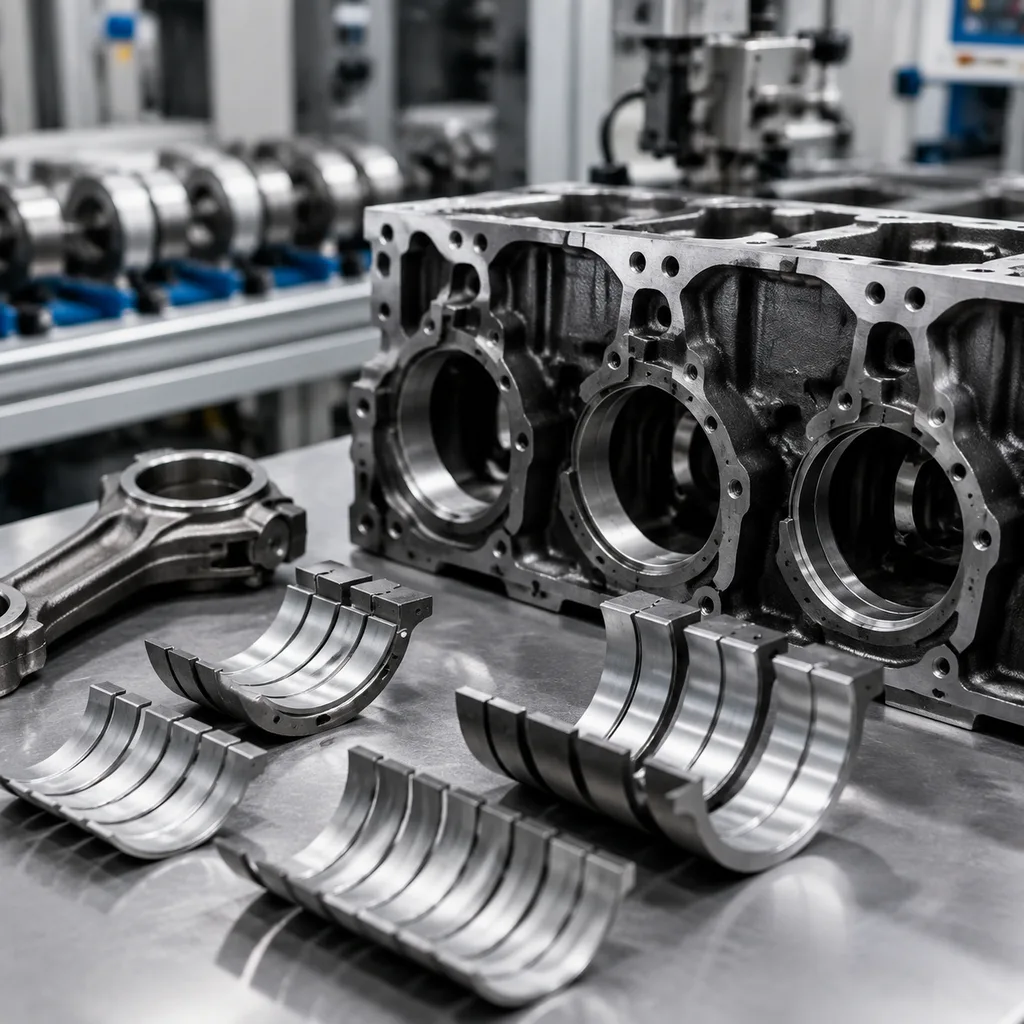
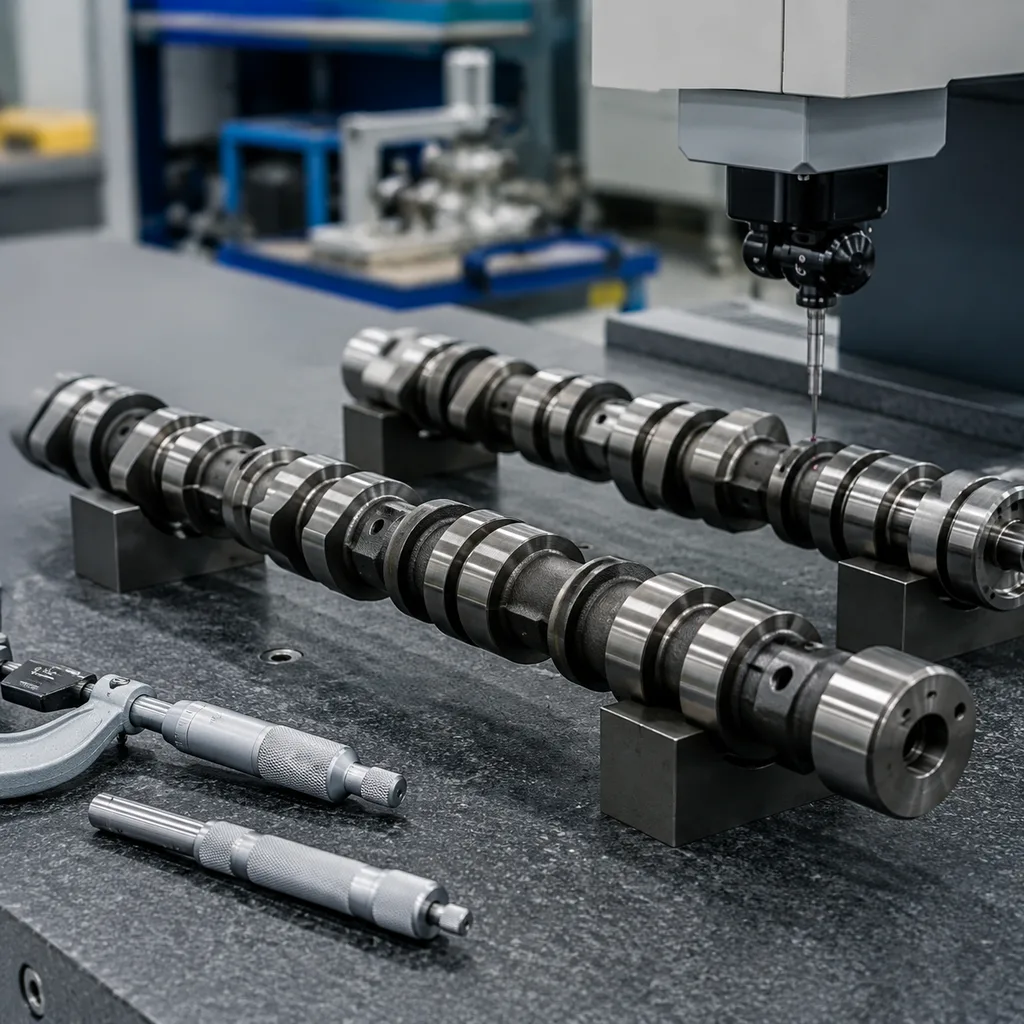
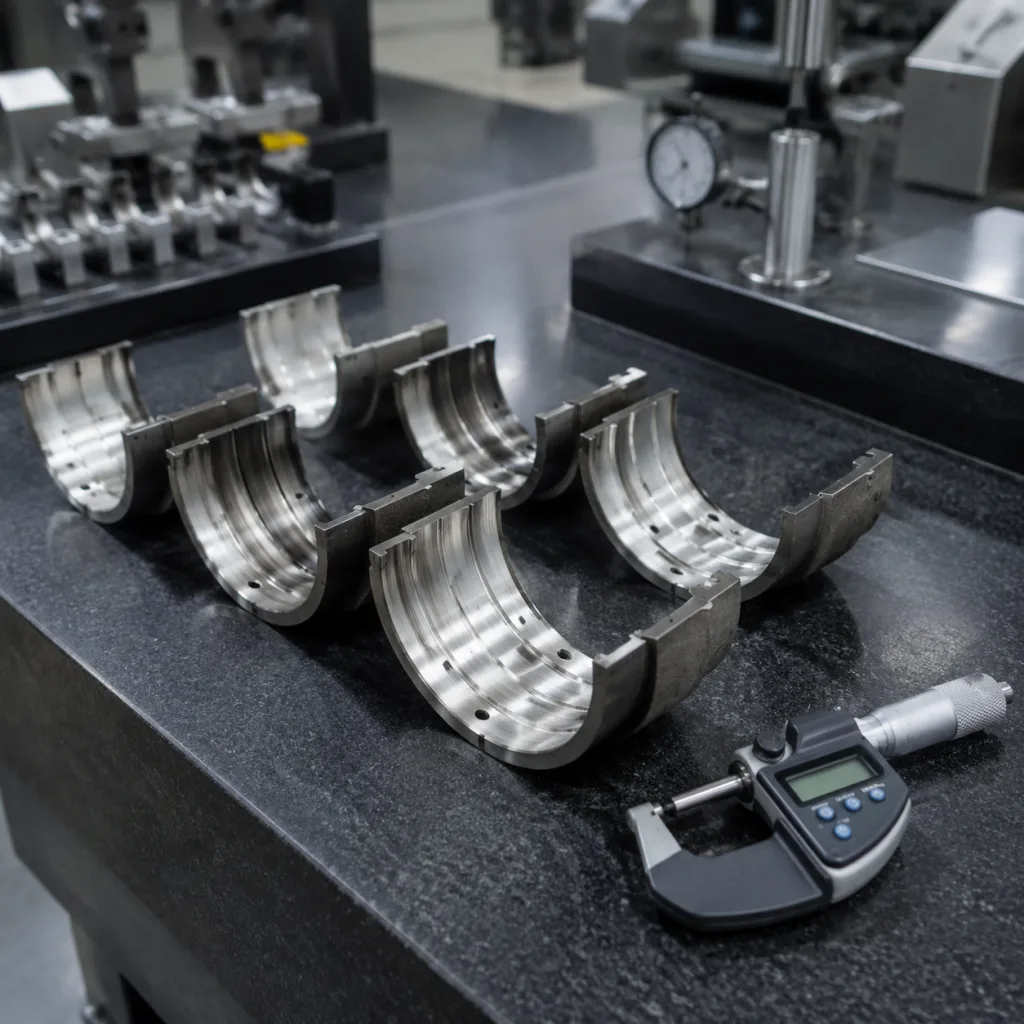
Buying Ram-fitment EGR coolers at wholesale level is not a catalogue exercise. The part sits in a hot, wet exhaust path, so a weak weld, warped flange or contaminated passage can become coolant loss, smoke, repeat labour and a warranty argument. Importers, distributors and repair-chain buyers need proof that the same geometry, pressure integrity and packaging standard will repeat across batches—not just one good sample. This guide shows how Driventus approaches egr cooler ram wholesale programmes: fitment definition, MOQ and lead-time planning, process controls, validation evidence, audit records and export packaging. Driventus is an independent aftermarket manufacturer; brand names are used only to identify fitment.
Decision Point: Is the Fitment File Strong Enough to Quote?
A Ram-fitment EGR cooler quote is only as accurate as the fitment file behind it. Photos help, but they do not control port clocking, flange flatness or bracket position. Before price negotiation, buyers should decide whether the programme is drawing-controlled, sample-controlled or still too vague to release.
A usable sourcing file normally includes:
Engine family, model-year range, fuel type, emissions generation and target market region
OE-style cross-reference format where applicable, used only when supplied or approved by the buyer
Inlet and outlet flange drawings, verified samples or controlled measurement data
Coolant port orientation, hose connection outside diameter, bead position and clamp working area
Mounting-point details, including bolt-hole diameter, centre distance, thread specification and bracket datum
Exhaust gas path material grade, wall thickness target and joint requirement, typically stainless tube and shell sections controlled by buyer drawing or approved sample
Gasket interface requirements, including sealing-face flatness, burr limits and protection from weld spatter
Batch traceability, pressure-test records, carton specification and pallet-loading requirement
If drawings exist, define measurable dimensions and inspection datums before sampling. If they do not, seal a golden sample, measure it and photograph the datum scheme. The same reference should then govern sample approval and mass inspection.
Critical checks include flange flatness, bolt-hole true position, tube angle, cooler body envelope, port clocking and distance from mounting datum to sealing face. Buyers can review related engine and emissions components in our catalog, including EGR-related assemblies under engine components. For private-label or drawing-controlled projects, custom manufacturing is the better route because tooling, validation plans and inspection criteria are agreed before sampling.
MOQ and Lead Time: What Changes the Buying Risk?
Wholesale EGR cooler demand rarely behaves evenly. A few references move quickly; others protect coverage but sit at lower volume. Treating both groups the same creates stock risk, slow sample approval or rushed production.
Sourcing item
Typical wholesale consideration
Buyer document to request
Initial sample order
2–5 units for visual and bench confirmation; 10–50 units if field-trial stock is required
Sample inspection report, pressure-test record and photos of capped ports
Production MOQ
Commonly 100–300 units per reference for active items; 300–800 units where special tubes, castings or fixtures are needed
Quotation with carton quantity, test method, lead-time and validity period
Mixed container order
Consolidated SKUs for regional distributors, often with 3–10 references per shipment
Packing list by SKU, pallet plan, gross weight and carton count
New-tooling project
MOQ depends on flange machining, tube bending, stamping, brazing fixture and checking fixture cost
Drawing, tooling quotation, sample schedule and PPAP-style validation plan
Repeat order lead-time
Usually 30–60 days after deposit, artwork approval and material confirmation
Production schedule, inspection plan and batch traceability method
</tr></thead><tbody> </tbody></table>For egr cooler ram wholesale orders, Driventus first confirms whether the reference uses existing tooling, modified tooling or a new development route. That matters. A catalogue listing may still need dimensional confirmation before it is safe to scale.
Lead time is shaped by stainless tube supply, machined flange stock, welding or brazing capacity, surface treatment, pressure testing and export packing. Price is shaped by more than the metal part: gasket kits, mounting hardware, protective caps, colour cartons, neutral cartons, barcode labels, palletisation and non-wood export packing all change the delivered cost.
Packaging deserves an early decision. Coolers can arrive unsellable if ports bend, gasket faces scratch or debris enters the gas path. A robust export pack uses capped ports, desiccant where required, formed pulp or foam supports around the cooler body, double-wall cartons for heavy references and pallet stretch-wrap with corner protection. Define maximum carton weight and pallet height before artwork approval.
Failure Modes the Factory Must Control
Driventus manufactures engine and powertrain components in Taizhou, Zhejiang, and operates under IATF 16949:2016 and ISO 9001:2015. Those systems support document control, corrective action, supplier management and traceability, but they do not replace part-specific EGR cooler controls. Buyers preparing an audit can review our quality system.
The common failures are practical: coolant leaks, distorted flanges, poor bracket alignment, blocked passages, weld spatter on sealing faces and contamination left inside the cooler. Each one needs a process control, not a promise.
Important checkpoints include:
Incoming inspection for stainless tube, flange material, gaskets and mounting hardware, with material certificate review where required
Tube cutting, bending and end-forming checks against fixture gauges to control length, angle and bead position
Flange machining checks for bolt-hole diameter, sealing-face finish, flatness and datum-to-port position
Welded or brazed-joint visual inspection against agreed acceptance criteria for undercut, porosity, incomplete fusion and spatter
Air-under-water or dry pressure testing for coolant-side leakage, with test pressure, hold time and acceptance limit recorded in the control plan
Fixture checks for flange flatness, bolt-hole position, pipe orientation and mounting-bracket alignment before final packing
Cleaning, drying and capping to limit internal contamination before packing
Lot coding that links finished goods with production date, operator, pressure-test record and inspection batch
Agree tolerances before sampling. Sealing-face flatness, bolt-hole position, port angle and bracket alignment can be controlled by drawing, checking fixture or approved master sample. Where the buyer has no drawing, Driventus can build the inspection plan around critical-to-fit features and document the measurement method used for approval.
Importers selling into the EU and UK may also request declarations aligned with REACH (EC) No 1907/2006 for substances of very high concern where applicable. Packaging waste, labelling and market-specific importer obligations remain the importer’s responsibility unless separately contracted.
Spec Deep-Dive: Evidence That Should Approve Production
A credible wholesale programme defines approval evidence before mass production. Vehicle emissions regulations such as ECE R-83 apply at vehicle level; an aftermarket EGR cooler supplier should not claim vehicle manufacturer approval or emissions certification unless that approval exists and is documented. The buyer’s practical target is OE-equivalent fit, pressure integrity and stable heat-exchanger performance inside the agreed application scope.
Production Approval Evidence
Dimensional match: flange face position, bolt-hole diameter, pipe angle, cooler envelope and bracket location checked against sample, drawing or checking fixture
Pressure integrity: coolant-side pressure test performed on every production unit or under an agreed sampling plan, with pressure level, hold time and leak criterion defined in writing
Thermal cycling: sample parts exposed to repeated heating and cooling to check joint stability, tube expansion behaviour and bracket fatigue risk
Corrosion resistance: material and surface condition reviewed for coolant and exhaust condensate exposure, especially in weld zones and low points where condensate can collect
Flow restriction: gas and coolant passages checked to avoid excessive restriction from poor fabrication, collapsed tubes, internal residue or misaligned inserts
Gasket interface: sealing faces checked for flatness, burrs, weld spatter, scratches and transit damage before packing
Installation trial: first samples checked on a fixture, engine mock-up or buyer-supplied vehicle where possible to confirm port access, hose clearance and fastener engagement
Tie validation evidence to the purchase order, part reference and batch number. That one step shortens warranty review when a distributor reports coolant loss, exhaust smoke, installation interference or abnormal restriction.
A practical sequence is simple: sample build, dimensional report, pressure-test report, buyer confirmation, pilot order, repeat production. If field complaints appear later, the supplier should trace whether affected parts came from the same welding batch, pressure-test station, gasket lot or packing date. That is more useful than a generic certificate because it supports containment and replacement decisions.
Audit Scenario: One Good Sample Is Not Enough
Imagine the first sample fits, the price is acceptable and the buyer is ready to place a mixed-SKU order. The audit should now answer a harder question: can the factory repeat that sample after 300 units, a fixture change and export packing?
Ask questions that connect records to delivered goods:
Which operations are in-house and which are subcontracted, including tube forming, welding, brazing, machining, coating, cleaning and packaging?
Are pressure-test parameters recorded by batch, by operator or by individual serial number, and can records be retrieved by shipment date?
What is the specified test pressure, hold time, medium and rejection rule for coolant-side leakage?
How are nonconforming welded or brazed joints segregated, reviewed and dispositioned?
What fixture controls prevent port-angle drift, bracket misalignment and flange distortion between batches?
How are gasket surfaces protected during final packing, palletisation and container loading?
Can the supplier provide 8D corrective action reports for repeat defects, including containment, root cause and permanent action?
How are engineering changes communicated to distributors that already hold stock?
Are gauges, pressure sensors, torque tools and checking fixtures calibrated under a controlled schedule?
Calibration is not paperwork decoration. If gauges or pressure-test equipment are uncontrolled, a passed leak test may not mean much. For larger orders, Driventus can support remote or on-site audit preparation with process flow, control plan, inspection records, pressure-test logs, material certificates where applicable and packaging photos.
Request one recent batch file instead of a generic quality presentation. A useful file contains the purchase order, production date, incoming material check, in-process inspection, final pressure-test summary, any nonconformance record, packing list and carton-label example. It shows whether traceability works at shipment level.
Commercial Q&A Before the Purchase Order
What should be locked before PO release? Define Incoterms, named port, MOQ by reference, price breaks, quotation validity, deposit, balance-payment timing and whether inspection before shipment is required. Stainless steel and freight costs can move, so validity matters.
What labelling details affect export readiness? Confirm carton label format, barcode requirement, country-of-origin marking, private-label artwork approval, pallet height, gross weight limits, container loading plan and whether mixed-SKU pallets are allowed.
Should gasket kits or hardware be included? Decide before quotation. If the programme requires spare gaskets, clamps, bolts or other hardware, list the kit contents on the quote so the distributor is not comparing unlike prices.
How should warranty claims be handled? Agree the evidence needed: installation photos, mileage, failure description, batch code and pressure-test result where available. Fast claim handling depends on clear batch coding and practical documentation.
How does Driventus support wholesale buyers? Driventus exports to more than 60 countries and supplies aftermarket distributors, wholesalers, OEM/Tier-1 customers and multi-location repair chains. We do not claim approval or endorsement by any vehicle manufacturer. Brand names and model names are used only to identify fitment.
For active sourcing, provide the application list, annual volume estimate, target market, packaging requirement and any OE-style cross-reference already used in your system. Our team can then confirm available references, sample timing, MOQ, price-break logic, lead-time, validation route and quotation details. To start a sourcing review, request a quote.
Frequently asked questions
Provide the application list, quantity by reference, target market, packaging requirements, required Incoterms and any existing OE-style cross-reference in your system. Photos, drawings or samples help confirm port orientation, flange geometry, hose connections, mounting points and gasket interfaces.
Yes. Private-label supply can include buyer carton artwork, barcode labels, pallet specifications and agreed documentation. For new references, tooling status, validation scope, sample timing, MOQ and price-break logic are confirmed before sampling.
No. Driventus is an independent aftermarket manufacturer; brand names are referenced for fitment only. Any approval or endorsement claim would require specific written evidence, and we do not make such claims.
If you are comparing suppliers for Ram-fitment EGR coolers, send your SKU list, annual forecast, target MOQ, Incoterms and packaging requirements for a practical sourcing review at /contact.html