An engine bearing quote can look acceptable and still fail in the warehouse, on the audit table, or during repeat orders. For Infiniti fitment programmes, buyers need more than a catalogue match: they need controlled dimensions, stable metallurgy, usable batch records, packaging that survives export, and cross-reference data that will not confuse receiving teams. This guide reframes how to evaluate an engine bearing Infiniti supplier for aftermarket distribution, private-label ranges, and service-chain inventory. It covers decision points, failure modes, production controls, commercial planning, import documentation, and the intake data Driventus needs to quote accurately. Driventus manufactures engine and powertrain components in Taizhou, Zhejiang, and exports to more than 60 countries. Engine bearing supply is managed under IATF 16949:2016 and ISO 9001:2015 systems, with batch traceability and export documentation for B2B buyers. Driventus is an independent aftermarket manufacturer; vehicle brand names are used for fitment identification only.
Decision Gate: Is the Supplier Ready to Quote?
Start with a simple test: can the supplier turn your application request into a controlled technical file, or are they only matching names in a catalogue?
For Infiniti engine bearing sourcing, the first decision is not unit price. It is whether the supplier can connect fitment data, bearing geometry, material control, traceability, packaging, and export logistics in one repeatable programme.
A quote-ready supplier file should include:
Business licence and export registration
IATF 16949:2016 and ISO 9001:2015 certificate copies
Product drawings or controlled specifications for each bearing set
Material declaration and restricted-substance statement aligned with REACH (EC) No 1907/2006 where applicable
Batch traceability procedure from raw material to packed carton
Sample inspection report with wall thickness, width, crush height, and oil-hole position
Packaging specification for inner packs, master cartons, labels, and palletisation
Commercial terms covering MOQ, tooling responsibility, lead time, warranty process, and claim handling
Range building usually starts by grouping bearings by engine family, crankshaft journal size, housing bore, width, thrust configuration, and standard or undersize options. A capable supplier should work from buyer-provided application data, technical drawings, physical samples, or approved cross-reference lists. Generic OE-style references can help identify the part when supplied by the buyer, but they should not replace dimensional confirmation. Driventus does not claim approval or endorsement by any vehicle manufacturer.
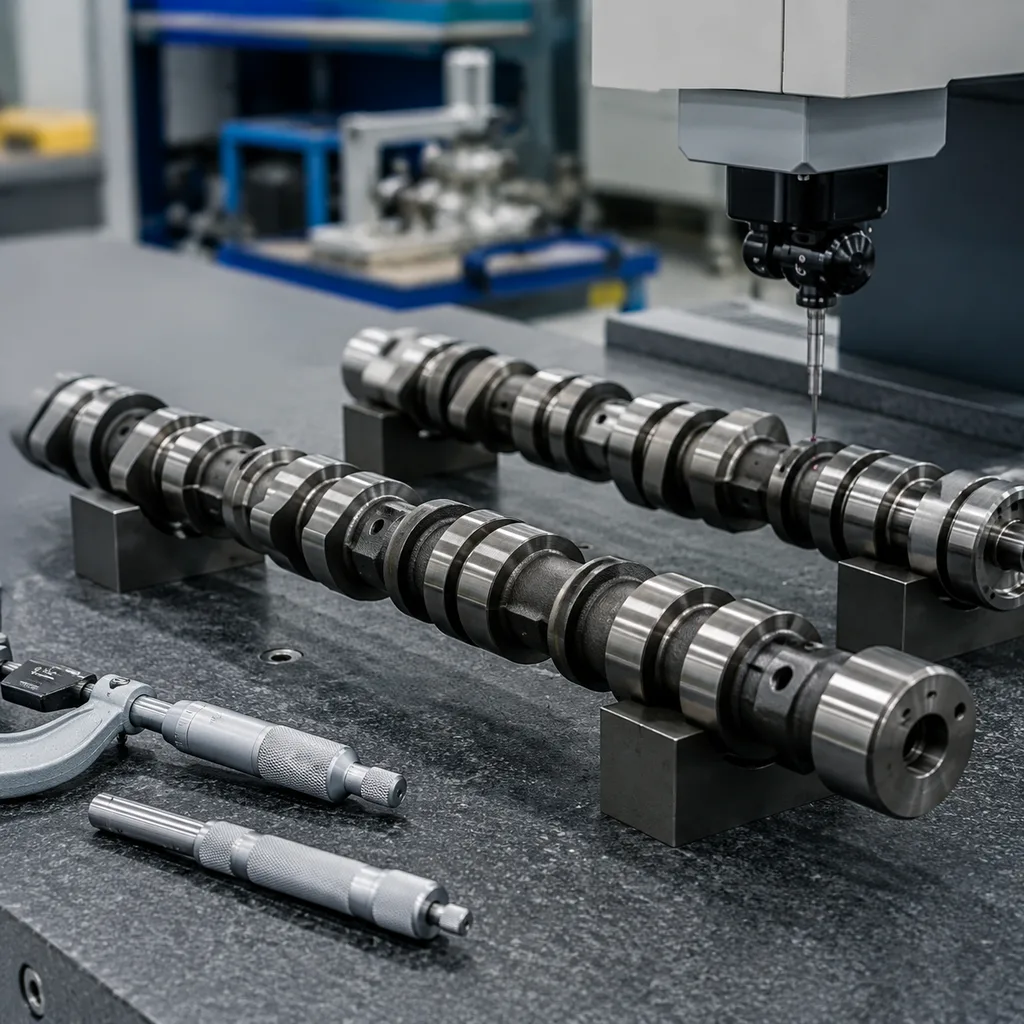
Make the first review measurable. Ask the supplier to state the measurement basis behind the sample or drawing set. A normal commercial checklist for a journal-bearing programme should define journal diameter to 0.001 mm, bearing wall thickness to 0.01 mm, width to 0.02 mm, and crush height to an internal target tied to housing bore. If the supplier cannot name the tolerance stack or inspection tool, the quote is not production-ready.
Also separate stocked sizes from made-to-order sizes. Standard, 0.25 mm undersize, and 0.50 mm undersize availability affects lead time, inventory risk, and whether the first order should be treated as sampling, pilot stock, or production replenishment.
Failure Modes That Production Controls Must Prevent
Engine bearing quality is built through repeated control, not final inspection alone. Small shifts in strip material, bonding, coating, machining, or deburring can affect oil clearance, housing retention, lubrication flow, noise, and service life.
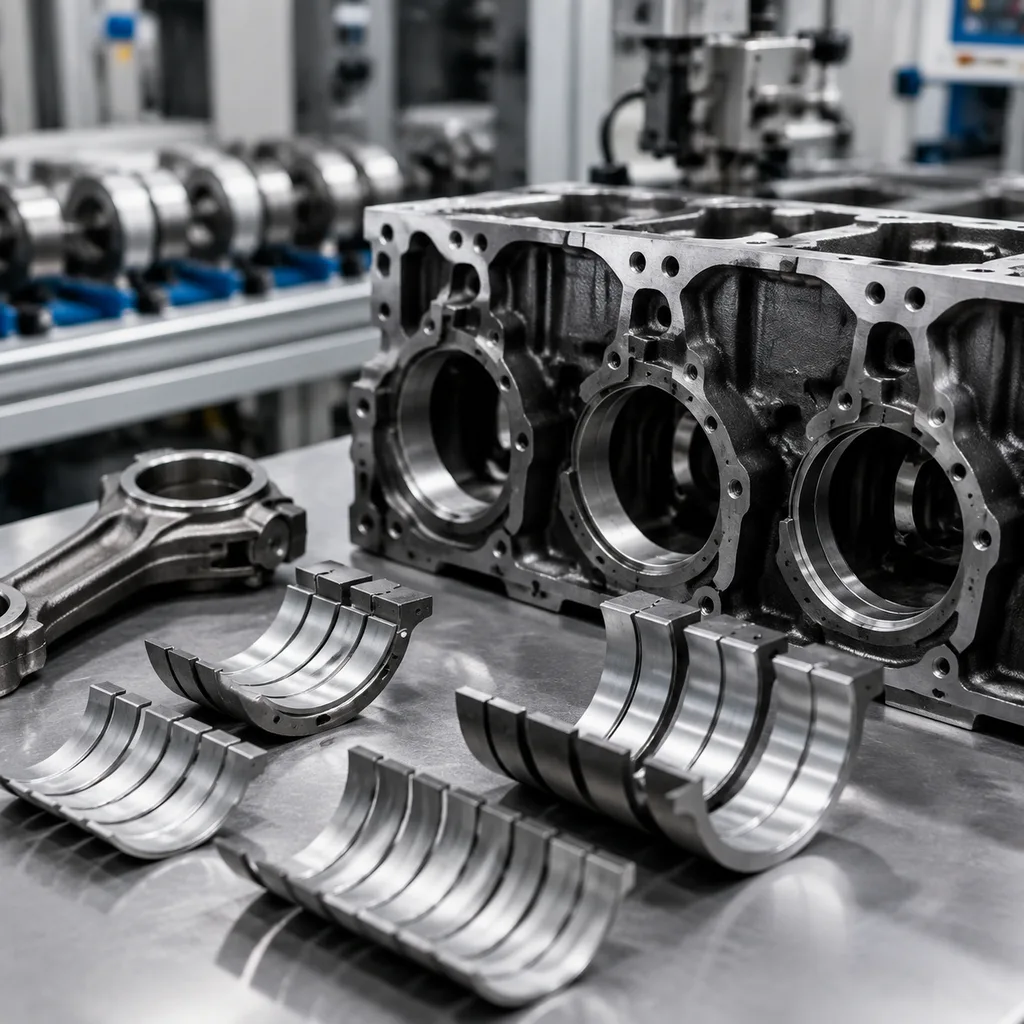
Typical aftermarket supply may include main bearings, connecting rod bearings, thrust washers, flanged bearings, or complete bearing kits. The supplier’s controls should cover both metallic structure and finished dimensions.
Control point
Why it matters to buyers
Evidence to request
Backing strip material
Supports fatigue strength and housing fit
Mill certificate or incoming inspection record
Intermediate layer bonding
Reduces delamination risk
Process parameters and section inspection
Overlay uniformity
Affects embedability and running-in behaviour
Coating thickness report
Wall thickness
Controls oil clearance
CMM or dedicated gauge report
Crush height
Maintains retention in housing bore
In-process inspection sheet
Oil-hole and groove position
Supports lubrication flow
Dimensional layout report
Surface finish
Helps oil-film formation and reduces abnormal wear risk
Roughness measurement or final inspection record
Cleanliness and deburring
Reduces assembly contamination risk
Final inspection record
</tr></thead><tbody> </tbody></table>Driventus manages engine component production through its documented quality system, including incoming material checks, in-process controls, final inspection, and traceable non-conformance handling. For export programmes, production inspection records can be provided by batch when agreed in the purchase contract.
Do not accept a broad capability statement as a substitute for limits. A mainstream bearing programme should show wall-thickness variation contained within ±0.01 mm on the approved size range, width within ±0.02 mm, oil-hole location within ±0.05 mm, and crush height controlled by a fixture or go/no-go method tied to the designated housing bore.
For coated products, request coating thickness by batch, normally measured in microns, and ask how the overlay is protected from scratches during conveying and packing. For repeat sourcing, ask whether SPC is used on critical dimensions. Trend data is more useful than one clean sample when the purchase plan depends on repeat orders.
MOQ and Lead Time by Buying Scenario
MOQ should follow SKU maturity. One figure for every bearing set usually creates either excess inventory or an unreliable launch plan. Fast-moving applications can carry larger lots. Slower Infiniti references may need phased launches, mixed-carton planning, or consolidation with other engine components.
Use separate commercial stages:
Sample order: Confirms dimensions, packaging concept, and catalogue setup.
Pilot order: Tests sell-through assumptions, warehouse receiving, and import documentation flow.
Repeat order: Uses forecast, safety stock, production cycle, and sea or air freight planning.
Lead time is often shaped less by bearing machining than by the order mix. Material scheduling, packaging artwork, carton labels, buyer inspection, and export documents can all move the shipment date. A realistic supplier should disclose those variables before confirming delivery, especially when the purchase order combines multiple bearing families or private-label packs.
A practical framework is to quote MOQ by product state. Standard catalogue SKUs may support 300 to 500 sets per reference for repeat production. Private-label or newly tooled references often require 1,000 to 3,000 sets per reference to cover setup, packing, and carton purchase. Existing-tooling samples commonly take 7 to 15 days. Pilot production often needs 20 to 35 days. Repeat orders usually run 25 to 45 days depending on artwork, inspection load, and container space.
If one shipment contains mixed SKUs, ask whether MOQ applies per part number, per engine family, or per consolidated order. Price should be structured the same way: repeat-stock price, small pilot-lot price, and a re-quote trigger if annual demand falls below the agreed threshold. Request price breaks at 500, 1,000, 3,000, and 5,000 sets so annual budgeting is tied to actual volume.
Engine bearing buyers can review related engine products in our catalog and the engine component range at /products/engine-components.html. For controlled private-label programmes, Driventus can discuss custom manufacturing for drawings, packaging, labelling, and batch documentation.
Audit Walkthrough: Follow One Bearing Set
A useful factory audit follows one bearing set through the system. Do not stop at certificates or a polished sample. Check whether the factory can reproduce the same part across batches and whether records match the product family you are buying.
Key audit areas:
Quality management: Confirm certificate scope under IATF 16949:2016 and ISO 9001:2015, internal audit records, corrective-action closure, management review, and complaint handling.
Material traceability: Match batch codes on raw strip, work-in-progress bins, finished bearings, inspection reports, and carton labels.
Gauge control: Review calibration status for micrometers, height gauges, coating thickness equipment, roughness testers, and fixture gauges.
Process capability: Request recent capability data on wall thickness, width, crush height, and other agreed critical dimensions where available.
Non-conforming product control: Confirm segregation, disposition authority, rework approval rules, and records showing how rejected parts are kept out of export cartons.
Packing control: Inspect label accuracy, anti-corrosion packaging, carton strength, pallet handling, and barcode or SKU consistency where required.
Audit records should be specific. General engine-parts capability is not enough because engine bearings depend on small dimensional increments that influence oil clearance, retention, and field reliability.
Walk the practical flow. Verify how incoming strip is identified, how WIP is segregated by engine family, how first-article approval is released, and what happens when a dimension drifts toward the control limit. Ask to see the calibration sticker and certificate number on the exact micrometer or gauge used in production. Confirm that the same tool family supports the inspection report you will receive with each batch.
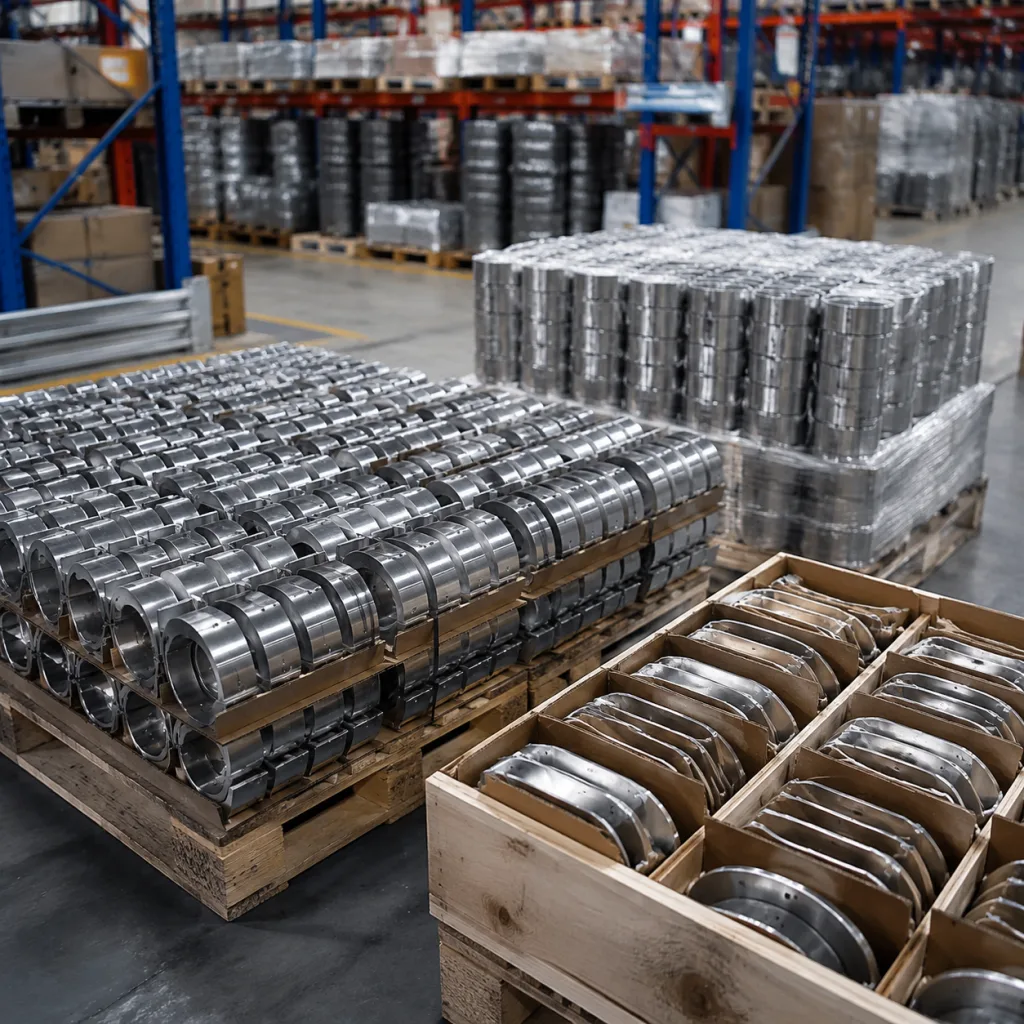
If the supplier claims process capability, ask for at least three recent production lots with measured wall thickness and width data. You are looking for stability over time, not a perfect result on audit day. For export programmes, also check pallet height, carton compression rating, and whether the outer box is designed for sea-freight humidity. Transit damage creates avoidable claims even when the bearing is in specification.
Import File Checklist: Avoid Receiving Errors
Import documentation should be aligned before production starts. Otherwise, the supplier, buyer, freight forwarder, customs broker, and warehouse may all work from slightly different SKU and packaging data.
Recommended documents include:
Proforma invoice with agreed Incoterms
Packing list by SKU, carton, and pallet
Certificate of origin where required
Material declaration and REACH (EC) No 1907/2006 statement when applicable to the market
Inspection report by production batch
Product images and catalogue data for buyer systems
Label approval file for private-label or distributor packaging
Claim procedure with photo, sample return, and batch-code requirements
For EU, UK, US, Canadian, Australian, and Brazilian buyers, the file should also support warehouse receiving. Inner box, outer carton, pallet mark, and electronic SKU file need consistent data. Mixed use of application names, engine codes, undersize references, and internal factory codes can cause receiving errors or catalogue mismatches. The supplier should maintain a controlled cross-reference table approved by the buyer.
The import file should also state the rules that drive payment and release. Agree whether the order ships under EXW, FOB, CIF, or DDP, because the Incoterm affects freight responsibility, insurance, and customs risk. The packing list should state net weight, gross weight, carton quantity, and carton dimensions so forwarders can calculate cubic volume and plan consolidation.
For recurring orders, keep the same carton code, label layout, and inner-pack count for at least one full sales cycle where possible. Changing pack architecture mid-year often creates distributor inventory mismatches. If barcoding is required, confirm whether labels use buyer SKU, internal factory code, or both, and whether the barcode is GS1-compatible or only for internal warehouse use.
Q&A: How Driventus Handles Bearing Programmes
What does Driventus supply? Driventus supplies engine and powertrain components to aftermarket distributors, wholesalers, OEM/Tier-1 purchasing teams, and multi-location repair chains. For Infiniti bearing enquiries, the focus is fitment confirmation, controlled sampling, stable packaging, repeatable batch inspection, and export-ready documentation.
What sourcing support is available?
Application review from buyer-provided data, drawings, samples, or existing SKU lists
Main bearing, rod bearing, thrust washer, flanged bearing, and kit-level range planning
Private-label packing according to agreed carton, label, and fitment wording specifications
Export documentation for sea, air, or consolidated shipments
Commercial planning for MOQ, forecast, safety stock, and repeat-order scheduling
What should buyers send first? The most efficient intake package is one file with part number, engine code, bearing type, current supplier reference, target annual volume, and dimensions measured from the sample set. If a packing standard already exists, include carton count, inner-pack count, label language, and barcode requirements for pouch, inner box, or outer carton.
How does Driventus classify the request? After review, Driventus can advise whether the reference should be treated as stocked, semi-custom, or fully custom. That classification affects tooling, inspection level, MOQ, lead time, and quotation timing.
What if one order covers multiple countries? Identify which markets need local-language labels or compliance wording. Artwork approval can add several days, especially for private-label shipments.
Driventus is an independent aftermarket manufacturer; brand names are referenced for fitment only. We do not state or imply vehicle manufacturer approval. Procurement teams can request a quote with application lists, drawings, sample photos, target annual volume, packaging requirements, and destination market. This keeps the quotation tied to real production conditions instead of a generic price list.
Frequently asked questions
Send the engine application, bearing type, sample photos or drawings, quantity, destination country, packaging requirement, and any existing cross-reference data. If available, include measured dimensions from the current bearing set and indicate whether standard or undersize bearings are required. For a faster quotation, also include target annual volume, preferred Incoterm, and whether you need private-label packing or neutral cartons.
Yes. Private-label supply can be reviewed for B2B orders, subject to MOQ, artwork approval, carton specification, and legally appropriate fitment wording. Label content should be approved before production starts. Buyers should also confirm inner-pack quantity, carton dimensions, barcode format, and whether the print file needs one-color or multi-color packaging, because these details affect tooling and lead time.
No. Driventus is an independent aftermarket manufacturer; brand names are referenced for fitment identification only. We do not claim approval, endorsement, authorisation, or affiliation with any vehicle manufacturer.
For sourcing review, send your SKU list, target volumes, and packaging requirements. Driventus can confirm feasibility, MOQ, and lead time at /contact.html