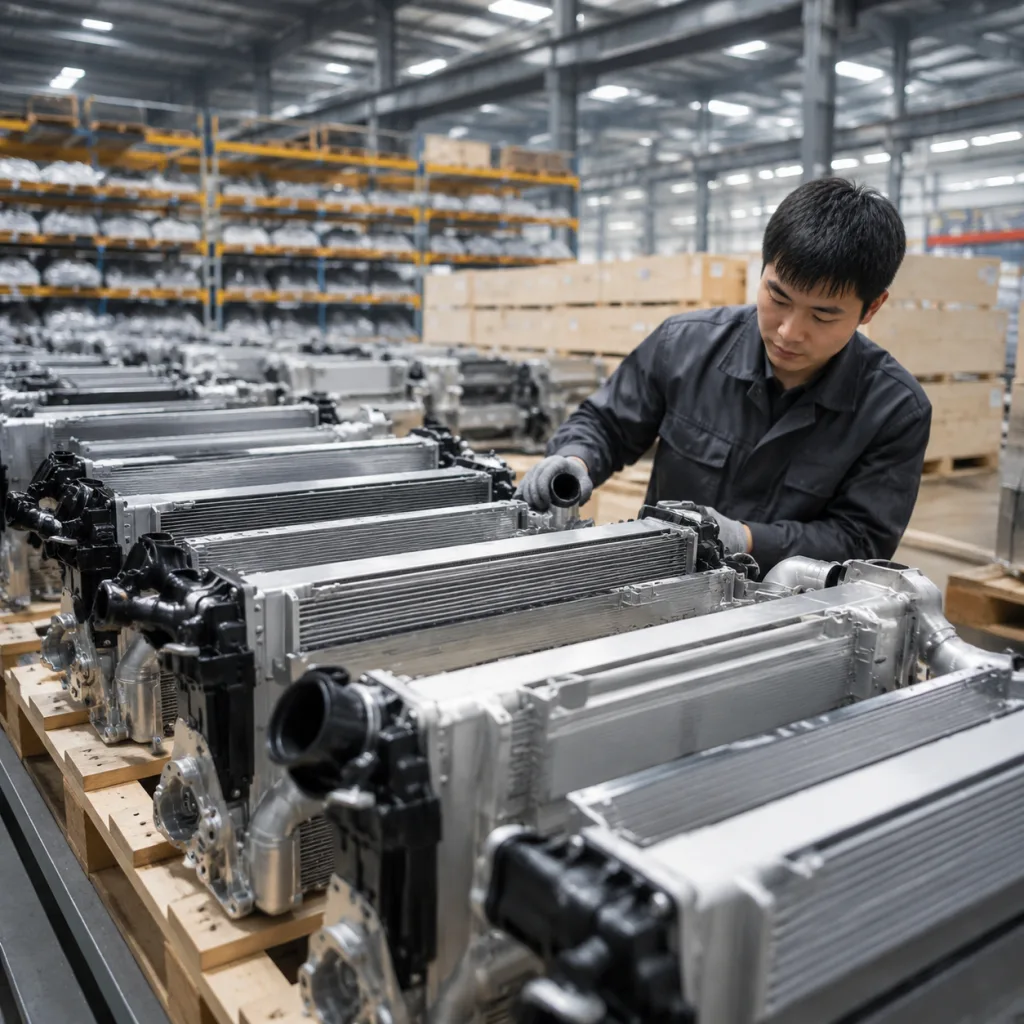
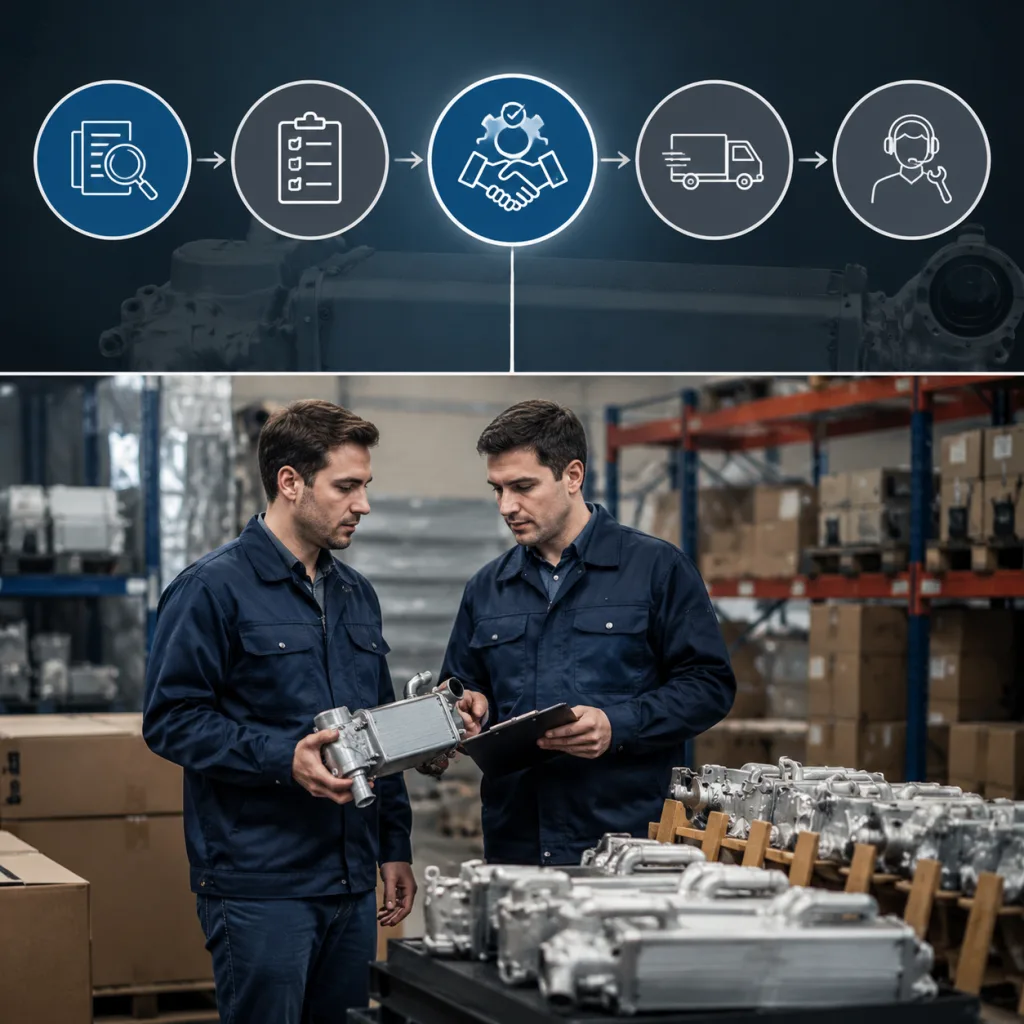
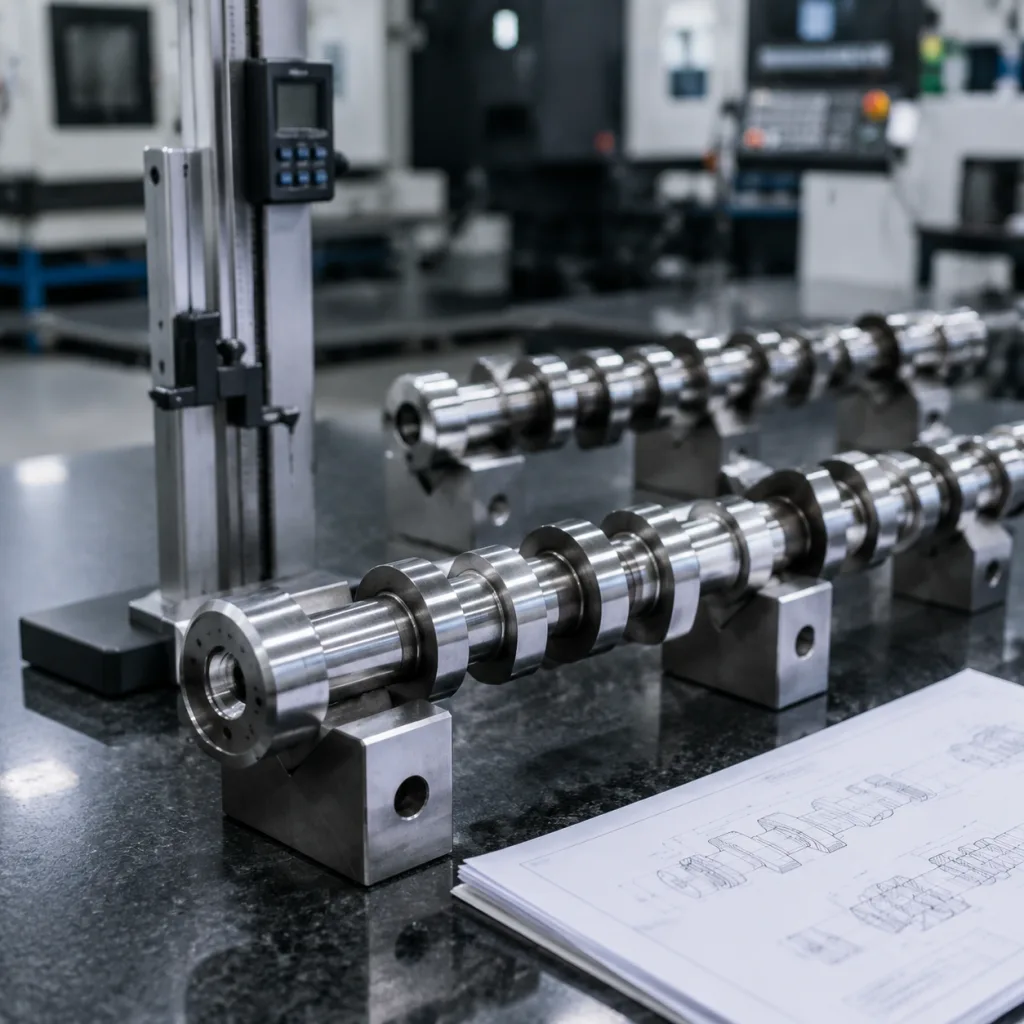
Procurement teams building an `egr cooler mitsubishi wholesale` program need more than a matching catalogue photo. The part must fit the target engine, survive repeated heat and pressure cycles, arrive with usable documentation, and stay available across repeat orders. For Mitsubishi light commercial vehicles, diesel passenger applications, fleet maintenance, dealer-channel replacement, and remanufacturing programs, demand is often planned months ahead but released in batches. That makes dimensional accuracy, weld integrity, corrosion resistance, packaging control, and test repeatability central to the buying decision. Driventus supplies engine and powertrain components from Taizhou, Zhejiang, exporting to 60+ countries with production aligned to IATF 16949:2016 and ISO 9001:2015. Driventus is an independent aftermarket manufacturer; brand names are used for fitment reference only. This guide shows the decision points, failure modes, validation records, and commercial terms sourcing teams should confirm before approving a wholesale production order.
How to tell a fitment match from a costly mismatch
Wholesale purchasing for an EGR cooler should start with application control, not catalogue resemblance. Mitsubishi coverage can vary by engine code, emission version, pipe routing, coolant inlet angle, flange spacing, bracket position, gasket face, and sensor port layout. Small differences can create installation stress, coolant leaks, or repeat warranty claims even when the part looks close enough at a glance.
Before approving a vendor, buyers should confirm:
OE cross-reference, engine family, and model-year coverage against the buyer's application file
Overall envelope dimensions, mounting hole centres, flange profile, and bracket geometry, with critical dimensions controlled to the approved drawing and typical fit tolerance held within ±0.5 mm on hole-centre and flange-interface features unless the drawing specifies otherwise
Coolant port orientation, exhaust pipe interface, gasket surface finish, and sensor-port layout, including thread type and seat depth where applicable
Core material, tube-wall thickness, header design, and weld specification, plus wall thickness documentation such as 0.8 mm to 1.2 mm stainless sections on many aftermarket programs when matching OE thermal mass is required
Pressure-test and leak-test method used for samples and production batches, including test pressure, hold time, and allowable pressure drop or leak rate
Packaging, labelling, carton marking, and export document format for destination customs, including part number, quantity, net/gross weight, and batch code on every carton
A credible wholesale source will provide drawings, sample confirmation, and batch traceability before mass production. If a supplier cannot confirm the application from technical data, treat the item as unapproved rather than relying on interchange notes alone. For broader engine programme sourcing, see our catalog and engine components.
Inside the cooler: the construction details that decide service life
An EGR cooler works in a harsh loop: hot exhaust gas passes through one side, coolant runs through the other, and the assembly expands and contracts thousands of times in service. Condensate, soot, acidic exhaust by-products, vibration, and installation load all affect service life. Construction quality therefore matters as much as nominal fitment.
Item
Buyer specification to check
Why it matters
Core material
Stainless steel or equivalent corrosion-resistant alloy, with material certificate showing grade and heat number
Resists condensate, exhaust acid exposure, and premature internal corrosion
Weld quality
Continuous, controlled, leak-tested seams, with visual criteria for undercut, porosity, and incomplete fusion
Helps prevent coolant loss, exhaust cross-leak, and early cracking
Pressure test
100% unit test or documented batch test, commonly at 1.0–1.5 bar coolant-side pressure or the program-specific requirement
Detects pinholes, weak joints, and poor sealing before shipment
Thermal cycle validation
Repeated hot/cold cycling under defined conditions, often 50–200 cycles depending on program severity
Simulates expansion stress seen in real service
Port alignment
OE-equivalent geometry and gasket-face position, with bracket and flange alignment held to the approved fixture
Reduces installation stress and sealing failure
Internal flow path
Consistent tube layout and clean passages, with no loose scale or weld spatter
Supports heat transfer and limits restriction risk
Surface finish
Clean, burr-free, assembly-ready surfaces, especially on gasket and hose interfaces
Improves sealing, handling safety, and workshop installation
</tr></thead><tbody> </tbody></table>For procurement teams, the practical question is not whether the unit looks similar. It is whether the cooler can tolerate thermal shock, pressure variation, vibration, and exhaust deposits without distortion, cracking, or internal fouling. Ask for test records, drawing control, and inspection criteria rather than only a sample photo. A documented quality system should support incoming inspection, in-process control, final release, and corrective action when nonconformity appears.
Commercial terms that prevent supply shocks later
A reliable wholesale program depends on commercial terms that match real demand patterns. Buyers should confirm MOQ, lead time, replenishment logic, and document flow before signing the first purchase order. For Mitsubishi EGR cooler orders, common supplier problems include long tooling delays, inconsistent labelling, shipment-to-shipment variation, and weak traceability once parts move through distributors or fleet depots.
Recommended commercial checks:
MOQ by part number, by carton configuration, and by mixed-order shipment; for many export programs a practical MOQ sits at 50–100 pieces per SKU for stock items and 300–500 pieces for custom revisions, depending on tooling and packaging complexity
Standard lead time for sample approval, pilot order, first production run, and repeat order; buyers should separate sample timing of 7–14 days, pilot build of 15–25 days, and repeat production of 25–40 days unless raw-material inventory is already on hand
Incoterms, shipment consolidation, pallet specification, and carton strength for export handling, including whether cartons are drop-tested or compression-rated for long-distance sea freight
Spare-parts reserve policy for fleet customers and scheduled maintenance contracts, especially where a 2%–5% safety stock is needed to cover service spikes and transit delay
Forecast review process for annual volume, seasonal demand, and call-off timing, so the factory can reserve tubing, fixtures, and welding capacity
Document pack: commercial invoice, packing list, COO, test certificate, and material declarations where required, with batch/lot numbers matching the packing list and carton labels
If your program includes private label or application-specific changes, custom manufacturing can cover drawing revision, port repositioning, packaging changes, barcode requirements, and buyer-specific inspection points. For annual-volume buyers, forecast-based scheduling helps keep materials, fixtures, and production capacity aligned instead of restarting the supply chain for every replenishment cycle.
Validation tests that expose weak suppliers before the first shipment
Before approving a supplier for wholesale supply, buyers should ask for validation that reflects likely field failures. Generic claims such as "high quality" or "OE standard" are not enough unless they are backed by test methods, acceptance criteria, and traceable records.
Useful checks include:
Coolant-side pressure retention under a defined test pressure and hold time, for example 1.0 bar for 5–10 minutes with no visible leak and no measurable pressure decay beyond the agreed limit
Exhaust-side leak detection before and after thermal exposure, using air-under-water, helium, or an equivalent method based on the customer standard
Dimensional inspection against the approved drawing and control sample, with critical dimensions recorded on the first article and periodic batch report
Weld and end-tank corrosion resistance assessment under relevant exposure conditions, such as salt-spray or condensate-exposure testing when the application sees severe humidity and road salt
Flow-path verification to reduce excessive restriction after soot accumulation, including before/after flow comparison where required
Gasket-face flatness and flange alignment checks to prevent installation leakage, with flatness typically controlled within 0.1–0.3 mm on sealing faces unless the OE drawing is tighter
Batch-level traceability from raw material lot to final inspection release, so any nonconformance can be isolated by date, line, and lot number
Where a program needs higher confidence, suppliers may align internal validation with published durability-related practices such as SAE J2527, or with vehicle-specific emission, installation, and service requirements where applicable. For regulated markets, confirm material compliance under REACH (EC) No 1907/2006 and make sure declarations are available for customs, importers, and downstream buyers.
A production-ready supplier should be able to show how each batch is traced through raw material receipt, forming, welding, cleaning, testing, packing, and shipment. That traceability helps a distributor isolate an issue by batch or shipment instead of stopping the entire line or recalling unrelated inventory.
Where Driventus fits in the buying process
Driventus supports B2B buyers that need a repeatable supply base for aftermarket, OEM-support, remanufacturing, and fleet channels. The focus is on fitment control, stable manufacturing, and document discipline, so technical approval and commercial supply stay connected from sample review through repeat shipment.
What procurement teams typically receive:
Engineering review against the target application, drawing, OE reference, or sample, with critical dimensions and interfaces checked before quotation finalisation
Sample confirmation before volume release, including dimensional and functional checks, typically with 1–3 sample pieces and an approval record before pilot production
Production planning based on forecast, scheduled call-off, or agreed replenishment cycles, with optional split shipments for monthly releases
Export-ready labelling, carton marking, and packing formats for distributor handling, including barcode or SKU formatting where required by the buyer system
Batch and inspection records linked to production and shipment information, so incoming inspection can match lot numbers to the purchase order
Support for adjacent engine and cooling components where vendor rationalisation is required, which can lower freight cost and shorten supplier lead time when combined on one order
For import managers, the advantage is working with a manufacturer that can coordinate technical confirmation, production planning, and export documentation in one place. That reduces handoff errors between the sourcing office, factory, inspection team, and freight forwarder. If you are building a wider cooling or engine program, the Driventus catalog can be combined with adjacent part families to simplify supplier management, receiving inspection, and reorder control.
Use this checklist before you issue the PO
1. Confirm the engine code, OE reference, emission version, and vehicle application. 2. Compare controlled drawing dimensions, not only visual appearance or catalogue interchange, and verify critical interfaces such as flange offset, port angle, bracket position, and gasket-face flatness. 3. Check coolant ports, exhaust flanges, gasket faces, brackets, and sensor-port layout, including thread size and seal type where sensors are fitted. 4. Request pressure-test, leak-test, dimensional-inspection, and traceability records, plus the exact test pressure, hold time, and acceptance criteria. 5. Validate MOQ, sample timing, production lead time, packing method, and shipment terms, including whether the quoted price changes at 100, 300, or 500 units. 6. Confirm compliance documents for destination market requirements. 7. Agree how repeat orders, forecast updates, and claims will be handled, including replacement timing for field failures and whether credit, replacement, or debited freight applies.
When the supplier can answer these points clearly, an `egr cooler mitsubishi wholesale` purchase is easier to audit, easier to receive, and easier to repeat. When they cannot, the lowest unit price can become the highest landed cost after claims, returns, emergency air freight, and vehicle downtime.
Frequently asked questions
Ask for the approved drawing, OE cross-reference, target engine application, test method, MOQ, lead time, and batch traceability. For Mitsubishi applications, port geometry, flange position, brackets, and gasket surfaces should be checked before price comparison, and the first article should show the same critical dimensions as the approved sample.
Yes. Driventus can support custom manufacturing for drawing-based changes, port positioning, packaging, labelling, barcode requirements, and export documentation, subject to technical review and order volume. In most programs, custom work is quoted after a drawing or sample review and a minimum order quantity is agreed for the revised tooling or fixture setup.
Yes. Buyers can request quality and compliance documents aligned to the part program, including inspection records, traceability information, and relevant material declarations for destination markets. Typical packs include the commercial invoice, packing list, COO, test report, and lot-level release record tied to the shipment.
If you are building a Mitsubishi replacement or wholesale program, send your target application, annual volume, OE reference, and drawing or sample details. Start with a quotation request at /contact.html.