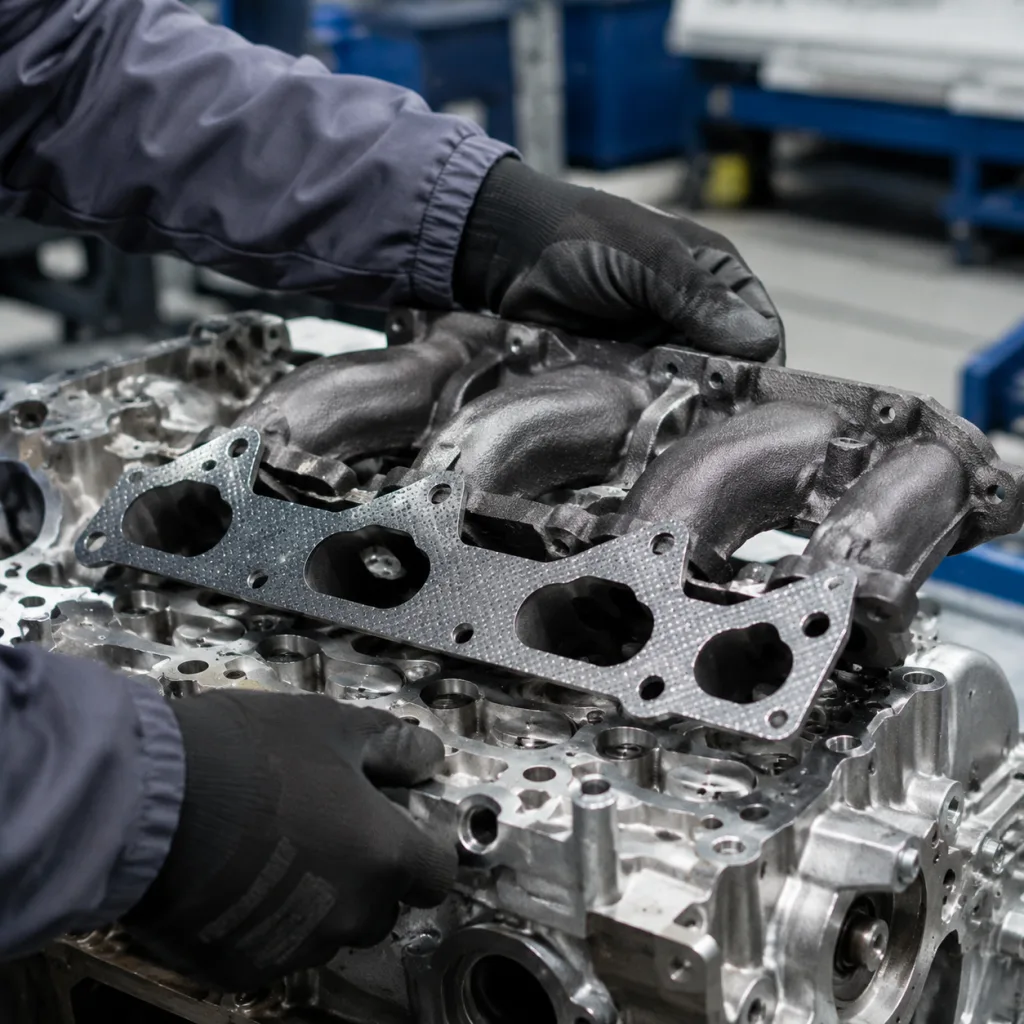
EGR Cooler Mercedes-Benz OEM Supplier: Sourcing Guide
When sourcing from an EGR cooler Mercedes-Benz OEM supplier, procurement teams need more than a matching part photo. Fitment accuracy, stainless-steel metallurgy, pressure integrity, traceability, and repeatable supply all affect whether a programme runs smoothly. Driventus manufactures engine and powertrain components for B2B aftermarket and industrial buyers, with export experience across Europe, North America, Australia, and Brazil. We support programmes that require controlled dimensions, coolant-side and gas-side leak integrity, batch traceability, and production managed under IATF 16949:2016 and ISO 9001:2015 processes. Driventus is an independent aftermarket manufacturer; Mercedes-Benz and other brand names are referenced only for application identification. Before placing a trial order for a Mercedes-Benz EGR cooler application, check OE cross-references, supersession status, packaging revision, flange geometry, bracket position, gas-side and coolant-side pressure requirements, and qualification documents. This guide covers what to verify before RFQ, how factories manage MOQ and lead time, and which quality records matter during supplier approval. The aim is to catch mismatch risk early, because a cooler that looks correct can still fail on port angle, valve interface, mounting datum, flow restriction, weld quality, or thermal-cycling durability.
What procurement teams should verify first
Before requesting pricing, confirm the exact Mercedes-Benz application and engine family you are sourcing against. The same model range may use different EGR coolers across engine codes, emissions stages, body layouts, and production dates, so the OE number should be checked against the vehicle application and revision level, not treated as a standalone identifier.
Start with these checks:
- OE reference, supersession chain, and any market-specific reference numbers
- Engine code, displacement, model year range, emissions standard, and build date range
- Vehicle configuration, including left-hand or right-hand drive where relevant
- Mounting pattern, bracket datum, connector orientation, and overall installation envelope
- Gas-side flange profile, bolt-hole pitch, gasket face, and coolant port dimensions
- Whether the part is a bare cooler, cooler with EGR valve, cooler with bypass flap, or a larger integrated assembly
- Sensor, vacuum actuator, electric actuator, or pipe connection interfaces where applicable
The goal is to avoid buying a part that fits only by appearance. A strong sourcing file should include OE and aftermarket cross-references, photos from multiple angles, key dimensions, sample markings, casting or stamping identifiers, and any known OE revision notes. Where possible, record flange thickness, port diameter, bolt-hole center distance, bracket offset, and cooler core length so quotation teams can compare the part against tooling data instead of relying only on catalogue text.
For recurring programmes, build an internal cross-reference table linking OE numbers, engine codes, model ranges, accepted supplier references, and rejected variants. It saves future buyers from repeating the same fitment work on every RFQ and lowers the risk of mixing similar OM-series diesel applications or regional emissions variants.
If the project includes adjacent thermal or sealing items, review our catalog and the related engine components range to consolidate supplier management and reduce shipment fragmentation.
Manufacturing and material controls for EGR coolers
An EGR cooler works in a harsh thermal and chemical environment: hot exhaust gas on one side, pressurized coolant on the other, repeated heat cycling, vibration, soot loading, acidic condensate, and chloride exposure from the cooling system. Manufacturing quality therefore depends on more than a clean visual finish. Stainless-steel grade, tube and fin geometry, brazing or welding control, header alignment, and post-process leak testing all influence field life.
In practice, the key controls include:
- Material specification for tubes, fins, headers, housings, flanges, and brackets, commonly stainless-steel grades selected for heat and corrosion resistance
- Controlled brazing, TIG welding, laser welding, or furnace processes with documented temperature, time, fixture, and shielding parameters
- Coolant-side pressure and leak testing, with defined test pressure, dwell time, medium, and acceptance limit
- Gas-side sealing verification across the exhaust path, including flange and weld-zone checks
- Wall thickness, weld penetration, and corrosion resistance appropriate to the target duty cycle
- Dimensional control of brackets, flanges, gasket faces, and ports after brazing, welding, cleaning, and surface finishing
- Verification that the cooler maintains flow, sealing, and actuator interface function after thermal loading where required by the programme
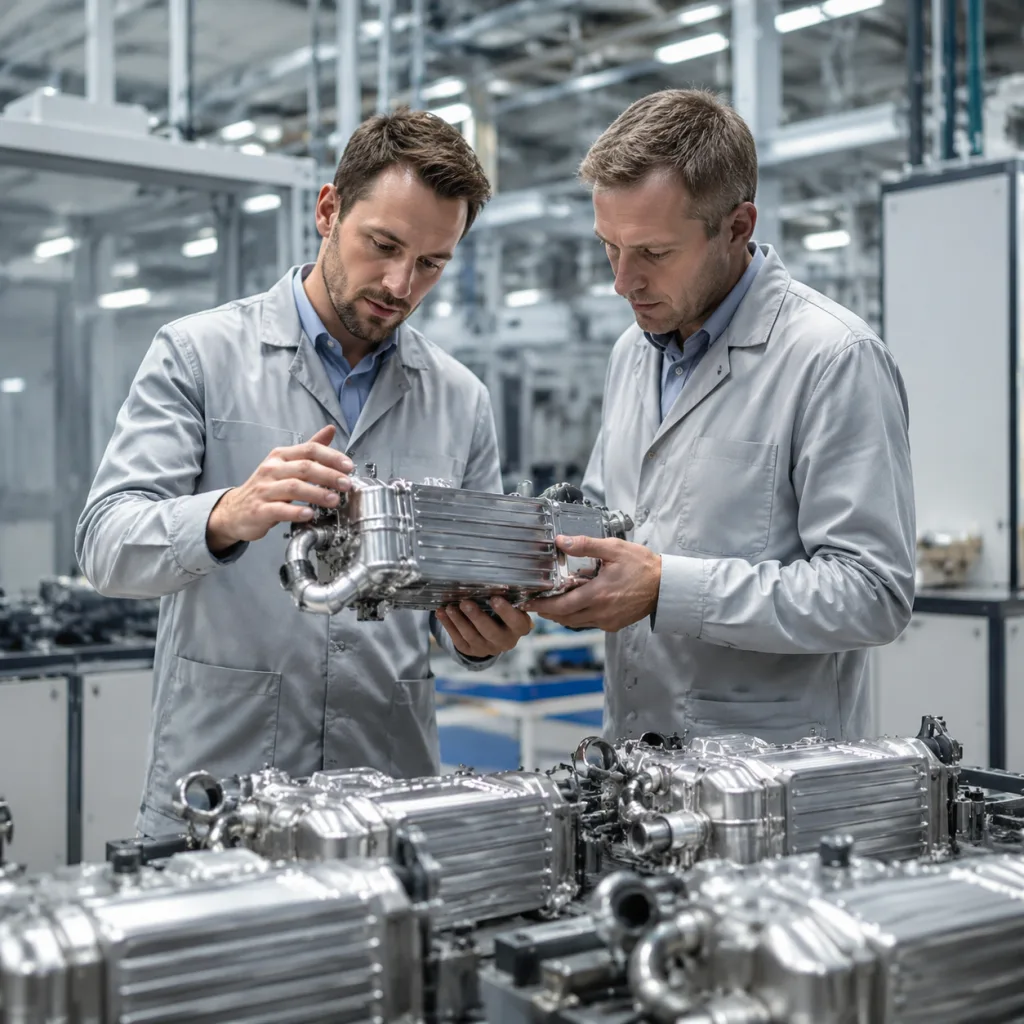
Ask how the factory controls incoming stainless steel, in-process fixture checks, weld inspection, core cleanliness, and final testing. A capable supplier should be able to explain which operations are automated, which dimensions are gauged manually or with CMM fixtures, what sample frequency is used, and what counts as a nonconformance. If the design includes a bypass valve, actuator, or integrated pipework, the control plan should also cover movement range, sealing surface condition, and connection orientation.
Where tight packaging or revised port positions are involved, the factory should confirm whether existing tooling, jigs, and leak-test fixtures support the exact revision you need or whether a new fixture is required. This matters because a small shift in bracket offset, tube angle, or gasket face location can turn a visually correct cooler into a difficult installation or a warranty risk.
For bespoke fitment needs, custom manufacturing can adapt the housing, ports, mounting geometry, or assembly configuration to your specification. This is especially relevant when an OE part has been updated, when a regional emissions variant exists, or when multiple references are being consolidated into one controlled replacement.
Quality documents that support supplier approval
Supplier approval for an EGR cooler should be evidence-based. Procurement, engineering, and quality teams usually need to see both process capability and product-level validation before volume orders are approved. The exact document set varies by programme, but the supplier should be ready to provide a traceable file from material input through final inspection and packed goods.
Common records include:
- Company quality certifications such as IATF 16949:2016 and ISO 9001:2015
- Approved drawing, golden sample record, or marked sample photos for revision control
- Dimensional inspection reports against the approved drawing, sample, or agreed control dimensions
- Coolant-side and gas-side leak test records showing test pressure, dwell time, method, date, and acceptance criteria
- Material certificates or material declarations for stainless steel and other controlled components where required
- Welding, brazing, or process-control records for critical operations when requested during qualification
- Lot number, production date, inspection date, and packing reference for traceability
- Packaging specification, barcode or label format, carton quantity, pallet pattern, and warehouse intake details
- Customer-specific inspection or validation records requested during PPAP-style or supplier approval workflows
The most useful documentation reduces ambiguity. A report that cannot be clearly matched to a specific part number, revision, batch, or inspection condition has limited value in a procurement workflow. Ask whether the factory can identify lot numbers, operator or line references, inspection dates, tooling revision, and test conditions on each record. That level of traceability matters when there is a field issue, return, containment request, or need to isolate one production window from accepted stock.
Driventus does not claim vehicle manufacturer approval or endorsement. All references to Mercedes-Benz are for fitment identification only. This distinction matters in supplier approval because internal files should separate application references from any statement of OEM affiliation or vehicle-maker authorization.
MOQ, lead time, and export planning
For an EGR cooler programme, price is only one part of the sourcing decision. The commercial structure needs to match how you buy: sample validation, pilot order, replenishment schedule, regional stocking programme, or consolidated export shipment. MOQ and lead time should be reviewed alongside tooling status, packaging, and documentation workload.
When evaluating a supplier, ask for:
- MOQ by part number, mixed-order policy, and whether carton quantity or pallet quantity drives the minimum
- Sample lead time, pilot-run lead time, and production lead time after approval
- Whether available stock matches the exact OE revision, actuator configuration, and packaging requirement
- Tooling, fixture, and leak-test equipment status if a new revision or custom variant is required
- Carton quantity, palletization, gross weight, net weight, and export label format
- Incoterms, export documentation, country-of-origin handling, and HS code confirmation
- Packaging requirements such as coolant-port protection, gasket-face protection, moisture control, and drop-test expectations
The lowest unit price can become expensive if the MOQ does not match your forecast, if packing fails during export handling, or if the supplier cannot consolidate shipments efficiently. A short lead time is also less useful when it is based on generic stock that does not match your OE revision, actuator type, or flange geometry. A disciplined supplier will separate ready stock, replenishment production, and new-project timing so you can plan inventory correctly.
For direct sourcing, use request a quote when you need current capacity, sample timing, or project-based pricing. For export buyers, this is also the right time to clarify neutral packing, private-label carton requirements, carton compression strength, moisture protection, and whether mixed-line shipments are possible across related engine components.
How Driventus supports B2B buyers
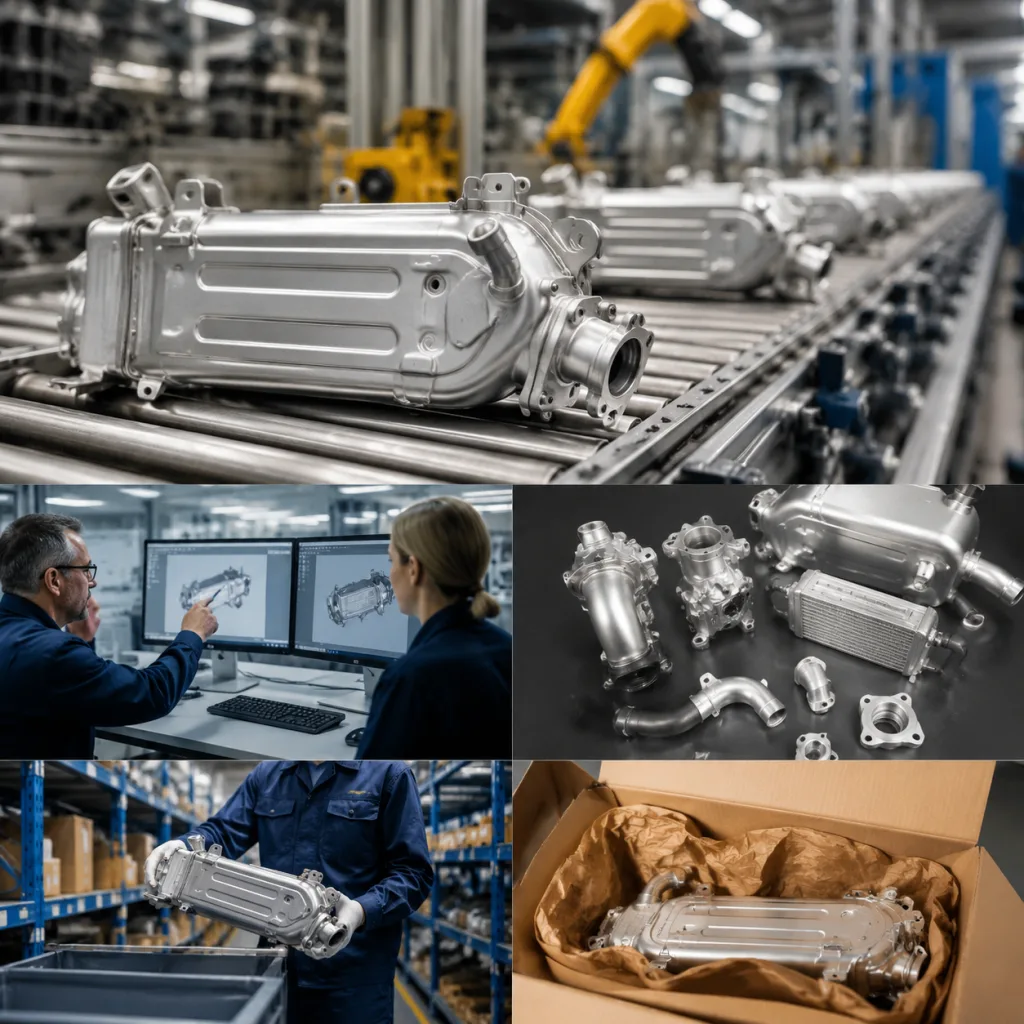
Driventus supports procurement teams that need a controlled, repeatable source, not an unverified trading offer. The practical value is straightforward: checked fitment data, documented manufacturing controls, export-ready packing, and a clear communication path when a project needs engineering or quality clarification.
Our support typically includes:
- Cross-referencing by OE number, supersession record, sample, photo set, or measured dimensions
- Review of engine code, emissions stage, vehicle application, and revision detail to reduce mismatch risk
- Production managed under quality systems aligned to IATF 16949:2016 and ISO 9001:2015
- Inspection and test records for supplier qualification workflows, including dimensional and leak-test evidence where applicable
- Export-oriented packing, labeling, pallet planning, and shipment coordination for overseas buyers
- Coordination across adjacent engine, cooling, EGR, sealing, and pipe components when a broader BOM is being sourced
For buyers managing multiple programmes, this approach keeps technical and commercial information in one place. Engineering can validate cooler geometry and interfaces, quality can review documents and traceability, and procurement can use the same supplier file for reorders, alternate sourcing, or regional stocking decisions. If your requirement includes related engine or cooling components, the same sourcing team can help align the bill of materials, packaging specification, and shipment plan.
The most effective engagements begin with a complete RFQ package: OE reference, supersession information if known, engine code, vehicle application, target quantity, required documentation, packaging specification, and any sample or photo evidence available. With that information, the supplier can quickly confirm whether the part is a direct match, a revision-specific match, a stocked reference, or a custom manufacturing case.
Frequently asked questions
Yes. We work from OE cross-references, supersession records, photos, samples, and dimensional data. Brand names are used for fitment only, and each request is checked for revision, engine code, and application match before quotation. If the OE number has a known supersession, we confirm that status before moving forward.
Please send the OE number, engine code, vehicle year range, emissions stage if known, target quantity, and any required test or packaging specification. If available, include photos, measured flange and port dimensions, and a sample part for verification. The more complete the RFQ, the faster we can confirm fitment and commercial options.
Yes. We can share quality records aligned to IATF 16949:2016 and ISO 9001:2015, plus inspection and test documents requested during supplier approval. Additional programme-specific evidence can be discussed during RFQ, including dimensional reports, coolant-side and gas-side leak test data, material records, traceability details, and packaging specifications.
If you are qualifying a new EGR cooler source or comparing current suppliers, send your OE reference, engine application, revision detail, and volume target through /contact.html and we will reply with technical and commercial next steps. We can review fitment, documentation, packaging, and lead-time expectations before you issue a trial order.
Request a Quote