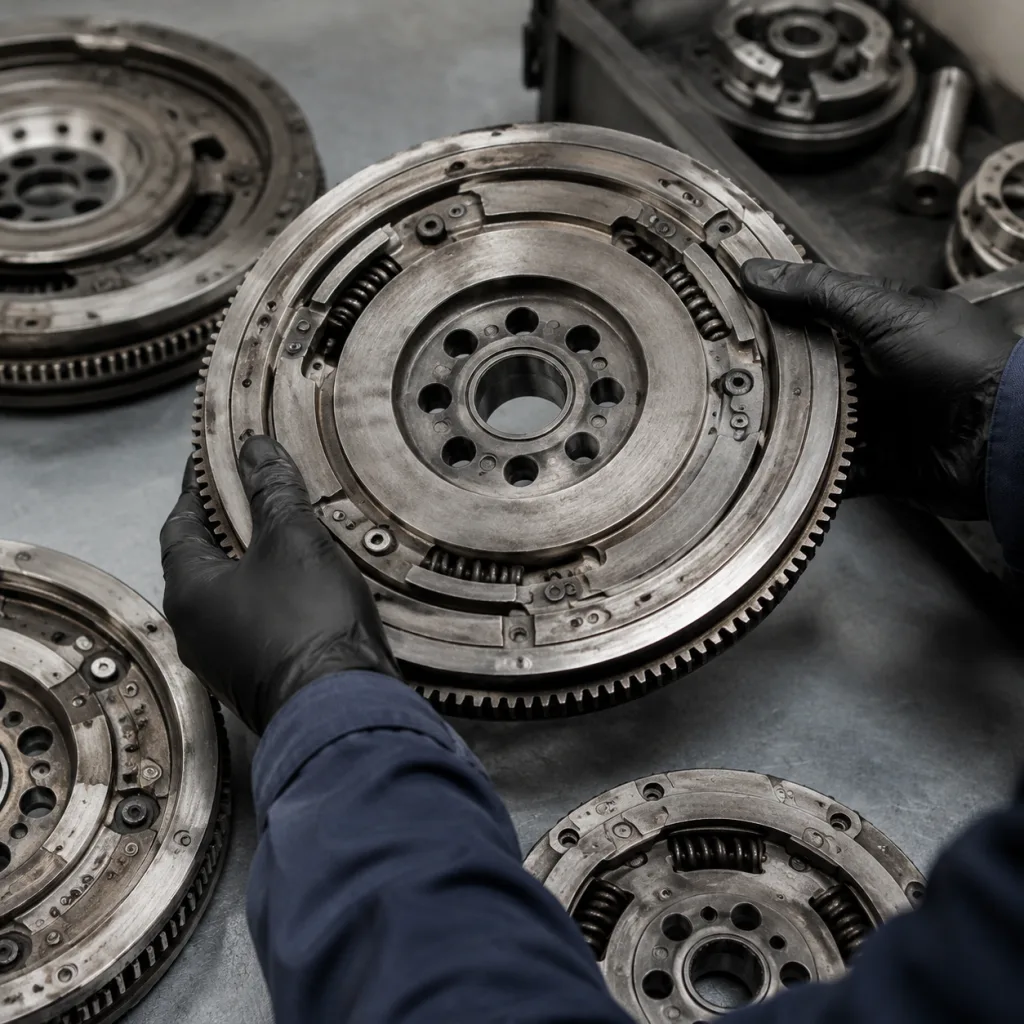
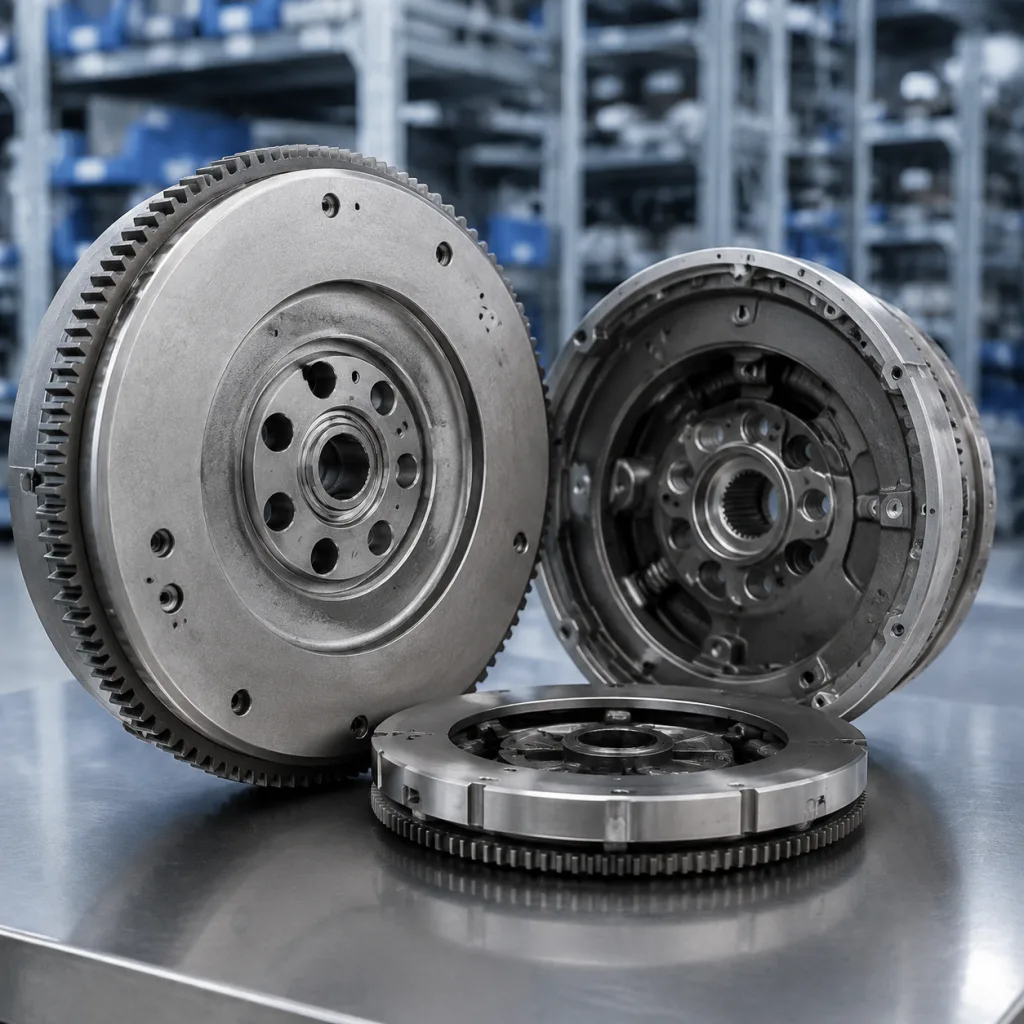
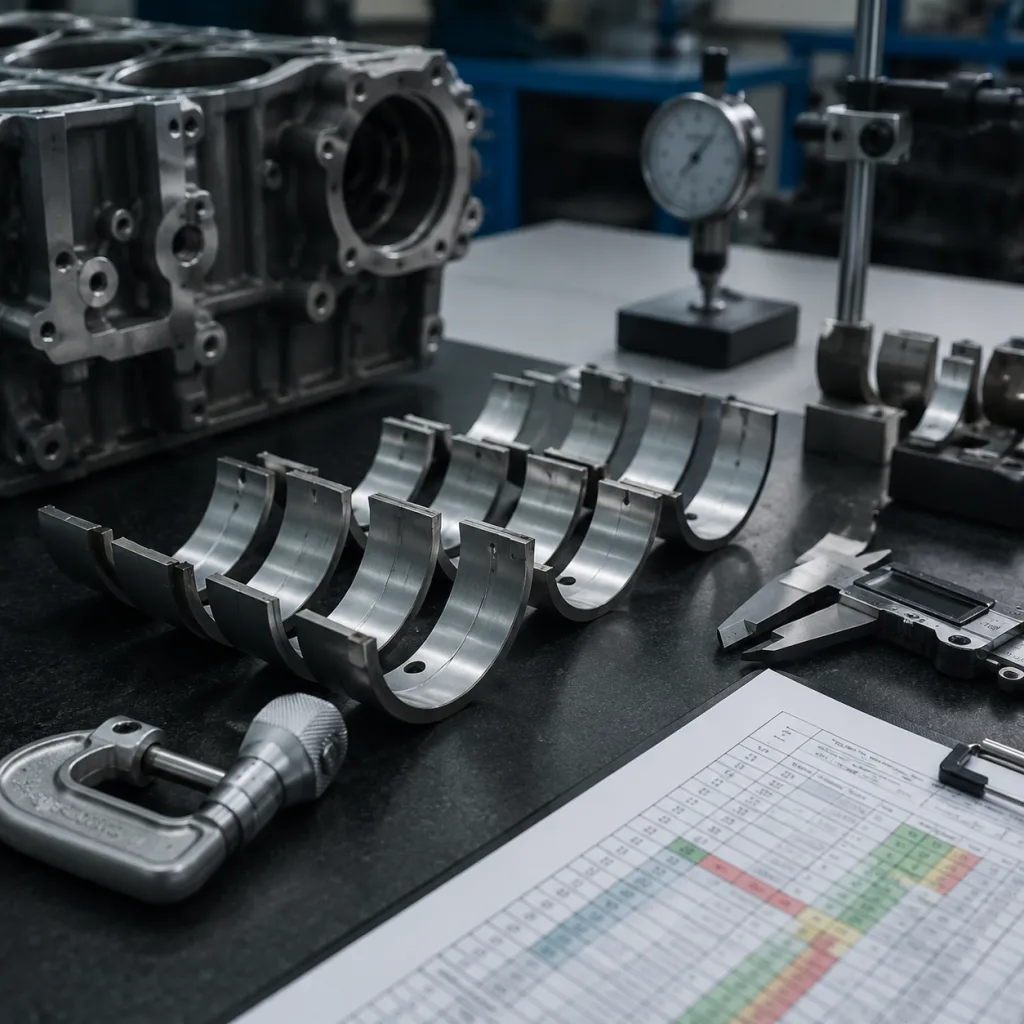
Dual mass flywheel wholesale buying is not a unit-price exercise. A part can bolt up correctly and still create noise, vibration, premature clutch wear, starter issues, or warranty claims if angular free play, runout, balance, spring rate, or friction-face control is wrong.
The better question for importers is this: can the supplier repeat the same result across 50, 500, or 5,000 pieces, then prove it by batch record if the market reports a failure? That is what separates a price list from a dependable programme.
Driventus manufactures engine and powertrain components in Taizhou, Zhejiang, and supplies B2B customers in more than 60 countries. Our dual mass flywheel programme is managed under IATF 16949:2016 and ISO 9001:2015 controls, including incoming material checks, CNC machining inspection, dynamic balance testing, carton-level traceability, and export-ready palletisation. Driventus is an independent aftermarket manufacturer; brand names are referenced for fitment only.
Start With the Buying Decision, Not the Price Sheet
A useful RFQ answers one question first: are you buying a stocked replacement part, launching a private-label range, or developing coverage that competitors do not yet handle well? Each route changes the evidence you need from the supplier.
For a repeat aftermarket SKU, fitment and batch stability matter most. For a new reference, the review shifts to samples, drawings, datum points, spring calibration, and validation time. For private label, packaging control becomes commercial risk because a correct part in the wrong carton can still fail warehouse intake.
Build the RFQ around decisions, not vague requests. Include:
Application list by make, model, engine code, year range, fuel type, transmission type, drive side, and emission generation where relevant
OE part-number cross-references where available, using generic references such as OE 06A… only when supplied by the buyer
Clutch kit pairing requirements, including disc diameter, spline count, hub profile, pressure plate compatibility, and release-system type
Dimensional checkpoints: outer diameter, overall height, crank bolt PCD, pilot bore, ring gear tooth count, friction-face diameter, and allowable runout target
Target markets and compliance expectations, including REACH (EC) No 1907/2006 substance controls for EU supply
Forecast volume by quarter, split by A-class fast movers, B-class replenishment SKUs, and long-tail references below 50 pcs per year
Packaging specification, carton burst strength, pallet size, label language, barcode format, and country-of-origin marking
Separate non-negotiables from preferences. Fit, safety, warranty exposure, customs data, and regulatory documents are mandatory. Carton layout, label sequence, and pallet mix are preferences unless your warehouse system requires a fixed format.
One used OE sample, one competitor sample, or a drawing with datum references can shorten new-reference feasibility review by 5–10 working days. Buyers can review broader powertrain coverage in our catalog. Programmes needing non-catalogue references, drawing-controlled changes, or customer-owned packaging standards can be reviewed through custom manufacturing.
MOQ and Lead Time: Choose the Scenario That Matches the SKU
MOQ is not one number. It depends on whether the dual mass flywheel is in stock, already in regular production, new to development, or tied to private-label packaging. Treat each SKU according to its demand pattern instead of forcing one purchasing rule across the range.
Sourcing scenario
Typical MOQ consideration
Typical lead-time driver
Buyer action
Existing catalogue reference
20–50 pcs per SKU when aligned with planned production
Finished stock or next batch slot, often 7–20 days after deposit
Confirm label, carton, and pallet format early
Regular but non-stocked reference
50–100 pcs per SKU depending on casting, machining, and assembly batch
Material purchase and production queue, often 30–45 days
Provide 3 to 6 month forecast
New reference development
100–300 pcs first order to amortise tooling, fixtures, and validation
Sample build, dimensional checks, road/load validation, often 60–90 days
Supply sample, drawing, or full application data
Private label order
MOQ affected by carton print, label setup, and minimum packaging purchase
Packaging procurement and artwork approval, usually adding 7–15 days if artwork changes
Freeze artwork before production release
Mixed-container programme
MOQ varies by reference and pallet plan; low-volume SKUs may be grouped with A movers
Consolidation, final inspection, and container booking schedule
Prioritise high-volume SKUs first
</tr></thead><tbody> </tbody></table>The cheapest quote can be the expensive choice. A 20-piece trial order spreads setup, inspection, export documents, and packing work over very few units. A larger repeat batch often lowers the real cost because cartons are standardised, shipment timing is known, and inspection can follow an established control plan.
Freight can erase savings quickly. A 12 kg flywheel sent by air may cost more to move than the margin gained from a lower machining quote. LCL handling can also increase carton damage, relabelling, and claim risk.
For dual mass flywheel wholesale planning, classify SKUs as launch stock, replenishment stock, or development stock. A practical starting mix is 60–70% fast movers, 20–30% medium movers, and no more than 10% speculative long-tail references until sell-out data proves demand.
Failure Modes Buyers Miss During Basic Inspection
Many dual mass flywheel problems are invisible in a carton check. The surface may look clean, the label may match, and the bolt pattern may be right, while the assembly still carries torsional, balance, or geometry risk.
Common hidden failure modes include excessive angular free play, inconsistent arc spring response, poor grease control, friction-face runout, ring gear eccentricity, incorrect pilot bore position, axial movement outside target, and residual imbalance. Any of these can become noise, vibration, judder, starter engagement issues, or early clutch complaints.
The controls that reduce those risks are specific:
Material verification: steel grade confirmation, supplier certificates, and incoming hardness checks where specified
Machining control: friction face flatness, bolt-hole position, pilot bore diameter, ring gear location, and datum repeatability
Heat and surface treatment checks: hardness, surface finish, phosphate or anti-rust oil coverage, and corrosion protection validation according to agreed drawings
Assembly control: spring set verification, grease weight control, angular free play measurement, axial movement check, and torque damper movement checks
Balance control: dynamic balance inspection on rotating assemblies according to the agreed internal specification, with correction records retained by batch
Traceability: lot code, production date, operator record, inspection result, balance record, and carton label match
During PPAP-style approval, ask for actual measured values, not “same as OE” claims. Useful checkpoints include friction-face runout, pilot bore tolerance, bolt-hole true position, ring gear concentricity, axial clearance, angular free play, and residual imbalance. The correct tolerance depends on the approved drawing and application.
A practical incoming-control plan combines first-article inspection for each production batch, 100% visual and label check before packing, dynamic balance checks according to the control plan, and AQL inspection for final cartons. Buyers may request AQL 1.0 for critical defects, AQL 2.5 for major defects, and AQL 4.0 for minor packaging defects when aligned with internal policy.
Driventus operates a documented quality system aligned with IATF 16949:2016 and ISO 9001:2015. For wholesale buyers, the value is not the certificate alone. It is the ability to retain records, trace batches, calibrate gauges, manage corrective actions, and investigate claims across multiple warehouses, installers, and vehicle platforms.
Audit the Process With One Carton and One Production Lot
A factory audit should prove whether the supplier can connect documents to real parts. Certificates and meeting-room presentations are useful, but the stronger evidence is on the production floor, inspection bench, packing area, warehouse, and nonconforming-material zone.
Use two audit paths.
First, pick one finished carton at random and trace backward to machining lot, assembly lot, balance record, and final inspection sheet. Second, select one production lot and trace forward to carton numbers, pallet numbers, packing list, and invoice. If either path breaks, traceability may not survive a field claim.
Recommended audit points:
Confirm valid IATF 16949:2016 and ISO 9001:2015 certificates, scope, issuing body, and expiry date
Review control plans for machining, assembly, balancing, final inspection, packing, and rework authorisation
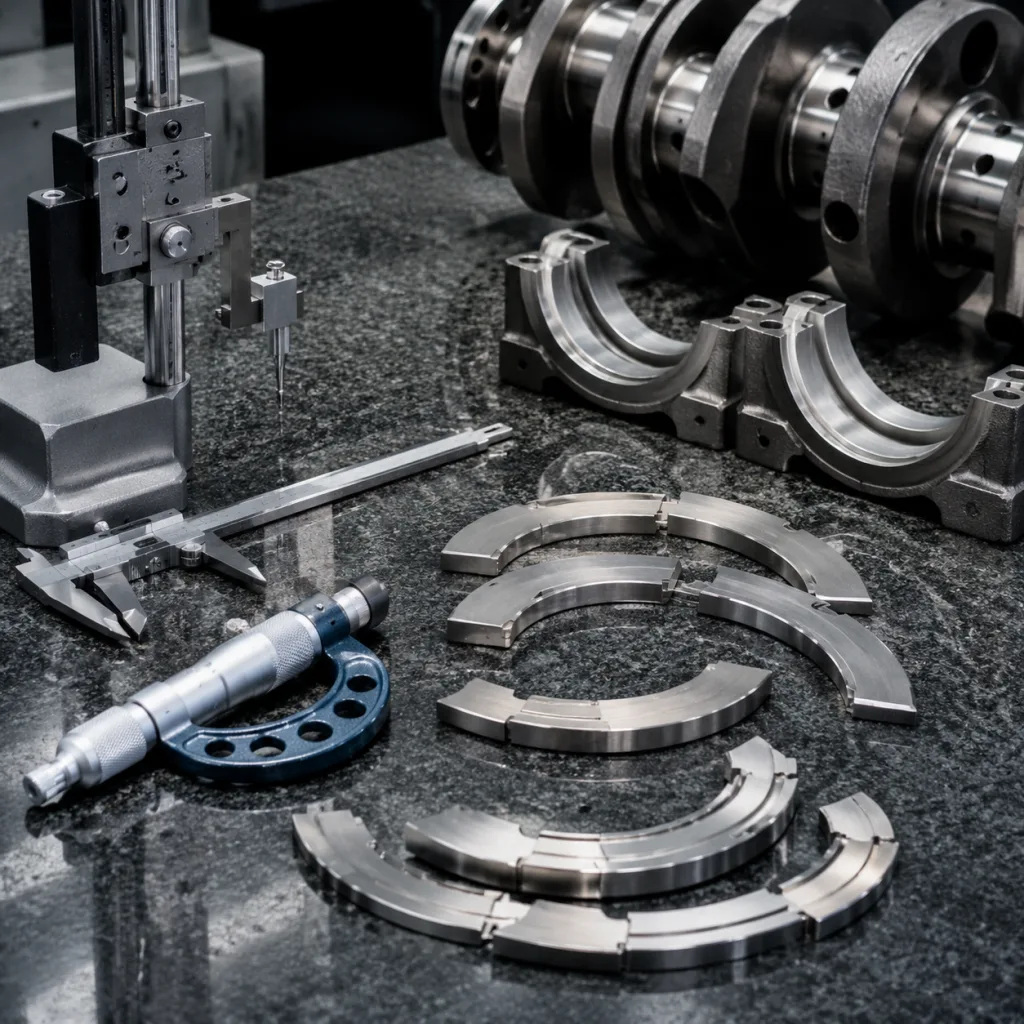
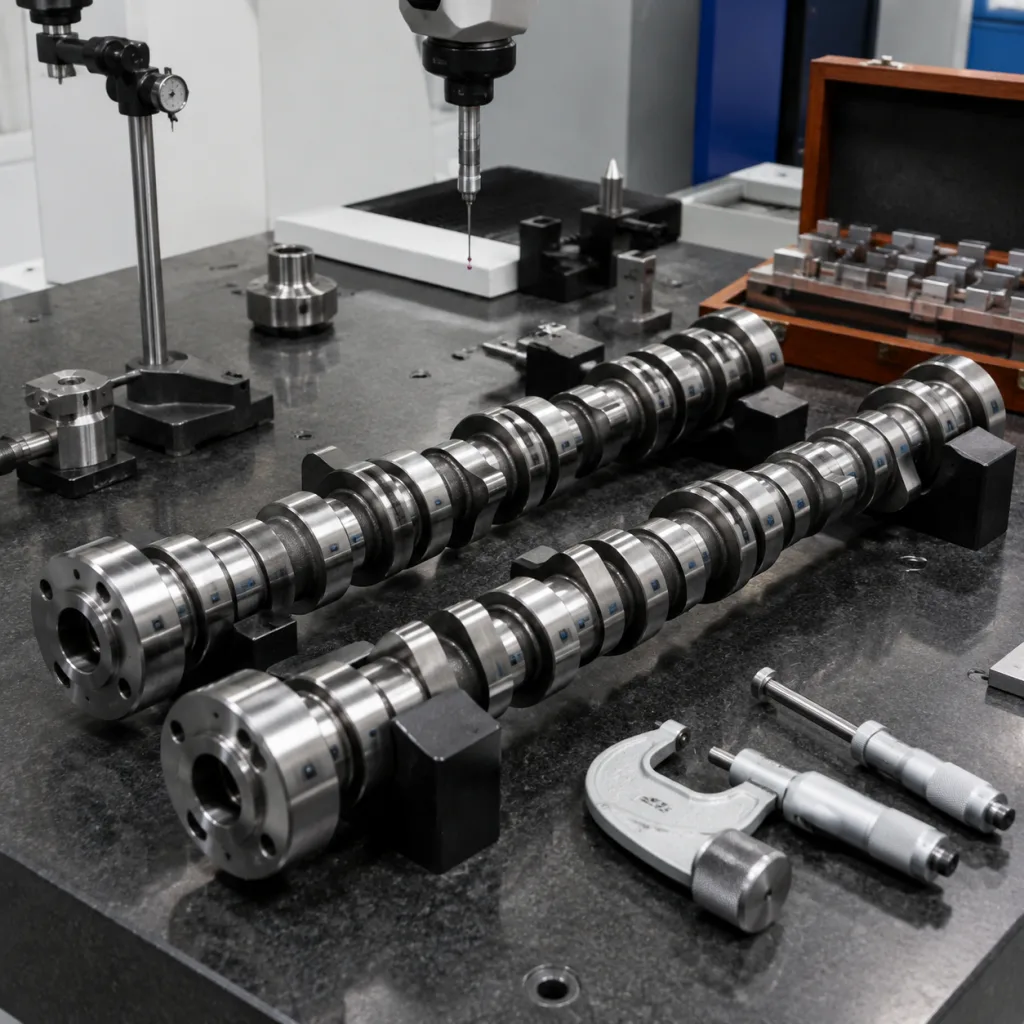
Check calibration records for micrometers, CMM fixtures, dial gauges, balance machines, torque tools, hardness testers, and height gauges
Review incoming inspection records for steel, springs, bearings, friction components, grease, fasteners, cartons, and anti-rust materials
Ask for recent internal rejection data, root-cause analysis, 8D reports, and corrective action examples from the last 6–12 months
Verify traceability from carton label back to production batch, operator record, inspection result, and balance data
Inspect packaging drop resistance, pallet wrapping, moisture protection, internal foam or molded support, and export carton construction
Check whether REACH (EC) No 1907/2006 declarations and material declarations can be supported for EU shipments
Tie audit findings to the commercial agreement. If you expect a two-year warranty policy, define the inspection plan, claim evidence, compensation method, and defective-part return rules before the first purchase order.
For repair-chain supply, be especially specific. Claims should include vehicle mileage, installation date, clutch kit part number, gearbox condition, photos or video, noise description, and whether crankshaft oil seal leakage or incorrect bolt torque was observed. Without that evidence, even a good supplier cannot separate product defects from installation or vehicle-condition issues.
Packaging Is a Technical Specification, Not an Afterthought
A dual mass flywheel is a dense precision assembly. One carton may carry 10–18 kg of machined steel. If the carton fails, the part can arrive with a dented friction surface, chipped ring gear, damaged pilot area, unreadable label, or corrosion that was not present at final inspection.
Set the commercial and logistics terms before production release:
Incoterms, shipment port, and preferred freight mode, commonly FOB Ningbo or Shanghai for consolidated export orders
MOQ by SKU, total order value, price validity period, and whether tooling, fixture, or sample charges are refundable after bulk order
Sample cost, sample lead time, approval criteria, and whether samples are production-made or hand-adjusted prototypes
Payment terms and credit requirements for repeat orders, including deposit ratio, balance timing, and document release method
Spare-parts documentation, fitting notes, torque warnings where applicable, and cross-reference spreadsheet format
Packaging should be engineered for weight and handling abuse. Use strong double-wall or reinforced cartons, internal blocking to limit side impact, anti-rust bags or VCI protection where specified, and labels that remain readable after pallet wrapping. Many importers set 800–1,100 kg maximum gross pallet weight depending on warehouse equipment and destination rules.
For sea freight, define desiccant use, fumigated or plywood pallet requirements, carton drop-test expectations, and compression-test evidence where needed. These details are not cosmetic. They protect scanability, storage stability, and claim defensibility.
Driventus supports export orders through consolidated production planning and carton-level traceability. Distributors usually need parts that enter warehouse systems without relabelling. Repair chains need branch-level availability and fewer comebacks after clutch or gearbox service. Buyers preparing a dual mass flywheel wholesale programme can request a quote with a SKU list, forecast, target market, and packaging preference.
How Driventus Handles a Wholesale Programme From RFQ to Repeat Orders
A reliable programme has a rhythm. It starts with application confirmation, moves through evidence-based approval, and then becomes repeatable stock planning.
For new references, Driventus normally follows this path:
1. Confirm application data and cross-references. 2. Review sample, drawing, or buyer specification. 3. Assess feasibility, tooling, fixtures, and validation needs. 4. Produce pilot samples when the reference is approved for development. 5. Submit inspection reporting for buyer review. 6. Release mass production after approval.
A practical timeline is 3–7 working days for application and cross-reference screening, 7–15 days for sample or drawing review, and 20–35 days for pilot preparation when fixtures are available. New tooling or extended validation may require longer.
For repeat wholesale supply, Driventus helps buyers separate the SKU list into fast movers, seasonal movers, and low-confidence references. That makes MOQ decisions cleaner, reduces dead stock, and stabilises production slots. Support can include cross-reference review, sample submission, dimensional reporting, private-label packing, container consolidation, packing lists by SKU and pallet, carton label samples, inspection summaries, and batch traceability files before balance payment or shipment release.
Driventus is based in Taizhou, Zhejiang, with vertically integrated capability across engine and powertrain component manufacturing. Related product categories include clutch-adjacent components, crankshafts, gaskets, water pumps, pistons, and turbochargers.
No supplier should claim vehicle manufacturer approval unless it has formal authorisation for that exact programme. Driventus does not make that claim. Driventus is an independent aftermarket manufacturer; brand names are referenced for fitment only. The goal is OE-equivalent fit, controlled production quality, transparent documentation, and reliable aftermarket availability.
Frequently asked questions
Send the application list, target OE cross-references if available, annual volume forecast, destination market, packaging requirement, and any inspection or compliance documents required by your company. Photos, used OE samples, competitor samples, or drawings help when a reference is not already in the catalogue.
Yes, private label packaging can be reviewed for wholesale orders. MOQ may depend on carton printing, label format, barcode requirements, and pallet configuration. Artwork should be approved before production release to avoid shipment delays.
Driventus is an independent aftermarket manufacturer and does not claim vehicle manufacturer approval. Brand names and OE-style references are used only to identify fitment and application compatibility for aftermarket procurement.
If you are building a wholesale flywheel programme, share your SKU list, forecast volume, and packaging requirements with our sourcing team. Start a technical RFQ at /contact.html