camshaft · 2026-06-17

Camshaft Fiat Wholesale Sourcing for B2B Buyers

Camshaft Fiat wholesale buying looks simple until a shipment misses the lobe profile, rusts in transit, or carries an application list no installer trusts. For distributors, importers, OEM/Tier-1 sourcing teams, and repair-chain procurement managers, the decision is not just “does this part fit a Fiat model?” It is whether the supplier can hold metallurgy, machining, trigger geometry, packaging, and traceability across repeat batches. The expensive failures usually hide in details: inconsistent lobe hardness, journal runout, poor surface finish, weak corrosion protection, or lot records that do not support a warranty claim. Driventus manufactures engine and powertrain components in Taizhou, Zhejiang, under IATF 16949:2016 and ISO 9001:2015 certified systems. This guide reframes camshaft Fiat wholesale sourcing as a practical buying decision: define the application, control the risks, compare suppliers on evidence, and plan MOQ and lead time around real market demand. Driventus is an independent aftermarket manufacturer; brand names are referenced for fitment only.

Start With the Buying Decision, Not the Vehicle Name

A Fiat-application camshaft should be purchased by engine reality, not by catalogue shorthand. Model names create false confidence. Engine family, fuel type, valve-train layout, model-year range, market region, and repair usage decide whether the part can be sold without creating returns.

For a serious camshaft Fiat wholesale RFQ, separate the programme into decision blocks:

  • Application: engine displacement, engine code, model-year range, emission level, and sales region where available
  • Shaft position: intake, exhaust, single shaft, matched pair, SOHC, DOHC, hollow shaft, assembled shaft, or solid shaft
  • Valve-train interface: flat tappets, roller followers, rocker arms, hydraulic lifters, cam phasers, or position-sensor trigger features
  • Material route: chilled cast iron, ductile iron, alloy cast iron, billet steel, or forged steel where specified
  • Surface control: chilled lobe, induction hardening, carburizing, nitriding, phosphate coating, oil film, or other anti-rust protection
  • Dimensional limits: journal diameter, lobe lift, base circle, axial length, runout, oil-hole location, keyway, dowel, thrust face, and trigger angle
  • Quality evidence: material certificate, hardness report, dimensional report, control plan, FAI, IMDS/REACH statement, or PPAP level where applicable
  • Commercial plan: annual volume, first-order quantity, replenishment frequency, safety stock, call-off schedule, packaging, and Incoterm

Do not let photos replace specifications. A trigger notch that appears correct can still be wrong by enough degrees to cause sensor faults. A shaft that measures well on one journal can still fail on lobe hardness. A carton that looks clean can still allow 45 days of sea-freight corrosion.

Buyers should also define the supply model. A direct replacement line usually depends on application validation and sample approval. A private-label aftermarket programme adds carton, label, barcode, and claim-handling requirements. A drawing-based development project needs controlled design records, datum references, master samples, inspection plans, and change management.

Driventus can support aftermarket line development through our catalog, including related engine components such as pistons, gaskets, timing parts, and water pumps. For private-label or drawing-based projects, buyers can review custom manufacturing options before issuing samples or technical drawings.

Where Camshaft Programmes Usually Fail

A camshaft is a timing component, not a generic casting. Small errors create loud failures: valve timing drift, tappet wear, rough idle, fault codes, power loss, oil-pressure complaints, emissions issues, and warranty returns. The useful question is not “does the supplier make camshafts?” It is “which failure mode can this supplier prove they control?”

</tr></thead><tbody> </tbody></table>The surrounding repair system matters too. Hydraulic lifters, rocker arms, timing belts, timing chains, cam phasers where fitted, oil condition, sealant discipline, lubrication procedure, break-in oil, and first-start procedure all affect field performance. A correctly manufactured camshaft can fail early if installed with contaminated oil, worn followers, blocked oilways, dry-start conditions, or inaccurate timing.

Driventus applies incoming material checks, in-process machining control, final dimensional inspection, and batch traceability under its quality system. Inspection plans can be aligned with buyer requirements, including first-article inspection, control plans, Cpk review on critical dimensions, retained master samples, and production part approval documentation where commercially agreed.

Build the Order Plan Backwards From Sell-Through

The right MOQ is not the smallest number a supplier will accept. It is the quantity that keeps service levels healthy without trapping cash in slow-moving engine codes. For distributors, camshaft planning has to connect demand, production economics, private-label packaging, sea-freight consolidation, and warranty exposure.

Use this sequence before negotiating price:

1. Split SKUs into fast movers, slow movers, diesel variants, paired-shaft sets, and unfamiliar new coverage. 2. Estimate monthly sell-through by region, then set safety stock by lead-time risk rather than by intuition. 3. Confirm whether tooling, fixtures, profile data, and previous batch records already exist. 4. Decide whether the first order is a sample run, pilot batch, launch batch, or replenishment order. 5. Add packaging time if private-label cartons, barcodes, anti-counterfeit labels, multilingual instructions, or customer pallet marks are required. 6. Calculate landed cost by Incoterm, freight mode, inspection level, reject risk, and claim handling—not by EXW price alone.

Typical planning ranges are useful, but they are not guarantees:

  • MOQ: Set by part number, material, tooling status, machining route, heat-treatment batch, inspection scope, and packaging requirement. Existing-line items may support lower trial quantities. New tooling or private-label production usually needs more volume.
  • Sample lead time: Often 20–45 days when tooling and reference data are available; 45–75 days or more when reverse engineering, new casting/forging tooling, trigger-feature development, or endurance validation is required.
  • Mass-production lead time: Commonly 35–60 days after sample approval for repeatable items, with longer schedules when casting, forging, induction hardening, nitriding, grinding, or packaging capacity is constrained.
  • Packaging lead time: Commonly add 7–20 days for custom artwork, barcode rules, carton tests, private labels, or pallet requirements.
  • Shipment planning: Works best when camshafts are consolidated with compatible engine components and the corrosion-protection method fits the route and season.

A phased order lowers risk: engineering review, 2–5 pre-production samples, pilot batch, controlled wholesale release, then scheduled replenishment. Distributors often use the pilot batch to test real demand, warranty behaviour, and carton durability before locking quarterly call-offs. This is especially useful when adding unfamiliar Fiat engine coverage to a European, Middle Eastern, North African, or Latin American range.

Build the Order Plan Backwards From Sell-Through

Audit the Process Path, Not the Showroom

A supplier audit should prove that the same specification can be repeated after the first approved sample. A tidy reception area says little. The camshaft’s path through material receipt, rough machining, heat treatment, straightening, grinding, deburring, washing, oiling, inspection, packing, storage, and shipment is what matters.

Ask direct questions and request records:

  • Is the quality management system certified to IATF 16949:2016 and ISO 9001:2015?
  • Does the certification scope match the production site, machining process, and product category?
  • Are material certificates traceable to each casting, forging, billet, or production lot?
  • Is incoming material checked for chemistry, hardness, visual defects, and supplier lot identity before machining?
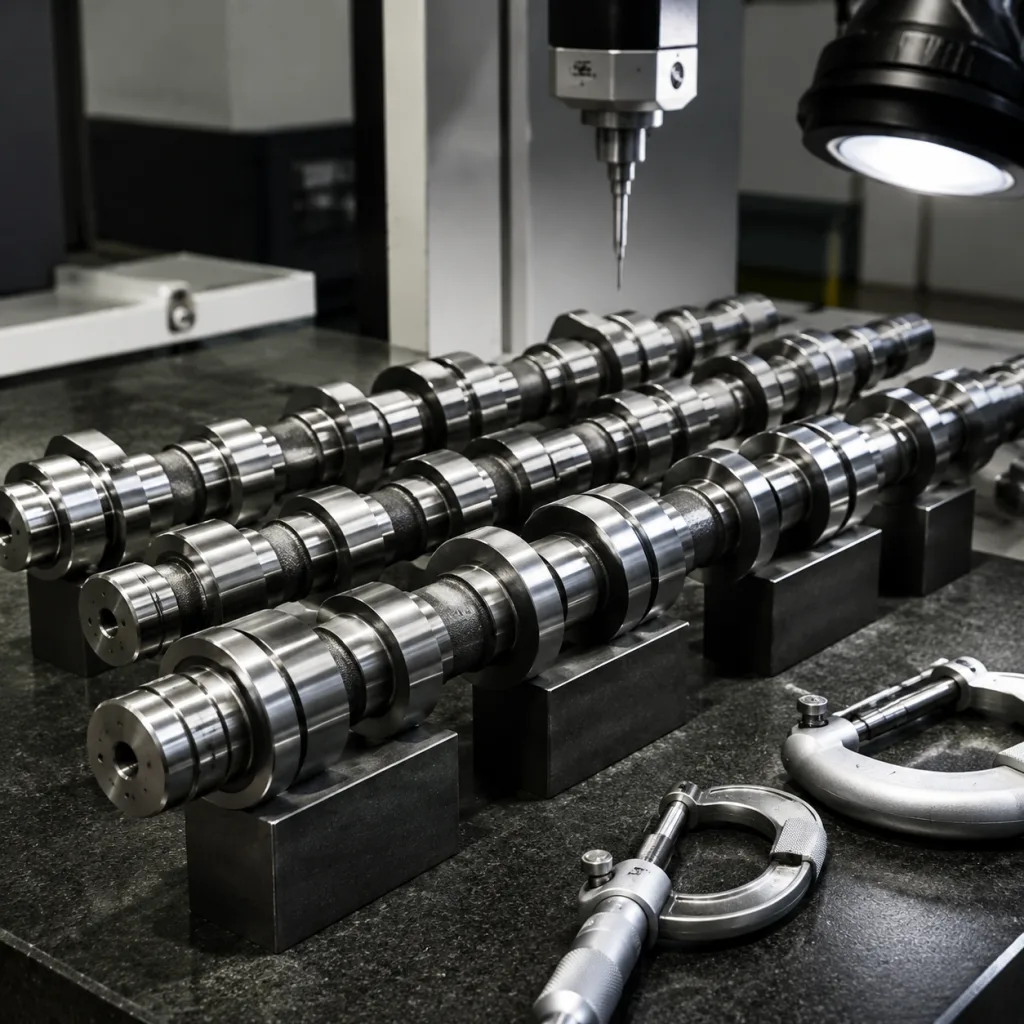
  • Are camshaft lobe profiles checked against controlled drawings, approved samples, master gauges, or digital profile data?
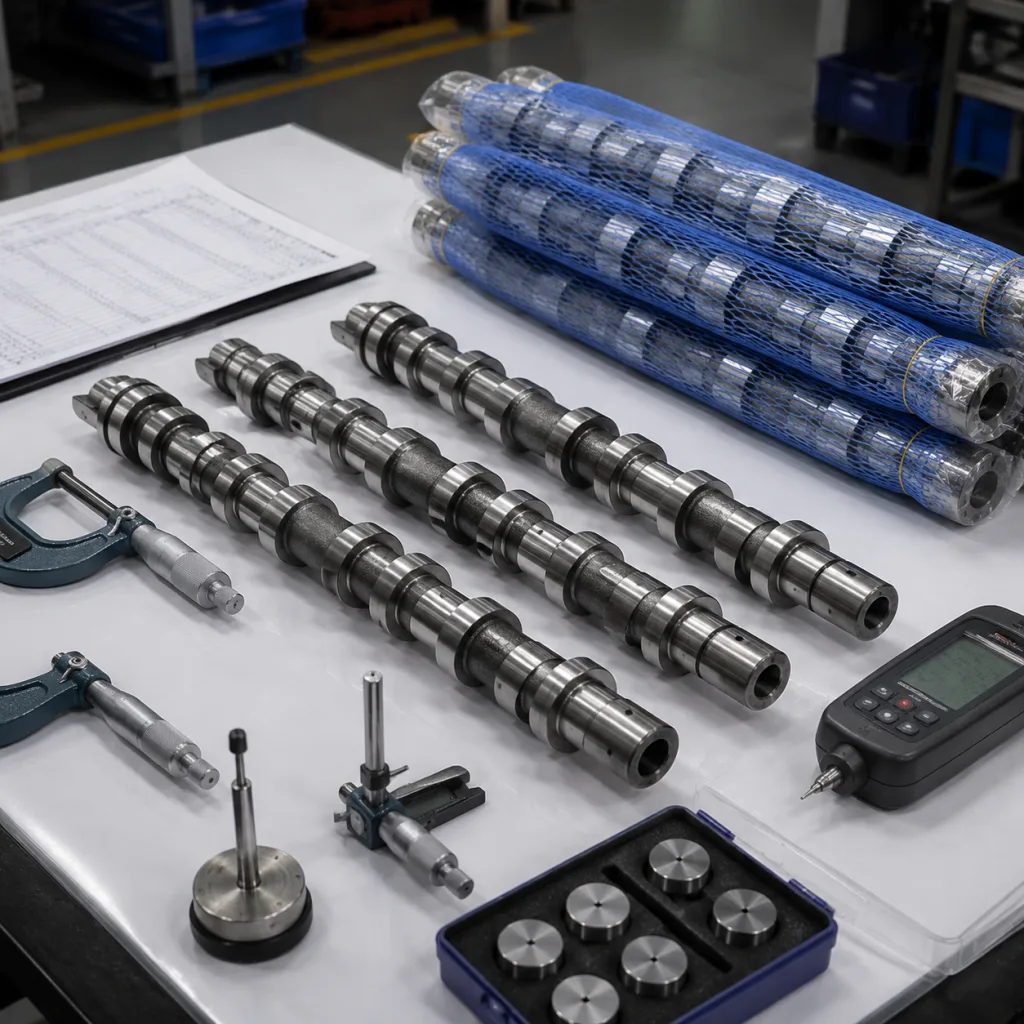
  • Are gauges, fixtures, micrometers, air gauges, hardness testers, roughness testers, and CMM equipment calibrated under a documented schedule?
  • Are critical dimensions checked after rough machining, heat treatment, straightening, grinding, and final cleaning?
  • Are heat-treatment or surface-hardening parameters recorded by batch, including temperature, time, quench medium, induction settings, or nitriding cycle where relevant?
  • Is there process capability evidence, such as Cpk monitoring on journal diameter, lobe lift, runout, or trigger position for stable high-volume parts?
  • Is final inspection linked to part labels, carton labels, lot numbers, pallet marks, and shipment documents?
  • Are non-conforming camshafts physically segregated, reworked only under approved instructions, and re-inspected before release?
  • Are customer complaints and internal defects handled with documented corrective actions, preferably 8D or a similar root-cause method?
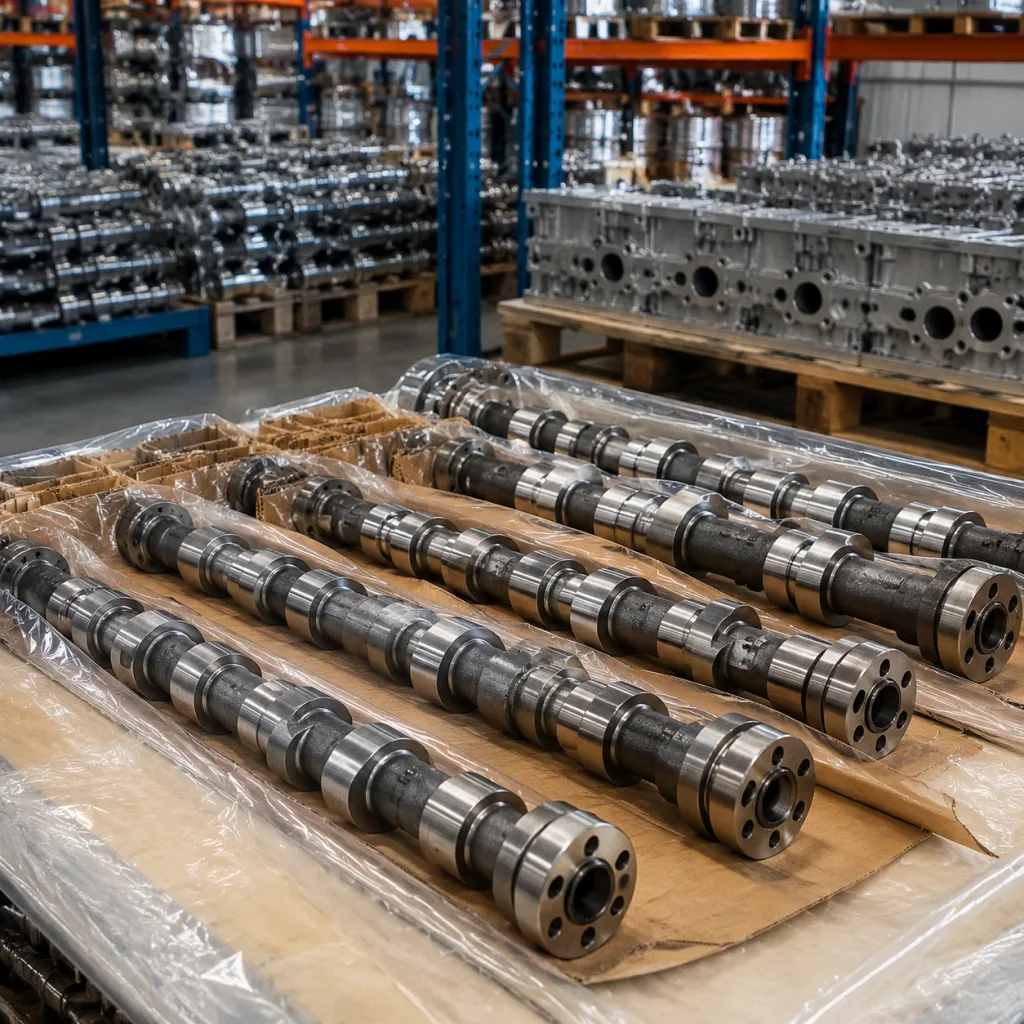
  • Does packaging protect lobes and journals against corrosion, impact, brinelling, abrasive dust, and contamination during 30–60 days of export shipment?

For EU and UK importers, substance control may also apply to supplied articles, coatings, corrosion inhibitors, oil films, labels, and packaging materials under REACH (EC) No 1907/2006 where relevant. Confirm documentation before purchase order release, not when goods are already at port.

Driventus supports remote and on-site audit preparation with process documentation, sample reports, traceability details, packing photos, export carton data, and inspection records for qualified B2B buyers.

Compare Offers Like a Warranty Manager

The cheapest offer can become the most expensive one in the claim file. A supplier that cannot hold dimensions, identify batches, or replace defective stock quickly transfers the hidden cost to the importer. For camshaft Fiat wholesale purchasing, normalize each offer before ranking it.

Failure mode Specification to lock Verification method Why buyers should care
Incorrect valve liftDrawing value, often within ±0.02–0.05 mmProfile gauge or CMMProtects power, idle quality, and emissions behaviour
Timing deviationDrawing-specific cam angle, often within ±0.5° where specifiedCamshaft measuring machine or CMMReduces fault-code and performance risk
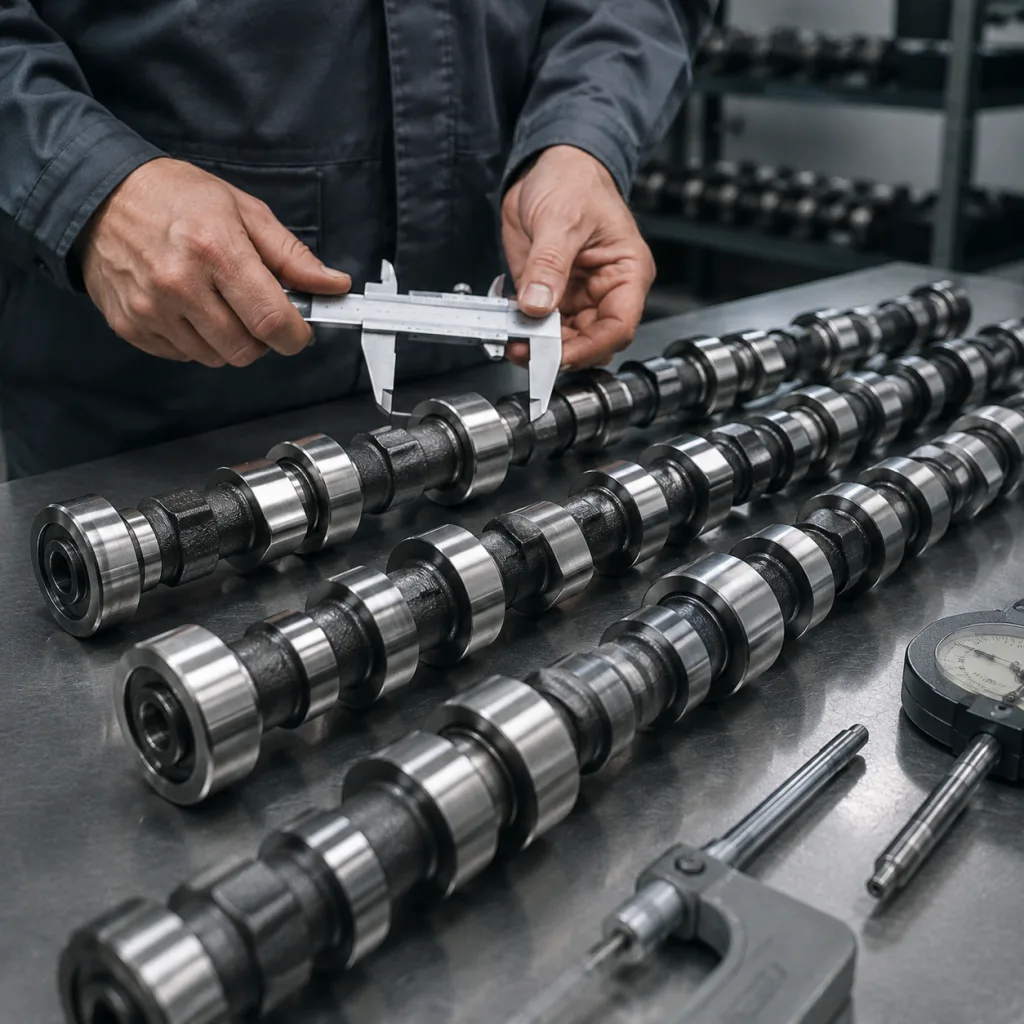
Valve-clearance inconsistencyBase circle commonly within ±0.01–0.03 mmMicrometer inspectionLimits noise and tappet complaints
Bearing fit problemsJournal diameter commonly within ±0.005–0.02 mmMicrometer, air gauge, or CMMMaintains oil clearance and rotation stability
Oil-film breakdownJournal roundness/cylindricity commonly ≤0.005–0.01 mmRoundness tester or CMMReduces bearing wear and seizure risk
Bent or unstable shaftJournal runout commonly ≤0.02–0.05 mmDial indicator or CMMPrevents abnormal bearing load
End-float issuesAxial length and thrust face per drawing, often within ±0.03–0.10 mmCaliper, height gauge, or CMMAvoids assembly and noise problems
Early lobe wearHardened lobe often controlled around 50–60 HRC, material dependentRockwell or Vickers testConfirms wear resistance
Thin hardened layerCase depth commonly checked at 0.8–2.5 mm where induction hardenedMetallographic or hardness-depth checkProtects durability after grinding and service load
Follower scuffingLobe roughness commonly Ra 0.2–0.4 µmSurface roughness testerReduces tappet and follower wear
Bearing surface damageJournal roughness commonly Ra 0.2–0.8 µmSurface roughness testerSupports stable oil film
Blocked lubricationOil-hole diameter, chamfer, groove, and burr-free condition per drawingPin gauge and visual inspectionPrevents dry-running damage
Sensor signal faultsTrigger feature angular position per drawingFixture or CMMProtects crank/cam synchronization
Rust claims after arrivalStorage or salt-spray target where requiredCoating check, packing validation, or visual inspectionReduces sea-freight and warehouse damage

</tr></thead><tbody> </tbody></table>A practical scorecard can weight commercial terms at 30–40%, technical capability at 30–40%, quality documentation at 15–20%, and logistics/after-sales support at 10–15%. Adjust the weighting by risk. A high-volume fast mover deserves stronger process-capability evidence. A slow-moving private-label SKU may need more attention to MOQ, carton durability, and ageing stock.

Also price the delay. If a low-cost supplier misses a 45-day replenishment window, emergency air freight, lost workshop sales, and warranty administration can erase the unit-price saving. If the production path from raw material to shipment is vague, the buyer is not buying a bargain. The buyer is accepting inventory risk.

Compare Offers Like a Warranty Manager

Ordering Workflow: Seven Checks Before PO Release

A good order file prevents engineering, quality, purchasing, and export teams from working from different assumptions. Before the first purchase order, lock the technical file and the commercial file together.

Use this workflow:

1. Share target application list, engine codes, shaft position, sales region, expected warranty terms, annual demand estimate, and first-order quantity. 2. Confirm whether existing Driventus part coverage is available through our catalog or whether a development route is required. 3. Provide drawings, OE sample parts, approved aftermarket samples, or agreed reference samples where reverse engineering is needed. If OE part-number cross-references are used, keep them in generic fitment format such as OE 06A… or OE 11251… unless validated by the buyer’s own data. 4. Agree material, heat treatment, dimensional tolerances, surface roughness, hardness range, trigger-feature position, inspection plan, AQL or 100% inspection points, labeling rules, and packaging specification. 5. Approve pre-production samples, dimensional reports, hardness reports, surface-finish checks, packaging mock-ups, and any private-label packaging artwork. 6. Release a pilot order with defined acceptance criteria, then review inbound inspection, trial installation, and field feedback before scaling. 7. Lock replenishment rules: reorder point, safety stock, forecast horizon, MOQ by SKU, lead-time buffer, and change-notification process.

For buyers sourcing multiple engine parts, camshafts can be combined with related engine components to simplify supplier management and container planning. To start a technical and commercial review, procurement teams can request a quote with the target application list, drawings or samples, preferred Incoterm, packaging requirements, and forecast volume.

Driventus is an independent aftermarket manufacturer; brand names are referenced for fitment only.

Frequently asked questions

Share the engine code, shaft position, application list, sales region, annual forecast, first-order quantity, packaging format, Incoterm, and required inspection documents. Samples or drawings help confirm lobe profile, journal dimensions, trigger features, oil holes, surface treatment, hardness range, roughness, and material requirements.

Yes. Private-label cartons, neutral packaging, barcodes, corrosion protection, distributor-specific labels, and pallet markings can be discussed. Confirm packaging before sampling because carton structure, label rules, VCI or oil protection, export protection, and artwork approval affect cost and lead time.

No. Driventus is an independent aftermarket manufacturer; brand names are referenced for fitment only. The company supports buyers with specification review, inspection records, traceability, and quality documentation, but does not claim endorsement by any vehicle manufacturer.

For camshaft sourcing, audit documents, MOQ review, pricing logic, lead-time planning, or fitment coverage review, send your application list and forecast volume to Driventus. Start a technical discussion at /contact.html

Request a Quote
Evaluation factor Lower-risk supplier profile Higher-risk supplier profile
CertificationIATF 16949:2016 and ISO 9001:2015 scope relevant to productionCertificate not current or not linked to production site
Technical dataDrawings, inspection reports, material records, hardness reports, and control plans availableOnly photos and basic dimensions supplied
Tolerance controlCritical dimensions defined with measurable limits such as lift, journal diameter, runout, and trigger angle“Standard quality” offered without numerical acceptance criteria
TraceabilityLot number linked to part, carton, inspection record, material record, and invoice documentationMixed batches without reliable identification
Fitment supportCross-reference and application review by engine code and shaft positionUnverified application list copied from market data
Process controlMachining, heat treatment, grinding, cleaning, and final inspection records retainedProcess route unclear or inspection evidence limited
PackagingVCI/oil protection plus journal and lobe protection, end supports, and export cartonsLoose packing with impact, dust, or rust risk
Supply planningMOQ and lead time tied to tooling, material, packaging, and capacityUnrealistic lead time without production evidence
Price transparencyQuote separates unit price, tooling, sample, packaging, label, testing, and freight assumptionsSingle low price with unclear inclusions and later add-on costs
Complaint handling8D or corrective-action process with batch containment and replacement rulesCase-by-case replacement without root-cause review