Dual Mass Flywheel Vauxhall Wholesale Sourcing Guide
Wholesale buyers sourcing a `dual mass flywheel vauxhall wholesale` programme need more than a part-number match. They need dimensional control, spring-rate consistency, balanced assemblies, and supply terms that support repeat purchasing. The real risk is not just a wrong cross-reference; it is a part that fits on paper but brings chatter, warranty claims, or stock delays in the field.
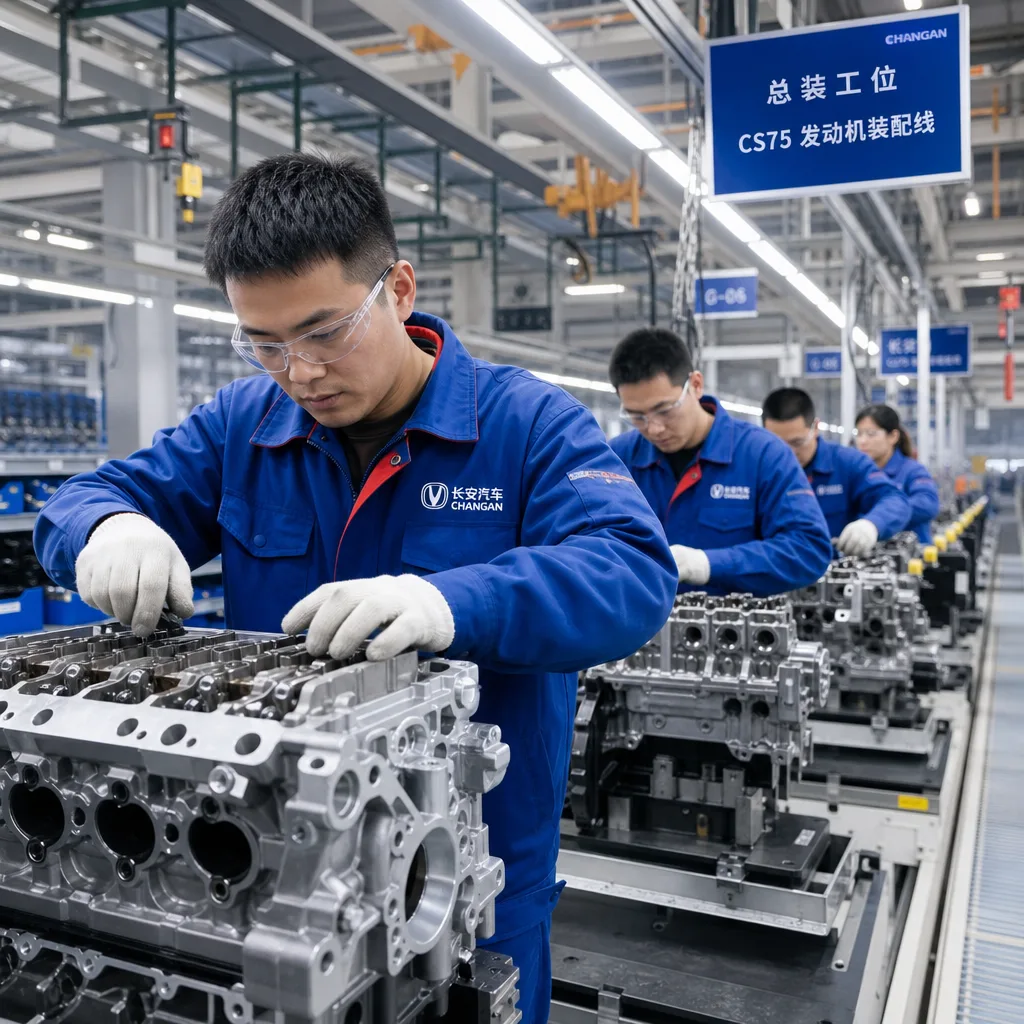
Driventus supplies dual mass flywheel programmes from a vertically integrated engine and powertrain manufacturing base in Taizhou, Zhejiang. Driventus is an independent aftermarket manufacturer; brand names are referenced for fitment only. Our manufacturing and QC systems operate under IATF 16949:2016 and ISO 9001:2015, with material controls aligned to REACH (EC) No 1907/2006 where applicable. This guide walks through the checks wholesale buyers should use before placing a purchase order, how to compare suppliers on more than price, and when custom manufacturing is justified for a Vauxhall fitment range.
Decide whether the application is really matchable
Before you talk about MOQ or lead time, decide whether the application is fitment-safe for wholesale. A dual mass flywheel has to align with the engine family, transmission code, starter ring geometry, bolt pattern, offset, and installed height. For Vauxhall coverage, confirm the OE reference first, then check whether the vehicle uses manual transmission only and whether that platform carries multiple flywheel revisions.
Use a buyer-side spec check, not a generic catalogue skim:
Outer diameter and mounting pitch
Crankshaft pilot register and offset
Ring gear tooth count
Rotational free play and damping angle
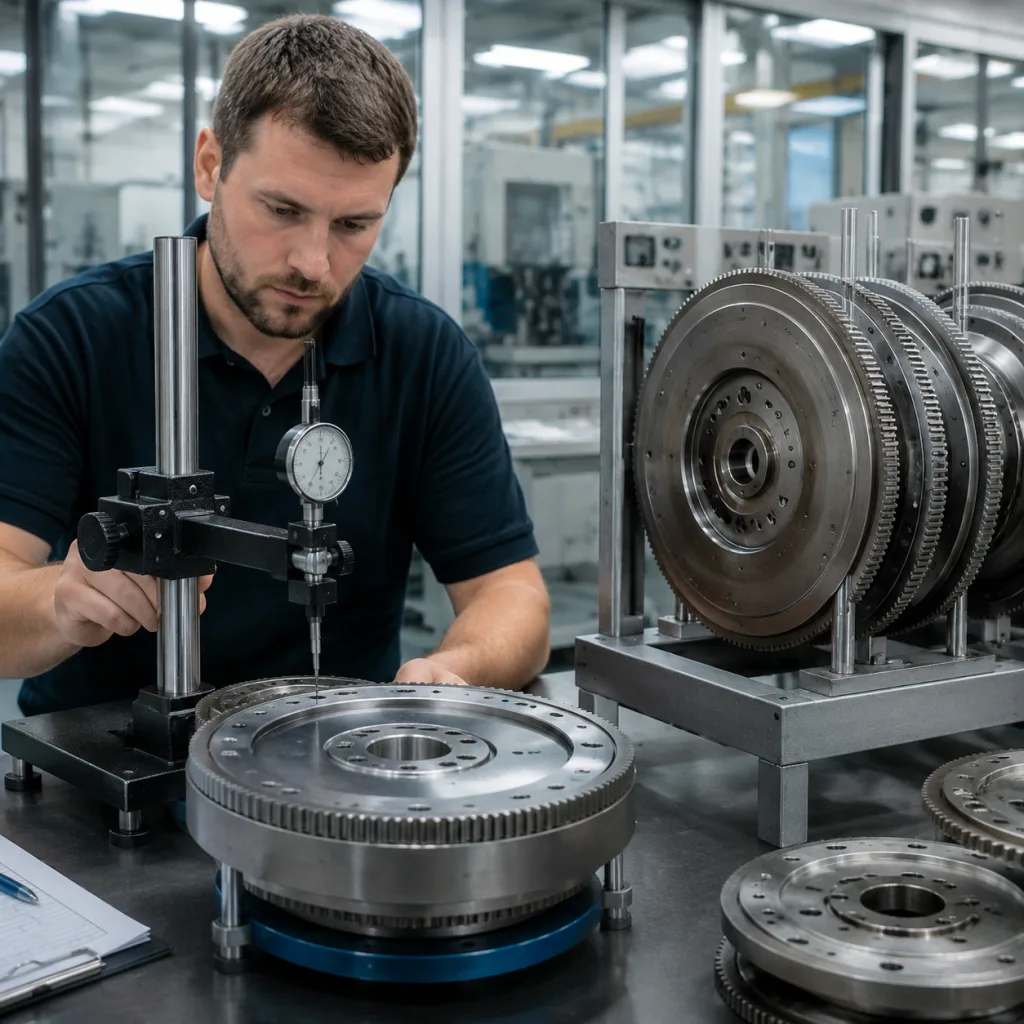
Maximum runout and face parallelism
Bolt grade, thread form, and tightening sequence
Ask suppliers to state actual measurements. A wholesale spec sheet should include nominal outer diameter, installed height, offset, free play in degrees, and runout in millimetres. As a practical control point, buyers often request outer diameter within ±0.20 mm, offset within ±0.15 mm, face runout no more than 0.10 mm TIR, and rotational free play held within a declared band of about 8° to 15° depending on engine family. If those numbers are missing, treat the cross-reference as incomplete rather than assumed.
That approach is especially important when the catalogue looks broad. A wide OE match can hide revision changes, and revision changes are where returns start.
Compare suppliers on landed cost, not unit price
Wholesale purchasing is usually won or lost on three things: minimum order quantity, replenishment lead time, and packing quality. For distributors and repair networks, a stable MOQ matters less than predictable availability across the full vehicle parc. Ask for carton count, pallet configuration, labelling format, and whether part numbers are barcoded for warehouse intake.
Buyer need
What to confirm
Why it matters
MOQ
Per part number and per range
Protects inventory planning
Lead time
Standard and expedited
Supports service-level targets
Labelling
SKU, OE cross-reference, batch code
Improves traceability
Packing
Rust protection, corner protection
Reduces transit damage
Warranty terms
Failure criteria and claim evidence
Limits dispute risk
</tr></thead><tbody> </tbody></table>For planning, many wholesale programmes work best when MOQ sits at one carton layer or one mixed pallet line rather than a full container by part number. A realistic target to request is 20 to 50 units per SKU for standard replenishment, with 30 to 45 days for regular production and 15 to 20 days for urgent top-up once tooling and approvals are in place. If a supplier quotes a lower unit price but cannot hold a repeat lead-time window, the landed cost usually rises once air freight, missed sales, and emergency sourcing are included.
Break the quote into ex-works price, export packing, inland freight, and destination terms. That makes supplier comparisons honest. A quote that is 3% cheaper but weak on packing or batch traceability often becomes the expensive option over a quarter.
Validate fitment with a failure-minded checklist
A Vauxhall dual mass flywheel programme should pass validation on geometry and function, not just visual similarity. Sampling should include torque transfer check, idle noise assessment, and inspection of internal spring-pack movement. Buyers stocking several models should start with the highest-volume applications, then expand to adjacent engine codes only after those first units clear.
Recommended validation sequence 1. Confirm OE cross-reference against the application list. 2. Measure installed height, offset, and ring gear alignment. 3. Check rotational smoothness and angular free play. 4. Inspect friction face finish and fastener interface. 5. Run bench or vehicle-level noise and vibration checks where feasible.
Define the rejection limit before the shipment lands. Require no abnormal axial play, no binding through the full angular travel, and no visible damage to the friction faces or starter ring after unpacking. If bench testing is available, specify a torque-handling range and a repeatability check across at least three samples per batch, with recorded values for free play, lock-up behaviour, and residual runout after balancing.
For fleet or workshop channels, the best replacement decision is symptom plus diagnosis plus confirmed dimensional match. That cuts comebacks and keeps the wholesale line suitable for professional installers.
Use certification to judge process control, not marketing
A dual mass flywheel is a safety-critical rotating assembly. Buyers should prioritise suppliers that can show process control, traceability, and documented inspection. Driventus manufactures under IATF 16949:2016 and ISO 9001:2015, which supports a controlled approach to raw material selection, machining, balancing, and final inspection. Where chemical compliance is relevant, REACH (EC) No 1907/2006 should be checked for the materials and coatings used in the programme.
The point of certification is repeatability, not decoration. For wholesale accounts, the key question is whether the supplier can hold the same mass distribution, balance grade, and mounting accuracy from one production lot to the next. That consistency protects a distributor’s return rate and a repair chain’s installation time.
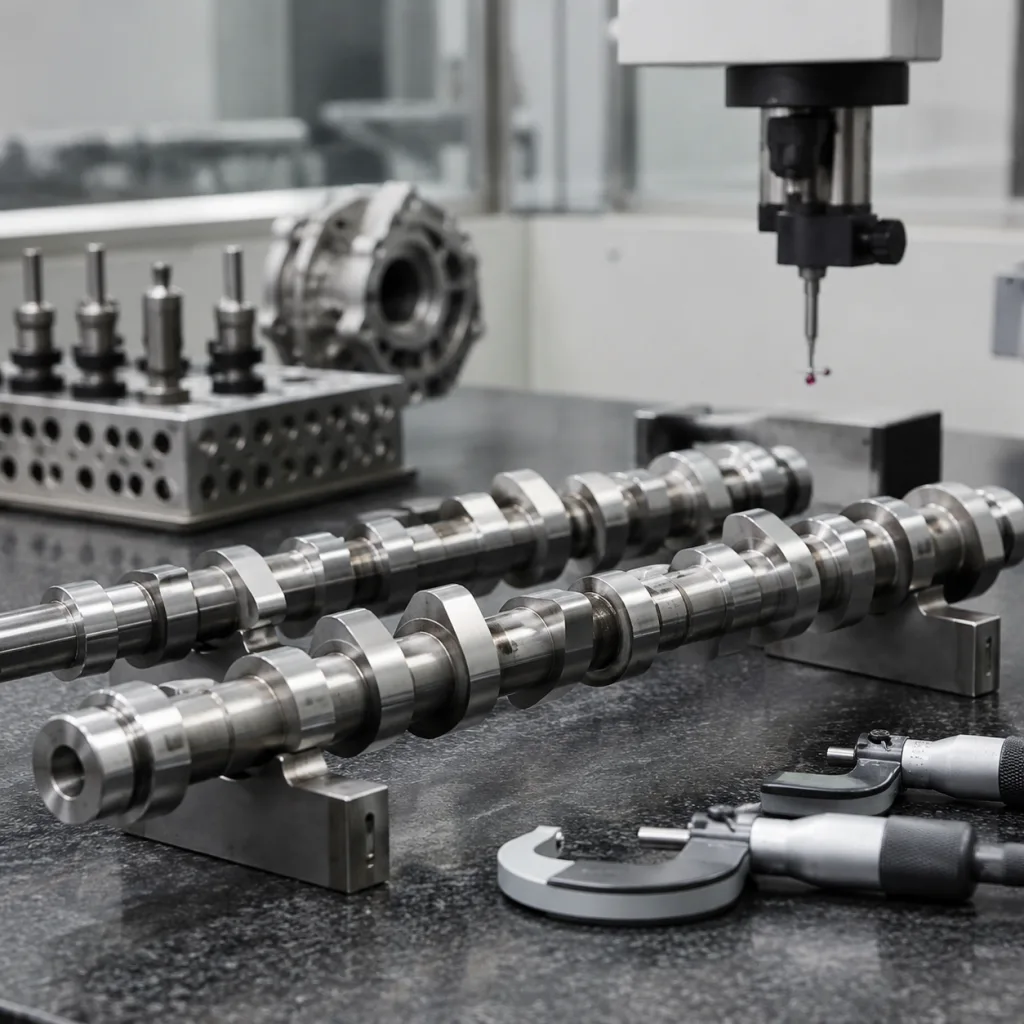
Ask for the actual process route: incoming material verification, CNC machining sequence, heat-treatment control, dynamic balancing, final dimension inspection, and outbound sampling. Also request the allowable process drift for critical features such as face runout, bolt-hole position, and ring-gear concentricity. If the factory cannot name the control point for those dimensions, they may be selling fitment similarity rather than repeatable manufacturing.
Batch or lot traceability matters too. It speeds up warranty handling and isolates a problem to a specific run instead of the entire programme.
When custom manufacturing starts to pay off
Custom manufacturing makes sense when a market needs a mixed catalogue strategy, private-label packaging, or a replacement programme for a high-volume OE reference with limited current availability. It can also be justified when a buyer needs regional packaging, special barcode rules, or documentation in a specific format for warehouse systems.
Driventus supports custom manufacturing through custom manufacturing for buyers who need application-specific packaging, OE cross-reference management, or controlled revisions across several related part numbers. If your programme also includes gaskets, water pumps, or other engine components, you can consolidate sourcing through our catalog and product families.
A custom run is usually worth the setup if forecast demand can support a stable run rate, if the application has repeated warranty sensitivity, or if the standard catalogue only covers part of the parc. In practical terms, buyers often justify a custom project when monthly off-take can support the target MOQ across 90 days and the commercial margin can absorb first-article approval, revised packaging, and final inspection documentation. For new programmes, ask for an engineering sample lead time, a production pilot quantity, and a clear transition point from sample approval to mass supply.
For broader supplier qualification, review the quality system before opening an account. If you are ready to compare pricing, availability, and programme structure, request a quote.
Frequently asked questions
Yes. We support B2B supply for distributors, repair chains, and importers with application-specific programmes, batch traceability, and export packing suited to wholesale distribution.
Yes, when the fitment data is verified. We use OE references for application matching only and do not claim vehicle manufacturer approval or endorsement.
Typical documents include commercial specification sheets, packing details, batch identification, and quality-system evidence under IATF 16949:2016 and ISO 9001:2015.
If you are building a wholesale range for Vauxhall applications, send your target OE references, volume, and packing requirements through /contact.html and we will review fitment and supply options.