Dual Mass Flywheel Porsche Wholesale: Sourcing Guide
Buyers sourcing a dual mass flywheel Porsche wholesale programme need more than a competitive unit price. They need dimensional consistency, predictable NVH performance, stable supply, and documentation that supports import, audit, and warranty control. For distributors, repair networks, and procurement teams, the main risks are fitment variation, inconsistent damping characteristics, and delayed replenishment across multiple SKUs. Driventus manufactures engine and powertrain components in Taizhou, Zhejiang, with IATF 16949:2016 and ISO 9001:2015 systems in place. We supply B2B customers in more than 60 countries and support OE-number cross-references where the application data is confirmed. Driventus is an independent aftermarket manufacturer; brand names are referenced for fitment only. This article explains what wholesale buyers should verify before placing a programme order, how to compare suppliers, and which technical documents reduce receiving risk.
What wholesale buyers should verify before ordering
For this part family, the commercial decision depends on fitment, durability, and documentation. A supplier may offer a lower unit cost, but if the flywheel mass, spring rate, or ring gear geometry varies outside the application window, the part creates returns and workshop delays.
Use a technical checklist during RFQ review:
OE cross-reference confirmed to the target application, for example OE 06A107065 where relevant
Overall diameter, mounting pattern, offset, and starter ring tooth count matched to the application data
Damping curve or torsional compliance verified against the target engine family
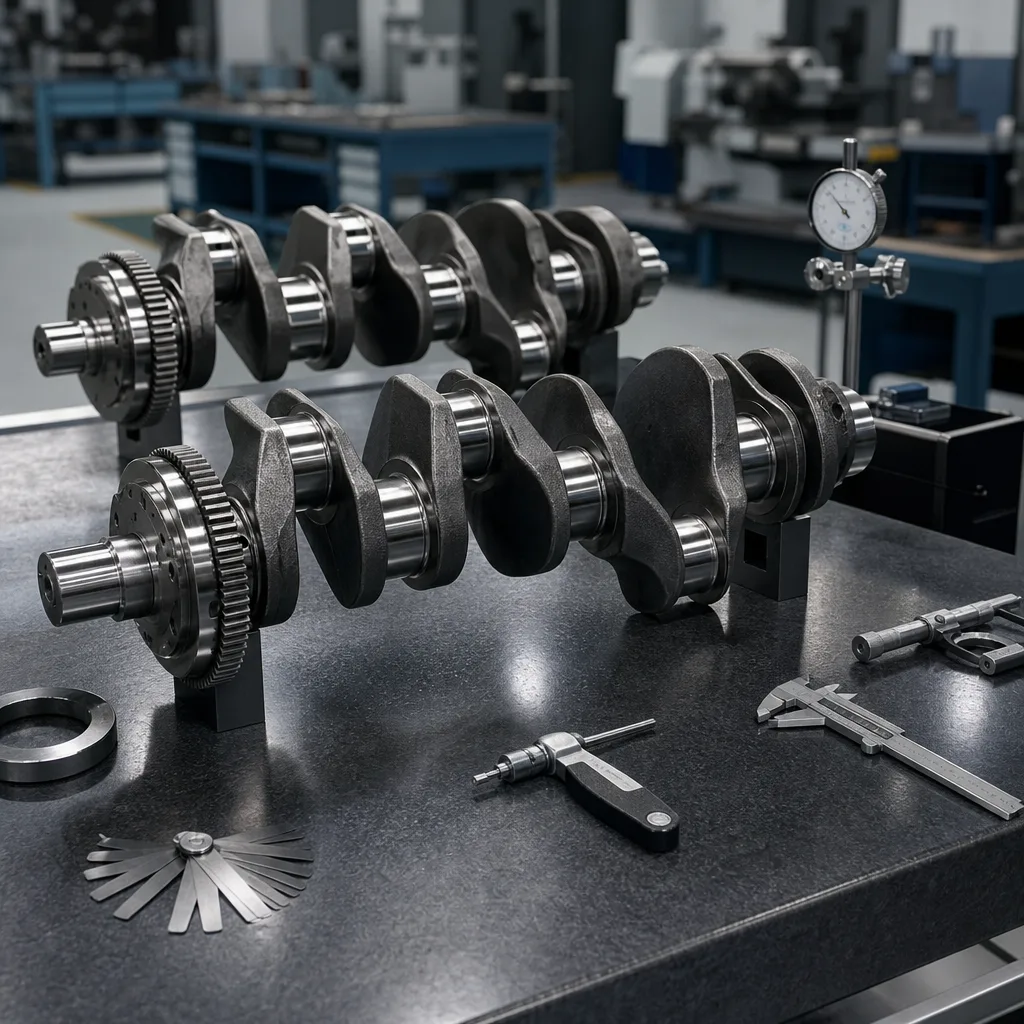
Runout, balance, and friction surface finish controlled in production
Packing and corrosion protection suitable for sea freight and long storage
Batch traceability linked to lot code and inspection record
For programme buyers, the practical question is not only whether the part fits, but whether the same specification can be repeated across replenishment cycles.
Technical data to request from a supplier
A reliable wholesale offer should include measurable data, not just a catalogue line. Ask for the current drawing revision, inspection standard, and test summary before approval.
Item
What to request
Why it matters
Mass and inertia
Nominal value and tolerance band
Affects engine response and idle control
Runout
Measured value at defined datum
Limits vibration and clutch engagement issues
Balance
Residual imbalance data
Reduces NVH and bearing load
Spring pack
Type, preload, and travel range
Determines torsional damping performance
Friction surface
Material and finish specification
Impacts clutch wear and heat stability
Fastener interface
Bolt hole pattern and thread details
Prevents installation mismatch
</tr></thead><tbody> </tbody></table>If the application is for a fleet or chain workshop programme, request PPAP-style documentation or equivalent production records where applicable. This is especially useful for tendering, private label supply, and multi-market stock planning.
How Driventus supports procurement programmes
Driventus is set up for B2B sourcing rather than retail transactions. Buyers can use our catalog to review adjacent engine and powertrain categories, including the full range at our catalog and related engine components.
For wholesale programmes, we support:
OEM / Tier-1 supply enquiries with drawing-based review
Aftermarket distributor orders with SKU consolidation
Multi-location repair chain replenishment with repeat lot planning
Packaging and labelling requirements for regional distribution
Our production and inspection structure is aligned with IATF 16949:2016 and ISO 9001:2015. Documentation may also be prepared to support market-specific compliance needs such as REACH (EC) No 1907/2006 for chemical substance control in the supply chain, where applicable to the finished assembly and packaging inputs.
Lead time, MOQ, and freight planning
Wholesale buying decisions are often limited by inventory turns, not by technical approval alone. For this reason, buyers should confirm minimum order quantity, production lead time, and shipping cadence before approval.
Typical planning questions:
What is the MOQ per reference and per carton configuration?
Is stock available for fast-moving applications, or is production required?
What is the standard lead time after sample approval and forecast confirmation?
Can mixed-SKU cartons be used for slower-moving references?
What export packaging is used for container and pallet loading?
For high-value powertrain parts, dimensional stability during transit matters. Ask for carton drop resistance, rust-prevention method, and humidity protection. Buyers shipping into the EU, UK, US, Canada, Australia, and Brazil should also verify customs data consistency across commercial invoice, packing list, and product description.
Validation and approval before mass purchase
Before a blanket purchase order, good procurement practice is to validate one sample lot under real workshop conditions. This is particularly important when the application overlaps several engine codes or transmission variants.
Recommended approval steps:
1. Confirm OE cross-reference and vehicle application data. 2. Inspect key dimensions against the drawing. 3. Check pilot fit, bolt pattern, and clutch interface. 4. Run installation on a representative test vehicle or bench fixture. 5. Record idle quality, engagement behaviour, and noise. 6. Review the first batch after 500–1,000 km of equivalent service where practical.
For friction-related validation, some buyers reference SAE J2527 or equivalent internal durability methods for related component testing. Final acceptance should be based on the buyer’s own engineering and service requirements. Driventus does not claim approval or endorsement by any vehicle manufacturer.
Why procurement teams choose an independent supplier
A dual mass flywheel programme is easier to manage when one supplier can support repeatability, documentation, and production control. That is the main value of working with a vertically integrated manufacturer.
Driventus maintains machining, assembly, and inspection flow in-house for core engine and powertrain categories. This helps reduce variation between raw material input, machining outcome, and final inspection. It also supports quicker corrective action if a customer reports a fitment or packaging issue.
For tender and annual supply discussions, buyers usually evaluate three points:
Can the supplier repeat the same specification over multiple batches?
Can inspection records be shared without delay?
Can the factory support engineering changes and application updates through quality system controls?
If the answer is yes, the part is more suitable for distributor stock, workshop chain replenishment, and private label expansion.
Frequently asked questions
Yes, where the application data is confirmed. Buyers should provide the OE reference, engine code, and transmission details so we can validate fitment and packaging requirements before quotation.
Typical documents include product specification, inspection records, carton details, and material declarations where applicable. We can also support buyer-specific audit and compliance requests.
Yes. Through our custom manufacturing process, we can support label format, carton artwork, and programme-specific packing requirements after technical and commercial review.
If you are building a programme for wholesale supply, send your OE reference, annual volume, and target market details. Our team can review fitment and quotation scope here: /contact.html