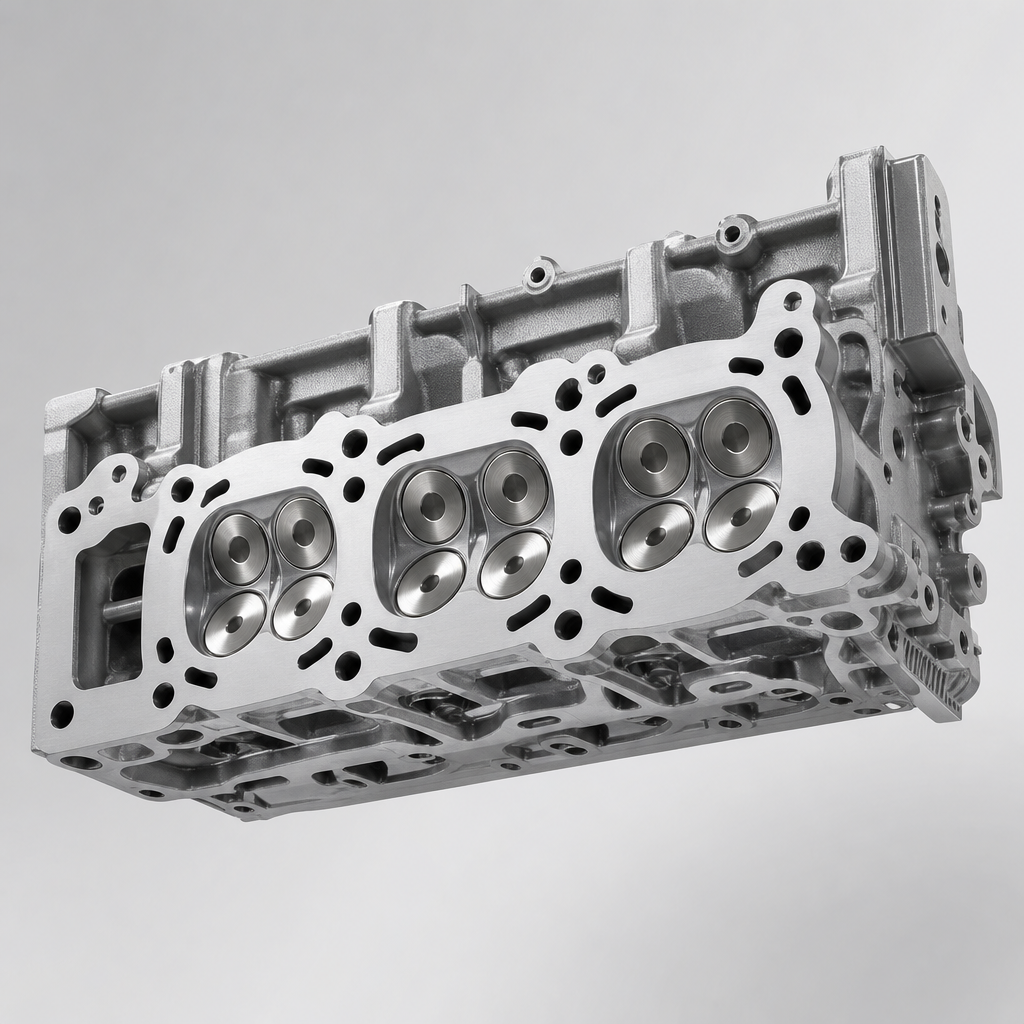
Dual Mass Flywheel Porsche Manufacturer China Guide
Sourcing a dual mass flywheel for Porsche applications is rarely a price-first exercise. The real question is whether the supplier can produce repeatable, road-ready parts with controlled geometry, stable damping behaviour, documented balance results, and traceable batches.
That changes how buyers should review any dual mass flywheel Porsche manufacturer China option. Catalogue breadth matters less than evidence: can the factory hold runout and balance limits, document material and process history, and ship consistent lots over repeat orders? This is a safety-critical driveline component exposed to cyclic torque, heat variation, and strict NVH expectations. Buyers should press for actual numbers during RFQ review, not general assurances. Axial runout targets discussed at approval stage are often in the 0.10 to 0.20 mm range depending on drawing and datum scheme, while dynamic balance is usually defined by residual imbalance per plane at a stated test rpm. Pilot programmes are commonly priced separately from repeat-stock orders because setup cost, packaging format, and validation effort change the economics. Driventus is an independent aftermarket manufacturer; brand names are referenced for fitment only.
Start with the decision filter, not the quotation
The fastest way to screen suppliers is to decide what must be true before pricing even matters. For most distributor, importer, and OEM-service buyers, four checks belong at the front of the review:
- Manufacturing scope: machining, friction surface finishing, balancing, spring-pack assembly, and end-of-line inspection
- Quality certification: current IATF 16949:2016 and ISO 9001:2015 certificates, with scope that genuinely covers automotive component production
- Traceability: batch coding linked to raw material lots, machining records, final inspection status, and packing date
- Export compliance: support for material disclosure where required, including alignment with REACH (EC) No 1907/2006 for applicable substance-control obligations
If a supplier cannot show these basics early, the rest of the conversation tends to become speculative.
A stronger approval file should also cover factory-audit access, PPAP-style documentation when requested, and sample validation before volume release. In aftermarket programmes, buyers usually want drawing-based inspection, fitment review, packaging specification, and carton-marking rules. In practical terms, that means a dimensional report, balance report, raw material certificate for the main bodies, hardness or heat-treatment record where applicable, and a control plan that makes clear which characteristics are checked 100% and which are sampled.
One point that often gets missed: ask which critical operations are done in-house and which are subcontracted. Outsourcing is not automatically a red flag. It does, however, change the audit. If balancing, heat treatment, or key machining steps sit outside the plant, buyers need to know who owns inspection records, how nonconforming parts are contained, and whether those external processes are still covered by the supplier's quality system. If dynamic balancing is outsourced, ask for the machine type, balancing speed, correction method, record-retention period, and how matched batches are segregated.
Commercial screening should be just as concrete. Ask for the trial MOQ, the standard MOQ, and the price-break structure. A supplier may accept a pilot order of 20 to 50 pcs for validation, then move to a normal production MOQ of 100 to 300 pcs per reference once printed boxes, pallet quantity, and line setup are fixed. Unit pricing usually shifts because of setup absorption, packaging, and whether castings or spring elements are being purchased specifically for that order.
Driventus provides buyers with access to our catalog, documented process controls, and a published quality system overview to support vendor qualification.
Where dual mass flywheel programmes usually fail
A dual mass flywheel can pass a visual check and still create field problems. That is the central sourcing risk.
The component combines two inertial masses with an internal damping mechanism intended to reduce torsional vibration through the driveline. So the supplier has to control both geometry and damping consistency. When either drifts, the failures tend to show up later as judder, noise, harsh engagement, clutch wear, or unstable NVH.
The production checkpoints that matter most
- Friction face flatness and finish: stable clutch contact depends on controlled surface condition after machining and grinding
- Radial and axial runout: excessive deviation can trigger judder, noise, and accelerated clutch wear
- Dynamic balance: imbalance increases NVH and can load surrounding drivetrain components at higher rpm
- Spring and damper preload consistency: this affects torsional response and driver-perceived vibration
- Ring gear and mounting interface accuracy: critical for starter engagement and installation fit
- Heat treatment verification: necessary where the design calls for hardened zones or controlled microstructure
For higher-volume programmes, buyers should ask for nominal dimensions, tolerance windows, Cp/Cpk data where available, and actual inspection frequency by lot or shift. Even in the independent aftermarket, dimensional reports covering pilot bore, crank mounting pattern, stack height, and friction surface position are normal approval documents. Typical buyer-side files call for checks such as friction-face runout, mounting-face parallelism, bolt-hole PCD position, pilot bore diameter, ring-gear concentricity, and total assembled height. Depending on drawing and method, buyers frequently ask whether the factory can hold values such as <=0.15 mm axial runout, <=0.10 mm friction-face flatness deviation, or residual imbalance limits per plane after correction.
The more useful supplier discussions move past pass/fail language. Ask how nonconforming parts are segregated, whether rework is allowed for balance correction, what share of output gets end-of-line dynamic testing, and how measurement equipment is calibrated. Those answers reveal whether the process is stable or whether defects are simply being sorted after the fact. A line with 100% runout and balance checks carries a different risk profile from one using first-off plus hourly sampling.
Sample history matters too. One inspection sheet proves the supplier can make paperwork. Multiple lot records show whether the process stays centered over time. Ask for at least three separate lot reports when the reference has repeat production history.
Then go deeper where it counts: is the friction face finish-turned or ground, what roughness target is used, is the spring pack assembled to a defined preload window, how is grease quantity controlled if lubrication is required, and are ring gears induction-fitted with recorded temperature control? Those details usually separate a technically managed line from a trading operation with limited process control.
A side-by-side RFQ comparison that actually helps
When buyers compare suppliers, the problem is often not lack of data but lack of structure. A quote sheet alone hides the operational differences that drive claims, shortages, and delayed launches.
| Audit point | What to ask | Typical buyer concern |
|---|---|---|
| MOQ | Trial MOQ and standard production MOQ by reference | Can the programme launch without excess stock risk? |
| Lead time | Sample lead time, tooling lead time if needed, repeat-order lead time | Can replenishment support seasonal demand? |
| Capacity | Monthly output by machining line or assembly cell | Will supply remain stable after the first order? |
| Testing | Balance test method, runout inspection, torque/damping validation | Is there objective evidence of functional consistency? |
| Documentation | Inspection reports, material certificates, packing specs, traceability labels | Can import and warranty files be closed quickly? |
| Claims handling | NCR timing, containment method, replacement policy | How quickly can field issues be isolated? |