Connecting Rod for Ford Mustang OE Equivalent Guide
When sourcing a **connecting rod for Ford Mustang OE equivalent** applications, the question is not whether a listing says "fits Mustang." The question is whether the rod behaves like the original part once it is torqued, assembled, and run. That is where programmes succeed or fail.
For distributors, engine rebuilders, and repair networks, the buying decision usually comes down to four things: dimensional accuracy, material and heat-treatment control, batch consistency, and supplier discipline. A rod can look correct and still create warranty exposure if big-end bore distortion, pin-bore finish, weight spread, or bolt-seat geometry drifts outside a narrow window. This guide breaks the evaluation into practical buying angles: what "OE equivalent" should mean, which checks catch weak supply early, how to validate a replacement programme, where sourcing failures usually start, and how to approve a Mustang line with fewer surprises.
Start Here: What "OE Equivalent" Should Mean for a Mustang Rod
For a replacement connecting rod, OE-equivalent does not mean factory branding or OEM endorsement. It means the part matches the original rod closely enough in function, interface geometry, and service behaviour to work in a controlled aftermarket programme.
That standard is tighter than a catalogue cross-reference. For Mustang applications, buyers should focus first on the features that determine fit, oil clearance, balance, and long-term durability:
Centre-to-centre length within drawing tolerance, commonly controlled to about +/-0.02 to +/-0.05 mm depending on design and process capability
Big-end bore diameter and roundness after cap assembly and bolt torque, often reviewed with roundness and cylindricity limits in the 0.01 to 0.03 mm range
Small-end pin bore size and bushing specification where applicable, with bore tolerance frequently held within 0.005 to 0.015 mm for controlled wrist-pin fit
Big-end width and small-end width for bearing and piston alignment, often checked to +/-0.03 mm or tighter on finished faces
Rod bolt seat geometry and thread quality, including seat squareness, thread gauge acceptance, and seating-face finish
Beam profile and sectional strength relative to the approved drawing or sample
Total mass and end-to-end weight balance, with many rebuild channels preferring total weight spread within 3 to 5 g per set and end-balance within 1 to 2 g when sold as matched sets
Material grade and heat-treatment consistency, such as forged C70 fracture-split steel or 40Cr/42CrMo forged steel depending on programme design
Shot peening, crack detection, and surface integrity records
In practice, the cleanest test of OE equivalence is simple: can the supplier match a controlled drawing, an approved sample, and an inspection plan with actual records? For Ford Mustang applications, that starts with the exact engine family, because rod dimensions, bolt specification, and bushing design can differ materially between 2.3L, 3.7L, 4.6L, 5.0L, and earlier platform programmes. Buyers should also confirm whether the supplier can support multiple engine families through our catalog and, where relevant, /products/engine-components.html.
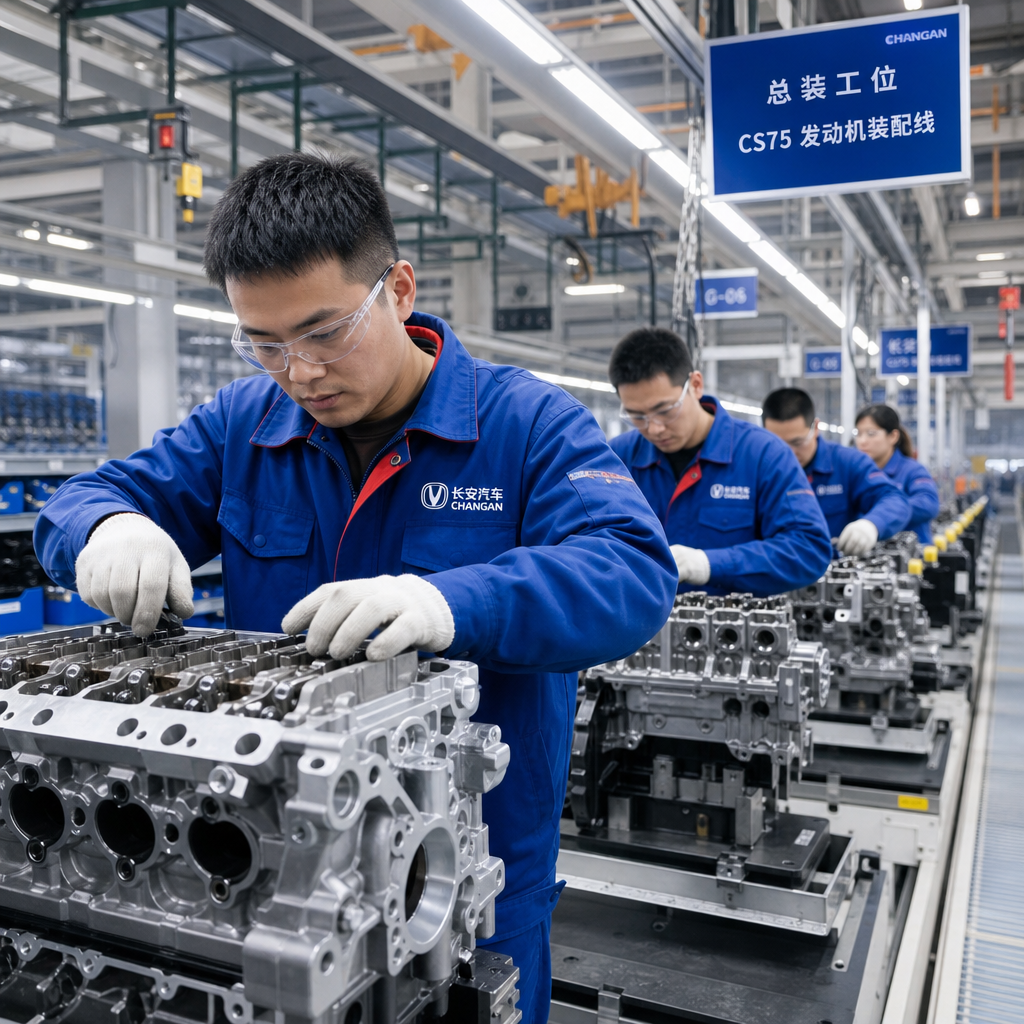
A credible supplier should also be able to describe the production route without vagueness: hot forging, normalising or quench-and-temper heat treatment, rough machining, cap splitting or saw cutting depending on design, finish boring or honing, small-end bushing insertion where required, shot peening, 100% visual inspection, and batch dimensional release. If that explanation is weak, the OE-equivalent claim is weak as well.
Driventus is an independent aftermarket manufacturer; brand names are referenced for fitment only.
The Spec Checks That Separate a Real Match from a Catalogue Match
Dimensional conformity is the first gate, not the last one. A rod may hit nominal size on a sample sheet and still underperform if grain flow, hardness, fastener seating, or heat treatment moves around from batch to batch.
Key procurement checks
Item
Why it matters
Typical buyer check
Forging or base material
Influences strength, fatigue resistance, and service life
Material certificate, chemical composition report, and heat-lot traceability
Centre-to-centre length
Affects compression height and engine balance
100% gauging for mature parts or CMM sampling at first article
Big-end bore
Controls bearing crush and oil clearance
Bore-gauge results after bolt torque, with actual torque value and fixture method stated
Pin bore
Determines piston-pin fit and rotation
Bore size, bushing material spec where used, and surface-finish report
Weight tolerance
Impacts NVH and balancing effort
Total and end-weight sorting data by lot
Hardness
Shows heat-treatment consistency
Rockwell or Brinell report by batch, with acceptance window
Crack testing
Helps reduce field-failure risk
Magnetic particle inspection or equivalent NDT record
Bolt quality
Protects cap retention under load
Mechanical property, coating spec if any, and torque validation
</tr></thead><tbody> </tbody></table>If the OE drawing is not yet available but a reference sample exists, the buyer still has enough to ask the right questions. Useful working benchmarks include:
Centre-to-centre length: request actual measured average and range across at least 5 to 10 pcs from one lot
Big-end bore tolerance: commonly expect process control within about 0.01 to 0.03 mm after cap tightening to specified torque
Big-end bore roundness: often expected at or below 0.01 to 0.02 mm for a stable bearing seat
Pin bore surface finish: often Ra 0.4 to 0.8 um for a controlled pin interface
Part-to-part weight spread: many distributors target <=5 g per shipment lot unless the product is sold as individually matched sets
Hardness consistency: request a defined min-max window, for example within 15 to 25 HB or an equivalent HRC band depending on material and design
For higher-volume replacement channels, it is reasonable to ask for:
PPAP-style dimensional package where available
Ballooned drawing with critical-to-function dimensions identified
Control plan and process flow
Gauge calibration records
Batch identification method on rod and carton
Nonconformance handling procedure
Torque specification used during final big-end bore inspection
Surface roughness records for bore and mating faces where available
When the requirement includes private-label supply or a modified specification, custom manufacturing capability matters more. Weight matching, finish requirements, dedicated packaging, and special inspection frequency all affect cost and execution.
Commercially, buyers should avoid one-number quote comparisons. A standard mature forging with existing tooling may carry a lower unit cost, while a slower-moving Mustang application with added weight sorting, branded packaging, or tighter inspection can be priced higher for valid reasons. Ask suppliers to separate piece price, tooling or fixture cost if any, packaging upcharge, and inspection upcharge so the quote can be evaluated line by line.
Validation in Sequence: How to Prove the Rod Before You Scale the Programme
A catalogue match is rarely enough for a connecting rod supplied into established aftermarket channels. Validation should confirm two things: the rod installs correctly, and it stays stable under service conditions.
Recommended validation sequence:
1. Drawing review against the target engine application, including rod orientation, cap design, bolt specification, and bushing status 2. First article inspection of critical dimensions, ideally covering at least 5 pcs from initial production 3. Material and hardness verification by batch, tied to the heat number on the certificate 4. Rod bolt torque and cap alignment check using the supplier's defined torque method and lubricant condition 5. Trial assembly with crankshaft, bearing shell, piston pin, and piston to confirm practical fit 6. Weight grading review across a sample batch, such as 20 to 50 pcs for initial approval 7. Fatigue or durability evaluation where programme volume justifies it
For a meaningful first-article package, ask for actual values rather than pass/fail only. The data below is more useful in a sourcing review than a generic approval stamp:
Big-end bore measured before and after bolt torque
Bore roundness and housing-bore alignment
Small-end bore size and bushing press-fit result where applicable
Parallelism or twist results between big and small ends
Mass, big-end weight, and small-end weight per sample piece
Hardness results by location if the rod has differentiated heat-treatment zones
Standards and system controls
Connecting rods are application-specific, so there is no single universal product standard that covers every rod design. What buyers should expect instead is disciplined system control aligned with recognised frameworks:
IATF 16949:2016 for automotive quality management system requirements
ISO 9001:2015 for documented process control and corrective action
REACH (EC) No 1907/2006 for chemical compliance in relevant materials and finishes supplied into the EU
A documented quality system gives buyers a clearer view of inspection frequency, traceability, corrective action, and change control. That matters even more when orders are repeated over time or split across multiple destination markets such as the EU, UK, US, and Australia.
From a practical approval standpoint, fatigue validation is usually not required on every reorder. It becomes more relevant during initial source approval, a major material change, a forging die change, or a bolt-source change. Many aftermarket buyers therefore use a staged path: dimensional approval first, pilot build second, then larger release quantities. That sequence contains risk without overpaying for full-volume inventory too early.
Lead time belongs inside validation as well. A supplier quoting 30 to 45 days for repeat orders but 75 to 90 days for first orders with new packaging, a new inspection fixture, or low-volume forging scheduling should document that clearly. A part can be technically acceptable and still fail the programme commercially.
Driventus is an independent aftermarket manufacturer; brand names are referenced for fitment only.
Where OE-Equivalent Rod Programmes Usually Break Down
Most replacement rod programmes do not fail because of one dramatic issue. They fail because small control gaps stack up: a loose bore here, uncertain bolt consistency there, weak packaging at dispatch, and no retained sample when a claim appears.
Typical risk points
Nominal fit without tolerance discipline: a rod may be listed for an engine family yet show excessive bore variation from one lot to another.
Unclear material origin: missing heat records make root-cause analysis and warranty review far more difficult.
Poor bolt consistency: variation in cap fasteners can change bore distortion after tightening.
Insufficient weight control: mixed rod weights increase balancing work for engine rebuilders.
No retained sample process: disputes are harder to resolve when no sealed approval sample exists.
Weak packaging protection: nicks on bore faces or mating surfaces can create assembly problems before installation even starts.
For import managers and category buyers, the commercial failure modes matter just as much. Ask whether the supplier can define:
MOQ by application, for example 100 to 300 pcs for standard stock items versus 500 to 1,000 pcs for slow-moving or private-label runs
Standard lead time and safety-stock policy, such as 30 to 45 days for repeat supply and 60 to 90 days for first customised orders
Inspection level before dispatch, including whether critical bores are 100% checked or sampled by AQL/CPK-based control
Carton marking and pallet standard, including batch code, gross/net weight, and destination label format
Warranty claim handling and root-cause response time, such as initial containment within 48 to 72 hours and 8D closure target within 10 to 20 working days
These details decide whether a programme keeps working after the first order. Supply stability depends on replenishment discipline, claim handling, and packaging quality as much as it does on the original drawing.
Price risk should also be surfaced early. Unit price is rarely driven by steel weight alone. It is strongly affected by whether the programme uses an existing forging die, whether the big end is fracture-split or conventionally machined, whether the small end needs a bronze bushing, whether bolt kits are included, and whether rods are supplied as singles or weight-matched engine sets. A buyer comparing quotations should therefore ask for at least four cost drivers to be identified explicitly: material/process route, machining content, inspection scope, and packaging format.
Another frequent failure is treating all OE-equivalent rods as interchangeable at catalogue level. For Mustang applications, engine generation matters. Even when overall appearance is similar, a small difference in pin diameter, beam offset, or cap bolt design can create fitment or durability problems. Require the supplier to tie each application to a drawing revision, approved sample, or verified cross-reference file rather than a broad model-year statement.
A Practical Approval Model for Ford Mustang Replacement Rod Supply
A structured approval process reduces field risk and gives buyers a cleaner basis for reorder decisions. For a Ford Mustang replacement line, many importers and distributors prefer a staged release rather than a full immediate rollout.
Suggested approval framework:
1. Confirm target engine code and market fitment scope 2. Review technical file: drawing, material data, inspection items, traceability method 3. Audit sample set: dimensional check, visual finish, mating surface quality, weight spread 4. Run pilot batch with selected rebuilders or service locations 5. Monitor installation feedback and return rate 6. Approve serial supply with locked packaging and labelling standard
If the sourcing brief includes OE cross-reference mapping, use the supplier's internal cross-list carefully and only against verified fitment data. OE formats such as OE 06A107065 or OE 11251… should only appear when they are already established in the customer keyword set or supplied reference file. Broad cross-reference claims should always be supported by technical evidence.
In operational terms, many buyers use a three-stage commercial gate:
1. Sample stage: 5 to 20 pcs for dimensional review and trial assembly; higher unit cost is normal because setup and freight are spread over a small quantity. 2. Pilot stage: 50 to 200 pcs for installer feedback and packaging verification; this is where return reasons, torque issues, and weight spread should be tracked closely. 3. Serial stage: MOQ-based production release, often from 100 to 1,000+ pcs depending on the application and whether the supplier holds buffer stock.
At approval, ask the supplier to lock the following items in writing:
Final drawing or approved sample reference
Material and hardness range
Bolt source or equivalent specification
Critical tolerances and inspection frequency
Unit pack, master carton quantity, and pallet pattern
Batch coding format and carton label content
Quoted MOQ, repeat-order lead time, and price validity period
For aftermarket buyers, the most useful comparison is not simply FOB price per rod. It is landed cost per approved piece. A rod priced 3% lower but requiring extra incoming inspection, resorting by weight, or emergency replenishment can become the more expensive option over the life of the programme. Include expected reject rate, incoming inspection cost, and freight mode assumptions when comparing offers.
Buyers looking to expand a replacement range can review our catalog for adjacent engine components and contact the technical sales team to request a quote for drawings, inspection items, sample discussion, MOQ, target price, and lead-time confirmation.
Driventus is an independent aftermarket manufacturer; brand names are referenced for fitment only.
Frequently asked questions
Request a dimensional inspection report, material certificate, hardness data, traceability method, bolt specification, and quality-system information aligned with IATF 16949:2016 or ISO 9001:2015. A stronger package also includes a ballooned drawing, first-article results with actual measurements, big-end bore data after torque, weight records, and a control plan.
No. Visual similarity does not confirm big-end bore accuracy, pin bore tolerance, weight control, material consistency, or cap alignment after torque. Approval should be based on dimensional and process evidence, not appearance alone. For practical review, buyers should expect measured tolerances, hardness range, and batch traceability, not just photos or a fitment statement.
Yes, if the manufacturer has drawing control, traceability, process documentation, and packaging flexibility. Private-label supply should still follow the same validation steps as standard catalogue items, especially for dimensions, weight grading, labelling, MOQ, and lead-time confirmation. Buyers should also ask whether customised cartons, barcode labels, or matched-set packing change the minimum order quantity or quoted delivery window.
If you are qualifying a replacement connecting rod programme and need technical documentation, sample support or private-label supply, you can review our range and request details at /contact.html