Clutch Kit Mini Manufacturer China: Supplier Audit Guide
For procurement teams sourcing Mini clutch kits, supplier selection is usually driven by consistency, documentation, and delivery control rather than headline unit price. The better question is simple: can this supplier hold release load, friction stability, spline accuracy, and cover runout inside agreed limits over repeat orders, not just on first samples?
That requires translating sales claims into measurable controls. For a typical aftermarket Mini kit, the factory should be able to define critical characteristics such as cover mounting-face runout, clamp-load tolerance band, hub spline fit, marcel height, and release-bearing envelope dimensions, then connect each one to an inspection method, frequency, and lot record. Commercial terms need the same discipline: MOQ per SKU, sample lead time, standard production lead time, artwork-freeze dates, and claim response windows.
This guide explains what to check when evaluating a clutch kit mini manufacturer china partner for aftermarket or private-label supply. It focuses on practical sourcing criteria: audit scope, production controls, batch traceability, validation testing, and programme support for mixed-SKU orders. Driventus is an independent aftermarket manufacturer; brand names are referenced for fitment only.
Start with the go-or-no-go decision, not the catalog
A sourcing decision for Mini clutch kits should begin with process capability, not catalogue breadth. A supplier may list wide vehicle coverage and still fail on stable clamp load, disc torsion behaviour, or release-system fit from batch to batch.
Before onboarding, buyers should verify these points:
Business model: direct factory, trading company, or mixed structure; also confirm which legal entity issues the PI, export documents, and quality reports
Certifications: valid IATF 16949:2016 and ISO 9001:2015 scope, issuing body, current surveillance status, and whether the clutch assembly line is included
Application coverage: exact engine and transmission variants, not just "Mini"; request OE cross references and production-year split where relevant
Bill of materials control: cover assembly, driven plate, release bearing, hub spline, damper springs, friction facings, rivets, marcel plate, and bearing grease specification
Traceability: lot-code system for pressure plate, disc, and bearing subcomponents, ideally linked to assembly date, operator, and incoming material batch
Inspection plan: incoming, in-process, and final checkpoints, with AQL or 100% inspection defined for critical items
Export readiness: carton markings, pallet standards, customs paperwork, origin documents, and experience with mixed pallets or label variants
Compliance controls: material restrictions aligned with REACH (EC) No 1907/2006 where EU supply is involved
Do not accept a generic capability deck. Ask the supplier to show the actual control list for one Mini part number. A capable factory should be able to point to critical items such as hub spline major diameter, disc runout, cover lift height, and bearing installation fit, then show how each one is checked to a defined limit.
If the programme includes private label or market-specific kits, confirm whether the supplier can manage barcode rules, bilingual labels, inserts, and packaging variants through custom manufacturing.
Compare suppliers on the few numbers that actually change outcomes
For repeat purchasing, most supplier comparisons come down to a small operating scorecard. These values should be confirmed during quotation, then written into the supply agreement or quality annex.
Sourcing factor
What to confirm
Typical buyer concern
MOQ
Per SKU and per consolidated order; for example 100-300 kits per reference on standard items, or a 500-1,000 kit combined MOQ across a mixed order
Avoiding excess stock on slower-moving references
Lead time
Sample lead time, first production, repeat-order cycle; typical ranges are 10-20 days for samples, 35-50 days for first production, and 25-40 days for repeat orders with stable materials
Planning around seasonal demand and container booking
Tooling
Whether existing tooling is used or new tooling is required; if new, clarify tooling charge, amortisation, maintenance, and ownership after volume recovery
Cost recovery and ownership clarity
PPAP-style submission
Dimensional report, material data, test report, sample retention, and packaging approval; some buyers require level-3 style submissions even for aftermarket programmes
Launch approval discipline
Warranty support
Claim window, response time, failure-analysis method; common expectations are 12 months from delivery or 24 months from vehicle fitment market practice, with 5-10 working days for initial response
After-sales cost control
Batch traceability
Marking on cover, disc, bearing, and outer box, with lot linkage retained for at least 12-24 months
Recall containment
Packaging
Corrosion protection, drop resistance, label format, and master-carton quantity; for export, inner protection and pallet stability matter as much as carton print quality
Damage during sea freight and warehouse handling
Incoterms
FOB, CIF, DDP, or other agreed basis, plus named port and what local charges are excluded
Accurate landed-cost comparison
</tr></thead><tbody> </tbody></table>For Mini fitments, insist on application-specific dimensions, including:
cover bolt pattern and mounting-face geometry
driven plate outer diameter and thickness
hub spline tooth count and major/minor diameter
release bearing envelope dimensions
installed height and release-travel window
If a supplier only says the kit "matches OE," push further. Buyers need actual numbers. Common control items include disc outside diameter to within roughly +/-0.20 to +/-0.30 mm, assembly runout within 0.30-0.50 mm depending on design, spline fit by go/no-go gauge, and cover height controlled so the release point stays inside the expected travel window.
Audit for failure modes, because that is where weak factories show up
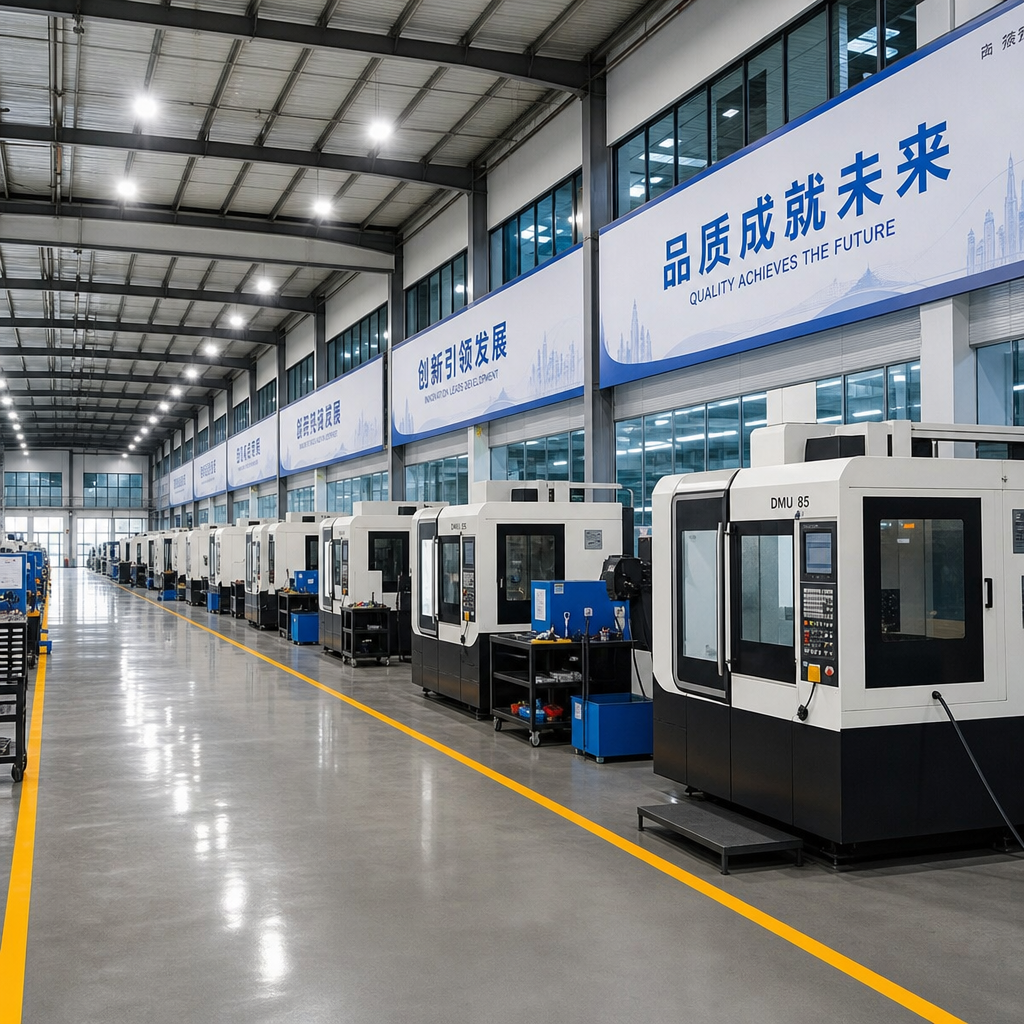
A clutch kit audit should go beyond a facility tour. The useful question is not whether the line looks busy. It is whether the factory has daily controls for the failure modes that create claims: friction variation, spring-load drift, bearing noise, imbalance, and dimensional mismatch.
Process controls to review
During an on-site audit, check whether the supplier has documented controls for:
Cover stamping and machining: flatness, burr control, mounting-face accuracy, and fixture repeatability; ask how often critical faces are checked per shift or lot
Diaphragm spring verification: hardness, heat-treatment records, release-load consistency, and linkage to furnace or tempering records
Driven plate assembly: rivet setting, marcel height, cushion deflection, torsion damper assembly, and lining rivet protrusion control
Hub spline inspection: gauge control for fit and backlash, including master-gauge records and wear replacement intervals
Release bearing sourcing: bearing-life validation, grease specification, seal integrity, and incoming inspection for noise, smoothness, and key dimensions
Dynamic balance: verification method and acceptance criteria for rotating parts, by piece or assembly family
Documentation and containment
The supplier should also be able to show:
control plans and PFMEA aligned with IATF 16949:2016 requirements
calibrated measuring equipment with current records
nonconformance segregation and rework identification
retained samples by batch
complaint handling and 8D-style corrective-action records
Then walk one Mini clutch kit through the plant, from incoming steel and friction facings to forming, spring fitting, disc riveting, assembly, packaging, and warehouse release. Look for first-piece approval, in-process checks every 1-2 hours or every 100-200 pieces, electronic force or torque records where possible, and quarantine rules that stop shipment when a critical dimension drifts.
When reviewing quality system documentation, the real test is whether production data is being used to prevent shipment of bad parts, not merely archived after the fact.
Ask for a validation pack with numbers, not a promise of OE quality
For distributor and repair-chain supply, the manufacturer should be able to provide test evidence showing that the kit meets the agreed performance window for torque transfer, engagement stability, and service life.
Common validation items include:
Clamp load testing of pressure plate assemblies, with nominal force and tolerance declared by part number
Release load and lift-point measurement, including the release-travel range where disengagement occurs cleanly
Facing wear and friction stability under thermal cycling, with before/after thickness and coefficient trend records
Torsional damper performance for driven plates, covering angular deflection and spring-rate behaviour
Spline fit verification with mating shaft gauges
Bearing noise and durability checks
Salt spray or corrosion-resistance checks for relevant exposed surfaces
Packaging transport tests for export handling
Where friction and durability claims are made, buyers should ask for the exact test method and acceptance criteria. In the broader friction-system field, published methods such as SAE J2527 are widely recognised, although clutch validation for a specific application may also rely on internal bench tests and vehicle-level protocols.
A strong request here is a sample validation matrix with actual values. That matrix should show nominal clamp load, allowed deviation, disc runout limit, marcel height range, torsion-angle target, bearing axial play limit, and the sample size tested. For higher-volume programmes, buyers may also require one full dimensional audit per batch, sampling-based endurance or noise checks, and retained samples for claim investigation.
For EU and UK programmes, material declarations should be available when requested, especially for restricted substances under REACH (EC) No 1907/2006. If market-specific compliance files are needed, agree that before SOP.
A mature supplier can usually deliver a coherent approval pack: drawing or critical-dimension list, inspection report, test summary, label artwork, and packing photos. That shortens launch time and reduces first-shipment disputes.
Plan the order flow before you negotiate the unit price
Many buyers for Mini applications do not purchase full-container volumes of a single reference. Orders are often mixed across several clutch kit SKUs and sometimes combined with related drivetrain or engine parts. That makes planning flexibility a commercial issue, not an administrative detail.
Ask the supplier these questions early:
Can MOQ be defined per SKU and per consolidated shipment?
Are trial orders accepted before an annual volume commitment?
What is the standard lead time for stocked raw materials versus new-tool items?
Can the factory group low-volume references into one production window?
Is neutral packaging available alongside private-label cartons?
What are the rules for safety stock, forecast locking, and order amendments?
A disciplined manufacturer should be able to map the timeline clearly:
sample preparation after drawing or sample confirmation
first-order production after artwork approval
repeat-order lead time under normal capacity load
peak-season adjustment periods
In practice, sample development often takes 10-20 days if drawings and tooling already exist, but 20-35 days if fitment confirmation, gauge preparation, or packaging mock-up is required. First production commonly takes 35-50 days after deposit and artwork approval. Repeat orders may reduce to 25-40 days when demand is forecast and core components such as cover stampings, facings, and bearings are buffered.
MOQ and price are linked. A low unit price may assume a 300-500 kit MOQ per SKU, full master-carton multiples, and standard packaging only. If the buyer needs 50-100 kits on slower references, mixed cartons, or private-label inserts, the factory will usually recover that complexity through higher pricing or a combined-order minimum value. Ask for price breaks at points such as 100, 300, and 500 kits per SKU so the cost curve is visible.
Driventus supports B2B buyers with application review, documentation, and export coordination across our catalog. Where a programme needs tailored packaging, bundled kits, or market-specific technical requirements, it is usually better to structure the project through custom manufacturing than to manage those needs as exceptions.
Use a like-for-like quote comparison or the cheapest offer will mislead you
A low quotation only matters if the scope is truly comparable. Before making a price decision, buyers should normalise supplier offers so the technical and commercial differences are visible.
Use the same checklist for each quotation:
1. Confirm whether the quoted kit includes cover, driven plate, and release bearing. 2. Check application detail by engine code, transmission variant, and production range. 3. Review the material and test summary, not only the fitment list. 4. Compare packaging specification, master-carton quantity, and pallet loading. 5. Verify MOQ, payment term, Incoterm, and claim procedure. 6. Ask for batch-marking examples and traceability format.
Quotation review should also include total risk cost:
line-stop or stock-out exposure from missed lead times
warranty handling cost if root-cause support is weak
repacking cost if labels and barcodes are not compliant
customs-delay risk if documents are incomplete
To make quotes actionable, request a comparison sheet with at least these commercial fields: EXW or FOB unit price, MOQ per SKU, MOQ per mixed order, sample charge, tooling charge, packaging surcharge, palletisation cost, and lead time by stage. In many aftermarket Mini programmes, price differences are driven less by raw material alone and more by bearing grade, facing material, inspection depth, and order size. A quote that is 3-8% lower may be using a different bearing source, looser final inspection, or a higher MOQ assumption.
It is also worth converting quotations into landed-cost logic. A supplier with a slightly higher FOB price may still be lower in total cost if it packs more kits per pallet, holds repeat-order lead time to 30 days instead of 45, and accepts mixed-SKU orders without carton redesign fees. The reverse is also common.
Before scaling up, request audit records, sample-inspection data, and a small pilot shipment. One or two pallet quantities are often enough to verify packaging integrity, barcode accuracy, shipment documents, and incoming inspection consistency under real receiving conditions.
Driventus is an independent aftermarket manufacturer; brand names are referenced for fitment only. For current clutch kit coverage, supply terms, and programme discussions, use the request a quote page.
Frequently asked questions
MOQ depends on the SKU, packaging type, and whether standard tooling already exists. For established aftermarket references, buyers commonly see 100-300 kits per SKU, while mixed-order programmes may be managed with a combined MOQ such as 500-1,000 kits across several references. Buyers should confirm MOQ per reference and per consolidated order, because mixed-SKU purchasing is common in aftermarket programmes.
At minimum, buyers should verify current certification to IATF 16949:2016 or ISO 9001:2015, depending on programme requirements. The certificate scope, issuing body, and current audit status should all be checked, and buyers should confirm that the manufacturing site and relevant assembly processes are included rather than relying on a group certificate alone.
Use a sample-approval process with dimensional reports, test summaries, packaging confirmation, and agreed traceability rules. Ask for critical values such as clamp load, disc runout, spline gauge results, and bearing dimensions, then confirm those limits in the quality annex. A pilot shipment and factory audit are also useful before placing larger repeat orders.
If you are qualifying a new supplier for Mini clutch kit programmes, Driventus can provide application review, factory documentation and quotation support. Start with a brief enquiry through /contact.html