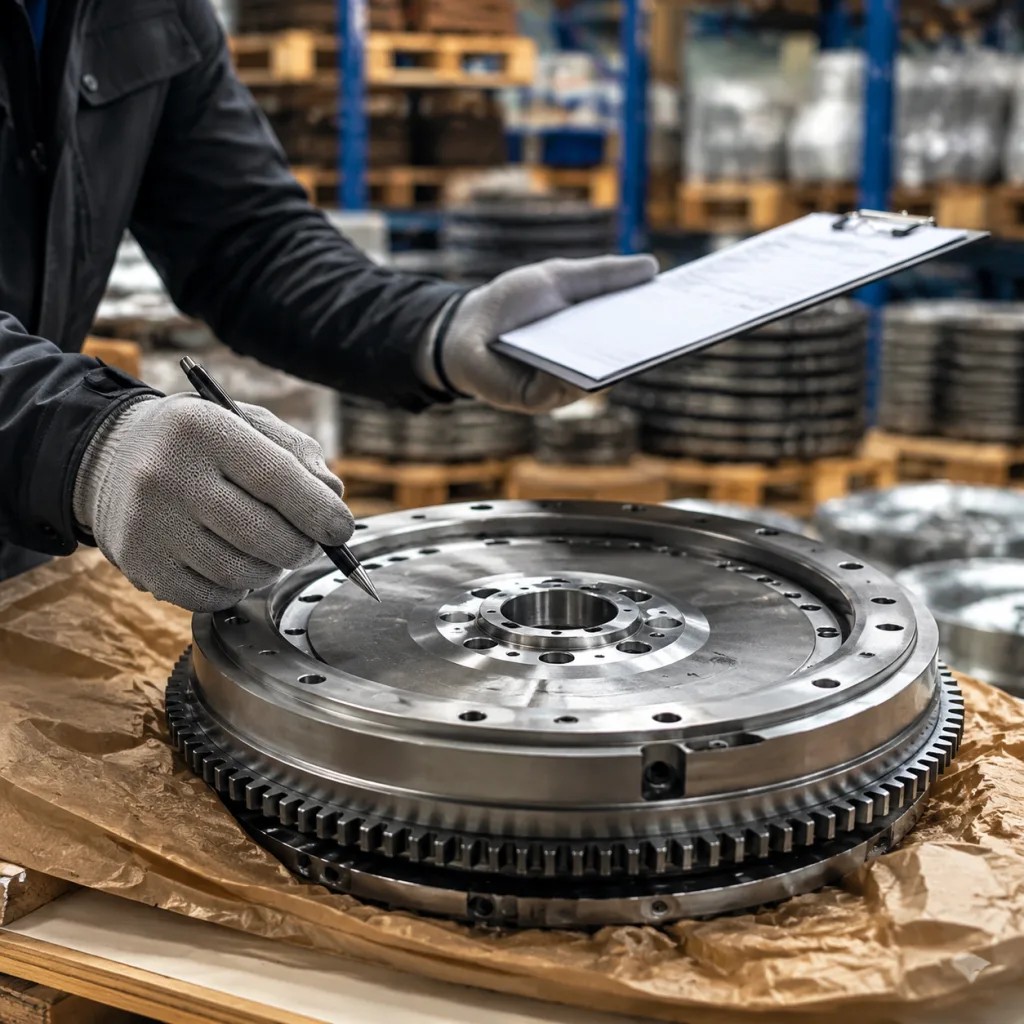
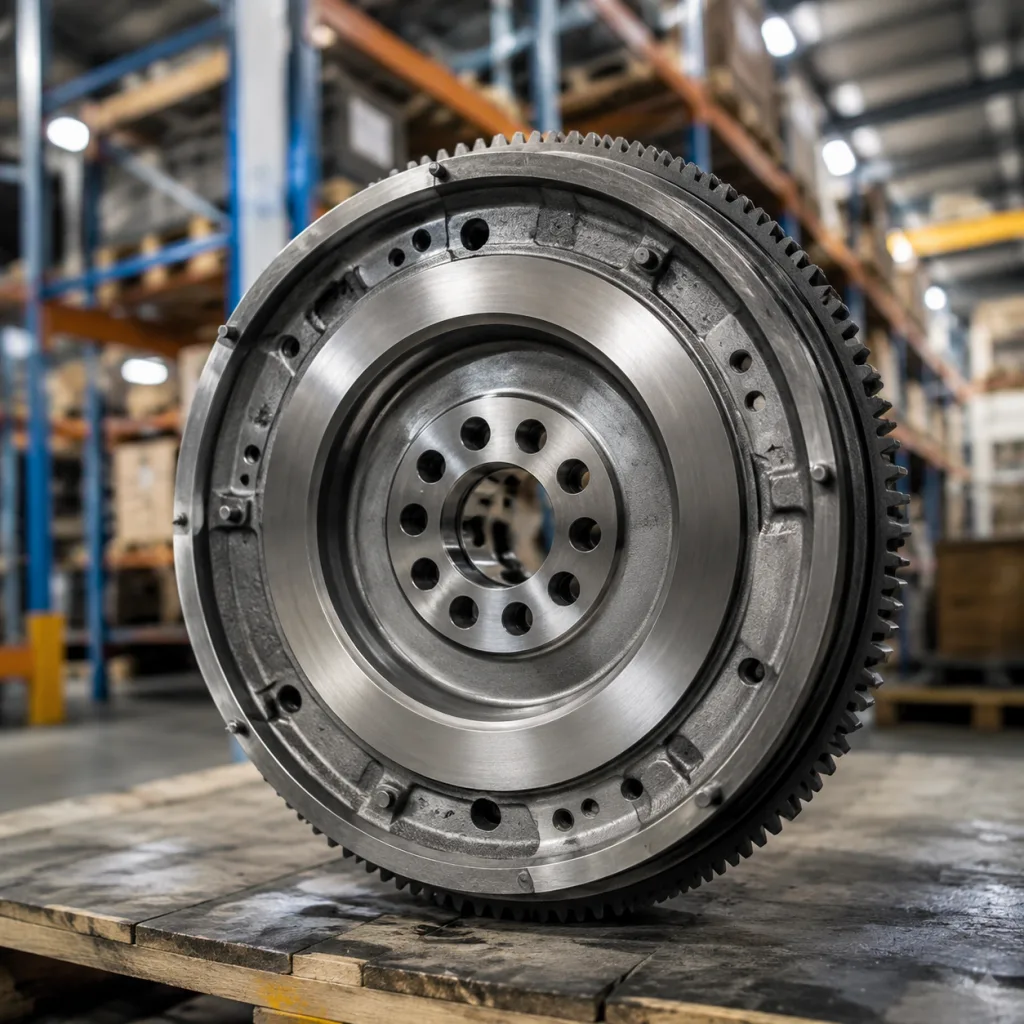
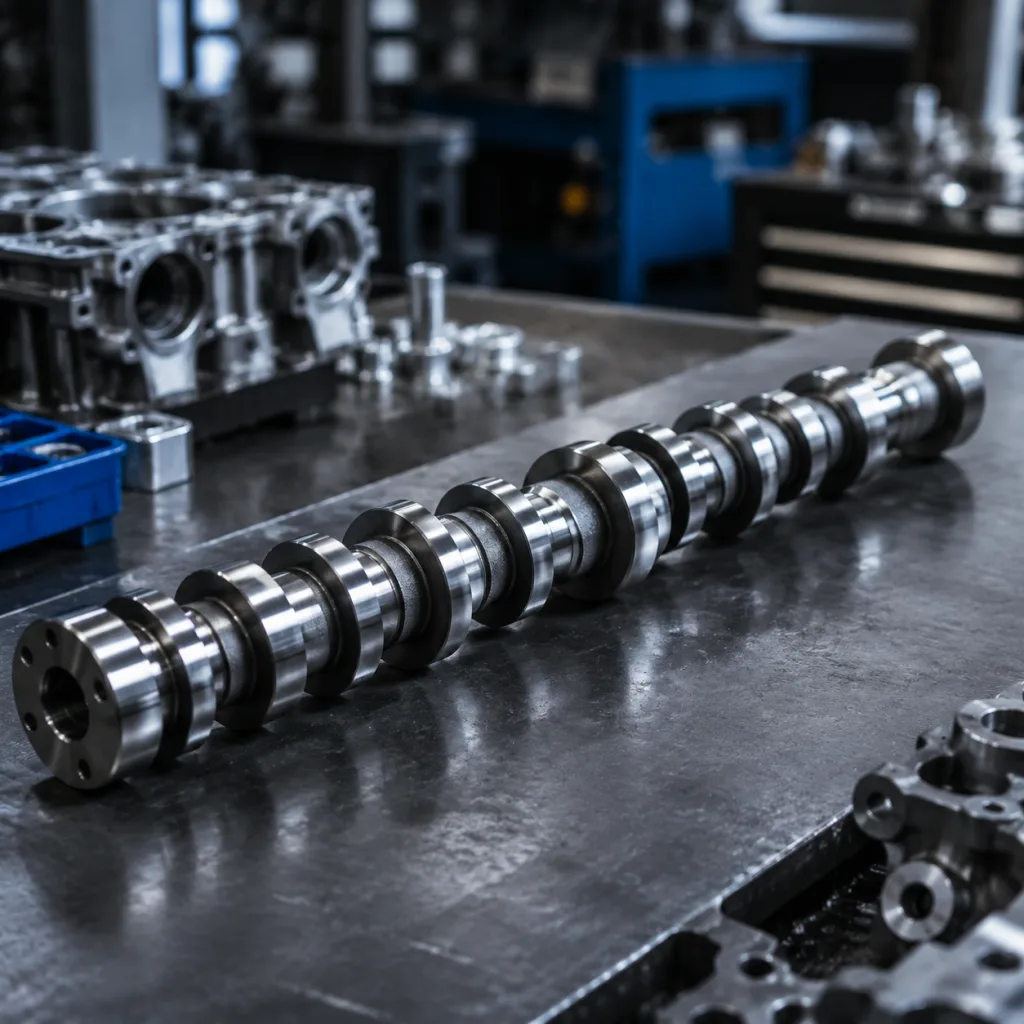
Jeep applications that use a dual mass flywheel demand stable torsional damping, repeatable crankshaft interface dimensions, and consistent balance control. For wholesale buyers, the decision is rarely about evaluating a single sample unit. It is about batch consistency, OE fitment matching, packaging discipline, and a supplier’s ability to hold process control across repeated production runs.
Driventus supplies drivetrain and engine components from Taizhou, Zhejiang, with IATF 16949:2016 and ISO 9001:2015 systems in place. Driventus is an independent aftermarket manufacturer; brand names are referenced for fitment only. Buyers sourcing for distributors, repair networks, or import programmes should verify OE cross-reference, tooth count, bolt pattern, mass travel, and damper torque window before placing volume orders. Published standards and environmental rules also matter, including REACH (EC) No 1907/2006 where applicable to the destination market.
Start with fitment risk, not price
For `dual mass flywheel jeep wholesale`, the cheapest quote is often the wrong first filter. Fitment control should come before unit cost, because a flywheel that misses the OE envelope creates returns, downtime, and warehouse confusion.
Check the application by engine code, transmission type, OE cross-reference, and clutch pairing. Then lock down the dimensional details that actually decide compatibility.
OE reference: confirm the exact match, for example `OE 06A107065` when the platform uses a cited cross-reference
Runout limit: request measured radial and axial runout on finished assemblies
Damper behaviour: require torque-angle or torsional travel data from the production lot
Fastener interface: verify bolt circle, pilot bore, and friction face geometry
Packaging: require corrosion protection and transport locking for the secondary mass
If you sell through mixed channels, split aftermarket and reman labelling by application code and transmission family. That simple step prevents most picking errors at intake.
What breaks volume orders
Wholesale programmes fail in predictable ways. The part may be correct, but the supply chain is not.
Failure mode
What it looks like
What to lock down
Wrong cross-reference
Same vehicle family, different gearbox or engine variant
OE code and transmission code
Loose dimensional control
Sample passes, batch drifts
First-article and lot inspection
Weak packing
Corrosion, scuffed faces, damaged ring gear
VCI wrap, carton spec, transport lock
Poor traceability
No clean claim trail
Lot code and inspection record
Mixed revisions
Warehouse receives inconsistent versions
Controlled SKU master and change notice
</tr></thead><tbody> </tbody></table>A supplier can look strong on paper and still fail here. The practical test is whether they can keep the same part, the same spec, and the same pack format across repeated runs.
Spec sheet checks that matter
The technical review should stay tight and measurable. A Jeep dual mass flywheel must match the gearbox input characteristics and clutch load window, not just the visible shape.
Use a short validation sequence:
1. Confirm engine displacement and transmission code from the target catalogue. 2. Match the OE part number, or the approved cross-reference where supplied. 3. Check diameter, overall height, starter ring gear tooth count, and mounting pattern. 4. Review secondary-mass free play and damping travel against the reference sample. 5. Fit one pilot batch into a test vehicle or rig before full release.
Keep the numbering format consistent in your purchase order when the platform uses a cited OE code. That reduces substitution errors and protects the buying record.
Compare supplier terms before you scale
Wholesale purchasing is more than a part-number exercise. The commercial terms shape landed cost, stock risk, and service continuity.
Item
What to confirm
Why it matters
MOQ
Per SKU or per application family
Affects inventory exposure
Lead time
Sample, pilot, and mass-production timing
Supports demand planning
Batch traceability
Lot code, heat code, inspection record
Enables claims handling
Surface protection
Oil coating, VCI wrap, carton strength
Reduces corrosion in transit
Audit access
Factory and process review
Supports supplier approval
</tr></thead><tbody> </tbody></table>If you serve multiple regions, align purchase planning with export documentation and container loading practice. A stable packing standard is often as important as the component itself when claims come from transit damage rather than manufacturing defects.
Proof to ask for before approval
A credible supplier should document process control, not only final inspection. Driventus operates under IATF 16949:2016 and ISO 9001:2015, which supports controlled production and traceability. Buyers should still ask for part-specific evidence.
Incoming material reports for castings, hubs, springs, and ring gear components
Dynamic balance records for finished assemblies
Dimensional inspection report for the first article and pilot batch
Corrosion resistance method and coating specification where applicable
Packaging verification for export transit
Review the quality system during supplier approval, especially if your organisation requires document retention, complaint handling, or controlled change notification. For adjacent drivetrain sourcing, see our catalog and the related engine components range if the programme includes connected assemblies.
When custom manufacturing beats catalog stock
Catalog stock works when the platform is standard and the fitment window is stable. It breaks down when your programme covers a fleet mix, a regional Jeep platform, or a private-label distribution plan that needs a tighter dimensional match.
In those cases, custom manufacturing can reduce fitment risk by aligning the flywheel geometry to your validated sample.
Common custom requests include:
Alternate OE cross-reference packaging
Specific balance target or acceptance window
Non-standard coating or anti-corrosion treatment
Private-label carton and barcode format
Consolidated kit packaging with clutch-related parts
The goal is not cosmetic differentiation. It is repeatable fitment across the same vehicle population and the same installation procedure.
Frequently asked questions
Yes. Wholesale supply is usually managed by application, OE cross-reference, and batch quantity. Buyers should confirm MOQ, lead time, and packaging requirements before release.
Yes. Custom manufacturing can cover packaging, labelling, surface protection, and controlled dimensional requirements, subject to validation against the approved sample.
Ask for material traceability, dimensional inspection data, balance records, and the supplier’s IATF 16949:2016 and ISO 9001:2015 evidence for the relevant production line.
If you are building a Jeep programme and need a controlled supply plan, compare applications, confirm the OE reference, and then [request a quote](/contact.html).