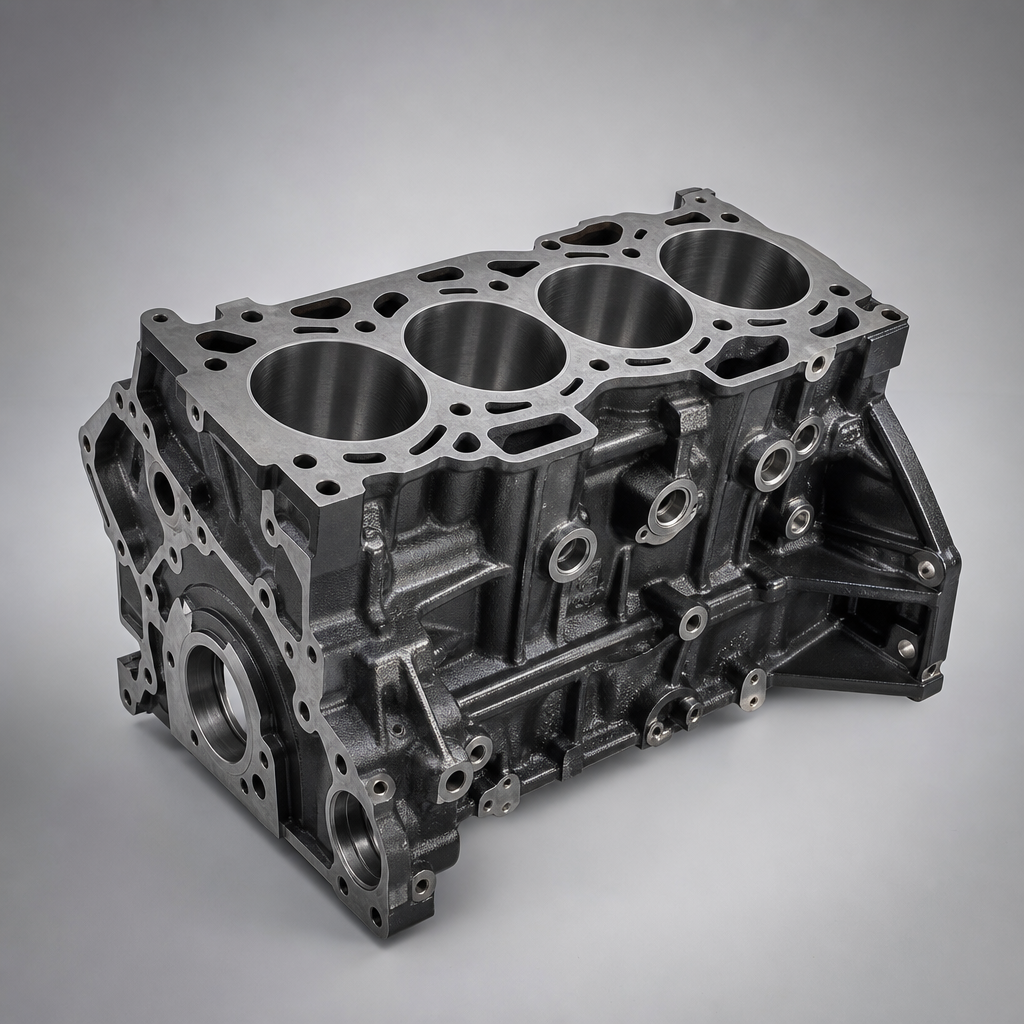
Sourcing a dual mass flywheel for Honda applications is a procurement decision, not a catalog browse. The buyer needs fitment control, torsional performance, and a supplier that can repeat the same result across batches, audits, and reorder cycles. Driventus supplies engine and powertrain components from Taizhou, Zhejiang, with vertically integrated production for machined and assembled parts. We work with aftermarket distributors, OEM and Tier-1 buyers, and repair network groups that need traceable supply rather than spot-market purchasing. Driventus is an independent aftermarket manufacturer; brand names are referenced for fitment only. For Honda programs, the core questions are simple: does the part match the OE interface, does it hold balance and heat load, and can the factory document every critical dimension? Buyers should also review certifications, inspection records, packaging requirements, and the ability to align with OE part-number cross-references such as OE 22100-5A2-A00 where applicable.
Start with fitment, not price
When evaluating a dual mass flywheel Honda OEM supplier, fitment control comes first. A part can look right and still fail at the bellhousing, starter ring gear, or clutch interface. The buyer should verify vehicle family, engine code, bolt pattern, crankshaft mounting position, tooth count, and hub spline detail before any commercial discussion moves forward.
Ask for these checkpoints before release:
OE part-number cross-reference and application list by model year and engine code
Drawing pack with critical dimensions, tolerances, and revision status
Static and dynamic balance records with measured residual imbalance in g-mm
Ring gear tooth count, pitch diameter, hardness, and starter engagement verification
Hub spline specification, damper travel range, and stop-angle limits
Surface finish on friction and mounting faces, with Ra target and inspection method
Packaging method for corrosion prevention, impact protection, and carton drop resistance
Sample approval record with measured master part and signed deviation list
If the supplier cannot document these items, the risk moves to claims, downtime, and freight returns. For a buyer managing multiple Honda platforms, the rule is blunt: no dimensional report, no production release.
Which specifications actually change performance?
A dual mass flywheel is not interchangeable by diameter alone. The useful comparison is the full functional stack: geometry, mass distribution, angular travel, and surface condition. That is where durability, noise, and drivability are won or lost.
Spec item
Buyer should confirm
Why it matters
Outer diameter
OE drawing match within the released tolerance band, often tight on critical fit surfaces
Affects starter engagement and bellhousing clearance
Mounting pattern
Bolt circle, hole count, and thread spec match the OE interface
Prevents installation mismatch
Mass distribution
Primary and secondary mass balance verified by lot
Controls vibration and torsional damping
Angular travel
Damper movement recorded, with stop-angle check
Directly affects drivability and noise
Runout and flatness
Critical faces controlled to tight limits, often 0.05 mm or better depending on application
Influences clutch life and pedal feel
Material and heat treatment
Steel grade, hardness, and process route confirmed by certificate
Supports fatigue resistance
Surface protection
Coating, phosphate, oil film, or VCI packing defined per storage route
Reduces corrosion in storage and shipping
Fastener interface
Thread depth, preload method, and seat condition verified
Prevents loosening and installation failures
Weight window
Finished mass target with an approved variation band
Impacts balance, inertia, and NVH
</tr></thead><tbody> </tbody></table>For many aftermarket and OEM-adjacent programs, buyers also ask for explicit operating data instead of broad claims. Useful request items include maximum transmitted torque, torsional damping range, permitted short-duration temperature exposure, and target service-life cycles under start-stop use. Standards that often matter here include IATF 16949:2016, ISO 9001:2015, and REACH (EC) No 1907/2006 for regulated substances in the EU. For durability validation, ask whether the test plan follows OEM-style vibration and endurance methods, with documented duration, cycle count, and failure criteria.
Where suppliers fail in real sourcing programs
Most sourcing problems in this category are not technical in the abstract. They show up when production begins. The common failures are boring and expensive: a revision mismatch, a balance issue that only appears at scale, packaging that lets corrosion start in transit, or a quote that looked attractive until the supplier could not hold lead time.
Watch for these warning signs:
The supplier uses a generic application list without engine-code detail
Sample dimensions are close, but no lot-level balance record is provided
Revision control is weak, so the quoted part does not match the approved sample
Packaging is treated as an afterthought, especially for export freight
Inspection records exist, but they are not tied to heat number or batch ID
Lead times are stated loosely, with no sample-to-production separation
The factory cannot explain how nonconforming parts are quarantined and reworked
These failures matter because the flywheel is not a cosmetic part. Once it is in the drivetrain, any inconsistency becomes a warranty discussion, not a warehouse issue. Buyers usually save time by screening for control evidence up front instead of negotiating after the first complaint.
How Driventus handles OEM-adjacent supply
Driventus operates as a manufacturing supplier, not a trading desk. That matters when lead time, repeatability, and engineering response time are part of the sourcing brief. We support programs through controlled machining, in-process inspection, and batch traceability from raw material to finished part.
For Honda-related programs, the buyer usually needs a stable part that can be repeated across long supply cycles. Our approach supports:
Sample development and dimensional approval against a customer drawing or OE reference
Production control under IATF 16949:2016 and ISO 9001:2015
Lot traceability from material heat number through final packout
Packaging specifications for export freight, warehouse handling, and corrosion control
Private-label or customer-number labeling where required
Measurement reports showing key dimensions, runout, and balance values by batch
Where a buyer needs more than catalogue supply, our custom manufacturing process can support drawing-based production, revised packaging, and cross-reference control. In practice, that means the buyer can specify a target volume, a packaging format, and a release standard instead of treating every order as a one-off purchase.
A workable sourcing sequence
A disciplined sourcing process keeps the decision from drifting into vague comparisons. The sequence should be tight enough that quality, commercial, and logistics all review the same facts.
1. Confirm vehicle application, engine code, OE reference, and revision status for the flywheel. 2. Review drawing, photos, dimensional checkpoints, and any special packaging requirements. 3. Request samples and verify critical dimensions, balance, runout, and friction-face condition. 4. Lock commercial terms, MOQ, forecast volume, and target annual demand. 5. Agree on lead times, inspection hold points, and replacement policy for nonconforming lots. 6. Release shipment with traceable batch documentation, carton labels, and packing list references.
For planning, buyers commonly ask suppliers to state:
Sample lead time: 7 to 15 days for standard verification samples, longer if a new fixture or process validation is needed
Production lead time: 30 to 45 days after sample approval for regular orders, depending on capacity and raw material position
MOQ: often 50 to 200 units per part number for engineered drivetrain items, with higher thresholds for custom packaging or new tooling
Price breaks: lower unit cost at 100, 300, and 500+ unit tiers, with freight and packaging quoted separately when needed
Order stability: whether the quoted price is valid for 30, 60, or 90 days and what triggers a re-quote
Buyers should avoid comparing only unit price. A lower quote with weak lead time discipline, inconsistent packing, or no dimensional record is more expensive after claims and returns. Buyers can review related engine and drivetrain parts in our catalog, including the broader powertrain range at /products/engine-components.html.
What quality teams should ask for in audit
A credible supply decision depends on more than a sample that fits. Quality teams should expect documented incoming inspection, in-process checks, and final inspection records tied to the production lot. The audit needs to show gauge control, calibration status, material segregation, and handling of nonconforming parts.
For this product category, a practical audit request list includes:
Material certificates tied to heat number and batch ID
Incoming inspection for castings, forgings, or machined blanks
In-process checks for critical dimensions, runout, and surface condition
Final inspection with sampling plan, typically AQL-based or customer-defined
Balance verification records and corrective-action logs when rework occurs
Calibration schedule for gauges, indicators, and balance equipment
Nonconforming material control, quarantine labeling, and disposition records
Packaging validation for rust prevention, vibration resistance, and carton integrity
Our quality system is built for B2B supply requirements and export documentation. In practice, that means inspection records that can be reviewed by sourcing, quality, and supplier development teams without translation guesswork. The key question is simple: can the supplier hold the same geometry, balance, and surface condition over time? If the answer is yes, the sourcing case is easier to defend internally and easier to scale across repeat orders.
Frequently asked questions
Yes. We support OE cross-reference review for fitment confirmation, such as OE 22100-5A2-A00 where applicable. We do not claim vehicle manufacturer endorsement.
Typical documents include dimensional data, sample photos, inspection records, material information, balance data, and shipment traceability. Buyers can also request lead-time confirmation, MOQ, packing configuration, and lot traceability details aligned to customer audit requirements.
Yes. Packaging, labeling, carton configuration, and barcode or customer-number labeling can be adapted for distributor, OEM, or warehouse intake requirements through our custom manufacturing process.
Review the product range, then send your application details, target volume, and required spec/tolerance window for a sourcing response. Start with a [request a quote](/contact.html).