Dual Mass Flywheel Honda OEM Supplier: Sourcing Guide
Procurement teams sourcing a dual mass flywheel for Honda applications need more than a price list. The part must align with OE fitment, rotational damping, bolt pattern, offset, starter ring specification, clutch interface, and allowable runout. For aftermarket and Tier-1 programs, the buying decision also depends on documented metallurgy, balancing control, traceability, and stable lead times. Driventus supplies engine and powertrain components from Taizhou, Zhejiang, with production aligned to IATF 16949:2016 and ISO 9001:2015. We serve distributors, OEM and Tier-1 buyers, and repair networks in 60+ countries. Driventus is an independent aftermarket manufacturer; brand names are referenced for fitment only. If you are building a supply list for Honda programmes, this overview shows the checks that matter before you place a trial order, approve a first article, or schedule a factory audit.
Honda fitment decisions: what to lock down first
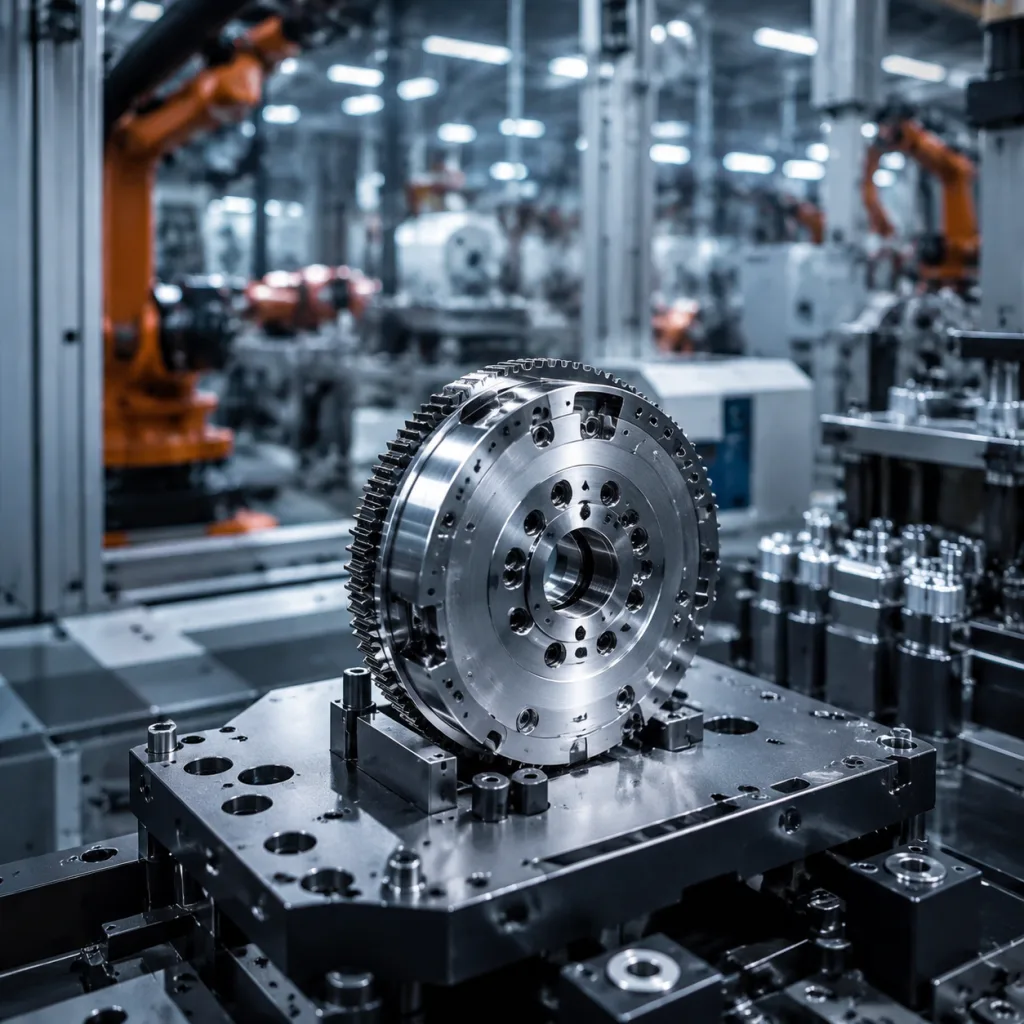
Start with the application data before comparing price or packaging. Confirm the exact Honda model, engine code, transmission type, model year, VIN range, and any superseded OE references, then match the dual mass flywheel to the drawing dimensions and clutch interface. Key checks should include overall diameter, nominal mass, pilot bore, bolt circle, offset, ring gear tooth count, starter ring OD, friction surface width, and the damping characteristics expected by the program. For example, a buyer should require the supplier drawing to state the nominal outer diameter, flange thickness, total assembled mass, and permitted dimensional variation, such as diameter and face runout tolerances, rather than accepting a catalog fitment note alone. Driventus supports this stage through drawing-based review, sample confirmation, and production traceability. For broader engine programmes, see our catalog and engine components.
Where supplier claims fail: the hidden risk points
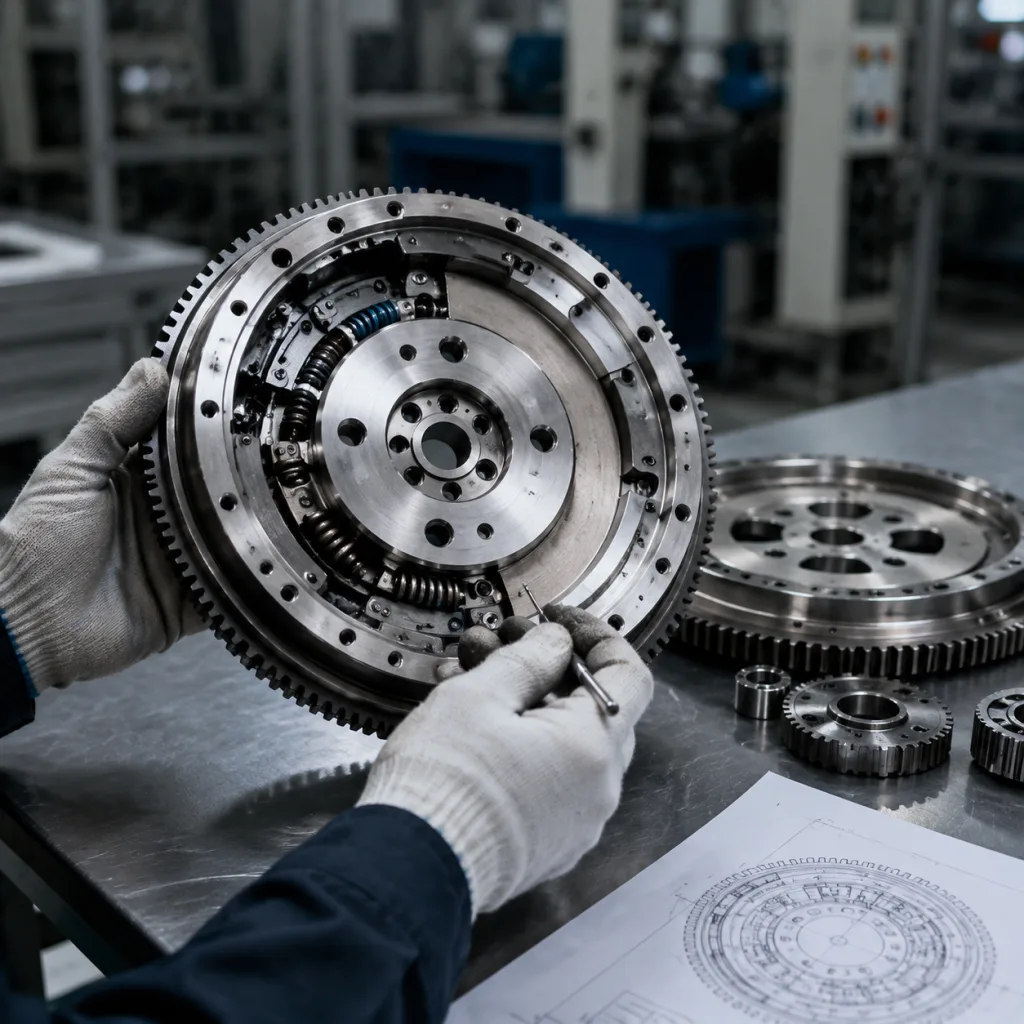
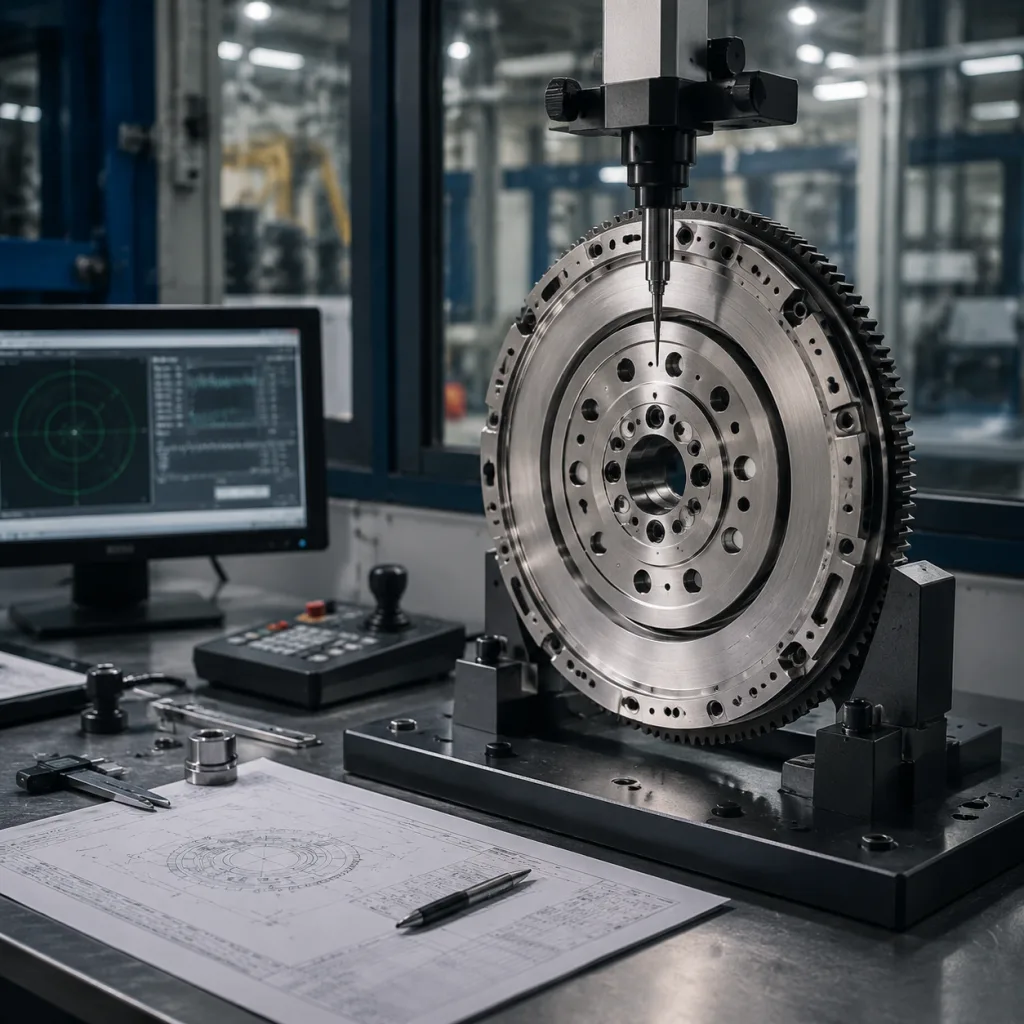
A credible dual mass flywheel honda oem supplier should be able to show more than a finished sample. Buyers typically ask for the material specification, machining process, heat-treatment control, balancing method, and in-process inspection points used to keep part-to-part variation low. The most common failure is a part that matches the outside profile but misses the details that matter in service: wrong offset, different ring gear count, weak damping curve, or a runout value that looks acceptable on paper but shifts under load. For a critical powertrain component, an audit should also check whether the supplier can document raw-material heat numbers, forging or casting route, CNC finishing sequence, balancing equipment capability, and final inspection frequency. A practical supplier checklist includes whether the factory can hold concentricity and face runout within the buyer’s print, whether dynamic balance is verified at the finished-assembly stage, and whether traceability is kept from incoming material through final packing. Driventus operates from Taizhou, Zhejiang, with production aligned to IATF 16949:2016 and ISO 9001:2015, supporting buyers who need consistent process control, documentable quality records, and repeatable output for aftermarket and Tier-1 programs. For sourcing decisions, that matters because similar Honda flywheel applications may differ by ring gear count, offset, or damping specification even when the exterior profile looks nearly identical.
A practical sourcing sequence from sample to PO
Commercial planning matters as much as fitment. In practice, buyers want to know the minimum order quantity, the sample lead time, the production lead time, and whether packaging or labeling can be adapted for a distributor or private-label program. A practical sourcing model is to separate the decision into three steps: sample approval, pilot lot, and mass production. Sample lead time is often quoted in days to weeks for stock geometry, while drawing-based production usually needs additional time for tooling confirmation, machining setup, and first-article inspection. MOQ should be discussed in the same quote as the unit price, because pricing typically changes by bracketed volume, carton configuration, and container mix. Buyers should ask for pricing at 1 sample set, a pilot quantity, and a recurring annual volume so they can compare landed cost, not just ex-works price. A supplier should also state whether packaging can support barcode labels, part-number stickers, palletization, and mixed-SKU consolidation. For Honda programmes, this is especially important when the part is released against a specific chassis or engine application and needs a controlled transition from sample approval to batch supply. Driventus serves distributors, OEM and Tier-1 buyers, and repair networks in 60+ countries, so we structure planning around application data, demand visibility, and shipment requirements rather than one-off spot buys.
What a release-ready test file should contain
Before approving a new source, procurement and quality teams often request evidence from dimensional checks, dynamic balancing, material verification, and durability or noise-vibration testing where the program requires it. The goal is not simply to confirm that the flywheel spins freely, but to verify that damping performance, runout, and interface geometry remain within the limits needed by the intended Honda application. In a release file, the buyer should ask for the exact inspection method and acceptance criterion for each critical feature, including face runout, axial float, bore size, tooth profile, balance residual, hardness, and surface finish. Depending on the project, buyers may also ask for inspection reports, hardness data, metallurgical records, and sample approval documents to support internal release. Driventus can provide shipment-level inspection records and traceability data, and for specific programmes we can add material certificates, dimensional reports, and sample approval documents to the file. If the buyer requires a gate-to-gate process, the approval flow should include drawing review, sample sign-off, pilot production review, and a first-batch inspection report before volume release.
Why Driventus is built for B2B sourcing
Driventus is built for buyers who need structured sourcing rather than generic catalog selling. We support drawing-based manufacture, application review, and document packs that help procurement teams move from sample to production with less ambiguity. Because we focus on aftermarket and B2B supply, we can align packaging, labeling, and commercial terms to the channel, whether the need is for distribution, private label, or a controlled replacement programme. Our position is straightforward: brand names are used only to identify fitment, while the product itself is supplied as an independent aftermarket component. If your team is evaluating a dual mass flywheel Honda replacement source, Driventus offers the combination of fitment review, manufacturing control, and programme support needed to move forward with confidence.
Frequently asked questions
We supply aftermarket parts built to match the approved application and drawing requirements. Fitment references are used only to identify the vehicle application, not to claim manufacturer approval.
Typical shipment packs include inspection records, packing lists, and traceability data. For specific programmes, we can add material certificates, dimensional reports, and sample approval documents.
Yes. For qualified programmes, we support custom manufacturing, packaging changes, and volume planning against customer specifications and forecast requirements.
Send your application data, target volume, and required documents through our contact team, and we will review fitment, lead time, and commercial terms for your programme. Start here: [request a quote](/contact.html).
Request a Quote