Dual Mass Flywheel Citroen Manufacturer China Sourcing
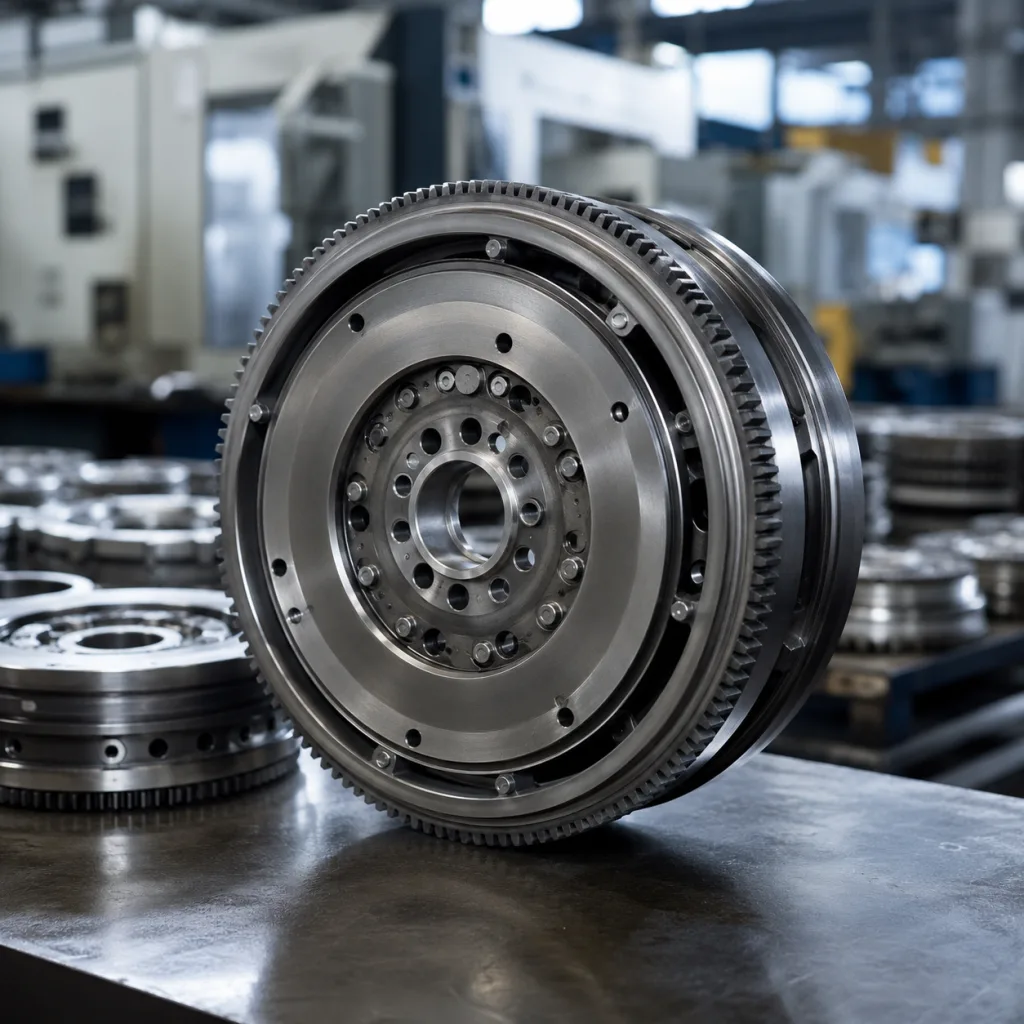
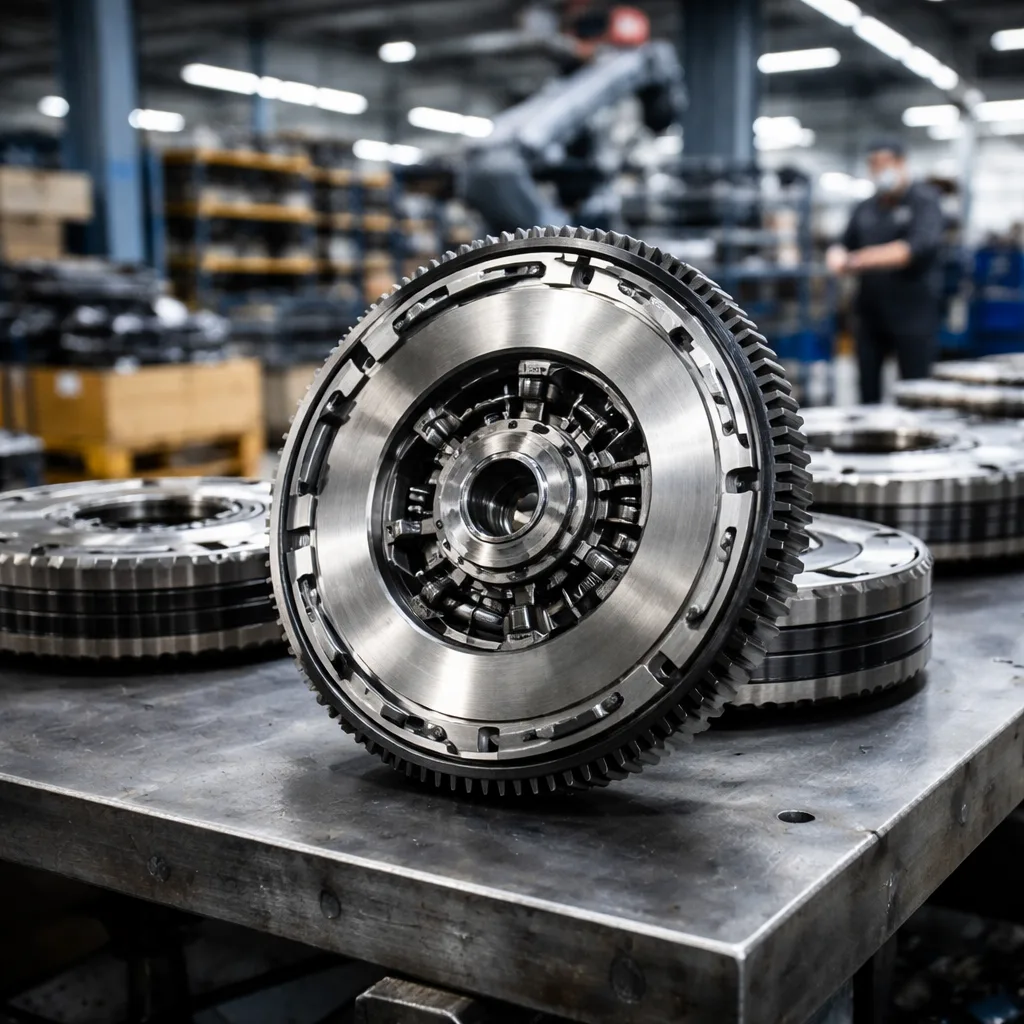
Sourcing a dual mass flywheel for Citroen applications is a fitment exercise, not a catalogue search. The part has to match the exact vehicle, engine code, and transmission package: spline count, starter ring gear tooth count and offset, crank bolt pattern, pilot engagement, installed height, and torsional damping window all need to align with the target build. Even a small mismatch can cause starter engagement issues, clutch chatter, idle rattle, or early torsional failure after installation, which is why the DMF has to be treated as an engineered rotating assembly rather than a commodity casting. Driventus is an independent aftermarket manufacturer; brand names are referenced for fitment only. For procurement teams in the EU, UK, US, Canada, Australia, and Brazil, the real decision points are process control, repeatability, and documentation. That means traceable materials, balance verification, batch test records, export packaging control, and clear lead-time commitments. This page explains how we support Citroen fitment programs from China, what to verify before placing a PO, and which documents are worth requesting from a dual mass flywheel supplier.
What buyers should verify before sourcing
For Citroen fitment, the part must match the vehicle application and transmission package, not just the engine family. A DMF that is close in diameter but wrong in offset, starter geometry, or torsional rate can still install poorly or fail early, so the sourcing brief needs to be precise before sampling begins.
Before you place a sample order, confirm:
Outer diameter and installed stack height
Crankshaft bolt pattern and pilot engagement depth
Starter ring gear tooth count, module, and offset
Primary and secondary inertia values
Spring pack specification, preload, and angular travel
Friction surface finish and heat-treatment state
Transmission family and clutch cover compatibility
Vehicle year, engine code, and market variant
If those inputs are incomplete, the wrong assembly can still look correct on paper. A useful procurement file should always tie the part to a specific application record, not a broad model name, because Citroen platforms often share engine codes while differing in gearbox, starter arrangement, or clutch stack height. Our catalog is organized for export procurement teams that need application mapping, not consumer-level lookup pages: our catalog. For broader engine-side sourcing, see engine components.
Dimensional control and dynamic balance
A dual mass flywheel is a rotating torsional system. It has to be controlled more tightly than a solid flywheel because the secondary mass, spring pack, and bearing interface directly affect idle behavior, shift quality, and long-term driveline comfort.
In practice, buyers should expect the supplier to control both geometry and dynamic behavior. A part can meet nominal dimensions and still fail in service if balance, concentricity, or preload vary between batches. That is why procurement teams should ask not only for the part dimensions, but also for the inspection method, sample size, and release criteria used for each batch.
Control point
Why it matters
Typical buyer request
Radial and axial runout
Prevents vibration and uneven clutch contact
Measurement report by batch
Mass balance
Reduces torsional excitation at speed
Static and dynamic balance data
Ring gear concentricity
Protects starter engagement
Tooth inspection and concentricity check
Heat-treatment consistency
Supports wear resistance and spring seat life
Material and process traceability
Assembly preload
Affects damping curve and service life
Defined test window per part number
Rotational free play
Confirms the secondary mass moves within target range
Functional test record
</tr></thead><tbody> </tbody></table>For fleet and distributor programs, repeatability is usually more important than one-off lab results. A part that passes an isolated inspection but varies from batch to batch creates warranty exposure and returns that are far more expensive than a slightly higher unit cost. We control these checks through our quality system and can align the release package to customer-specific inspection plans, including custom check sheets for warehouse intake and pre-shipment verification.
Materials, damping, and wear life
A DMF is not just a machined casting with a bearing in the middle. Buyers should ask what material set is used for the primary and secondary sections, how the springs are packaged, what surface treatment is applied to the working faces, and what grease or friction control method is specified for the target duty cycle.
The material and damping package determines whether the part is suited to light-duty urban use, mixed highway service, or repeated stop-start operation. If the assembly is too soft, the engine may feel smooth but the drivetrain can over-travel under load. If it is too stiff, the cabin may see more vibration and the clutch may engage more harshly. Matching those characteristics to the vehicle use case is the difference between a part that fits and a part that performs.
Common questions that affect service life:
Is the housing forged or cast, and what is the alloy specification?
Are the friction surfaces ground after heat treatment?
What is the grease fill strategy for high-temperature duty?
Is the bearing sealed for contamination resistance?
What torsional range was validated for the target application?
What temperature and endurance profile was used in validation?
Was the validation based on passenger-car duty or commercial service?
The right answer depends on the vehicle duty cycle. A city-delivery car, a taxi, and a long-haul service van do not stress the same damping window, even if the engine family is similar. For that reason, we support custom manufacturing when a buyer needs a tighter fit to a regional duty profile, a specific clutch pack, a private-label program, or a market-specific service interval.
Quality documents and compliance
Procurement teams should ask for documentation before they ask for the lowest unit price. In a DMF program, the documents are not paperwork for their own sake; they are the proof that the part was made under a controlled process and can be repeated without guesswork.
At minimum, a serious supplier should be able to support:
IATF 16949:2016 and ISO 9001:2015 process control
Material traceability by batch or heat number
Dimensional inspection records
Balance and functional test records
Packaging specification for export handling
REACH (EC) No 1907/2006 material awareness where applicable
Corrective-action tracking for rejected samples or customer complaints
Lot identification that survives warehouse intake and distribution
For aftermarket supply, the goal is not to claim vehicle maker approval. The goal is to show that the part was produced under a controlled system and can be audited. That is the difference between a price list and a sourcing program. Buyers who manage multiple regions also benefit from a supplier that can separate release documentation by market, because customs, distributor QA, and internal engineering teams often want different formats. If you want to review certificates, inspection flow, and corrective-action handling, start with our quality system.
MOQ, lead time, and export handling
Chinese manufacturing only helps if the commercial structure fits your inventory model. For dual mass flywheel programs, the main variables are MOQ, sample timing, carton protection, and the supplier's ability to keep shipping terms aligned with your receiving process.
Typical sourcing points to confirm:
Sample lead time versus mass-production lead time
MOQ by application, not by generic family
Pallet height and crate protection for sea freight
Labeling requirements for warehouse intake
Spare-parts policy for mixed shipment lots
Export carton strength and moisture protection
Whether mixed references can be consolidated into one shipment
Distributors often want a slower first release with controlled replenishment so they can test demand without carrying excess inventory. OEM and Tier-1 buyers usually want a fixed cadence and documented change control because their downstream schedules depend on stable supply. Both models are possible, but the supplier has to state it clearly before award, including whether lead time changes after approval or only after engineering revision. If you need a quotation, application check, or private-label discussion, use request a quote.
How we support Citroen programs
We supply dual mass flywheel projects as an export manufacturer, not as a trading desk. That matters because the buyer gets direct process ownership for machining, assembly, inspection, and packing, which reduces ambiguity when something has to be checked, corrected, or resampled.
What that means in practice:
Faster engineering feedback when a fitment issue appears
Cleaner responsibility for dimensional changes
Better control over batch consistency
Easier factory audit preparation
More direct communication on sample failures and corrective actions
Clearer control over labels, packing inserts, and export documentation
Faster response when a buyer needs a revised test window or pack spec
For procurement teams sourcing a dual mass flywheel Citroen manufacturer China relationship, the key question is whether the plant can repeat the same result across orders. Price matters, but only after the assembly method, test protocol, and export handling are defined. A supplier that can document those points is easier to manage over a full program cycle, especially when you need to move from sampling to annual supply with no change in fit, finish, or warehouse handling.
Frequently asked questions
Yes. We supply B2B export programs for distributors, OEM/Tier-1 buyers, and repair chains. Fitment is handled by application data, and brand names are referenced for fitment only.
Ask for dimensional data, balance records, material traceability, packaging specification, and quality certificates tied to IATF 16949:2016 or ISO 9001:2015 processes where applicable.
Yes. We can support custom manufacturing when the application needs revised dimensions, packing, testing, or private-label requirements. The best starting point is a drawing, sample, or target OE reference.
For fitment review, sample planning, and commercial terms, use [request a quote](/contact.html).