Dual Mass Flywheel Audi Wholesale: Sourcing and Supply
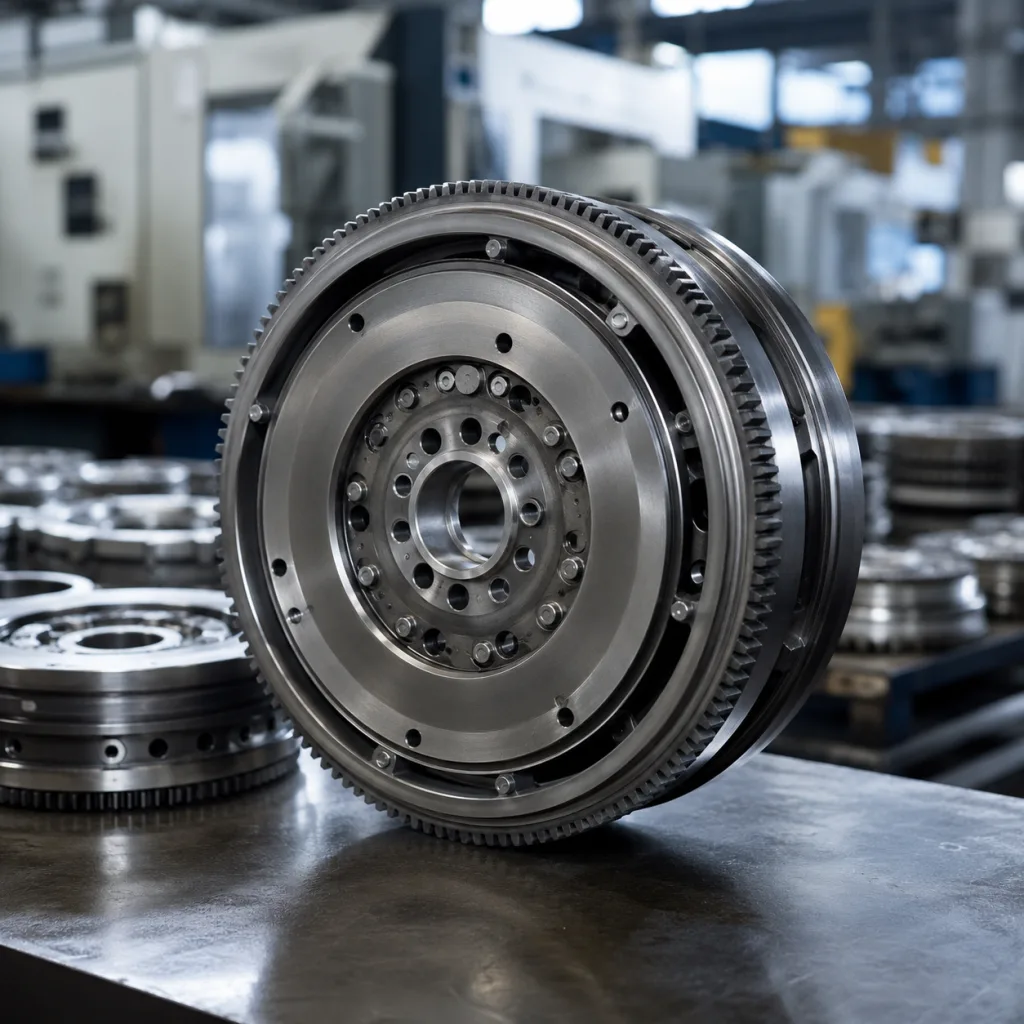
Wholesale buyers of Audi applications usually care less about a single-unit price and more about repeatable fitment, controlled tolerances, and stable replenishment. For a dual mass flywheel Audi wholesale program, the key checks are OE cross-reference validation, engine and gearbox code, starter ring gear geometry, pilot and bolt-circle dimensions, torsional damping behavior, and export-safe packaging. Driventus supports B2B programs for distributors, repair networks, and sourcing teams that need controlled specification data and a predictable supply route from Taizhou. Production follows IATF 16949:2016 and ISO 9001:2015 controls, with documentation support for incoming inspection, batch traceability, and supplier audits. That matters when annual call-off volume, warehouse turnover, warranty exposure, and service consistency are part of the sourcing decision. Driventus is an independent aftermarket manufacturer; brand names are referenced for fitment only.
What Audi Buyers Verify First
When a buyer sources a dual mass flywheel Audi wholesale program, fitment control comes before commercial terms. The first step is to confirm the submitted OE cross-reference, then lock the vehicle application by engine code, gearbox code, starter interface, and production year range. A part can look correct in a catalogue and still fail in service if the offset, tooth count, bolt pattern, pilot diameter, or clutch-side interface does not match the actual build.
In practice, the buyer should not treat the model name alone as a fitment rule. Audi platforms often share nameplates across multiple engine families, transmission codes, and revision levels, so the purchasing team needs the exact application data before any order is released. If a workshop or distributor provides only a vehicle badge, the sourcing team should request the VIN, OE number, or a physical sample before pricing.
For procurement teams, the minimum verification set should include:
OE cross-reference and revision note from the buyer
Engine code and transmission code, not just model name
Starter ring gear tooth count and engagement depth
Crankshaft flange pattern, pilot diameter, and register dimensions
Clutch-side and gearbox-side orientation
Packaging requirements for carton, pallet, and warehouse intake
Warranty position and expected service interval in the target market
Driventus can work from sample parts, drawings, photos, or a target cross-reference list. If the enquiry is not yet fully defined, the result should be a controlled fitment matrix rather than an unverified catalogue match. That gives the buyer a documented basis for stock planning and lowers the risk of returns once the program reaches the channel.
Dimensional Control and Noise Behaviour
A dual mass flywheel is a torsional control component, so buyers should evaluate both geometry and dynamic behavior. The useful question is not only whether the part fits the crankshaft flange, but whether the damping window, axial endplay, and rotational free play remain within the OE print or approved benchmark over the life of the clutch package. In wholesale supply, small deviations can turn into field complaints: clutch rattle, poor idle refinement, starter noise, gear lash, or premature wear on the transmission side.
For that reason, dimensional control has to be paired with functional validation. A catalogue description alone cannot show whether the unit is stable under load, whether the ring gear is aligned correctly, or whether the assembly will behave properly after transport and warehouse storage. Buyers handling regional distribution should make sure the supplier can document both static measurements and assembly checks.
Check
Why it matters
What to request
Concentricity and radial runout
Supports smooth clutch engagement and limits vibration
Inspection record from the production lot
Axial endplay and rotational free play
Confirms torsional isolation and return behavior
Sample approval or bench test record
Ring gear alignment and tooth condition
Protects starter engagement and reduces noise
Gauge result and visual check evidence
Surface finish and corrosion protection
Supports storage and export durability
Finish specification and packing method
Fastener pattern and interface geometry
Avoids installation issues during workshop fitment
Dimensional drawing or control plan
Mass consistency and balance
Reduces batch-to-batch variation in drivability
Lot measurement summary or SPC output
</tr></thead><tbody> </tbody></table>When a buyer has an OE sample, the cleanest process is to compare the part against the reference component and capture the measured deviations. For wholesale supply, that record is more useful than a generic aftermarket claim. It allows the buyer to review the part against the actual service requirement, not just a nameplate reference.
Validation, Traceability, and Compliance
Wholesale supply is easier to manage when the factory can show how each batch was made and checked. Driventus works to a documented quality flow that supports IATF 16949:2016 and ISO 9001:2015 controls, with traceability from raw material to finished carton. Where a buyer needs compliance paperwork, we can support material declarations for REACH (EC) No 1907/2006 and project-specific inspection records. For audit-heavy accounts, that documentation should be ready in a format that procurement, QA, and warehouse teams can all use without rework.
Traceability matters because a dual mass flywheel is usually purchased in repeat batches, not as a one-time emergency item. If a problem appears in the field, the buyer needs to know which heat lot, machining batch, balance station, and final assembly window the affected units came from. That is why the supply file should connect the physical part to the paperwork trail at each step.
Typical validation points include:
Incoming material verification and heat-code traceability
Machining inspection at key dimensions before assembly
Dynamic balance and functional checks on the finished unit
Final visual inspection for ring gear, housing, and seal surfaces
Export packing review for vibration resistance, moisture protection, and label durability
Batch coding on carton and unit packaging for warehouse control
If coating performance is part of the specification, published methods such as SAE J2527 can be used as a reference for corrosion evaluation of coated parts. The exact test plan should follow the buyer's drawing, sample plan, or audit requirement. Buyers that need a supplier approval package can review our quality system for the documents usually requested during onboarding, including inspection records and quality certificates.
Wholesale Terms for Distribution Programs
The commercial model matters because a dual mass flywheel is usually bought as part of a replenishment programme, not a one-off spot order. Distributors and repair networks normally want a stable MOQ, predictable lead time, and packaging that fits their warehouse and retail distribution flow. That is especially important for heavier drivetrain components, where pallet efficiency, carton strength, and damage prevention directly affect landed cost.
A wholesale agreement should be built around the buyer's operating model, not just the unit price. If the program serves a central warehouse, the carton count and pallet pattern must support efficient receiving and pick-face storage. If it serves workshop supply, the label format, barcode placement, and part-number visibility matter just as much as the engineering data.
</tr></thead><tbody> </tbody></table>If your programme needs a private label, special carton spec, or non-standard packing sequence, custom manufacturing is the right route. For standard catalogue supply, buyers can start with our catalog and then narrow the list by engine family, gearbox code, and annual volume. The earlier the channel rules are defined, the easier it is to keep stock moving without creating avoidable variation in the field.
How to Start a Sourcing Enquiry
To quote accurately, the buyer should send a short technical pack rather than a single line item. The more complete the input, the faster the cross-reference check and the cleaner the sample approval path. For a dual mass flywheel Audi wholesale request, the quote should be based on application data first and commercial terms second.
Please include:
Submitted OE cross-reference number, if available
Vehicle model, engine code, and gearbox code
Target market and expected annual volume
Required carton quantity, pallet pattern, and label format
Whether the order is for wholesale stock, workshop supply, or private label
Any sample reference, photo set, or drawing already available
If the buyer is replacing an existing supplier, it also helps to send the current packaging photos, the current carton dimensions, and any known failure history. That allows the engineering team to spot issues such as incorrect starter engagement geometry, inconsistent surface treatment, abnormal ring gear wear, or a packaging method that has already caused damage in transit.
For broader engine programmes, it can also help to review engine components if the buying scope includes pistons, crankshafts, gaskets, water pumps, or turbochargers. That allows the sourcing team to consolidate supplier audits, freight, and document control across multiple part families.
If the application is unclear, a sample or photo set is usually enough to start the engineering review before quotation. Once the reference is validated, the buyer can move from sample approval to batch planning with less risk of rework.
Frequently asked questions
We match the submitted OE cross-reference, engine code, gearbox code, starter interface, and any sample part or drawing before quotation. That avoids catalogue-only assumptions and reduces the risk of the wrong application being shipped.
Common documents include commercial invoice, packing list, batch traceability, inspection records, and compliance files where requested. Material declarations for REACH (EC) No 1907/2006 can be supplied when they apply to the program.
Yes. We can build neutral cartons, buyer artwork, barcode labels, and pallet layouts to the agreed specification. The usual starting point is target volume, required carton quantity, and the market the stock will serve.
Share your part-number list and volume forecast via [request a quote](/contact.html)