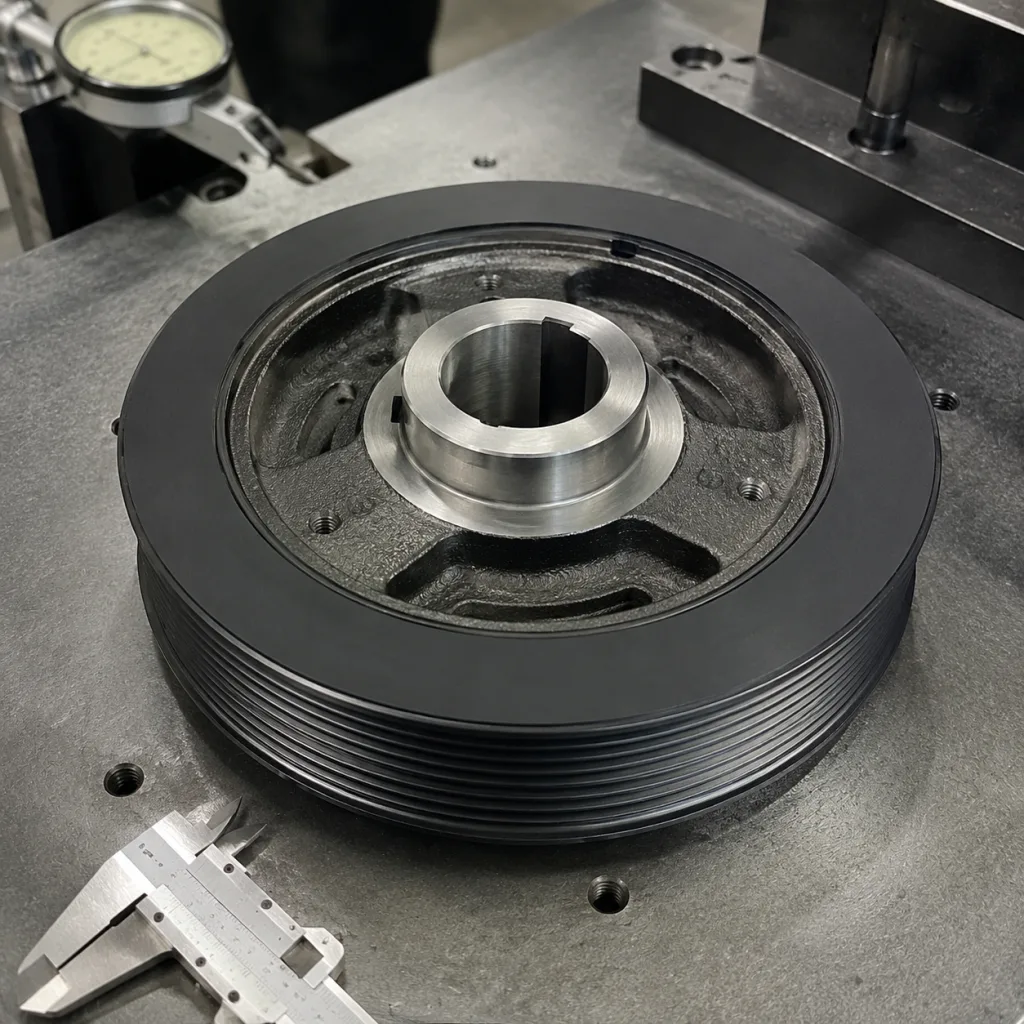
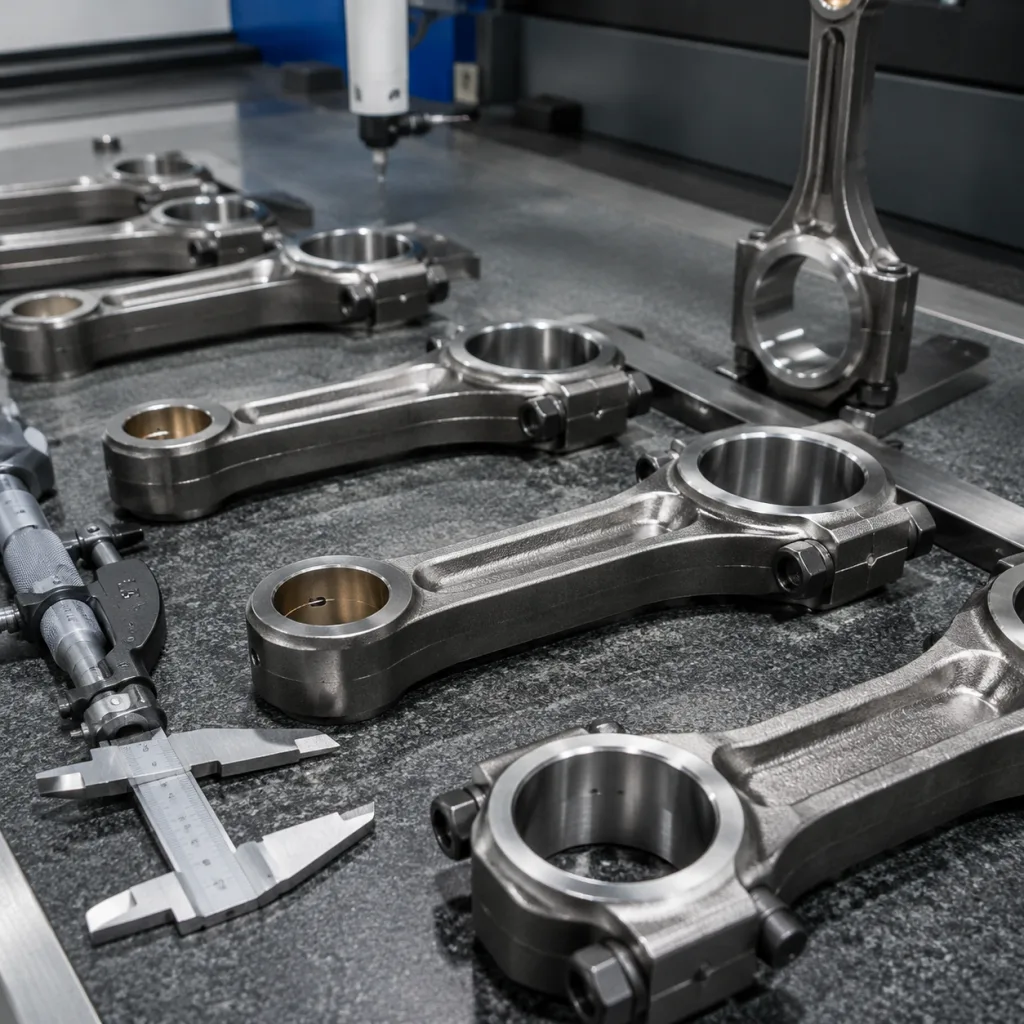
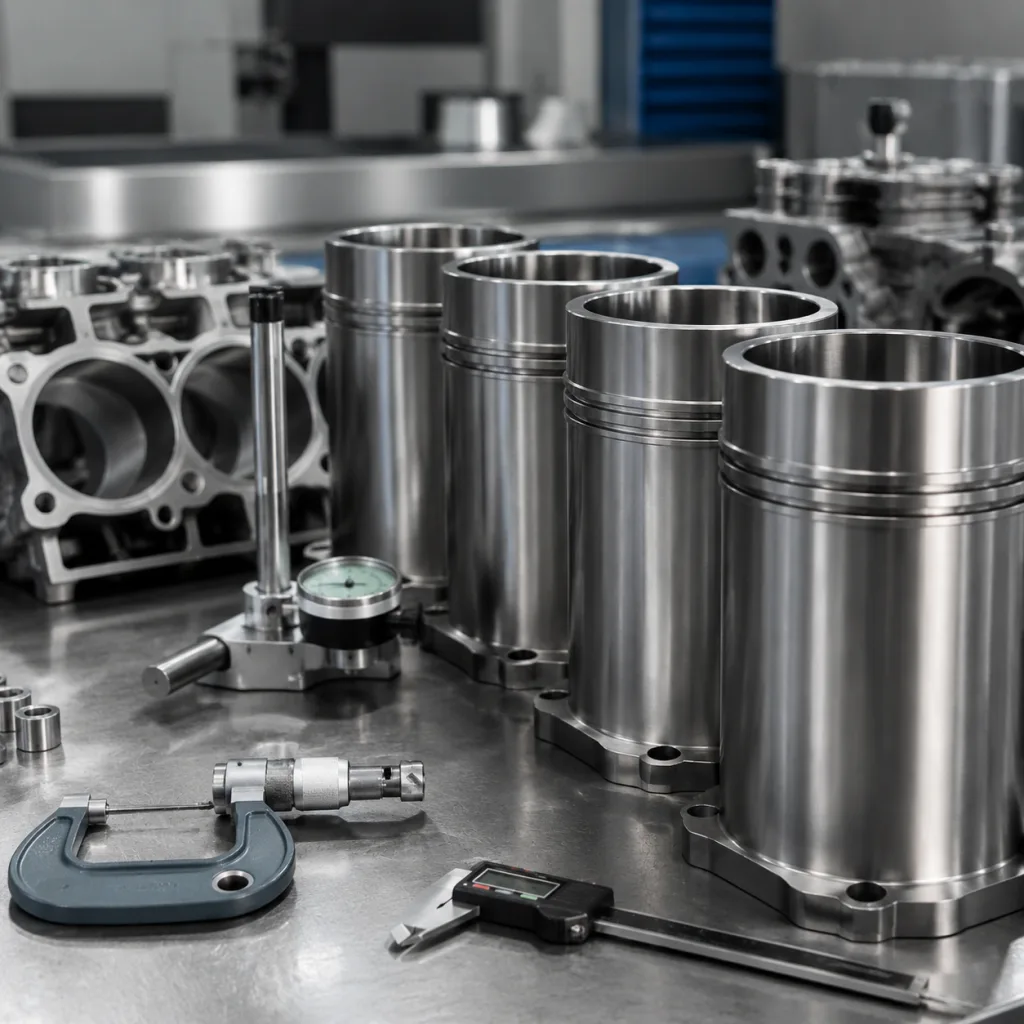
BMW dual mass flywheel wholesale sourcing is a procurement exercise, not a retail lookup. Buyers need OE-fit verification, stable supply, and traceable quality records before they place volume orders. For fleets, distributors, and workshop networks, the main risks are dimensional mismatch, uneven torsional damping, and inconsistent clutch interface height. That is why purchasing teams should compare flywheel mass, ring gear count, starter engagement geometry, bolt pattern, and installed stack height before release. Driventus is an independent aftermarket manufacturer; brand names are referenced for fitment only. We supply engine and powertrain components from Taizhou, Zhejiang, with IATF 16949:2016 and ISO 9001:2015 controls in place. If you need a broader range of matching parts, see [our catalog](/products.html) and [our quality system](/quality.html) before you issue an RFQ.
How to decide if a BMW dual mass flywheel is source-ready
For BMW applications, a dual mass flywheel should be approved by measurement, not by model name alone. The same platform can use different clutch depths, starter ring gears, and torque ratings across engine codes and production years.
Start with a fitment gate, then move to commercial terms:
OE cross-reference, such as `OE 06A107065`, when the buyer already holds a listed number
Outside diameter, bolt-circle diameter, and crankshaft pilot fit
Installed height and clutch contact-face offset
Ring gear tooth count and starter alignment
Primary and secondary inertia values, if available from the drawing set
Dynamic balance record and runout limit
If any of those inputs are missing, pause the order. Wholesale errors are usually not pricing mistakes; they are specification mistakes. For mixed-market stocking, confirm whether the flywheel is supplied as a complete assembly or as a serviceable core-return unit. That choice affects inventory planning, packaging, and claim handling.
What separates a dependable supplier from a cheap one
A wholesale purchase should be evaluated like a supply agreement. Low unit price can hide variation in materials, machining, and documentation.
IATF 16949:2016, ISO 9001:2015, REACH (EC) No 1907/2006
Supports EU and global sourcing files
Packaging
Rust prevention, carton drop protection, pallet spec
Lowers transit damage on export orders
</tr></thead><tbody> </tbody></table>For buyers in the EU, UK, US, Canada, Australia, and Brazil, the supplier should also explain document control, sample retention, and corrective-action timing. Driventus supports OEM and aftermarket programmes, and our quality system outlines the controls used on production lots.
Where BMW fitment checks usually fail
Wholesale fitment problems tend to repeat. They are predictable, which makes them avoidable.
The most common failure modes are:
Matching by badge instead of engine code
Ignoring starter ring gear count or starter engagement depth
Overlooking clutch stack height and bell housing clearance
Treating similar OE numbers as interchangeable without dimensional proof
Accepting a flywheel with acceptable outer dimensions but wrong damping characteristics
A part can look correct on paper and still create noise, chatter, or premature clutch wear after installation. That is why procurement teams should request the original target application sheet, then compare it against the supplier drawing and inspection record. If the programme needs a revised interface or non-standard packaging, custom manufacturing is available for volume projects.
Step-by-step: vetting a wholesale order before release
Use a simple sequence so the review does not stall in email threads.
1. Confirm OE dimensions from the target application sheet. 2. Check starter ring gear alignment against the original part. 3. Measure runout and face variation before packing. 4. Verify bolt pattern and fastener grade compatibility. 5. Test the clutch-to-flywheel stack height on a reference bell housing.
Once the geometry is clear, move to validation evidence. Ask for bench testing against published procedures or internal acceptance criteria aligned to common industry practice. Torsional and durability checks can be mapped to methods used in SAE J2527-style validation plans, while fitment data should stay separate from any vehicle-owner language.
When stock strategy should favor forecast over spot buying
A wholesale programme works best when inventory is built around demand bands, not single orders. Dual mass flywheels are higher-value parts, so buyers usually balance MOQ against service level and forecast accuracy.
Set commercial rules early:
MOQ by OE reference or by mixed reference family
Lead time for samples, first production, and repeat orders
Pallet quantity and export carton dimensions
Spare capacity for urgent replenishment
Whether barcode labelling and private packaging are available
For distributors, the best approach is often a two-tier stock plan: fast-moving references held as ready stock, and slow-moving references produced to forecast with scheduled replenishment. That reduces obsolescence while keeping fill rate stable. If you also source related rotating parts, our catalog includes matching engine and powertrain categories, and engine components may help consolidate suppliers.
Which documents should accompany export shipments
Export buyers should expect a technical file with every shipment. That file should support receiving inspection, warranty triage, and claims resolution without depending on verbal confirmation.
A useful document pack includes:
Commercial invoice and packing list
Batch or lot traceability sheet
Dimensional inspection report
Material certificate where applicable
Certificate of conformity referencing IATF 16949:2016 and ISO 9001:2015 controls
REACH declaration when required by destination market
Driventus is an independent aftermarket manufacturer; brand names are referenced for fitment only. We do not claim vehicle-maker approval or endorsement. For sourcing teams that need a supplier review, factory audit information, or quotation support, the fastest route is to request a quote.
Frequently asked questions
Yes. We support wholesale and project-based supply, including sample approval, repeat production, and export packing. Buyers should provide OE reference data, target annual volume, and required lead time.
Typical shipment files include packing list, invoice, batch traceability, and inspection records. Market-specific declarations can be added when required by the destination country or customer programme.
Yes. Custom packaging and programme-specific labelling can be arranged through our OEM and private-label workflow, subject to volume and specification review.
If you are building a BMW aftermarket programme or comparing supply options, send your target references and volume needs through our contact form and we will review fitment and pricing with you: /contact.html