Connecting Rod for GMC Acadia OE Equivalent: Buyer Guide
When buyers search for a connecting rod for GMC Acadia OE equivalent, they usually need a direct replacement that matches the original part in geometry, weight, material behavior, and installation fit. For procurement teams, the priority is not only dimensional compatibility but also batch consistency, traceability, and test evidence that supports repeatable supply. A rod that is close on appearance but outside bearing bore, centre-to-centre length, or big-end roundness limits can create noise, oil-film loss, or premature crankshaft wear. Driventus supplies engine and powertrain components for B2B replacement programs, with production controlled under IATF 16949:2016 and ISO 9001:2015. Driventus is an independent aftermarket manufacturer; brand names are referenced for fitment only. This article explains what an OE-equivalent rod should match, what to check before ordering, and how to compare options for aftermarket distribution, repair-chain stocking, and regional import programs.
Start with the fitment decision, not the catalog
For a connecting rod replacement, OE-equivalent means the part matches the functional and dimensional requirements of the original design, not that it carries vehicle-maker approval. The first sourcing question is simple: does the rod match the engine variant, or does it merely resemble the original part?
Buyers should verify:
- Centre-to-centre length
- Big-end and small-end bore size
- Big-end width and small-end width
- Cap bolt specification and thread form
- Rod weight class and pair matching
- Surface finish at the bearing seats
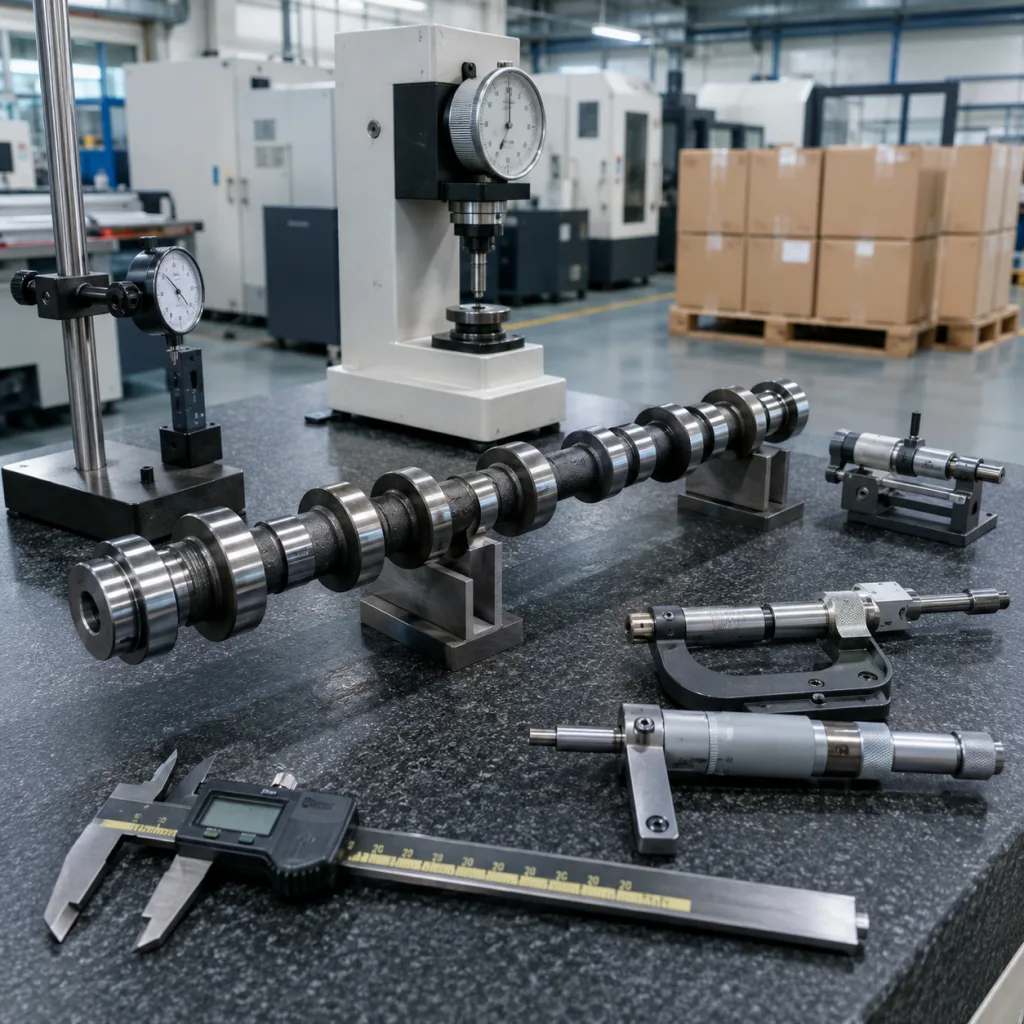
A credible supplier should provide measured values, not only a catalogue description. If the application uses a known OE cross-reference, it should be documented only when the reference already exists in the buyer’s data. Do not accept vague fitment statements without engine-code confirmation, VIN-based validation, or dimensional evidence.
Driventus is an independent aftermarket manufacturer; brand names are referenced for fitment only.
Why most replacement rods fail approval
Replacement programs usually fail for one of three reasons: the rod misses a hidden dimension, the batch is inconsistent, or the documentation is too thin for procurement sign-off.
Common failure modes include:
- Bearing bore drift that changes oil clearance
- Cap bolt variation that alters clamp load
- Weight spread that upsets engine balance
- Small-end mismatch that affects wrist-pin fit
- Poor roundness after machining or assembly
- Weak traceability when a claim lands
A rod can pass a visual check and still fail in service. That is why buyers should compare against the original sample or approved drawing, not against photos in a listing. If the program is expected to run across multiple regions, ask early how the supplier separates lots, labels cartons, and traces heat numbers.
For aftermarket distribution, the strongest offer is the one that prevents repeat returns.
The spec sheet buyers should demand
Use the specification sheet as the approval gate. If a supplier cannot supply this information clearly, the part is not ready for a controlled program.
| Check point | Why it matters | Typical buyer requirement |
|---|---|---|
| Centre-to-centre length | Affects piston deck position and compression height | Match to OE sample within drawing tolerance |
| Big-end bore | Controls bearing crush and oil clearance | Roundness and size within print limits |
| Small-end bore | Affects wrist-pin fit and pin lubrication | Bore size and alignment checked |
| Rod weight | Impacts engine balance | Weight sorted by batch or set |
| Bolt preload | Prevents cap separation | Verified with specified tightening method |
| Material traceability | Supports warranty control | Heat number and mill cert available |