Cylinder Sleeve vs NPR Alternative: Sourcing Comparison
When buyers compare a cylinder sleeve vs NPR alternative, the real question is not branding. It is whether the part matches the engine, survives machining, and fits the commercial window for MOQ, lead time, and price. Driventus is an independent aftermarket manufacturer; brand names are referenced for fitment only. The decision should rest on measurable data: bore size, wall thickness, casting route, surface finish, and whether the part is for aftermarket stocking or OE-equivalent replacement. Before approving a quote, confirm material grade, heat treatment, roundness, cylindricity, and piston-ring compatibility. Also verify documentation against IATF 16949:2016, ISO 9001:2015, and REACH (EC) No 1907/2006 where applicable. Lock the spec sheet first; it is the fastest way to avoid rework, returns, and field failures.
Start with the fitment gate
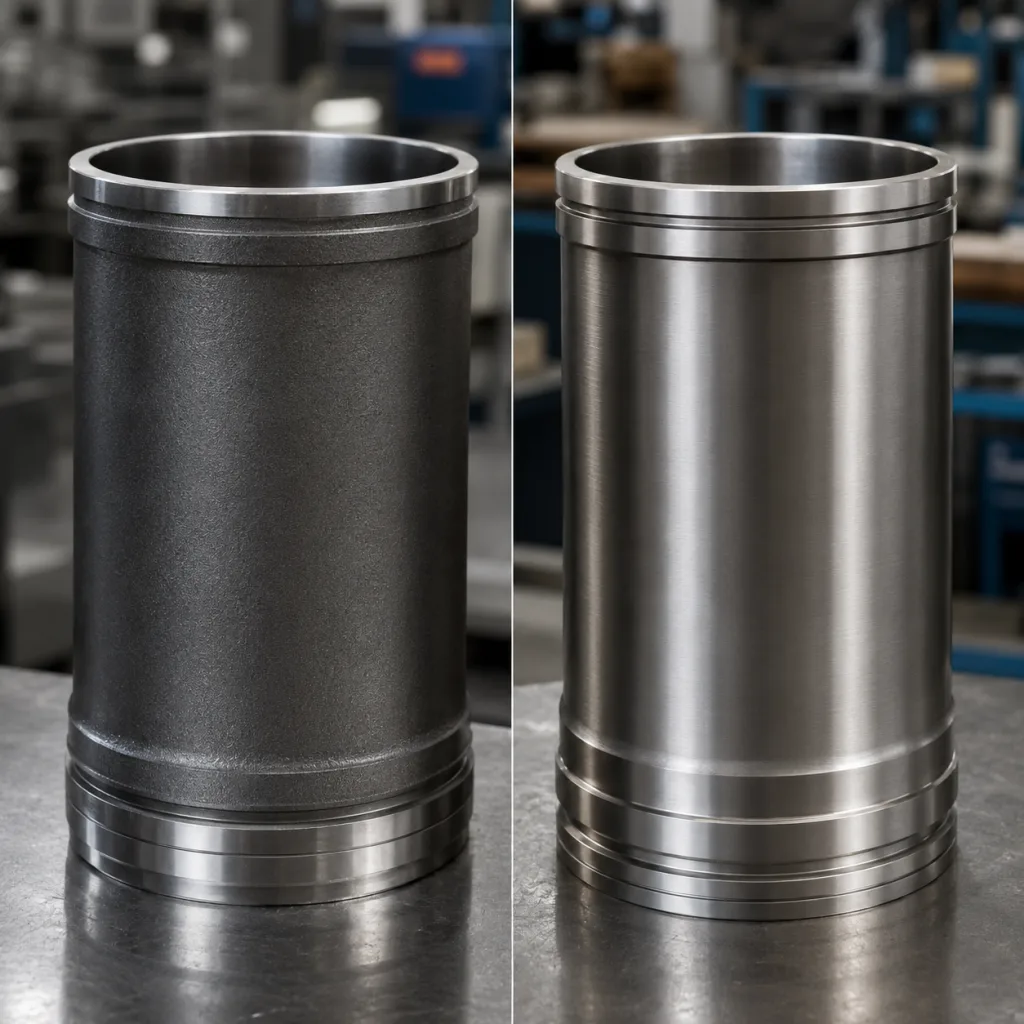
For a cylinder sleeve vs NPR alternative, the first decision is fit, not price. If the sleeve cannot be installed, honed, and sealed within the engine-builder’s limits, the sourcing option is already wrong.
- Bore and outer diameter: confirm nominal size, interference fit, and final-hone allowance.
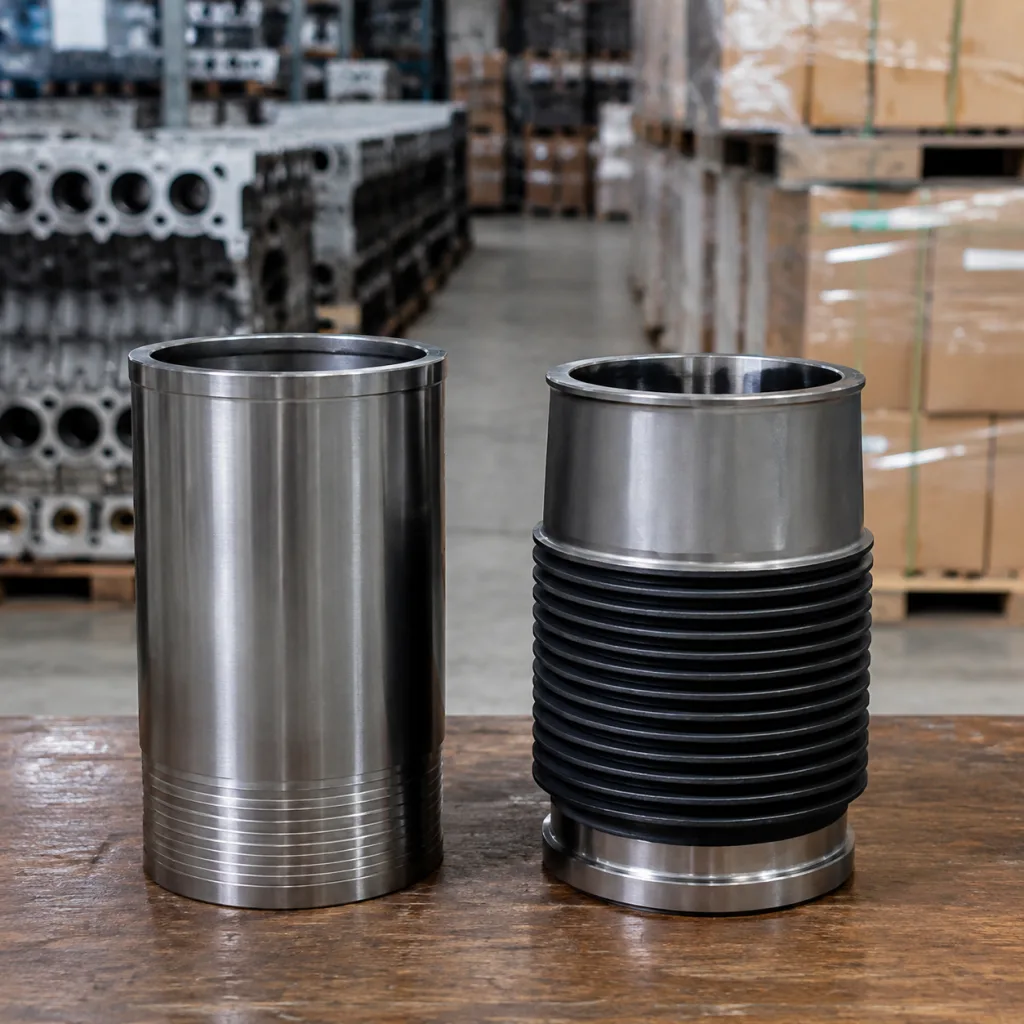
- Wall thickness: check whether the application uses a dry or wet sleeve.
- Material: verify cast iron grade, pearlitic structure, and wear behavior after machining.
- Surface finish: confirm the supplied bore condition and the target Ra after honing.
- Geometry: roundness, taper, and concentricity must stay inside rebuild limits.
- Traceability: request lot coding and inspection records tied to shipment.
A practical RFQ starts with the engine code, nominal bore, and machining allowance together. Include the block bore before repair, finished bore after honing, sleeve OD tolerance, sleeve length, flange or step height, and ring-seating finish. If the engine calls for an 86.00 mm finished bore, the sleeve blank still has to create the right press fit and leave room for final hone correction. For wet sleeves, coolant-side sealing, flange flatness, and top protrusion matter more than interference fit alone.
For related product families, see our catalog and our engine components range.
Where alternatives fail
The weak point in many sleeve purchases is not the metal. It is the assumption that a reference part will behave the same way in every block.
An NPR alternative becomes risky when:
- the block has already been reworked several times;
- piston-to-bore clearance is tight;
- the ring pack is sensitive to bore finish;
- the engine runs under high thermal load;
- the customer expects long service intervals and low comeback rates.
In those cases, ask for dimensional validation, hardness data, and sample installation testing before you buy volume. A simple rule works well: if annual demand is below the supplier’s economic batch size, stock only a verified alternative after first-article approval. If demand is high enough for repeat production, move to a drawing-controlled program with agreed tolerances, inspection points, and packaging standards.
Treat missing answers as a warning sign. If a supplier cannot state whether the quote is valid for 30, 60, or 90 days, the price is provisional, not firm. The same applies to dimensional evidence. No inspection report, no release.
Comparison at a glance
| Factor | Cylinder sleeve from Driventus | NPR alternative |
|---|---|---|
| Fitment basis | Engine-dimension controlled for aftermarket and OEM-style replacement | Usually selected against a known reference fitment |
| Engineering input | Drawing review and validation support available | Often sourced against an existing reference only |
| Tolerance control | Held to application-specific bore and OD targets | Depends on the supplied part family and source lot |
| Material verification | Chemical and hardness checks available | Must be confirmed against the actual supply chain |
| Supply flexibility | Stock or custom manufacturing options | Limited to available catalog or channel inventory |
| Documentation | IATF 16949:2016, ISO 9001:2015, inspection records | Varies by seller and route to market |
| MOQ logic | Lower MOQ possible on stocked SKUs; custom orders usually need a higher minimum per size | MOQ often tied to distributor stock and may vary by channel |
| Price logic | Pricing typically improves with higher annual volume and consolidated packing | Price often follows available market stock and can swing with scarcity |
| Lead time | Stock items can ship faster; drawing-based runs need production and inspection time | Lead time depends on distributor inventory and may be unpredictable |