Cylinder Sleeve vs King Alternative: B2B Buyer Comparison
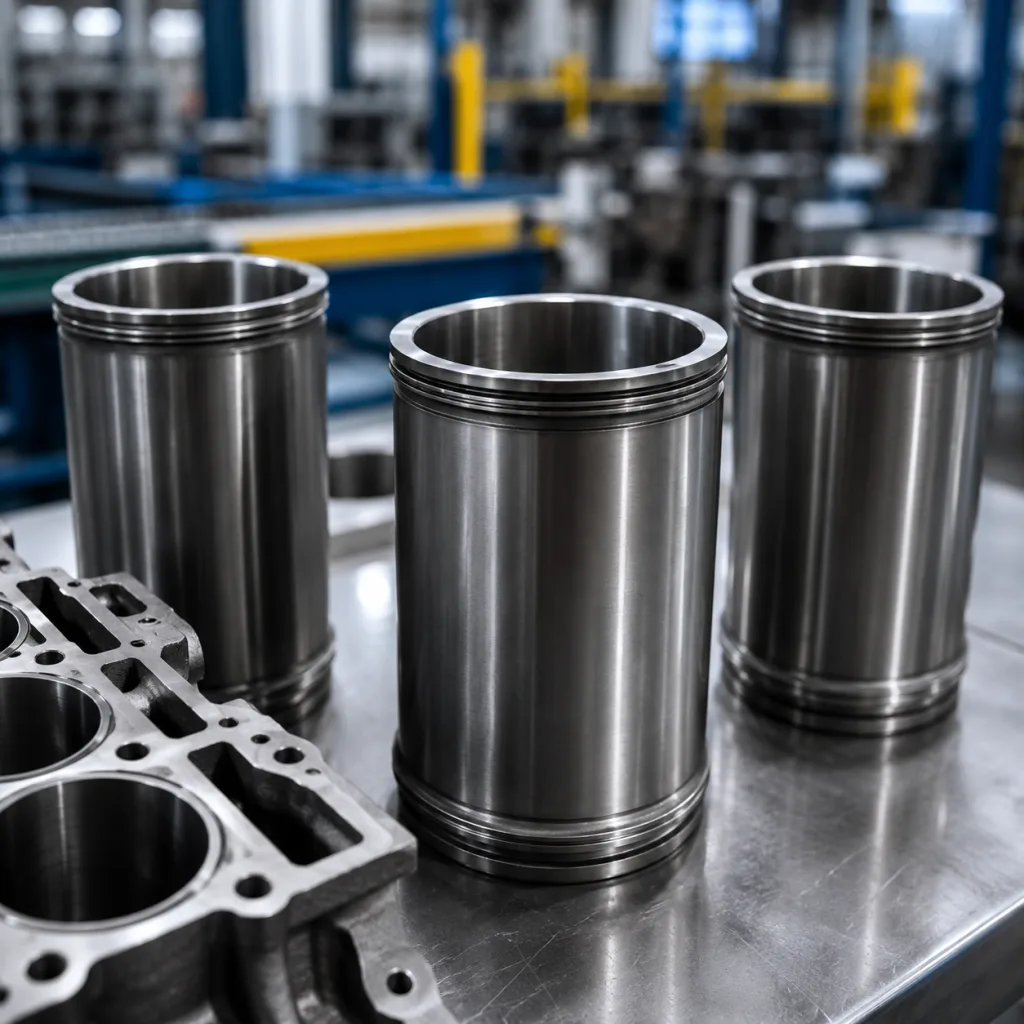
In a cylinder sleeve vs king alternative review, procurement teams need more than a price check or a catalogue cross-reference. The decision affects bore stability, heat transfer from the ring pack into the block or coolant jacket, machinability, overhaul yield, installation scrap, and warranty exposure across multiple engine platforms. For aftermarket distribution, engine remanufacturing, and private-label programmes, the practical questions are specific: what material grade is used, what hardness and microstructure are controlled, what machining allowance is supplied on the bore, how consistent are wall thickness and concentricity, and what inspection evidence supports repeat supply.
A useful comparison starts by separating product claims from process evidence. Two sleeves can look interchangeable in a catalogue yet behave very differently once pressed into the block, bored to final size, or exposed to coolant, combustion loading, and thermal cycling in service. That is why B2B buyers should review the drawing package, tolerance plan, metallurgical control, validation records, and packaging specification alongside unit price.
This guide sets out objective buying criteria for dry and wet cylinder sleeves, with attention to metallurgy, tolerance control, surface finish, validation, and compliance requirements. It is written for buyers and sourcing engineers evaluating interchangeable aftermarket supply rather than end users. Driventus is an independent aftermarket manufacturer; brand names are referenced for fitment only.
What buyers should compare first
The first question is not the brand name. It is whether the supplier can define the sleeve exactly as the application requires. Before reviewing quotations, buyers should lock down four basics: engine family, dry or wet liner design, supply condition (rough, semi-finished, or finish-machined), and the installation method used by the target workshop or plant.
Once the application is fixed, the supplier's technical file and production control plan should answer the following points in plain, measurable terms:
Material specification: grey cast iron, alloyed cast iron, or centrifugal-cast iron, with the declared grade, internal material code, or recognized standard used for that part number
Chemical composition control: declared ranges for key elements such as C, Si, Mn, P, S, and alloy additions including Cr, Mo, Cu, or Ni where used for wear resistance or matrix stability
Microstructure control: graphite form and distribution, pearlitic or ferritic-pearlitic matrix requirement, and the metallographic inspection method used to verify the structure
Hardness range: target hardness window, test method such as HBW/Brinell, sampling frequency, and whether values are checked per melt, per shift, or per finished lot
Dimensional tolerances: inner diameter, outer diameter, flange thickness, overall length, groove dimensions where applicable, and ID-to-OD concentricity or total indicated runout
Surface condition: whether the sleeve is supplied pre-finished, semi-finished, or with rough-machining allowance for final boring and plateau honing
Interference fit parameters: recommended housing fit, typical press-fit allowance, installation temperature window, and any cautions on press force, mandrel design, or block preparation
Traceability: heat number, melt or lot number, batch code, inspection record, and packing label identification down to carton or pallet level
Quality documentation: material certificate availability, dimensional inspection data, PPAP or first-article support where required, and non-conformance response process
Rather than asking for a single loose sample, request a sample approval pack. At minimum, that pack should include a drawing or cross-reference confirmation, a measured inspection report, a material declaration, hardness results, and photos of final packaging. That makes it much easier to compare a cylinder sleeve vs king alternative on evidence instead of marketing language.
For distributor and remanufacturing buyers, the sleeve itself is only part of the cost. Scrap during installation, inconsistent machining stock, variable hardness, or poor rust protection will increase total landed cost even when the unit price appears lower. If you are reviewing multiple engine component lines together, see our catalog and our wider engine components range.
Side-by-side comparison criteria
Use a side-by-side matrix so every supplier is scored against the same technical and commercial checkpoints.
Comparison point
Cylinder sleeve requirement
Why it matters to buyers
Liner type
Correct dry, wet, flanged, or straight-wall configuration for the application
Prevents quoting a visually similar part that cannot be installed or sealed correctly
Base material
Stable cast iron chemistry with controlled alloy content and declared grade
Influences wear resistance, thermal conductivity, damping, and machining behavior
Microstructure
Verified graphite distribution and matrix structure to the drawing or internal standard
Affects crack resistance, bore stability, oil retention, and ring-face compatibility
Hardness range
Consistent batch-to-batch hardness, typically verified by Brinell testing
Reduces wear variation, chatter during machining, and honing inconsistency
ID/OD tolerance
Controlled to drawing tolerance after machining, commonly in hundredths of a millimeter for finish features
Supports correct press fit and lowers installation rejection
Wall thickness variation
Tight control around circumference and along length
Reduces local hot spots, distortion, and uneven cooling
Flange and groove geometry
Accurate flange height, flatness, sealing groove dimensions, and edge condition where applicable
Critical for protrusion, head gasket loading, and wet-liner sealing
Surface finish and stock allowance
Defined Ra and consistent machining allowance, for example finish-bored or semi-finished condition
Influences ring seating, final machining time, and usable yield in the workshop
Corrosion protection
Transit oil, VCI, rust-preventive bagging, or export packaging suited to sea freight
Reduces warehouse oxidation and claim risk after long transit
Validation
Metallurgical inspection, dimensional reports, fitment trials, pressure or leak checks where relevant
Batch traceability, inspection records, packing list control, and clear outer-carton identification
Helps incoming QC, warehouse accuracy, and warranty containment
</tr></thead><tbody> </tbody></table>A buyer comparing one supplier to a King alternative should ask for actual numerical ranges, not broad statements such as "premium material" or "high precision." The request should cover tolerance bands in millimeters, hardness in the relevant scale, surface finish in Ra micrometers, and the exact condition in which the liner is shipped. If the supplier holds capability data such as Cpk, Ppk, or gauge repeatability and reproducibility studies, that information is useful for higher-volume programmes.
Where private-label or drawing-based business is involved, custom manufacturing support is often more important than catalogue breadth alone. A supplier that can maintain the same specification across multiple production lots is usually the lower-risk choice, even if the initial quotation is not the lowest.
Material and machining differences that affect field performance
Cylinder sleeve performance comes from metallurgy and downstream machining working together. Buyers evaluating a cylinder sleeve vs king alternative should treat these two areas as one system: material determines how the liner behaves under load and temperature, while machining determines whether that material can deliver the intended bore geometry in service.
Material selection
For many aftermarket applications, sleeves are produced from cast iron selected for wear resistance, thermal stability, vibration damping, and machinability. Depending on duty cycle and engine design, buyers may see:
Grey cast iron sleeves for standard-duty rebuilds where balanced cost, machinability, and ring compatibility are required
Alloy cast iron sleeves with additions such as chromium, molybdenum, copper, or nickel to improve wear resistance, high-temperature strength, or matrix stability
Centrifugally cast sleeves where a denser wall section, lower porosity, and more uniform properties through the circumference are required for demanding service
Typical aftermarket sleeve materials often target a predominantly pearlitic matrix because pearlite gives better wear resistance than a soft ferritic structure while still remaining machinable with standard boring and honing tools. For wet liners, buyers should pay special attention to the coolant-side surface and any anti-corrosion or cavitation-control provisions, because external wall damage can occur even when the bore itself remains acceptable.
Microstructure and hardness
Material description should go beyond the phrase "cast iron." Buyers should ask how the supplier controls graphite distribution, matrix structure, and hardness consistency. A sleeve that is too soft may show early bore wear, ring groove polishing, or accelerated taper growth. A sleeve that is too hard, or inconsistent from lot to lot, can increase tool wear during finish machining and complicate ring seating.
In practice, many cylinder sleeves for diesel and gasoline rebuild applications are specified in a Brinell hardness band roughly around 180-260 HBW, depending on the engine design, ring pack, and material system. That is not a universal requirement, so buyers should always work to the application drawing or approved supplier standard. The key point is that the supplier should declare a controlled hardness window and support it with metallographic checks at a defined sampling frequency.
Machining control
Even good material will underperform if machining control is weak. Buyers should ask whether the supplier controls:
Bore cylindricity, taper, and roundness after final machining
Surface finish appropriate for the intended final honing strategy, such as rough-bored, semi-finished, or finish-honed supply
Chamfer depth and uniformity to reduce installation damage and ring insertion damage
Flange flatness and seating consistency on flanged designs
Groove geometry and edge quality on wet liners using sealing rings
Stock allowance consistency for remanufacturing workshops that finish the bore in-house
Typical semi-finished sleeves may be supplied with a controlled boring/honing allowance, often in the range of a few tenths of a millimeter on diameter, but the exact amount depends on sleeve wall thickness, installation distortion, and the rebuilder's process route. If the stock allowance varies too much from part to part, rebuilders either lose cycle time removing extra stock or scrap the part because cleanup diameter exceeds the repair plan.
In practice, unstable machining stock forces rebuilders to remove extra material to clean up the bore, which increases cycle time and can reduce usable yield. Poor chamfer control can chip during installation. Inconsistent flange geometry can change protrusion and head gasket loading. These are not minor shop-floor issues; they directly affect warranty performance and the profitability of repeat orders.
A robust supplier should operate under documented controls aligned with IATF 16949:2016 and ISO 9001:2015, with incoming material inspection, in-process gauging, and final release checks. You can review Driventus' quality system for the framework used in production control.
Tolerance control, fitment risk, and warranty cost
For importers and remanufacturers, most sleeve-related claims trace back to a short list of failure modes, and each one has a predictable cost chain.
Incorrect interference fit causing liner movement, block stress, or distortion after installation
Out-of-round bore after press-fit or after thermal cycling in service
Premature wear from hardness, wall thickness, or finish inconsistency
Coolant leakage in wet-liner applications due to flange, groove, or seal-seat mismatch
Cracking from installation stress, local material defects, or sharp-edge geometry
This is why buyers should request measured data on the points that influence installed condition, not just loose-part dimensions:
Outer diameter tolerance relative to housing bore requirement
Inner diameter allowance before final boring or honing
Wall thickness tolerance around the circumference and along the full length
Concentricity between ID and OD
Roundness and taper at the defined measurement positions
Flange height, thickness, and flatness where applicable
Seal groove dimensions for wet-liner designs
Hardness range across production batches
Visual inspection and NDT practice, where applicable for critical applications
For finish-machined sleeves, buyers commonly look for dimensional control in the hundredths of a millimeter, with roundness and taper limits tight enough to leave only the intended final honing correction after installation. For semi-finished sleeves, the focus shifts to consistent stock allowance and OD control, because press-fit distortion and cleanup allowance will determine whether the rebuilder can hit final bore size without exceeding oversize limits. Exact numbers vary by engine family and should come from the drawing, not a generic brochure claim.
If possible, ask for inspection taken from at least two separate production lots and, for higher-risk applications, request a small installation trial. A loose sleeve can measure within nominal tolerance yet still create problems once pressed into the block if the OD distribution, wall uniformity, or flange seating is inconsistent. That is the point where many warranty claims begin.
If the supplier can provide only nominal dimensions without process capability evidence, the commercial risk increases. In a distributor network, even a low single-digit defect rate can generate significant reverse-logistics cost across multiple warehouses, along with workshop labor claims and lost customer confidence.
Where fitment references are used in catalogues, buyers should also confirm whether the supplier can manage cross-reference mapping accurately, including formats such as OE 06A107065 when relevant to the enquiry. Cross-reference accuracy should support identification only and must not imply vehicle manufacturer endorsement.
Compliance and sourcing checks for import programmes
For EU, UK, US, Canada, Australia, and Brazil supply programmes, procurement teams should review both product compliance and supplier-system compliance. The cylinder sleeve is a machined iron component, but the sourcing risk often sits in documentation, packaging, labelling, and repeat-order control rather than in the casting alone.
Recommended sourcing checklist:
Confirm manufacturing site certifications, including IATF 16949:2016 and ISO 9001:2015
Check whether material and coating substances are managed in line with REACH (EC) No 1907/2006 where applicable
Verify packaging specification for sea freight, humidity exposure, stacking, and anti-corrosion protection
Review batch traceability from melt or material lot through machining, inspection, and final packing
Ask for dimensional inspection samples from at least two separate production lots, not just one pilot sample
Confirm MOQ, lead time, safety-stock policy, and the supplier's ability to hold repeat tooling or gauges
Clarify whether the supplier supports private branding, custom labels, carton consolidation, and pallet standards
Check export documents such as packing declaration, country of origin, and barcode or label format if required by your warehouse system
Agree a non-conformance process covering containment, replacement timing, root-cause analysis, and corrective action reporting
Packaging deserves more scrutiny than many buyers give it. Bare cast iron can oxidize quickly under condensate conditions during ocean transit, especially when parts are packed warm, bag seals are poor, or cartons are exposed to fluctuating humidity. Ask whether the supplier uses rust-preventive oil, VCI film or paper, desiccant where needed, sealed inner bags, and pallet wrapping suitable for container shipment.
For aftermarket buyers, consistency over 12 to 24 months is often more important than a one-time pilot result. A qualified supplier should be able to explain how tooling wear, gauge calibration, process audits, and operator training are controlled during repeat production. Buyers should also ask who owns the drawing, how revisions are released, and how superseded stock is segregated if a dimension or process changes mid-programme.
If you are comparing supply options for a new programme, you can request a quote with the target dimensions, annual volume, supply condition, and destination market. That allows the supplier to quote the correct inspection level and packaging method rather than treating the part as a generic catalogue item.
How to decide between suppliers
A practical decision framework is to score suppliers on four factors: technical conformity, repeatability, commercial fit, and service support. In a cylinder sleeve vs king alternative decision, these four factors usually separate a usable long-term source from a supplier that only looks competitive on the quotation sheet.
Technical conformity means the sleeve matches drawing, material, surface condition, and installation requirements. This should be proven by measured data, not assumed from a part number match. For many buyers, that means reviewing chemical or material declarations, hardness results, dimensional reports, and supply-condition notes on every approved part number.
Repeatability means the same result across batches, not only from initial approval samples. Ask whether the supplier can show stable inspection results from more than one lot and whether there is a control plan for tooling wear, hardness checks, and final release. If the programme is high volume, capability targets on critical dimensions may be worth specifying in advance.
Commercial fit covers MOQ, lead time, Incoterms, packaging density, payment terms, and total landed cost. A lower invoice price is less valuable if the part creates extra machining time, incoming inspection burden, or warranty exposure.
Service support includes response speed on non-conformance, traceability depth, engineering communication, and the ability to handle private-label or drawing-revision changes without disrupting supply.
A practical way to decide is to use a weighted scorecard. Many B2B buyers give the highest weighting to technical conformity and repeatability, then compare commercial fit and service support once the technical gate is passed. This prevents the common mistake of approving a low-cost source that later creates installation scrap or field claims.
Before nominating a supplier, it is sensible to complete three steps:
1. Review the technical file and inspection evidence against the target application. 2. Approve samples from at least one lot, and preferably compare results from a second lot or pilot order. 3. Validate packaging, labelling, and response expectations for repeat supply before rolling out across multiple warehouses or reman lines.
For many buyers, the correct decision is the supplier that provides the clearest process evidence and the lowest operational risk, rather than the lowest invoice price. This is especially true for rebuilders and distributors managing warranty exposure across several markets.
Driventus supplies independent aftermarket engine components for B2B customers and supports catalogue, drawing-based, and private-label programmes through our catalog and custom manufacturing. Driventus is an independent aftermarket manufacturer; brand names are referenced for fitment only.
Frequently asked questions
Start with material grade and dimensional control, but do not stop there. Buyers should verify hardness range, microstructure, ID and OD tolerances, wall thickness consistency, flange or groove geometry where relevant, and whether the sleeve is supplied rough, semi-finished, or finish-machined. The best comparison combines material evidence with measured inspection data from actual production lots, ideally including hardness results and bore/OD readings at defined positions.
No. A lower unit price can be offset by higher machining time, installation scrap, bore distortion, oxidation in storage, or warranty returns. Total cost should include rejection rate, fitment stability, packaging quality, incoming inspection effort, and batch consistency over repeat orders. For most B2B programmes, the cheaper sleeve is only a saving if it also protects machining yield, installation success rate, and warranty performance.
Typically buyers should ask for certification details, material information or certificates where available, dimensional inspection data, hardness results, batch traceability, packing specification, and any programme-specific quality documents required for approval or repeat supply. For higher-volume or private-label business, it is also useful to confirm sample reports from more than one lot, packaging labels, and the supplier's corrective-action process for non-conforming parts.
If you are qualifying a new sleeve supplier or comparing an existing source against a technical alternative, Driventus can review your drawing, fitment list, supply condition, and annual volume. Contact our team to [request a quote](/contact.html).