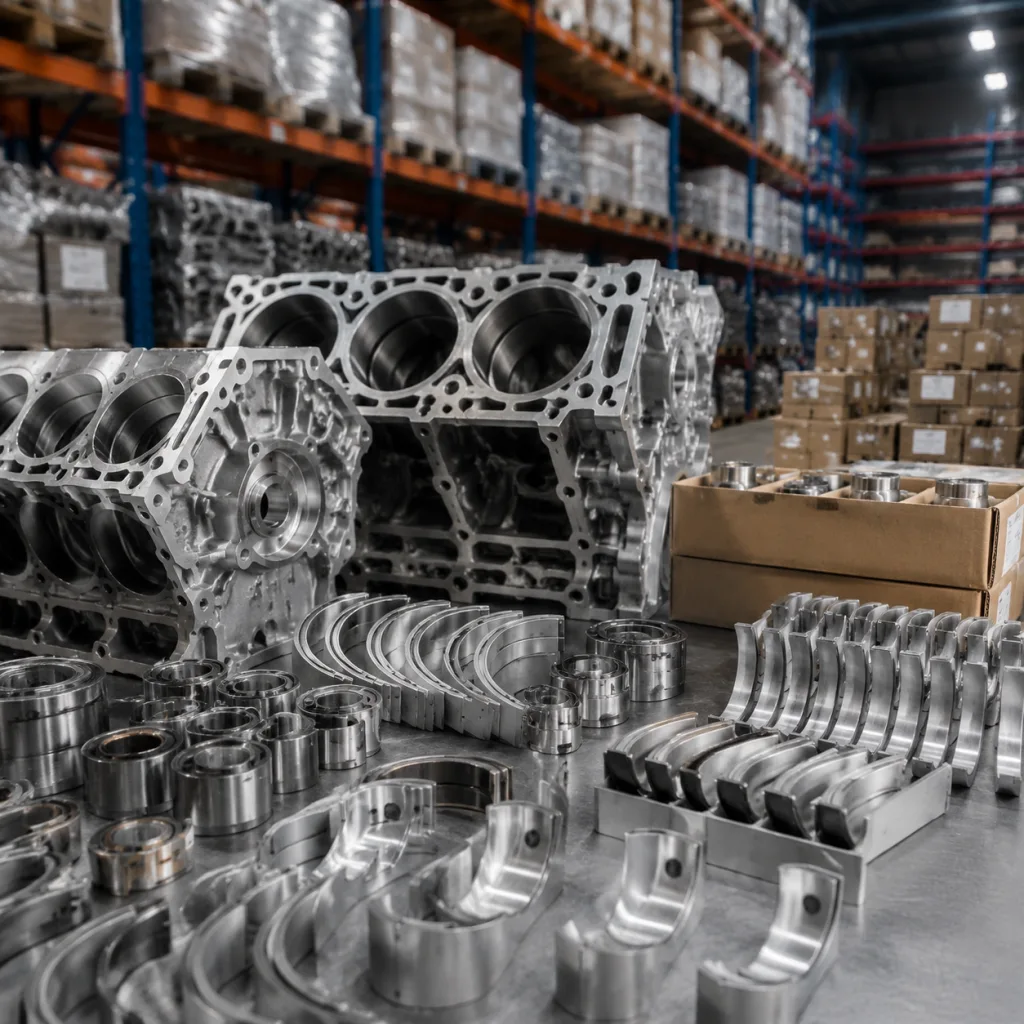
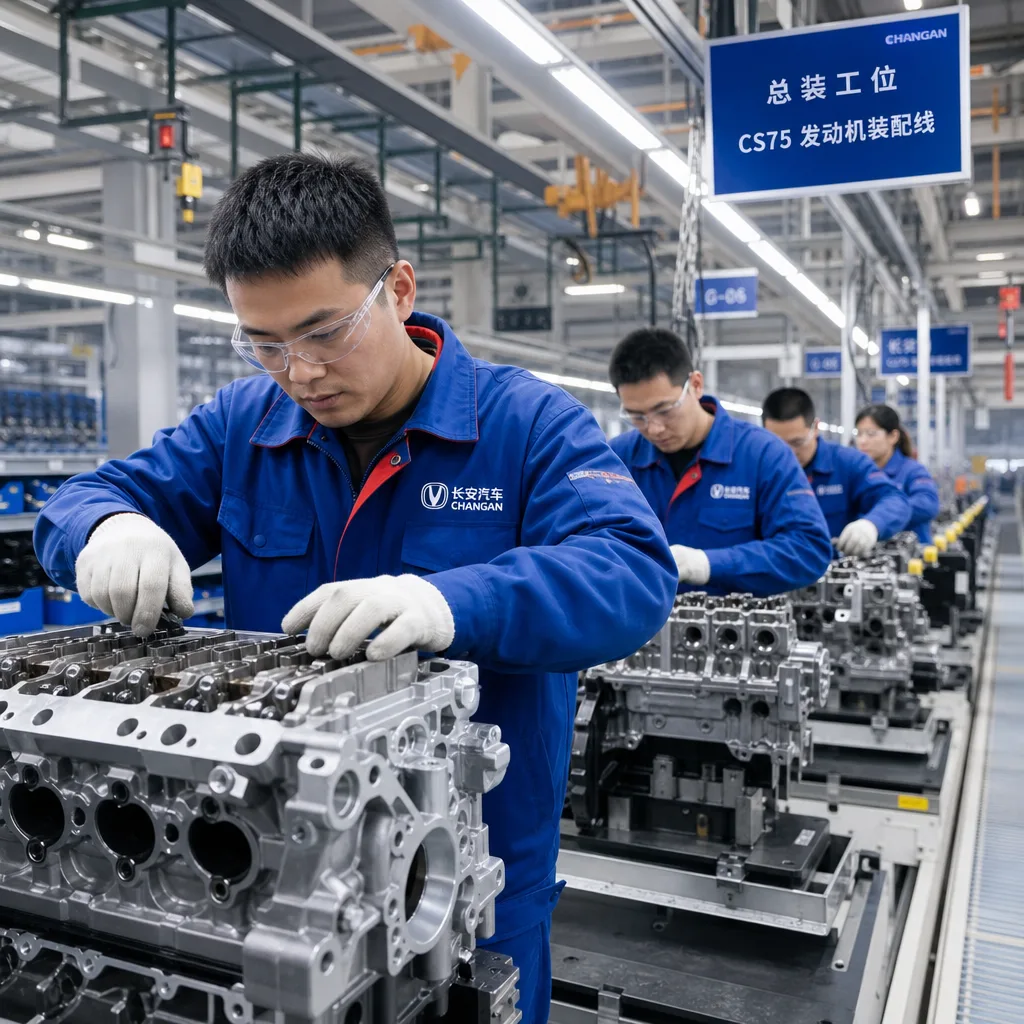
Hyundai engine bearing sourcing is a procurement decision with real failure cost. A part can look correct in a catalogue and still miss on clearance, crush, or journal fit. Buyers need more than a fitment claim: they need OE cross-checks, dimensional proof, lot traceability, and a supplier that can repeat the same spec on the next order. Driventus is an independent aftermarket manufacturer; brand names are referenced for fitment only. We produce engine and powertrain components in Taizhou, Zhejiang, and export to more than 60 countries under IATF 16949:2016 and ISO 9001:2015 processes. If you are evaluating engine bearing Hyundai wholesale sources, use the checks below to separate usable supply from catalogue noise.
How to decide if a bearing is actually a match
For engine bearing Hyundai wholesale buying, the first decision is not price. It is whether the bearing belongs to the exact engine family, bearing position, and size class you need. A supplier that cannot prove those three points is not ready for bulk supply.
Start with these checks
Engine code and displacement
Main bearing, connecting rod bearing, or thrust application
Standard size, undersize, or oversize requirement
OE cross-reference, where available, such as `OE 06A107065`
Shell width, locating features, and coating type
Packaging and lot traceability
A common mistake is treating “fits Hyundai” as a complete answer. It is not. Two engines in the same family can use different journals or different clearance targets. Ask for a drawing, a dimensional sheet, or both. Then compare the supplier’s data with your engine record, not just the product title.
Request these fitment details before approval
Crankshaft journal diameter and service limit
Bearing wall thickness and tolerance band
Installed oil clearance range for the exact engine code
Crush height and anti-rotation feature geometry
Available size steps such as `0.25 mm` or `0.50 mm`
If you manage multiple references, keep one approval line per part. Include engine code, OE number, bearing position, size, and notes on any machining history. That simple file avoids most substitution errors during replenishment.
Why some bearings pass inspection and still fail in service
A bearing can clear receiving inspection and still create trouble after installation. The reason is usually not one defect. It is a small stack of tolerances: material system, thickness, roundness, coating, and surface finish all interact.
Control item
What to verify
Why it matters
Material system
Steel-backed, tri-metal, or aluminium alloy
Affects load capacity and fatigue resistance
Thickness tolerance
Usually controlled to `±0.01 mm` to `±0.02 mm` depending on size class
Prevents oil-clearance drift
Width tolerance
Checked by cavity and process control
Keeps axial location stable
Surface finish
Working-face roughness target, often `Ra 0.2–0.4 µm`
Supports oil film retention
Crush / roundness
Sample seating and shell retention checks
Helps prevent shell movement
Overlay / coating
Thickness and anti-seizure specification
Improves start-up protection
Traceability
Lot code and inspection record
Supports claims handling
</tr></thead><tbody> </tbody></table>The short version: a bearing is only as good as the process behind it. Buyers should care less about marketing language and more about whether the supplier can show first-article data, in-process checks, and final inspection records. If a factory can only provide catalogue photos, that is a warning sign.
Inspection evidence worth asking for
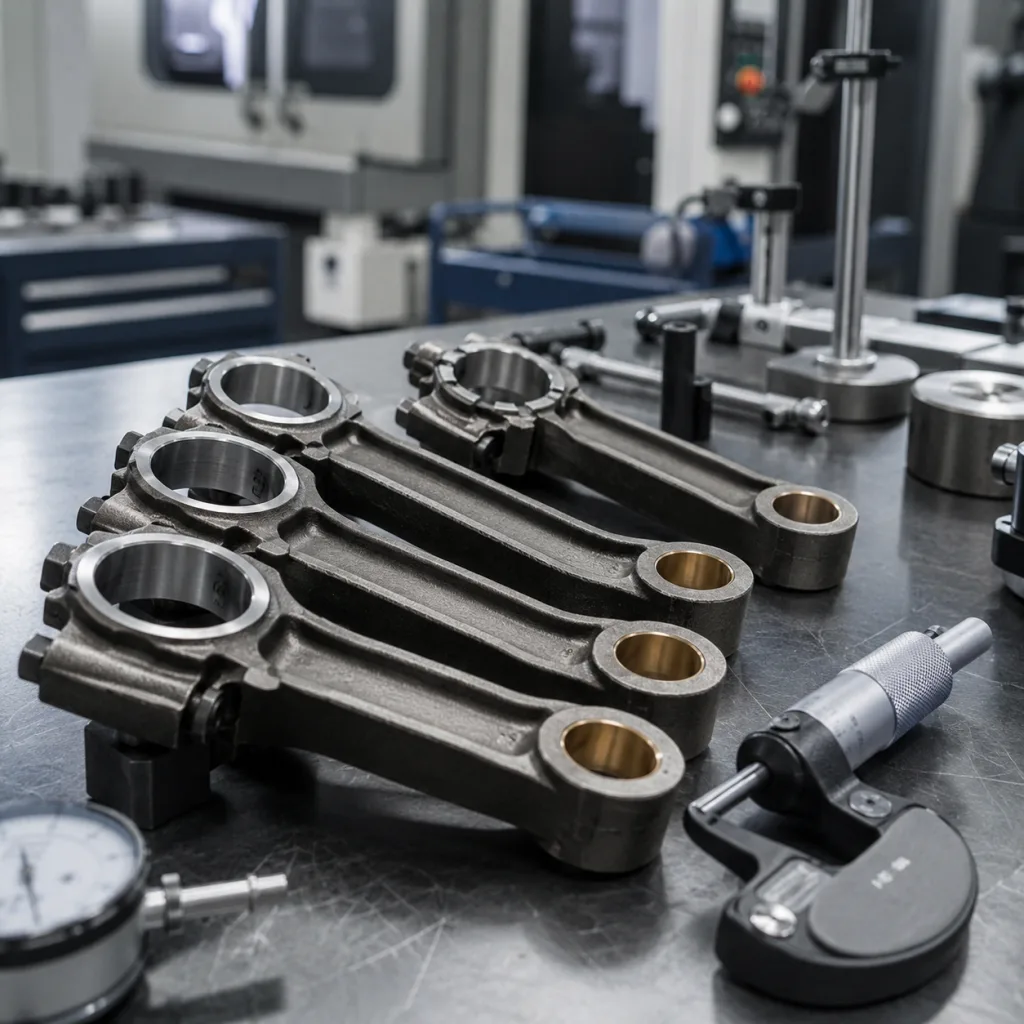
Thickness micrometer readings from each cavity or lane
Visual checks for scoring, flaking, edge damage, and copper exposure
Lot traceability tied to packing date, shift, and inspector code
Sample hardness or adhesion checks where the material system requires them
Packaging and corrosion-protection checks for export transit
For controlled sourcing, ask the supplier to state the sampling method clearly. An acceptance record aligned to `AQL 1.0` or `AQL 1.5` is easier to manage than vague “quality checked” language.
What Driventus can supply for wholesale programs
Driventus supports engine bearing programmes as a B2B manufacturer, not a marketplace reseller. Buyers can source standard catalogue items, validate fitment against supplied engine data, or request custom manufacturing where the market needs a special size or private-label pack.
Supply paths
Standard aftermarket references from our catalog
OE-number-based matching when the buyer supplies fitment data
Custom manufacturing for special dimensions or packaging through our custom manufacturing
Batch-level quality documentation through our quality system
Typical workflow 1. Buyer sends engine code, OE number, target market, and forecast. 2. We confirm whether the request is standard or custom. 3. We issue drawings, data sheets, and a sample quotation. 4. Buyer approves samples and confirms packaging artwork. 5. Production starts after order confirmation and deposit or agreed credit terms. 6. Final inspection data, carton labels, and shipping documents ship with the lot.
Commercial ranges buyers often plan around
Sample order: `1–5 sets` per reference
Trial order: `50–200 sets` depending on mix and pack complexity
MOQ for standard items: often `100–300 sets` per part number
MOQ for custom items: usually higher because of tooling or labeling setup
Standard lead time: often `15–25 days` for stocked or repeat items
New-build lead time: commonly `30–45 days` when tooling, coating, or artwork changes are involved
Driventus is an independent aftermarket manufacturer; brand names are referenced for fitment only.
Which commercial terms change the real landed cost
Wholesale decisions are often lost in the commercial details, not the part itself. Lead time, carton configuration, and document quality can cost more than a small price difference on the unit line.
Confirm these terms in writing
MOQ by part number and by mixed order
Sample lead time and production lead time
Packing configuration per carton and pallet
Incoterms and export documentation support
Warranty or claims process for non-conforming lots
Audit access for larger accounts
A supplier with stable replenishment is usually more valuable than the lowest first price. If the factory holds tooling, controls dimensions, and repeats the same pack-out, your receiving team spends less time sorting and rejecting mixed stock.
How buyers should compare price
Standard references are usually cheapest in full carton quantities
Mixed-SKU orders often add a `5%–12%` handling premium
Custom dimensions, private label cartons, or special corrosion protection can add `8%–20%`
Repeat orders are usually more stable than first orders
Freight, duties, and insurance can materially change landed cost, so compare delivered terms, not ex-works alone
Planning rules that reduce stockouts
Keep at least one replenishment cycle of buffer stock for fast movers
For seasonal demand, place the next PO before stock falls below `30%` of the reorder point
Reserve raw material or finished-goods capacity when monthly demand is consistent
Separate urgent references from slow movers so one long-tail item does not delay the shipment
When quoting, ask for
`EXW`, `FOB`, and `CIF` pricing
Price breaks at `500`, `1,000`, and `3,000` sets or the nearest production tiers
Refund terms for sample charges, if applicable
Final artwork approval before price lock so the quote does not change later
The mistakes that create most bearing claims
Most claims start before the order leaves the factory. The pattern is familiar: the buyer assumes all bearings for an engine family are interchangeable, skips crankshaft verification, or accepts a cross-reference without dimensional proof.
A better sequence is straightforward: 1. Confirm engine code and OE reference. 2. Verify standard size or undersize requirement. 3. Request dimensions, material data, and inspection method. 4. Review packaging and traceability. 5. Approve samples before bulk release.
That sequence sounds basic because it is. What changes results is discipline. Every region, warehouse, and workshop should work from the same approval file so the drawing, test record, and commercial terms never drift.
Frequent failure modes
Buying by engine name instead of exact engine code and bearing position
Skipping crankshaft measurement after machining or polishing
Accepting “fits many models” listings without dimensional proof
Missing mixed-size cartons during receiving
Approving artwork before carton count, barcode format, and country-of-origin marking are signed off
Release checklist before PO approval
Confirm nominal journal size and service limit
Confirm bearing position: main, rod, thrust, or thrust-integrated shell
Confirm clearance target from the engine builder or workshop spec
Confirm lot traceability format on inner and outer packaging
Confirm dispute evidence, claim window, and replacement lead time
Confirm whether the supplier can hold repeat stock for the next cycle
What buyers should ask in a Q-and-A review
Use a short Q-and-A review with your supplier before you place the first wholesale order. It keeps the conversation anchored to proof instead of promises.
Q: Can you supply by OE cross-reference? A: Yes, if the buyer provides the engine code or OE reference for validation. Fitment is checked against the supplied data before sample or production release.
Q: What documents are available? A: Typical documents include dimensional data, batch traceability, and quality records. Additional compliance documents can be provided where required for market entry or audit.
Q: Do you support private label or custom packaging? A: Yes. Through our OEM services, we can support custom manufacturing, carton marking, and pack-out requirements for distributor programmes and regional channels.
Q: What should I compare between suppliers? A: Compare fitment proof, thickness control, traceability, MOQ, lead time, and claims handling. Price matters, but not before the part is proven.
Q: What is the fastest way to reduce risk? A: Start with one validated reference, require inspection records, and release bulk only after the sample matches the target engine and size class.
Frequently asked questions
Yes, provided the buyer supplies the engine code or OE reference for validation. We verify fitment against the supplied data before sample or production release.
Typical documents include dimensional data, batch traceability, and quality records. Additional compliance documents can be provided where required for market entry or audit.
Yes. Through our OEM services, we can support custom manufacturing, carton marking, and pack-out requirements for distributor programmes and regional channels.
If you are building a repeatable supply line for engine bearings, send your part list, target market, and required documentation through our contact form. Start with a quote request at /contact.html.