Cylinder Sleeve Supplier: Sourcing, Specs, and Lead Times
Procurement teams sourcing sleeves need more than a nominal bore size. A cylinder sleeve supplier should be able to show metallurgy, dimensional control, lot traceability, and export-ready paperwork before the first production order. For engine rebuild programmes, the main risks are bore distortion, wrong flange height, inconsistent wall thickness, and poor surface finish after honing. Driventus is an independent aftermarket manufacturer; brand names are referenced for fitment only. Buyers should use IATF 16949:2016, ISO 9001:2015, and REACH (EC) No 1907/2006 as baseline checks, then confirm that the supplier can support drawing reviews, first article data, and repeatable lead times. The sections below focus on what to verify before you place an RFQ or approve a trial batch.
What buyers should expect from a supplier
A credible supplier should answer three questions quickly: can the part be made to drawing, can it be repeated at scale, and can it be documented for import and quality review. For standard programme work, look for a published range in our catalog, then ask for the matching inspection format and traceability method.
At minimum, request:
Material grade and casting route
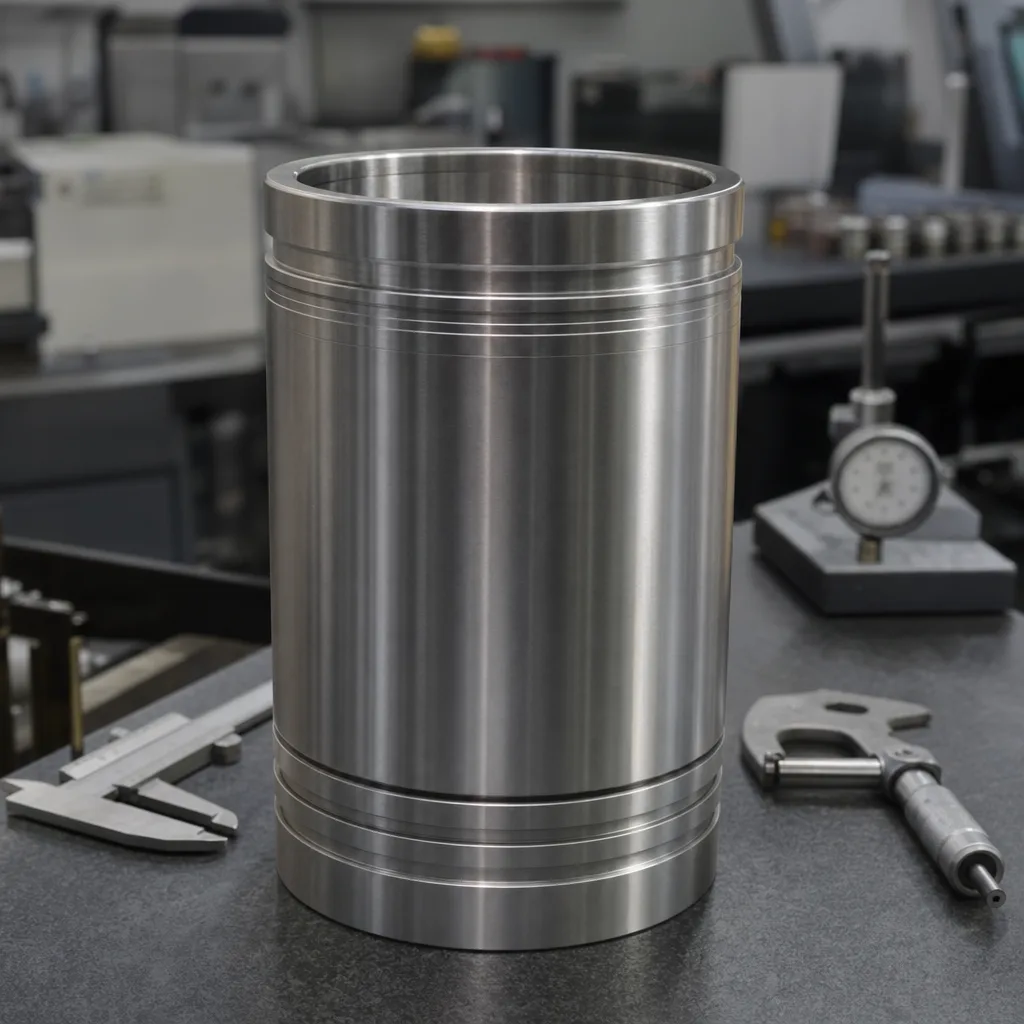
Nominal bore, outside diameter, flange height, and protrusion limits
Honing or finish-machining method
Packing standard and corrosion protection
Sample, pilot, and mass-production lead times
If the vendor cannot provide a clear quality dossier, the buying risk shifts to your receiving inspection team. A supplier working to our quality system should be comfortable with lot control, nonconformance handling, and documented release criteria.
Materials and dimensions that drive fit
Sleeves fail commercially when the drawing is incomplete. The buyer may compare only the bore, while the real fit depends on interference, wall stiffness, and thermal behaviour after machining.
Check
What to ask
Why it matters
Bore ID and OD
Tolerance band, roundness, cylindricity
Controls fit and sealing
Wall thickness
Minimum and maximum across the full length
Protects strength after honing
Flange height / protrusion
Drawing revision and measurement method
Prevents deck mismatch
Surface finish
Honed finish, coating, and storage protection
Affects ring seating and corrosion resistance
Hardness / structure
Material grade and heat-treatment record
Reduces cracking and uneven wear
</tr></thead><tbody> </tbody></table>Dry sleeves are usually chosen for stability and simple installation. Wet sleeves are used where coolant contact is part of the design, so sealing geometry and corrosion control become more important. If the part family has multiple variants, add a revision-controlled drawing pack rather than relying on a verbal reference.
What to verify in a factory audit
A procurement review should go beyond a certificate on the wall. Ask how the plant controls incoming metal, machining wear, gauge calibration, and lot traceability. For a supplier claiming IATF 16949:2016 or ISO 9001:2015 alignment, the evidence should be visible in process records, not only in sales material.
Useful audit questions include:
Can the plant trace each sleeve back to heat number, shift, and machine line?
Are bore gauges, micrometers, and CMM fixtures calibrated to a defined schedule?
How is first article approval recorded for a new drawing or revision?
What happens when a lot fails hardness, geometry, or coating checks?
Can the factory provide a packing standard that prevents rust, impact damage, and mix-ups?
For buyers managing multiple plants, a documented quality system is more useful than informal assurance. It shortens approval cycles and reduces disputes when a shipment is inspected at destination.
MOQ, lead time, and export logistics
Most sourcing delays come from assumptions about availability. A part that looks standard may still need a new tooling insert, a different hone stone, or a revised coating process. MOQ is usually driven by casting economics, machining setup time, and the number of variants on the production line.
In practice, buyers should separate the order into three stages:
1. Sample or validation lot 2. Pilot quantity for vehicle or engine testing 3. Production release with repeatable call-off terms
Lead time is shortest when the sleeve matches an existing process route and longest when the drawing introduces a new diameter, flange profile, or surface requirement. Export documentation should be defined before shipment: commercial invoice, packing list, material declaration where needed, and any customer-specific certificates. For regulated destinations, REACH (EC) No 1907/2006 declarations may be required, so ask for them during RFQ rather than after PO placement.
When custom manufacturing is the right call
Custom work becomes sensible when the target engine family has a unique block bore, an unusual sleeve length, or a requirement that cannot be met by a catalogue item. It is also the right route when the buyer needs a controlled revision history for long-term supply.
For broader engine programmes, it can help to review the wider engine components catalog before committing to a new sleeve specification. Driventus is an independent aftermarket manufacturer; brand names are referenced for fitment only. If the drawing is stable, custom production can reduce future sourcing friction and make reorders easier to audit.
Frequently asked questions
At minimum, ask for the drawing match, material grade, tolerance summary, MOQ, lead time, packing method, and the inspection documents available for sampling. If the part is custom, request a revision-controlled quotation and a clear sample approval path.
Yes. Catalogue parts work well when the dimensions are standardised. Drawing-based parts are better when the block, flange, or surface requirement is specific. The key is to lock the revision before tooling or pilot production starts.
Confirm the dimensional report, hardness record, surface finish, packing standard, traceability method, and shipment documents. For regulated markets, also confirm any REACH declarations and the agreed method for handling nonconforming lots.
Share your drawing, target annual volume, and destination market, and use [request a quote](/contact.html).