Cylinder Liner BMW OEM Supplier: Sourcing Guide
BMW programs often use cylinder liners to restore bore geometry, control wear, and keep ring sealing stable across service intervals. For buyers, the real questions are dimensional control, material traceability, machining repeatability, and whether the supplier can support PPAP-style evidence at scale. Driventus is an independent aftermarket manufacturer; brand names are referenced for fitment only. If you are qualifying a cylinder liner BMW OEM supplier for distributors, repair chains, or OEM-adjacent supply, you should ask for the drawing, the control plan, the inspection method, and the export pack before you discuss price. The target is not a generic casting. It is a repeatable part that matches bore, flange, finish, and heat-treatment requirements across batch lots.
BMW Fitment Scope and Part Boundaries
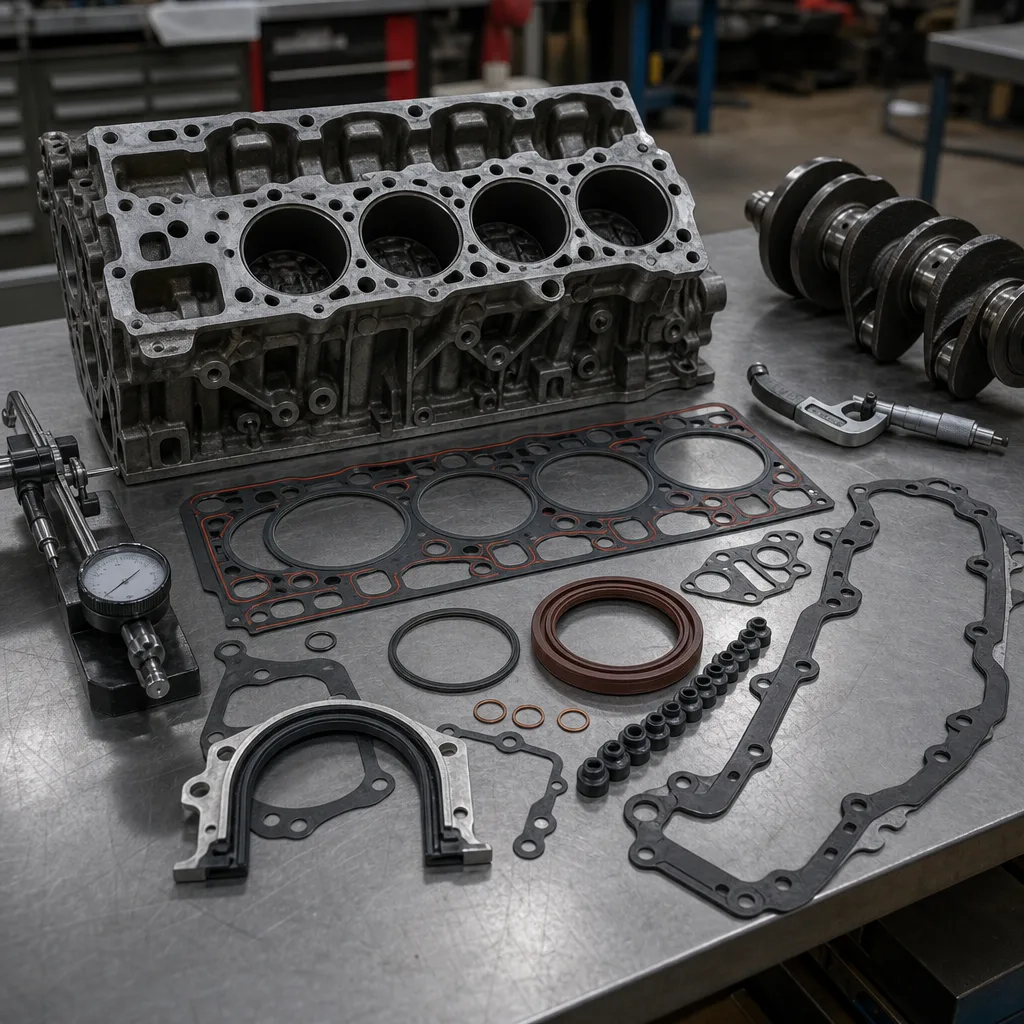
Cylinder liners are used where the parent block needs a wear surface that can be renewed without replacing the full casting. In BMW-fit programs, that usually means careful control of bore size, flange height, skirt length, and any interference fit into an aluminium or iron block. The supplier should confirm whether the part is a dry liner, a repair sleeve, or a drawing-specific special.
For procurement teams, the important point is fitment discipline. OE cross-reference data should be treated as an identification tool for matching applications, not as a claim of manufacturer approval or endorsement.
If you are building a broader engine range, start with our catalog and engine components so the liner is evaluated alongside pistons, gaskets, and related wear parts.
What to Specify Before You Buy
A liner quote is only useful when the drawing requirements are clear. The buyer should define the finished dimensions, the raw blank condition, the machining allowance, and the inspection method before asking for price.
| Spec item | Buyer check | Why it matters |
|---|---|---|
| Material | Cast iron grade, alloy content, and traceability | Wear resistance and ring life |
| Bore and OD | Finished ID, OD, taper, and ovality | Press fit and sealing stability |
| Flange geometry | Height, seat flatness, and chamfer | Head sealing and installation repeatability |
| Surface finish | Honing allowance, Ra/Rz, and cross-hatch target | Oil retention and ring seating |
| Protection | Rust prevention and export packaging | Shelf life and transit damage |