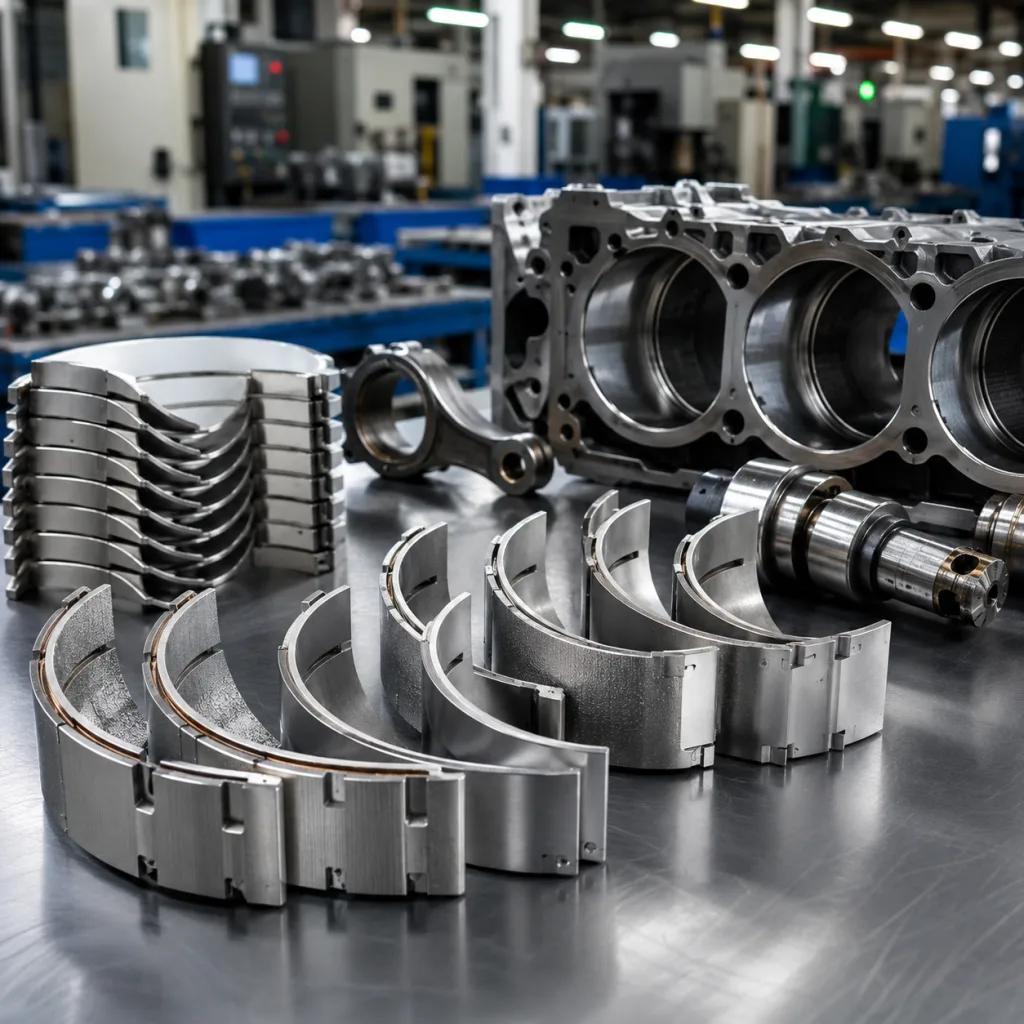
Cylinder Sleeve Porsche Supplier: Sourcing Guide for Buyers
Sourcing cylinder sleeves for Porsche applications takes more than matching a catalogue bore size. Buyers need a cylinder sleeve Porsche supplier that can control liner metallurgy, hold bore and OD geometry through machining, document critical characteristics, and reproduce the same result across replenishment batches. For engine rebuilders, distributors, repair networks, and Tier-1 buyers, the first checks are material grade, hardness, graphite structure, wall-thickness consistency, surface finish, interference-fit assumptions, and traceability back to heat and lot records. Driventus is an independent aftermarket manufacturer; brand names are referenced for fitment only. We produce engine and powertrain components in Taizhou, Zhejiang, and export to 60+ countries under IATF 16949:2016 and ISO 9001:2015 systems. This guide explains what to verify before placing a cylinder sleeve order, how to compare supplier capability, which commercial questions affect supply continuity, and which documents to request during RFQ and audit stages.
What procurement teams should verify first
In a cylinder sleeve Porsche supplier search, begin with a controlled part definition before moving into unit price. Confirm whether the requirement is a dry sleeve, wet sleeve, flanged sleeve, or repair liner, then match the engine family, bore size, outside diameter, wall thickness, installation method, and final machining route. One nominal application can still involve different repair strategies, especially when the buyer must choose between a semi-finished liner for machine-shop boring and honing or a finish-machined sleeve for controlled replacement stock.
Procurement should also request the base material, typically centrifugally cast gray iron, alloyed cast iron, or another customer-approved sleeve material. Ask for the hardness range, graphite form, microstructure target, and machining allowance at the same time. Many aftermarket sleeve programmes specify pearlitic gray iron with flake graphite and a hardness window commonly in the HB 180-260 range, but the final requirement should be tied to the drawing and engine duty cycle. For performance or high-load rebuild markets, the sleeve has to be judged as a working tribological surface, not just a cylindrical insert. Ring compatibility, heat transfer, oil retention after honing, and distortion behaviour after pressing into the block all influence the final engine result.
Minimum RFQ data to request:
Engine code and application notes
Bore diameter, sleeve OD/ID tolerances, and measurement datum scheme
Material grade, chemistry range, graphite form, microstructure target, and heat-treatment or stress-relief route
Surface finish targets on bore, outside diameter, flange face, sealing lands, and lead-in chamfers
Required machining state: rough, semi-finished, or finish-machined
Finish-honing allowance, where the sleeve is supplied semi-finished
Target interference fit or installation guidance, where applicable
Packaging standard, VCI or oil protection, labelling, and pallet requirements
Annual volume, forecast, sample quantity, and target lead time
If OE cross-reference data is available, list it clearly as OE 06A107065 or another customer-provided reference. Cross-reference numbers are useful for fitment screening, but they do not replace engineering confirmation. Verbal application claims are not enough, particularly when several engine variants share similar nominal bore dimensions. A capable supplier should provide dimensional drawings, inspection records, and a sample approval route before mass production. For custom programmes, the buyer should also confirm whether the supplier will work from controlled drawings, physical samples, 3D data, or a documented reverse-engineering process with buyer approval of all critical dimensions.
Supplier capability for Porsche-fit cylinder sleeves
A credible supplier has to support both repeat production and low-volume replacement demand. That requires stable casting or tube sourcing, controlled CNC turning, boring, facing, grooving, chamfering, final deburring, and documented gauging at key steps. Driventus supplies engine components to aftermarket distributors, OEM / Tier-1 suppliers, and repair chains, so the supply model must work across different order sizes, not only one-time sample orders.
For Porsche-fit cylinder sleeves, buyers should look closely at how the supplier controls geometry under production conditions. Roundness, straightness, cylindricity, flange perpendicularity, wall thickness variation, and surface finish are measurable characteristics that belong in the control plan. For many sleeve programmes, buyers ask suppliers to report ID and OD at three or more axial stations and at two clock positions to detect taper and ovality. The supplier should also understand how sleeve geometry changes after installation and final honing. A loose part can pass inspection and still create problems later if press fit, flange seating, or machining allowance is poorly defined.
Prevents corrosion, impact damage, mixed lots, and warehouse confusion
</tr></thead><tbody> </tbody></table>When comparing vendors, the practical question is not only whether the sleeve fits. It is whether the supplier can repeat the same dimensional and material result across replenishment orders and future batches. That is where process discipline carries more weight than brochure language. Ask how the factory handles first-article approval, gauge calibration, nonconforming material, engineering changes, and corrective action. A mature supplier will answer with process evidence, such as inspection plans, calibration records, and previous first-article formats, instead of broad claims.
Quality control points that reduce field failures
Cylinder sleeves tend to fail in service when press fit, wall finish, material condition, sealing geometry, or thermal behaviour is not controlled. The visible symptoms may include poor sealing at the deck, sleeve drop or movement, distortion after installation, accelerated ring wear from incorrect honing allowance, coolant or oil leakage around a wet sleeve, and premature scoring caused by porosity, burrs, or embedded machining debris. These failures are costly because they often appear after machining, assembly, or installation, when the sleeve price is only a small part of the total loss.
Buyers should require the following checks before shipment:
OD and ID measurement at multiple axial positions, typically top, middle, and bottom
Cylindricity, taper, ovality, and straightness verification against the drawing
Wall thickness measurement to identify eccentric machining or casting variation
Flange flatness, flange thickness, shoulder height, and perpendicularity, where applicable
Chamfer, radius, groove, and lead-in inspection to support installation without edge damage
Hardness testing on the finished part or qualification coupon, with test method stated
Material chemistry and microstructure confirmation for new heats or production batches
Surface roughness checks on bore, OD, flange, and sealing faces as specified
Visual inspection for porosity, cracks, scoring, dents, burrs, rust, and handling damage
Cleanliness and deburring checks, especially on oil-contact and bore-edge areas
Corrosion protection verification for sea freight and long storage cycles
A good supplier should also explain the recommended installation and finish-machining sequence. If the sleeve is supplied semi-finished, the buyer needs to know the stock allowance for boring and final honing, along with the reference surfaces to use during machining. Semi-finished sleeves are commonly supplied with additional ID stock so the machine shop can correct for distortion after pressing the sleeve into the block. If the sleeve is finish-machined, the tolerance window should be stated on the drawing and aligned with the buyer's inspection equipment. For wet sleeves or flanged designs, sealing land quality, flange height, flange face finish, and O-ring groove dimensions should be treated as critical characteristics.
For Europe-facing programmes, confirm whether the material, surface treatment, rust preventive, and packaging align with REACH (EC) No 1907/2006 obligations and customer-specific restricted substance lists. Request documentation before production release, not after the shipment is ready. That timing gives both sides room to resolve restricted-substance declarations, labelling, and customer-specific certificate language before parts enter the supply chain.
Lead time, MOQ, and sourcing strategy
For procurement teams, commercial terms are part of the technical decision. A reliable cylinder sleeve Porsche supplier should state MOQ, sample lead time, production lead time, and the order split between standard and custom parts. If the part supports an active programme, buyers should also confirm whether raw castings, centrifugally cast tubes, or semi-finished blanks are held for buffer inventory, and whether the supplier can reserve machining capacity during peak rebuild seasons.
Lead time depends on material availability, drawing maturity, tooling or fixturing requirements, inspection scope, approval documents, and export packaging standard. A catalogue sleeve with confirmed dimensions may move quickly from sample to production. A custom repair liner may need drawing review, sample machining, fitment validation, installation feedback, and approval of a pre-production batch. Separate prototype sample timing, first-article approval timing, and mass-production timing in the RFQ so internal launch plans are realistic.
Typical sourcing questions: 1. What is the sample lead time for first articles? 2. What is the MOQ for standard sleeves and custom variants? 3. Can the supplier support monthly call-off schedules, blanket orders, or safety stock? 4. Is raw material, cast tube, or semi-finished stock available for repeat demand? 5. Which dimensions are checked 100% and which are checked by sampling? 6. Is packaging suitable for export warehousing, barcode receiving, and rework-free handling? 7. Can the factory support third-party inspection before shipment? 8. How are engineering changes, drawing revisions, and obsolete versions controlled? 9. What documents are included by default and which require RFQ confirmation?
For distributors, the strongest sourcing strategy is usually a mix of fast-moving standard sleeves, forecasted replenishment stock, and controlled custom projects for less common applications. For repair chains, consistency, labelling, and packaging reliability may matter as much as price because branch-level returns and rework consume margin quickly. For Tier-1 or programme buyers, supplier approval, PPAP-style documents, capacity planning, and change-control rules should be discussed before the first production order.
Driventus also supports custom manufacturing when the required sleeve geometry is not covered by the standard range. For catalogue screening, see our catalog and the related engine components section. For audit preparation, review our quality system page before issuing a supplier questionnaire.
How to evaluate an RFQ response
A strong RFQ response should let your team compare suppliers on the same technical and commercial basis. The quotation should go beyond unit price and cover drawing status, material assumptions, machining state, inspection scope, packaging method, lead-time logic, and exclusions. When sourcing cylinder sleeves for Porsche applications, a low unit price can become expensive if the supplier leaves final dimensions unclear, omits material traceability, or treats corrosion protection as an afterthought.
RFQ response checklist
Part drawing or dimensional confirmation sheet with revision status
Application notes, engine code, and cross-reference data supplied by the customer
Material specification, chemistry range, hardness range, graphite or matrix requirement, and test method
Inspection plan with sampling basis, critical characteristics, and measurement equipment
Confirmation of rough, semi-finished, or finish-machined delivery state
Recommended installation allowance, finish-honing allowance, or final bore responsibility
Sample approval process and PPAP-style documentation when required
Tooling, fixture, and gauge ownership terms, if applicable
MOQ, price breaks, production lead time, and quotation validity period
Packaging specification, corrosion protection, carton quantity, pallet format, and labelling method
Incoterms, payment terms, and export documentation support
Compliance declarations required for the destination market
Exclusions, assumptions, and customer responsibilities
If a supplier cannot provide a clear inspection plan, the risk shifts downstream to your receiving dock and machine shop. If the supplier cannot explain the material source or traceability method, containment becomes harder when a quality issue appears later. If packaging is left vague, sleeves can arrive with corrosion, damaged chamfers, dented flanges, or mixed lots that slow receiving inspection.
For buyers managing multiple warehouses or franchise repair networks, consistent documentation is as important as the component itself. Standardized labels, batch codes, packing lists, certificates of conformity, and inspection reports make it easier to handle claims and replenish stock without confusion. Driventus is an independent aftermarket manufacturer; brand names are referenced for fitment only.
Why Driventus is structured for B2B sourcing
Driventus operates as a vertically integrated manufacturer in Taizhou, Zhejiang, with in-house control over core engine and powertrain processes. This structure helps buyers reduce dependency on fragmented subcontracting and makes it easier to track material, machining, packaging, and final inspection under one quality system. For a cylinder sleeve Porsche supplier evaluation, that matters because sleeve quality is created across material selection, machining control, measurement discipline, corrosion protection, and shipment release, not at final inspection alone.
For procurement teams, the benefits are practical:
Single point of contact for technical and commercial coordination
Export experience across 60+ countries
IATF 16949:2016 and ISO 9001:2015 quality-system alignment
Documentation support for distributors, OEM / Tier-1 buyers, and repair networks
Stable production planning for repeat orders and programme continuity
Ability to review custom drawings, samples, and application-specific requirements
Support for inspection records, material traceability, compliance declarations, and shipment documentation when specified
Packaging coordination for export cartons, pallet labels, corrosion protection, and warehouse receiving requirements
Driventus is positioned for buyers who need more than a transactional parts quote. We can review sleeve drawings, compare tolerances against production capability, confirm whether a standard or custom route is suitable, and define the inspection package before sampling. That gives procurement, engineering, and quality teams a shared basis for approval.
If your sourcing team needs a verified supply route for sleeves, liners, or related engine parts, the next step is a technical review of the drawing, target volume, delivery schedule, packaging requirements, and compliance obligations. From there, we can confirm feasibility, lead time, sample plan, inspection scope, and documentation requirements before production release.
Frequently asked questions
Yes, if the customer provides the OE reference and technical drawing, sample, or approved dimensional data. We use cross-references for fitment only and do not claim OEM approval or endorsement.
Typical documents include commercial invoice, packing list, certificate of conformity, inspection report, and material traceability records when specified in the RFQ. Chemistry, hardness, microstructure, and compliance declarations can be added where required by the programme.
Yes. We support sample runs, repeat call-offs, and custom manufacturing depending on the programme needs, target MOQ, inspection scope, and lead time requirements.
If you need a technical quote or want to review a drawing against production capability, please [request a quote](/contact.html).