Cylinder Sleeve Porsche OEM Supplier: Sourcing Guide
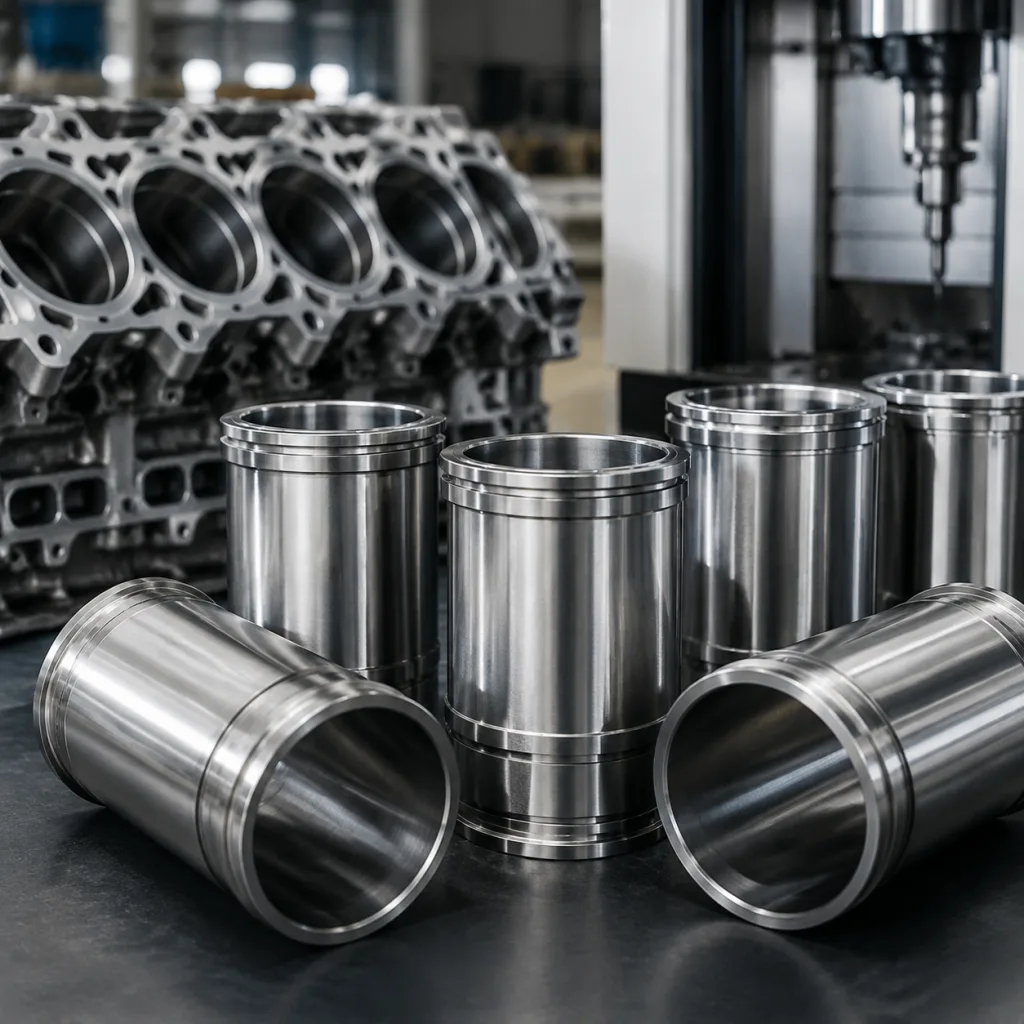
When buyers search for a cylinder sleeve Porsche OEM supplier, they are usually solving more than a replacement-part problem. The sleeve has to match a specific engine family, hold consistent metallurgy and dimensions, and come with documentation that supports supplier approval, incoming inspection, and ongoing replenishment. For engine rebuilders, remanufacturers, distributors, and private-label programmes, that means the required bore, flange, wall thickness, outside diameter, seating depth, and surface finish all need to suit the intended block and machining route. The supply process matters too: sample approval, drawing review, PPAP-style documentation where requested, controlled packaging, export paperwork, and continuity from batch to batch. Driventus manufactures engine and powertrain components in Taizhou, Zhejiang, and exports to 60+ countries. Driventus is an independent aftermarket manufacturer; brand names are referenced for fitment only. This guide is designed for procurement and engineering teams evaluating cylinder sleeves for Porsche applications and related high-performance European engines.
What procurement teams should verify first
For any cylinder sleeve Porsche OEM supplier search, start with the application and acceptance criteria before moving to price. A sleeve that looks close in a catalog can still be wrong if the block bore, counterbore depth, flange seat, finished bore requirement, or installation method differs from the target engine family. Collect the technical baseline early: engine code or vehicle application, sleeve type, drawing revision if available, and whether the programme calls for a dry sleeve, wet sleeve, or flange-supported design.
It is just as important to clarify how the sleeve will be used. A distributor may be looking for a standard aftermarket reference with stable replenishment. A remanufacturer may need sleeves that can withstand repeated boring and honing cycles. A private-label programme may require controlled packaging, batch marking, and inspection records that downstream customers can review. Those details shape both the part specification and the supplier qualification file.
Minimum buying checks:
- OE or engine-code cross-reference, where available
- Nominal bore, semi-finished bore, and finished bore tolerance
- Outer diameter, flange diameter, flange thickness, and seating depth
- Sleeve length, wall thickness, chamfer geometry, and deck relationship
- Sleeve material specification, hardness target, and heat treatment route
- Surface finish, roundness, cylindricity, and perpendicularity limits
- Compatibility with block material, coolant jacket design, and installation process
- Required machining allowance for pressing, boring, and final honing
- Marking, batch identification, and packaging method to protect the precision bore during transport
If your programme requires documentation, request inspection reports, heat or batch traceability, and process control records aligned with IATF 16949:2016 and ISO 9001:2015. For critical applications, agree on the inspection method in advance: which dimensions are checked by CMM, bore gauge, micrometer, surface roughness tester, or hardness tester, and how many pieces are measured per lot. For related engine parts, see our catalog and the broader engine components section.
Sourcing model: MOQ, lead time, and supply stability
Unit price is only one part of the sourcing decision. With precision sleeves, the real landed cost can include sample delays, repeated dimensional reviews, rejected incoming lots, urgent freight, and the risk of an engine line or rebuild programme waiting for a corrected batch. A better sourcing model connects commercial terms with engineering readiness and production capacity.
Begin by separating standard references from custom or low-volume Porsche applications. Standard sleeves can often be planned around existing tooling, proven machining processes, and more predictable lead times. Custom sleeves may require drawing conversion, material confirmation, trial machining, sample inspection, and fitment validation before production release. MOQ should reflect that difference instead of being treated as one fixed number for every part.
A practical sourcing model should include:
- MOQ by part family: lower for standard aftermarket references, higher for custom, private-label, or low-volume Porsche applications
- Sample lead time: enough for dimensional inspection, installation trial, honing review, and teardown validation if required
- Production lead time: determined by batch size, material availability, machining cycle, heat treatment, and inspection capacity
- Forecast and call-off planning: useful when buyers need recurring shipments but want to avoid overstocking slow-moving references
- Safety stock option: important for distributors, remanufacturers, and multi-location repair chains supporting urgent engine work
- Packaging standard: corrosion protection, individual bore protection, separators to avoid metal-to-metal contact, carton strength, and palletisation for export
- Change-control process: agreement on how drawing revisions, material changes, or packaging updates are communicated before shipment
Driventus supports B2B supply for aftermarket distributors, OEM / Tier-1 suppliers, and remanufacturers. For structured onboarding, use request a quote to share drawings, target volumes, annual forecast, required launch date, and any inspection plan. If the programme needs adapted dimensions, revised tolerances, special marking, or private-label packaging, see custom manufacturing.
Quality documentation and audit readiness
A credible cylinder sleeve supplier should make audit preparation easier, not add another layer of uncertainty. If your quality team is building an approved vendor file, ask for documents that match the part’s risk level and your internal SQE checklist. A routine aftermarket replenishment order may only need a certificate package and dimensional report. A higher-risk remanufacturing, OEM-service, or private-label programme may call for deeper evidence of process control and traceability.
Audit readiness starts with current certificates, but it should not end there. Buyers should be able to connect each shipment to material records, production batch data, inspection results, and packing information. For cylinder sleeves, that traceability matters because small deviations in hardness, outside diameter, bore geometry, or surface finish can affect installation force, heat transfer, oil control, and service life.
Documents to request:
- IATF 16949:2016 and ISO 9001:2015 certificates
- Incoming material and in-process inspection records
- Heat treatment, hardness, or material certificates where applicable
- Dimensional inspection report with measured values, not just pass/fail status
- Control plan, process flow summary, or inspection plan for the agreed part family
- Batch traceability record linking material, machining, inspection, and shipment
- Packing specification, corrosion-prevention method, and export carton or pallet details
- Nonconformance and corrective-action process for dimensional or documentation issues
For export programmes in the EU and UK, material declarations may also need to address REACH (EC) No 1907/2006. Some buyers may also include test references such as SAE J2527 for corrosion exposure, or other customer-defined validation protocols, in the quality file. When comparing suppliers, confirm whether reports can be prepared in the format your incoming quality team uses, including critical-characteristic marking, sampling level, and drawing balloon references where available. For the quality framework behind these controls, review our quality system.
Fitment, cross-references, and validation testing
A sleeve can look right and still fail in service if the bore finish, interference fit, flange seat, or thermal expansion profile is wrong. Fitment validation therefore carries more weight than catalog language. Cross-references help teams communicate, but they should not replace measurement against the actual block condition and the agreed drawing.
If a buyer already has a known reference, use the OE number only as a communication tool, for example OE 06A107065. Do not assume interchangeability without dimensional verification. The same caution applies to Porsche-oriented engine families, where block machining, deck condition, coolant passages, and previous repair history can change the sleeve geometry required. A block that has already been repaired may need a different outside diameter, flange depth, or machining allowance than a standard reference suggests.
Validation points before release:
1. Confirm the engine family, block material, and intended installation method. 2. Measure block bore, counterbore, and sleeve OD before pressing or fitting. 3. Confirm interference fit against the agreed drawing and temperature condition. 4. Check flange seating, installed protrusion, or flushness at deck level. 5. Verify finished bore size, taper, roundness, and surface finish after honing. 6. Review piston, ring, and lubrication requirements against the final bore finish. 7. Document trial assembly results and any sealant, lubricant, cooling step, or heating step used. 8. Record any deviations caused by previous block repair, resurfacing, or oversize machining.
For production approval, define whether the first shipment needs sample pieces, a first article inspection report, or a small pilot batch before full release. That step helps prevent a catalog match from turning into a production issue. Driventus is an independent aftermarket manufacturer; brand names are referenced for fitment only. If your team needs a sleeve made to a controlled sample, technical drawing, or drawing revision, custom manufacturing is the right route.
Why Driventus fits B2B sourcing workflows
Driventus is built for export-facing procurement, not retail selling. That distinction matters. B2B buyers need repeatability, document control, technical communication, and packaging that can withstand long-distance freight. A cylinder sleeve Porsche OEM supplier evaluation is rarely about a single order; it is about whether the factory can support repeated shipments with stable dimensions, clear records, and responsive engineering feedback.
For distributors, the priority is dependable availability, consistent carton labelling, and lower return risk. For remanufacturers, it is dimensional stability, machining allowance, and predictable installation performance. For OEM / Tier-1 or private-label buyers, the checklist may also include drawing review, controlled inspection formats, supplier onboarding documents, and packaging that matches the customer’s brand or warehouse process.
What buyers usually value:
- Stable batch production from a vertically integrated plant in Taizhou, Zhejiang
- Quality controls aligned to IATF 16949:2016 and ISO 9001:2015
- Technical support for drawings, tolerances, samples, and production approval
- Export experience across 60+ countries with documentation for international shipments
- Ability to support private-label, custom machining, and controlled packaging programmes
- Communication around MOQ, lead time, inspection status, and batch traceability
- Support for related engine and powertrain components when buyers want supplier consolidation
For teams comparing suppliers across Europe, North America, Australia, Brazil, or other export markets, the decision often comes down to whether the factory can hold dimensions consistently and respond quickly when engineering feedback arrives. That is the difference between a one-time shipment and a long-term supply line. To review available part families, start with our catalog and send a spec pack through request a quote.
Frequently asked questions
Yes, where the application data is clear enough to validate fitment. We use OE references for cross-checking only and still require dimensional confirmation before production release.
Typical documents include IATF 16949:2016 and ISO 9001:2015 certificates, inspection reports, material traceability, and packing specifications. Extra declarations can be prepared for REACH (EC) No 1907/2006 when needed.
Yes. We support custom manufacturing for controlled drawings, revised tolerances, and private-label packaging, subject to technical review and minimum order quantity.
If you are qualifying a new cylinder sleeve Porsche OEM supplier, share your drawings, target volumes, and inspection requirements with our team. Start here: /contact.html
Request a Quote