Stretched Timing Chain, Timing Belt: Diagnosis and Replacement
A stretched timing chain, timing belt complaint rarely starts with a visibly broken part. More often, it shows up as a phase-control or drivability issue: rough idle, P0016/P0017-style cam-crank correlation faults, cold-start chain rattle, misfire codes, hard starting, reduced torque, or belt noise long before the timing cover comes off. The technical distinction is important. A timing chain can elongate as pins, bushings, rollers, and link plates wear. A synchronous timing belt, by contrast, usually loses timing accuracy through tooth wear, tensile-cord fatigue, contamination, heat aging, pulley misalignment, or incorrect tension rather than true elastic stretch.
For B2B sourcing teams, the real question is whether the timing drive can hold camshaft-to-crankshaft phasing within the vehicle maker’s service limits for the intended replacement interval. That means looking past the headline part number and checking application fitment, belt pitch and tooth count, chain pitch and guide geometry, tensile-cord construction, rubber compound consistency, pulley and sprocket compatibility, tensioner operating range, bearing quality, packaging condition, and validation under relevant quality controls.
Driventus is an independent aftermarket manufacturer; brand names and OE references are used for fitment identification only. Our timing belt programmes are produced under IATF 16949:2016 and ISO 9001:2015 controls, with material and compliance considerations aligned to REACH (EC) No 1907/2006 where applicable. This article explains how to interpret stretched timing chain, timing belt symptoms, what to inspect first, when to replace the full set, and how to specify timing components for distributors, repair networks, fleets, and engine rebuild programmes.
What a stretched timing chain, timing belt complaint usually means
The phrase “stretched timing chain, timing belt” is a common repair-order shortcut, but it can point to several different failure modes. A timing chain may elongate as the pins, bushings, rollers, and side plates wear, increasing its effective length and allowing cam timing to retard. On some engines, even a small phase shift is enough to trigger correlation faults or reduce valve timing accuracy.
A timing belt behaves differently. It does not normally stretch in the same mechanical sense. Timing accuracy is more often lost because the glass-fibre, aramid, or other tensile cords are damaged, the teeth are worn or sheared, the backing is heat-cracked, the belt is contaminated, or the tensioning system can no longer hold the specified preload.
That distinction matters because the belt or chain is only one part of the drive. A chain complaint may trace back to worn guide rails, a sticking hydraulic tensioner, low oil pressure, blocked oil feed passages, debris in the oil circuit, worn sprocket teeth, or a variable valve timing actuator that cannot park correctly. A belt complaint may involve a weak automatic tensioner, an incorrect manual tension setting, a noisy idler bearing, a seized timing-driven water pump, pulley misalignment, oil leakage from camshaft or crankshaft seals, or coolant contamination from a nearby pump or hose. Different causes, same possible result: camshaft and crankshaft phasing moves outside the range expected by the engine control module.
Common customer and workshop complaints include:
Cold-start chain rattle for 1-3 seconds, especially before oil pressure stabilises
MIL on with cam/crank correlation or camshaft position faults, commonly P0016-P0019 families depending on application
Misfire codes that remain after ignition, injector, and fuel-pressure checks
Loss of power at higher load, poor throttle response, or reduced low-speed torque
Hard starting after belt service, cylinder-head work, or front-cover repairs
Belt chirp, whine, slap, rubbing noise, or resonance from the timing cover area
Visible oil, coolant, rubber dust, or plastic guide debris near the front cover
For procurement teams, the repair-order wording is less important than the system condition. Is phase control outside the acceptable range? Is a complete service kit needed? A belt-only replacement may look cheaper, but it can leave aged bearings, weak tensioners, leaking seals, torque-to-yield fasteners, or a worn water pump in service. The same applies to chain repair: fitting a new chain while reusing worn guides, sprockets, or a weak tensioner may leave the root cause untouched.
Symptoms, causes, and what to inspect first
A structured inspection helps prevent repeat repairs and gives buyers a clearer view of which components belong in the sourcing programme. Start with the symptom pattern, confirm it with scan data or mechanical checks, and inspect the full timing path before deciding what to replace. Timing faults can overlap with ignition, fuel, compression, oil-control, and sensor problems, so the goal is to separate genuine mechanical timing deviation from a broader drivability complaint.
Mechanical timing drift, VVT actuator fault, sensor signal issue
Mechanical timing position, VVT actuator and oil-control valve operation, chain/belt tension, waveform or sensor signal
</tr></thead><tbody> </tbody></table>For belt systems, remove enough covers to see the complete belt path rather than judging the exposed section alone. Inspect the tooth side for glazing, tooth-root cracks, missing material, rounded or undercut teeth, uneven wear, and signs that the belt has been walking against a flange. On the backing, look for heat cracks, polishing, fabric separation, cord exposure, and edge fray. Rotate the engine by hand according to the service procedure so the full belt length can be checked. If the vehicle maker specifies a tension gauge, frequency method, pointer window, or locking-tool sequence, use that method instead of estimating tension by belt twist.
For chain systems, compare actual camshaft position data with the manufacturer’s specified values where the scan tool supports it. Mechanical checks should cover chain slack, guide surface wear, tensioner extension, sprocket tooth shape, oil condition, oil pressure, and any sign that the tensioner ratchet or hydraulic circuit is sticking. On engines with variable valve timing, a phasing fault may come from the chain drive, actuator, oil control valve, oil viscosity, sludge, or an electrical signal problem. The first fault code should not be the end of the diagnosis.
When validating stock for a repair chain or distributor network, look beyond the catalogue part number. Confirm belt width, pitch, tooth count, tooth profile, effective length, pulley count, tensioner type, engine code, production date range, packaging integrity, shelf condition, and traceability. A timing belt exposed to excessive heat, oil, ozone, crushing, bending, or poor storage can fail early even when the application listing is correct. For product planning, reference vehicle applications against OE cross-reference records only where the buyer already uses that convention, and verify the engine code, model year range, pulley layout, water-pump inclusion, and service interval before volume ordering.
Why replacement should usually include the full timing set
When timing wear is present, replacing a single component can create uneven service life inside a system that depends on controlled tension, alignment, and bearing condition. The belt or chain transfers motion, but the tensioner, idlers, guides, sprockets, seals, water pump, and fasteners all affect how accurately the system maintains timing. If one aged component is reused and later fails, the labour cost and engine risk can be far higher than the incremental cost of the complete set. On interference engines, the stakes are even higher because timing loss can allow valve-to-piston contact.
A complete timing belt replacement normally includes:
Timing belt with the correct pitch, width, tooth count, tooth profile, and effective length
Automatic or manual tensioner matched to the application and service setting method
Idler pulley, guide pulley, relay roller, or deflection roller where fitted
Water pump, gasket, or O-ring where the pump is driven by the timing belt
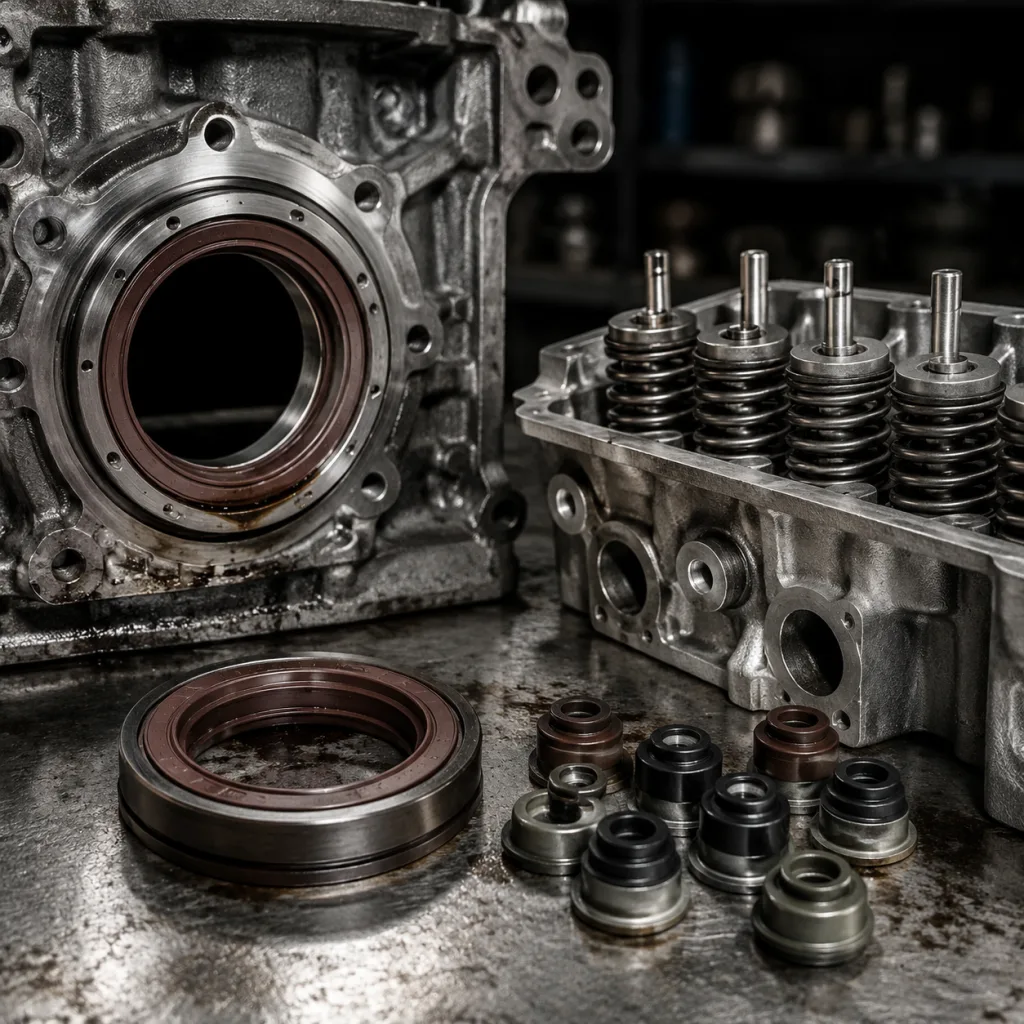
Camshaft and crankshaft seals if leakage is present or service data recommends replacement
New torque-to-yield bolts, one-time-use fasteners, studs, washers, or nuts where specified
Installation label, mileage record, or service documentation where required by the repair programme
A complete chain-driven repair may include:
Timing chain or chain set matched to the camshaft layout and chain pitch
Fixed guides, pivoting guides, guide bolts, and rail pads
Hydraulic or mechanical tensioner with the correct ratchet and oil-feed design
Camshaft and crankshaft sprockets where wear is visible or specified
VVT actuator, phaser bolts, or oil-control components where diagnosis confirms wear or sticking
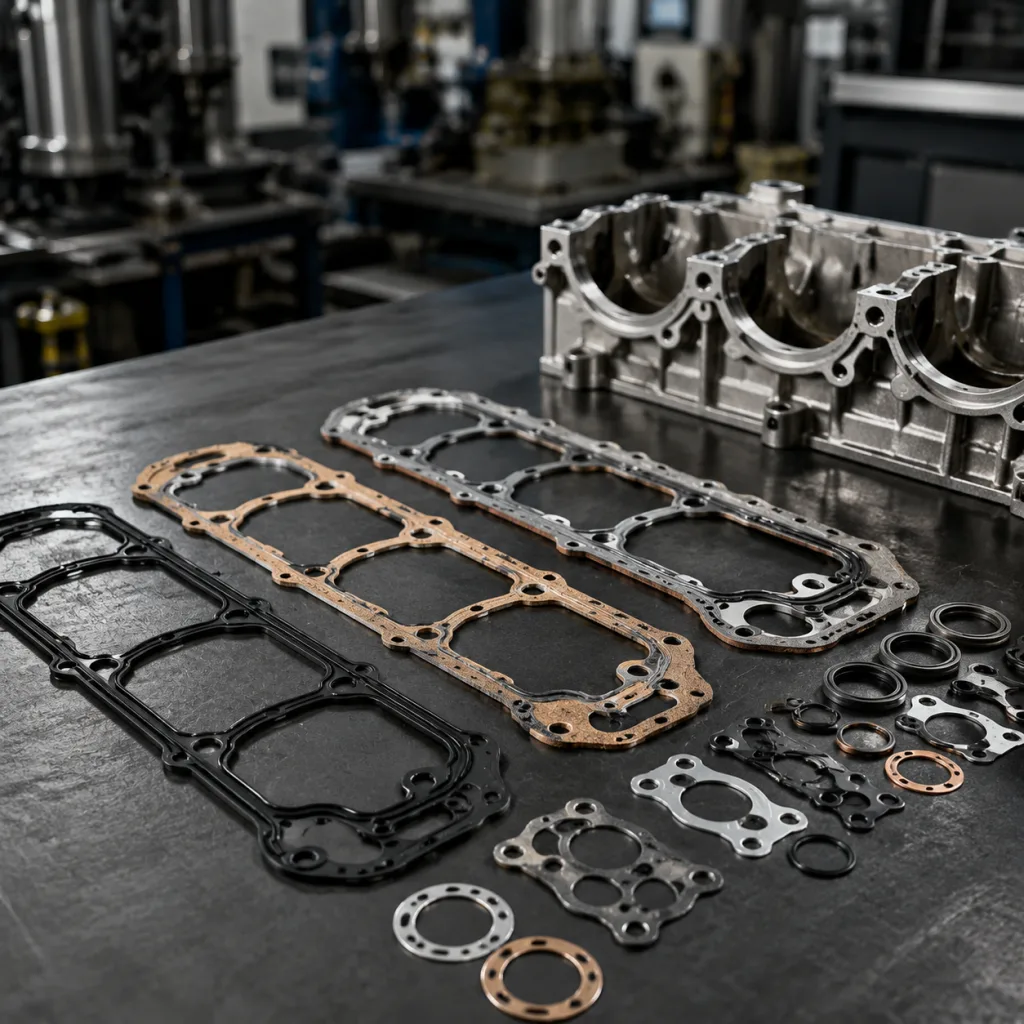
Front cover gasket, crank seal, cam seals, and required fasteners
Fresh oil and filter where contamination, sludge, or oil-pressure concerns contributed to the failure
For distributors and workshop groups, kit-based replacement reduces comeback risk because the parts in the timing path are renewed together and validated as an application-specific set. It also simplifies stocking, application lookup, warranty review, installer communication, and batch traceability. Instead of combining a belt from one source, a tensioner from another, and a water pump from a third, a workshop receives one kit matched to the engine code, with one tolerance strategy, one batch trail, and one support channel.
For procurement standardisation, the service kit can be reviewed as a system. Buyers can check whether the belt profile, pulley bearing specification, tensioner travel range, pump mounting face, impeller configuration, gasket material, and fastener pack match the intended application. Driventus publishes a quality system overview for buyers who need traceability, production controls, and documentation before adding a timing part family to their range.
Replacement criteria for timing belts and chain-driven repairs
Replacement decisions should be based on measured condition, service interval, engine design risk, and application history rather than assumption. Timing components may look acceptable during a quick inspection while still being close to the end of their fatigue life. A belt that has reached its age limit, a tensioner near the end of its adjustment window, or a chain system showing repeatable correlation faults should be treated as a timing-system issue, not just a single worn part.
For timing belts, check service age, mileage, heat exposure, oil or coolant contamination, cracking, tooth wear, edge wear, backing fabric condition, pulley alignment, and tensioner position. Be especially cautious with belts removed during other repairs. If a belt has been kinked, sharply twisted, contaminated, run loose, run against a damaged pulley, or reinstalled against service guidance, replacement is normally the safer decision. Many vehicle makers specify both mileage and time limits; whichever limit arrives first should drive the service decision.
For chain-driven engines, evaluate chain elongation, guide wear, tensioner extension, sprocket wear, oil pressure, oil condition, and scan-tool correlation values. Engines exposed to extended oil-drain intervals, incorrect oil viscosity, poor oil maintenance, stop-start use, or repeated cold starts can show chain and guide wear before a major mechanical failure is visible. If the tensioner is extended near its limit or the chain has cut into the guide surface, replacing only the tensioner will not restore the original geometry.
Practical replacement triggers
Belt age or mileage at or beyond the vehicle maker’s service interval
Unknown belt service history on an interference engine
Visible cracks across the belt backing or tooth root
Missing, rounded, undercut, polished, or sheared belt teeth
Oil, fuel, solvent, or coolant contamination on the belt
Belt edge fray, exposed tensile cord, tracking marks, or contact with cover/flange surfaces
Noisy, rough, loose, leaking, or seized idler, tensioner, or water pump bearing
Tensioner pointer outside the specified window or near maximum travel
Measured cam timing deviation outside the vehicle maker’s specification
Cam/crank correlation faults that return after clearing and road testing
Chain rattle with confirmed guide wear, slack, or excessive tensioner extension
Sprocket wear, damaged guides, broken rail material, or metal/plastic debris in the timing area
Published methods and standards matter when a buyer is validating a supplier or building a cross-border aftermarket programme. For belt endurance, high- and low-temperature exposure, flex fatigue, tooth shear, abrasion, and environmental testing, procurement teams may request evidence aligned with SAE J2527 where relevant to the product and duty cycle. For materials, traceability, and restricted-substance review, REACH (EC) No 1907/2006 may be part of the documentation set for applicable markets. For emissions-related fitment and system integration on applicable vehicles, ECE R-83 may also be part of the broader compliance review because valve timing accuracy can affect combustion stability, catalyst performance, and engine-out emissions.
Final application screening should always follow the vehicle’s service data, engine build specification, and repair procedure. This includes torque values, torque-angle steps, locking-tool requirements, tension-setting sequence, VVT reset or relearn steps, and post-repair scan checks. In a B2B sourcing context, the supplier should be able to support that screening with catalogue data, sample review, dimensional records, batch identification, and clear packaging labels.
How Driventus supports sourcing for aftermarket timing parts
Driventus supplies timing components for aftermarket distributors, OEM and Tier-1 programmes, private-label ranges, and multi-location repair chains. Buyers usually need more than a catalogue listing. They need repeatable fitment, stable lead times, controlled production, export-ready packaging, and documentation that supports receiving inspection, application validation, and warranty review.
Our timing belt sourcing support focuses on:
OE-dimension matching for belt width, pitch, tooth count, tooth profile, and effective length
Tooth profile consistency for the intended pulley geometry, including curvilinear or trapezoidal profiles where applicable
Controlled compound selection for heat, abrasion, flex fatigue, ozone resistance, and tooth shear performance
Tensile cord and backing construction appropriate to the application duty cycle
Consistent moulding, curing, trimming, marking, and tooth profile geometry
Tensioner, idler, water-pump, fastener, and kit-component matching where complete sets are required
Batch traceability, incoming material control, inspection records, and packaging identification
Export packaging designed to protect belts from crushing, sharp bends, contamination, moisture, and excess heat during transit
Support for private label, barcode, carton, application-label, and regional catalogue requirements
For distributors, the commercial value is fewer fitment disputes and a clearer warranty process. For repair chains, it is consistency across branches and reduced risk of mixing parts from incompatible sources. For rebuilders and fleet programmes, it is the ability to review samples, dimensional data, packaging, and documentation before committing to repeat orders.
You can review our catalog for the current range, including related engine components at /products/engine-components.html. For programmes that need non-standard packaging, private label, regional application coverage, or application-specific changes, see custom manufacturing. If you need a sourcing review for a stretched timing chain, timing belt complaint pattern, a timing belt kit range, or a specific engine family, request a quote.
Frequently asked questions
A timing belt does not usually stretch like a chain. The more common issue is loss of timing accuracy from tooth wear, tensile-cord damage, contamination, heat aging, pulley misalignment, or incorrect system tension. That is why the tensioner, idlers, pulley alignment, seals, and any timing-driven water pump should be checked with the belt.
If the water pump is driven by the timing system, it is commonly replaced with the belt set because the pump bearing, seal, pulley alignment, and gasket condition affect the same service area. This reduces repeat labour and helps avoid a second teardown if the pump later leaks or seizes. If the pump is not timing-driven, replacement depends on mileage, leakage, bearing condition, and the vehicle maker’s service procedure.
Match the engine code, OE cross-reference, belt pitch, belt width, tooth count, tooth profile, effective length, pulley layout, tensioner type, water-pump inclusion, and service interval data. For a fleet, distributor, or repair-chain programme, confirm fitment with samples, application documentation, packaging details, batch traceability, and any required quality or restricted-substance records before placing volume orders.
If you need timing belts, full kits, or application checks for a specific engine family, contact our sourcing team and we will review fitment and documentation with you: /contact.html