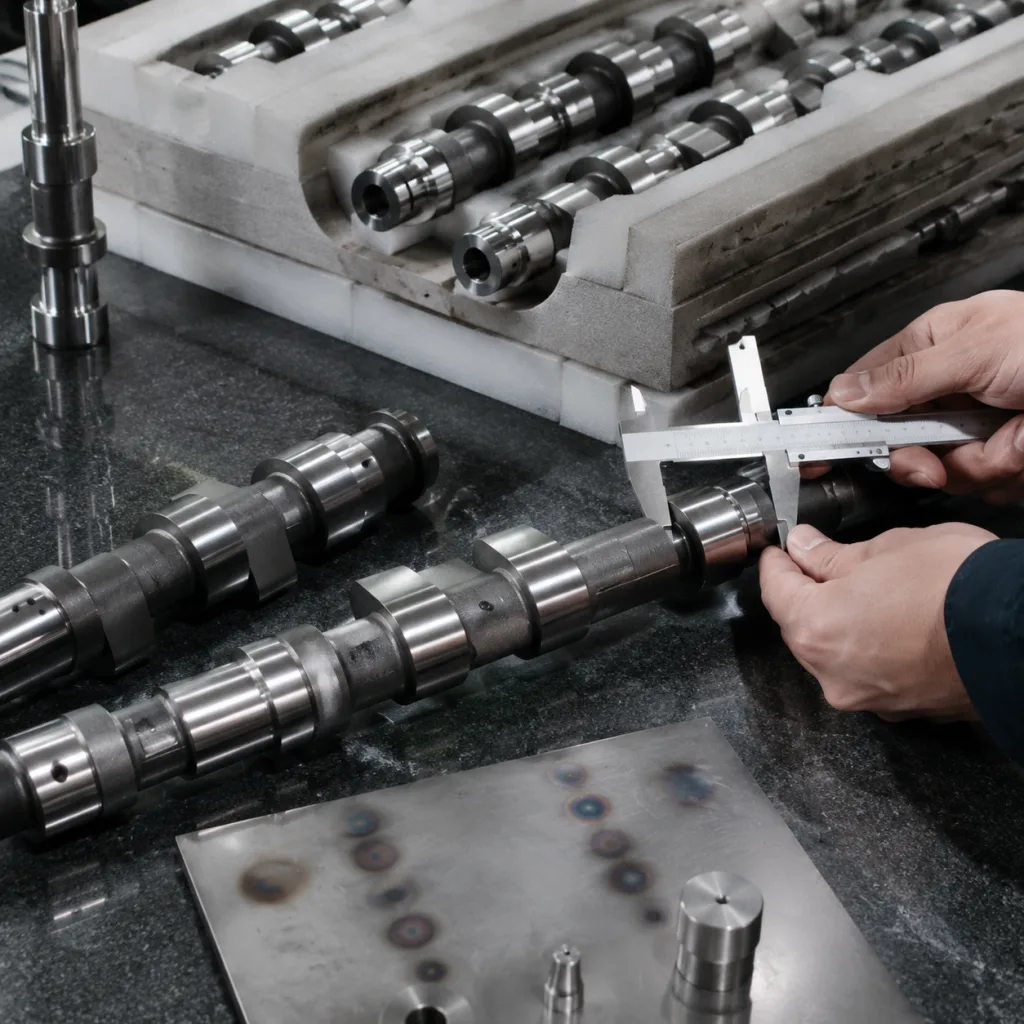
For importers and engine-parts distributors, cylinder sleeve Opel wholesale sourcing is a technical purchasing decision, not a simple price comparison. Correct outside diameter, bore allowance, flange geometry, hardness, metallurgy and surface finish help reduce machining rework, fitment complaints and warranty exposure across repair networks. Published on 2026-06-10, this guide is written for procurement teams evaluating Chinese manufacturing partners for Opel-fit engine sleeve programmes. It explains how to define the RFQ, qualify factory capability, set inspection criteria, compare commercial terms and prepare documentation for shipments to the EU, UK, US, Canada, Australia and Brazil. Driventus manufactures cylinder sleeves and related engine components in Taizhou, Zhejiang, under IATF 16949:2016 and ISO 9001:2015 certified management systems. Driventus is an independent aftermarket manufacturer; Opel and other brand names are referenced for fitment identification only.
What wholesale buyers need to define first
Before requesting pricing, buyers should divide the programme by engine family, sleeve type and finishing level. Opel-fit applications may use dry sleeves, wet sleeves, semi-finished liners or fully finished bores depending on the engine platform, rebuild method and local repair practice. A distributor selling mainly to machine shops may prefer semi-finished sleeves with controlled bore allowance. A repair-chain programme may need finished dimensions, consistent packaging and tighter batch-to-batch stability.
A useful RFQ should include:
Engine application and model-year range, stated for fitment identification only
Sleeve type: dry, wet, flanged, step-flanged or straight-wall
Material grade, typically centrifugally cast grey iron or alloyed cast iron
Outside diameter, inside diameter, wall thickness and flange dimensions
Bore condition: rough, semi-finished or honed to final size
Annual demand, launch quantity and replenishment cadence
Packaging requirements for sea, air or courier distribution
Labelling format, including private label, neutral label or Driventus label
Buyers can use our catalog to identify standard engine-component families before sending drawings, OE references or samples. For sleeve geometry outside current catalogue coverage, custom manufacturing is the correct route.
Factory capability and process controls
Cylinder sleeves look straightforward, but reliable production depends on stable metallurgy, controlled casting and repeatable machining. Driventus production covers material control, centrifugal casting or approved-source cast blanks, rough turning, heat treatment where specified, finish machining, grinding, honing and final inspection.
For procurement audits, focus on controls that affect installed performance:
Control point
Procurement relevance
Typical verification
Material chemistry
Wear resistance and thermal stability
Spectrometer report by melt or lot
Hardness range
Compatibility with piston rings and honing
Brinell hardness test record
OD and flange tolerance
Press fit or seating accuracy
Calibrated micrometer and CMM checks
Bore allowance
Machine-shop rework margin
Bore gauge and finish report
Surface roughness
Oil retention and ring bedding
Roughness tester record
Batch traceability
Warranty containment
Lot code linked to inspection data
</tr></thead><tbody> </tbody></table>Driventus operates under a documented quality system aligned with IATF 16949:2016 and ISO 9001:2015. These certifications do not approve a specific part or imply vehicle-maker endorsement. They do, however, define requirements for process control, corrective action, traceability, risk management and continual improvement. For buyers supplying regulated markets, shipment documentation can also include REACH (EC) No 1907/2006 declarations where applicable to materials and packaging.
MOQ, lead time and sample approval
Wholesale sourcing usually begins with a sample or pilot lot, then moves into repeat orders after dimensional approval. For cylinder sleeve Opel wholesale programmes, MOQ and timing depend on whether the sleeve is already tooled, uses an existing blank with new machining, or requires a new casting pattern.
Sourcing scenario
Typical MOQ
Sample lead time
Mass-production lead time
Existing Driventus item
100-300 pcs
7-15 days
25-35 days
Existing blank with new finish machining
200-500 pcs
15-25 days
35-45 days
New casting or dedicated tooling
500-1,000 pcs
30-45 days
45-60 days
</tr></thead><tbody> </tbody></table>These ranges vary with drawing completeness, current capacity, inspection scope and packaging complexity. The lowest MOQ is not always the best commercial choice when demand is recurring. A slightly larger launch order can reduce unit cost, improve freight efficiency and give production enough volume to stabilise machining settings.
A practical approval sequence is: confirm drawing or sample, issue quotation with Incoterms, produce pre-production samples, complete dimensional inspection, approve packaging, then release the purchase order. For larger distributors, Driventus can support supplier questionnaires, video audits and on-site audits by the buyer or an appointed third party.
Inspection criteria for Opel-fit cylinder sleeves
The most expensive procurement failures are often not visible at first glance. Common issues include tolerance drift, incorrect flange seating, insufficient bore allowance, unsuitable hardness, poor corrosion protection or a surface finish that adds machine-shop time. Buyers should list inspection points in the purchase order instead of relying on a broad product description.
Recommended incoming inspection criteria include:
Outside diameter measured at multiple heights to verify taper and ovality
Inside diameter and bore allowance before final machining
Flange thickness, flange OD and seating-face flatness
Chamfer dimensions and oil-path clearance where applicable
Sleeve length and perpendicularity between bore axis and flange face
Hardness range agreed for the specific material and repair use
Visual inspection for cracks, casting porosity, rust and impact damage
Packaging drop resistance and corrosion protection for long transit
Sampling plans can be agreed using ISO 2859-1 where buyer and supplier both accept the AQL level. For critical dimensions, many importers require 100% inspection on the first production batch, then move to reduced inspection after stable performance is proven. Driventus can provide dimensional reports, material certificates and batch traceability records with shipment documents.
Commercial terms for distributors and chains
A wholesale sleeve programme needs predictable pricing, stable replenishment and clear after-sales handling. Buyers should align part numbers, carton quantities, pallet build and barcode rules with their warehouse system before the first shipment. Mixed engine-component orders may improve container utilisation because sleeves can ship with pistons, rings, bearings, gaskets or water pumps when packaging weights and carton strength are planned correctly.
Typical commercial points to confirm include:
Topic
Buyer question
Driventus response format
Incoterms
FOB, CIF, DAP or EXW?
Quotation line item
Currency
USD, EUR or other?
Proforma invoice
Labelling
Neutral, distributor brand or Driventus?
Packaging specification
Documentation
COO, invoice, packing list, certificates?
Shipment document set
Warranty
What evidence is required?
Claim review procedure
Forecasting
Can capacity be reserved?
Rolling demand plan
</tr></thead><tbody> </tbody></table>For multi-location repair chains, the priority is consistency across branches. A central approved product specification helps prevent local substitution with sleeves from mixed sources. For distributors, the focus is usually SKU breadth, fill rate and stable landed cost. In both cases, procurement should measure supplier performance through on-time delivery, complaint rate, dimensional conformance and corrective-action response time.
When to choose standard supply or custom manufacturing
Standard supply is suitable when the target sleeve already matches an established Driventus item and the buyer needs commercial availability without design changes. Custom manufacturing is better when the buyer has a regional repair specification, oversize requirement, private-label drawing or obsolete engine programme where catalogue supply is limited.
Use standard supply when:
The application has common aftermarket demand
Existing sleeve dimensions match the buyer drawing
Lead time and MOQ matter more than design changes
The buyer needs fast replenishment across multiple SKUs
Use custom manufacturing when:
A repair-chain specification requires a special bore allowance
The local market uses a preferred oversize or flange correction
Packaging, traceability or private branding is part of the tender
A buyer wants to consolidate several sleeve sources into one audited factory
For cylinder sleeve Opel wholesale projects, the best starting point is a complete RFQ pack: drawing, sample if available, target annual volume, preferred Incoterm, destination port, packaging rules and inspection requirements. That preparation reduces quotation cycles and helps procurement compare suppliers on technical capability as well as price.
Frequently asked questions
Yes. Private-label packaging, neutral packaging and Driventus packaging can be quoted. Buyers should provide artwork, carton specifications and warehouse labelling rules before sample approval. Brand names are used only for fitment reference.
Typical documents include commercial invoice, packing list, certificate of origin where required, material report, dimensional inspection report and batch traceability record. REACH (EC) No 1907/2006 declarations can be supported where applicable.
No. IATF 16949:2016 confirms a certified automotive quality management system. It does not mean approval or endorsement by any vehicle manufacturer. Driventus is an independent aftermarket manufacturer; brand names are referenced for fitment only.
If you are building a cylinder sleeve sourcing programme, send drawings, samples or a SKU list for technical review. You can [request a quote](/contact.html) or contact our team through /contact.html.