A cylinder sleeve Kia supplier should not be judged by bore size alone. In a real aftermarket program, the buyer is managing fitment risk, machining behavior, batch consistency, rust prevention, carton damage, warehouse labeling, and claim handling. One sleeve failure can consume far more than the part value once workshop labor, warranty negotiation, customer downtime, and replacement freight are included.
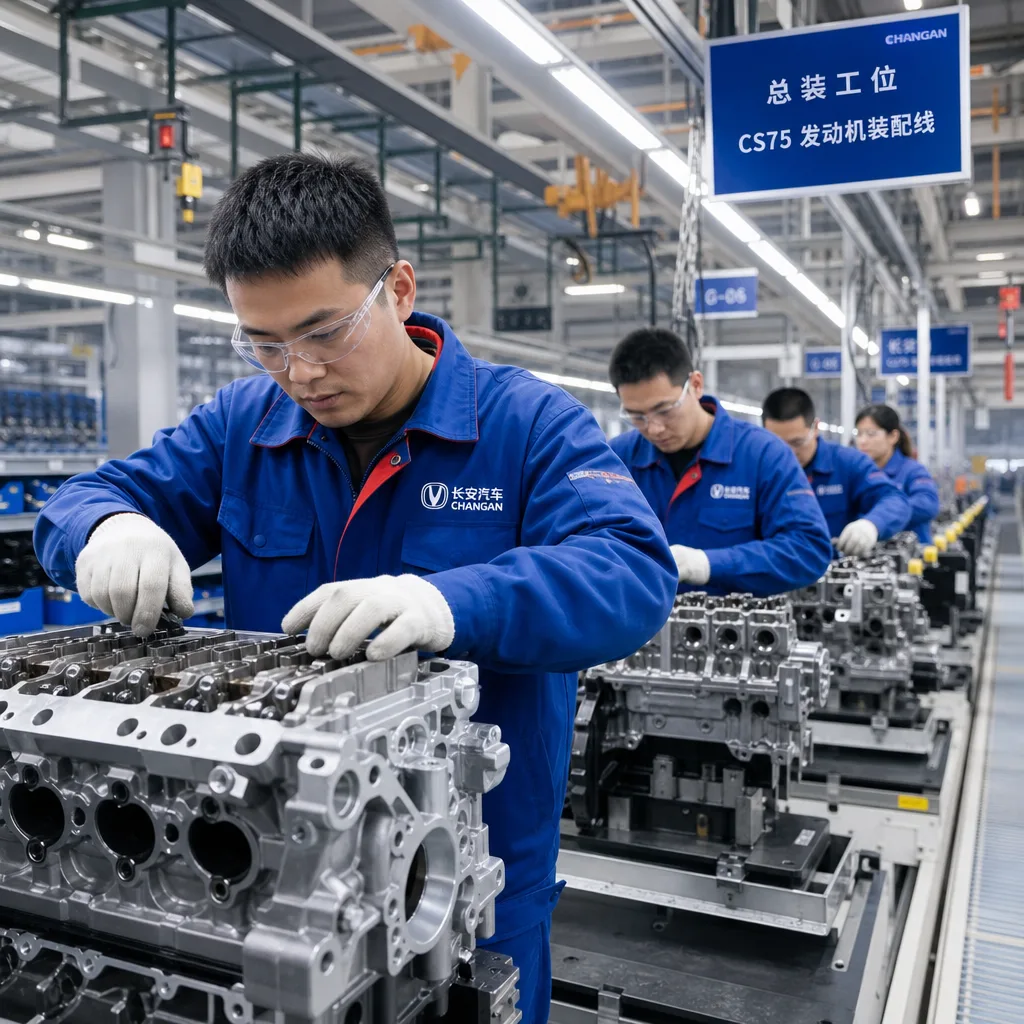
Driventus Auto Parts manufactures engine and powertrain components in Taizhou, Zhejiang, and exports to more than 60 countries. Our cylinder sleeve programs are built for distributors, importers, and repair-chain buyers that need controlled specifications, repeatable replenishment, and practical support for range development.
Driventus is an independent aftermarket manufacturer; vehicle brand names are used only to identify fitment. When comparing suppliers, start with facts that can be checked: Can the factory hold ±0.01 to ±0.03 mm on critical machined diameters where the drawing requires it? What MOQ applies by SKU and by consolidated shipment? How long does a repeat order actually take? What inspection record ships with the batch?
Decision Framework: What Makes a Kia Sleeve Program Worth Buying?
A cylinder sleeve program usually begins with application coverage. That is necessary, but it is not enough. The stronger purchasing decision compares fitment certainty, machining control, documentation, packing discipline, and replenishment logic.
Use the first supplier conversation to separate catalog sellers from controlled manufacturers. A capable cylinder sleeve Kia supplier should be able to discuss the sleeve design, the drawing or sample basis, the inspection points, and the commercial limits before quoting mass quantity.
Key buying questions:
Can the supplier combine several engine applications in one shipment?
Are dry and wet sleeve designs available where the target engine family requires them?
What is the MOQ per reference, and what is the MOQ for a consolidated shipment?
Which dimensions are controlled on every batch, not only on the first sample?
Are inspection reports, packing lists, and export documents available before shipment?
Can private-label packaging be handled without changing the part specification?
How are slow-moving SKUs, pilot orders, and repeat replenishment managed?
Is the quoted part cast, rough-machined, semi-finished, or finish-machined?
The right answer depends on the buyer’s business model. A distributor may want broad coverage and flexible mixed-SKU loading. A repair chain may prefer fewer references with stronger installation consistency and documentation. Both need a supplier that can explain how part numbers are developed, approved, packed, traced, and repeated.
A useful RFQ should include the engine code or reference number, sleeve type, finished bore size, outside diameter, flange dimensions, target quantity by SKU, destination country, and labeling language. If no complete drawing exists, request a sample-to-drawing comparison before mass production. That step prevents the common mistake of quoting a similar-looking sleeve from the wrong fitment family.
Driventus supplies cylinder sleeves as part of wider engine component programs, including pistons, piston rings, gaskets, bearings, crankshafts, water pumps, and related powertrain parts. Buyers can review engine component coverage through our catalog and discuss application gaps before releasing a new range.
Spec Deep-Dive: Material, Fit, Allowance, and Surface Finish
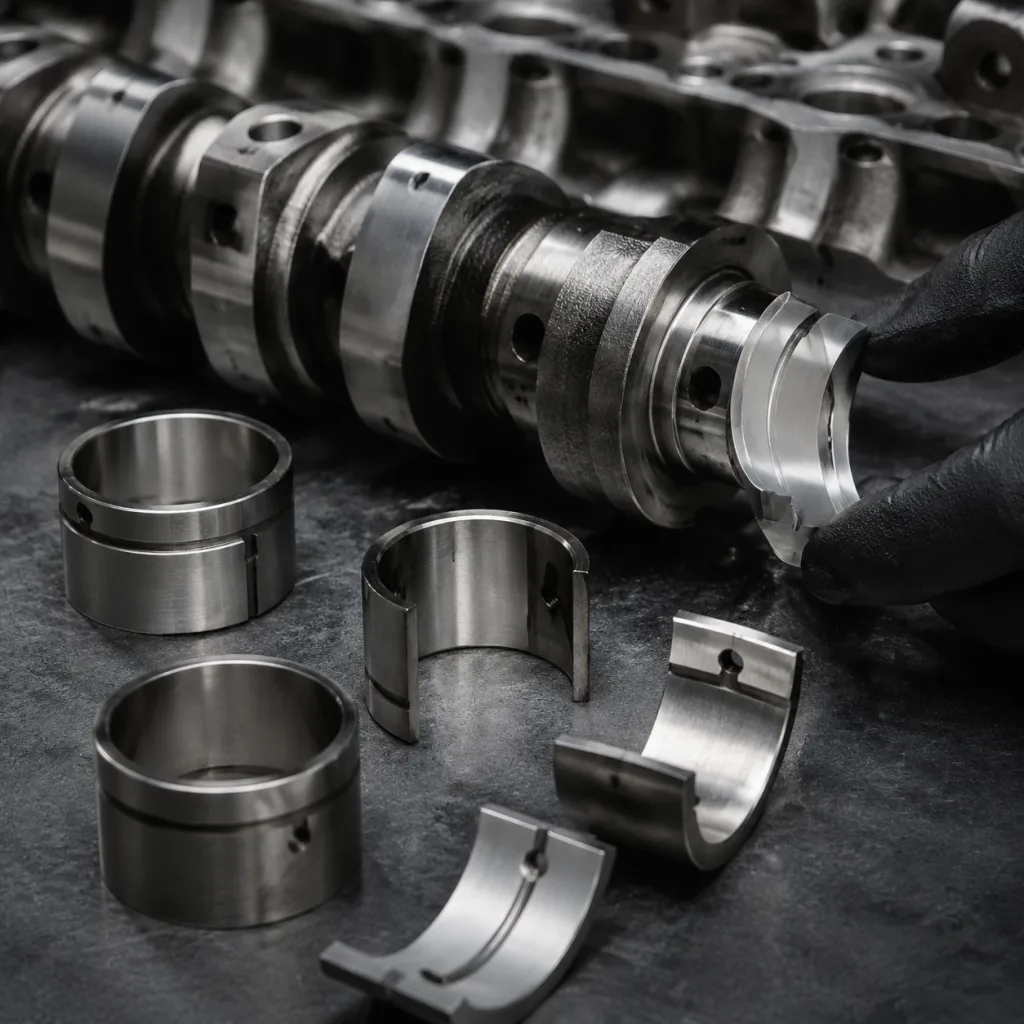
Cylinder sleeves work under heat, friction, combustion pressure, and in some designs coolant exposure. The sleeve must match the block geometry and still machine predictably after installation and honing. Material stability, bore allowance, flange geometry, wall thickness, and surface condition all affect the final repair result.
The table below shows the controls buyers should define before approving a sleeve program:
Parameter
Buyer target
Typical control method
Material grade
Grey cast iron or alloyed cast iron, commonly FC250 / GG25 / equivalent depending on application
Spectrometer review, chemistry certificate, hardness test
Hardness
Commonly 180-260 HB depending on design
Brinell hardness testing
Outside diameter
Set to block fit and press-fit requirement; often ±0.01 to ±0.03 mm on critical machined sizes
Micrometer and bore gauge inspection
Inside diameter allowance
Rough-machined oversize for final boring/honing; often +0.20 to +0.60 mm before final finishing
Machining route control
Roundness / cylindricity
Commonly ≤0.01 to 0.03 mm on finish-machined surfaces depending on drawing
Roundness meter or precision bore gauge
Flange height and width
Seating accuracy and protrusion control; often ±0.02 mm where specified
Height gauge and profile inspection
Wall thickness
Strength, heat transfer, and machining safety margin; often 1.5 to 4.0 mm depending on design
Section measurement and drawing review
Surface roughness
Supports run-in and final honing; typically Ra 1.6-3.2 μm after finishing where specified
Roughness tester and visual inspection
Corrosion protection
Prevents rust during storage and transit
Oiled surface, VCI bag, carton sealing, desiccant where required
</tr></thead><tbody> </tbody></table>The tolerance plan changes by sleeve type. A dry sleeve usually puts more pressure on press fit, concentricity, and outside diameter control. A wet sleeve may require closer attention to flange seating, protrusion, sealing areas, and corrosion protection. A flanged or stepped sleeve adds more geometry to inspect.
Where a buyer provides a drawing or sample, Driventus quotes against defined dimensions and inspection checkpoints. Where only application data is available, our engineering team reviews fitment information first and may request extra measurements to reduce misapplication risk.
Some distributors source sleeves as part of a rebuild-kit strategy. In that case, sleeve consistency must align with pistons, rings, and gaskets. One mismatch can affect compression, oil control, coolant sealing, or installation time. Buyers can discuss integrated projects through custom manufacturing, including drawing-controlled production, packaging requirements, batch documentation, and first article approval.
Failure Modes to Audit Before You Approve the Factory
Certificates matter, but they do not prove that a specific sleeve family is controlled. A factory audit should focus on the failures that create claims: wrong material, unstable machining, uncalibrated gauges, mixed batches, corrosion, poor packing, and weak traceability.
Driventus operates under IATF 16949:2016 and ISO 9001:2015 quality management frameworks. These systems support process control, document management, risk-based thinking, corrective action, and continual improvement. They do not replace part-specific validation, but they give buyers a structured basis for supplier qualification. Buyers can review our quality system before arranging an audit or supplier review.
Ask for evidence that connects to the sleeve process, not just general company files:
Business license and manufacturing scope
IATF 16949:2016 and ISO 9001:2015 certificates
Process flow chart and control plan for the product family
Incoming material inspection records
In-process and final inspection reports
Calibration records for measuring tools and gauges
Traceability method by batch, order, or production date
Non-conformance and corrective action records
Packaging specification and handling checks where required
Sample approval, first article inspection, or production release records where applicable
Operator work instructions for machining, washing, rust prevention, and carton packing
Go one level deeper during review. How often are gauges calibrated? What is the resolution of the tools used on critical diameters? Is inspection data retained by lot number? Can the supplier link a finished sleeve to the material batch and production date?
For sleeve programs, a practical minimum is traceability to the production date and order number, with retained incoming material data and final inspection results. If a claim occurs, the supplier should be able to investigate whether the issue came from material, machining, packing, or handling.
Regulated markets may require chemical or packaging compliance checks. EU importers often request confirmation against REACH (EC) No. 1907/2006 for applicable substances. Packaging may also need to meet local labeling, recycling, or wood-packing rules. Confirm these details before mass production. Correcting them after goods are packed is slow and expensive.
Planning Scenario: MOQ, Lead Time, and Mixed-SKU Shipments
Cylinder sleeve buying rarely behaves like a single high-volume fast mover. Most programs contain many low-to-medium-volume references. That is where MOQ structure becomes important. Too high, and the distributor carries dead stock. Too low, and the factory cannot hold stable cost, scheduling, or batch control.
Driventus reviews MOQ by part family, machining complexity, material availability, and packing requirement. Existing references usually allow lower MOQ because the process route and inspection plan are already known. New drawings or sample-based development require more volume because tooling, validation, inspection setup, and first article approval must be absorbed.
Planning variables include:
Existing reference or new development
Raw casting availability and minimum melt or purchase quantity
Machining cycle time and fixture requirement
Dry, wet, flanged, or stepped sleeve design
Standard export packing or customer-branded packing
Required inspection report format
Sea freight, air freight, or consolidated shipment
Destination market documentation and labeling needs
Forecast reliability and replenishment frequency
Carton-level barcode labels or pallet labels for warehouse scanning
A common MOQ model is tiered. A repeat stock reference may be practical at 50-100 pcs per SKU if tooling and process controls are stable. A new reference may need 200-500 pcs per SKU to cover setup, sampling, and inspection work. Private-label cartons can raise the MOQ because artwork, plates, label control, and packing checks add non-recurring effort.
Mixed-SKU consolidation is often the best compromise. A 1,000-piece shipment split across 10 references may be healthier than 1,000 pieces of one slow-moving SKU. The buyer gets range coverage; the factory gets a workable production batch.
Lead time depends on order structure. Stock or repeat items can often ship in 7-15 days after confirmation if material is on hand. Repeat orders requiring machining and packing usually need 20-35 days. New development or first-order programs may require 30-45 days. Complex mixed orders can take 45-60 days depending on the number of references, packaging work, and freight booking. Sea freight may add 20-35 days of transit time depending on destination; air freight is usually reserved for urgent pilot orders or small replenishment runs.
Export planning should cover carton strength, rust prevention, pallet configuration, labels, and document accuracy. Commercial invoices, packing lists, and reference descriptions must match customs and warehouse requirements. A simple rule works well: approve the sample, confirm the packing specification, and lock the shipment schedule before the final batch starts.
Step-by-Step Validation Before Range Launch
A sleeve can look correct and still fail in service. Visual comparison does not reveal hardness, wall thickness, flange error, bore allowance, or machining behavior. Before launching a range, validate the sleeve in the way workshops will actually use it.
Recommended checks:
1. Dimensional approval: Check critical dimensions against the drawing, approved sample, or agreed inspection plan. For new programs, record outside diameter, inside diameter allowance, flange thickness, flange height, overall length, and roundness. 2. Material verification: Review chemical composition, hardness, and microstructure where specified. For many cast-iron sleeve programs, the practical target is hardness within the drawing requirement and no visible shrinkage, porosity, or cracking. 3. Installation trial: Fit the sleeve into a representative block or test fixture. Verify press fit, seating, and protrusion. Record insertion force, seat stability, and any galling or interference. 4. Machining trial: Bore and hone to final size. Check final bore size, taper, out-of-round, and surface finish after honing. 5. Piston and ring compatibility: Confirm final bore size and ring pack requirements. Many rebuild issues begin when the sleeve is acceptable by itself but mismatched with the piston kit. 6. Packaging trial: Check corrosion protection and damage risk after simulated handling or real shipment. Drop-pack testing is useful for export cartons above 15-20 kg. 7. Traceability review: Confirm that production date, lot, or order information can be connected to inspection records if a claim occurs.
A practical pilot program may start with 20-50 sets or a limited reference list, depending on demand. That gives the buyer enough parts to test workshop fitment, machining behavior, carton durability, and customer feedback without overloading inventory. If the pilot batch performs well, the buyer can move to a rolling forecast and set a replenishment trigger, such as reordering when stock reaches 6-8 weeks of sell-through.
Aftermarket validation does not always require OE-level documentation, but it should be repeatable and recorded. Driventus does not claim approval or endorsement by any vehicle manufacturer. Parts are produced for independent aftermarket supply unless otherwise agreed under a customer-owned drawing or contract manufacturing program. If a buyer requests OE part-number cross-references, they should be used only for fitment identification, for example in a generic format such as OE 11251… when provided by the customer. Brand names and OE references must not be presented as authorization by the vehicle manufacturer.
Buyer Q&A: Qualifying Driventus Without Overbuying
What should a new buyer send first? Send the target application list, annual volume estimate, destination market, and any drawings, samples, or cross-reference data. If the program is for aftermarket distribution, repair-chain supply, or customer-owned development, state that clearly because the documentation level may differ.
What should be agreed before the pilot order? Define packaging, labeling, barcode, carton, and pallet requirements. Confirm inspection items, tolerances, report format, compliance needs, customs documents, and destination-country rules. A pilot order should not be treated as a blind stock purchase; it is the release test for the program.
How should the pilot be reviewed? Review first-batch inspection data, installation feedback, machining behavior, packaging condition, and market response. Only then expand the reference list or move to larger replenishment orders.
What commercial model works best? Spot buys are useful for urgent demand, but quarterly replenishment or annual blanket orders with call-offs usually create better planning. Forecast visibility helps the supplier schedule casting, machining, inspection, and packing more efficiently.
Should the lowest unit price win? Not by itself. A cheaper sleeve becomes expensive if it arrives rusty, needs rework, machines poorly, does not fit correctly, or triggers warranty claims. The better measure is total sourcing reliability: accurate fitment data, stable production, usable documents, realistic MOQ, and a supplier team that responds when the range changes.
What drives pricing? Material grade, machining steps, tolerance level, inspection depth, packaging format, and annual volume. A small pilot order normally has the highest per-piece cost because setup, sampling, and QA are spread across fewer units. Reorder pricing improves when the same reference repeats, packaging is standardized, and forecast visibility is stable.
For OEM or Tier-1 related projects, documentation depth may include PPAP-style submissions where contractually agreed. For independent aftermarket distribution, the normal focus is dimensional approval, material consistency, traceability, durable packaging, and dependable replenishment.
Buyers can send application lists, drawings, or sample photos to request a quote. Include bore size, sleeve type, target annual volume, destination country, preferred MOQ, expected price tier, and any packaging or compliance requirements so our team can respond with a practical sourcing plan.
Frequently asked questions
Yes. Driventus can review mixed application lists and consolidate suitable references into one export order, subject to MOQ, material availability, and current production schedule. For best results, send the engine code, sleeve type, finished bore size, expected annual volume, and any packaging or labeling rules so we can group compatible references efficiently.
Common documents include IATF 16949:2016 and ISO 9001:2015 certificates, process flow information, inspection reports, packing lists, and traceability records. Additional documents can be discussed based on buyer audit requirements and the target market, including sample approval records, control plans, and compliance statements where applicable.
Yes. Driventus can review customer drawings, samples, and technical specifications for custom manufacturing. Feasibility depends on sleeve geometry, material, tolerance requirements, tooling, MOQ, and validation needs. For new programs, we usually recommend a sample review first, then a pilot run before full release.
If you are qualifying a cylinder sleeve Kia supplier for distribution or repair-chain supply, send your application list and technical requirements to Driventus for review. Include reference numbers, target quantities, tolerances, packaging needs, and destination market so we can propose MOQ, lead time, and pricing logic. Start a sourcing discussion at /contact.html