Cylinder Liner vs INA Alternative: Comparison Guide
Choosing a cylinder liner replacement is not just a price decision. Procurement teams need the correct bore size, flange geometry, wall thickness, surface finish, and material specification before any parts move into production or stock. When buyers compare a cylinder liner vs INA alternative, the practical question is whether the offered part matches the required dimensional envelope and durability targets across the full duty cycle. Driventus supplies engine and powertrain components to B2B buyers in the EU, UK, US, Canada, Australia, and Brazil. We manufacture to controlled processes under IATF 16949:2016 and ISO 9001:2015, and we support fitment checks against OE data where available. Driventus is an independent aftermarket manufacturer; brand names are referenced for fitment only. This article compares sourcing criteria, inspection points, and validation methods so buyers can separate catalog compatibility from field performance before placing volume orders.
What buyers should compare first
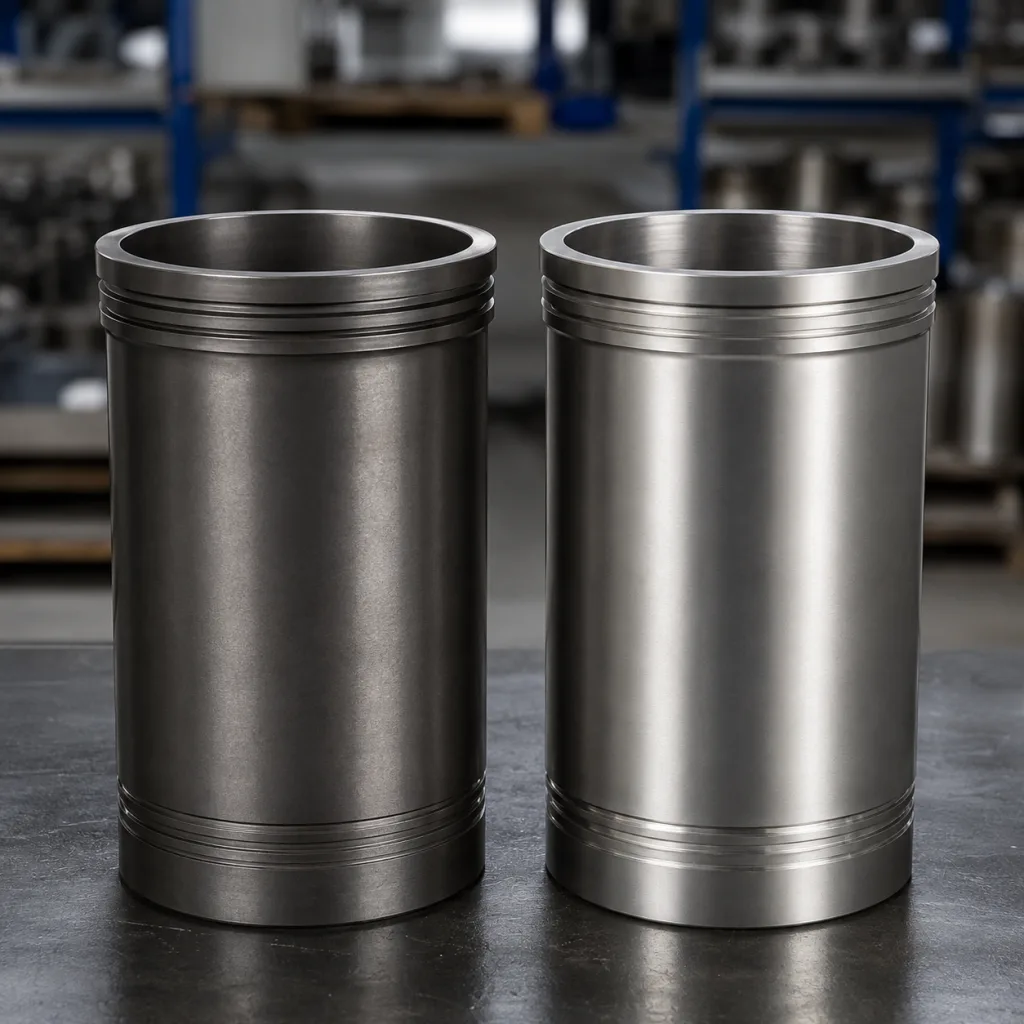
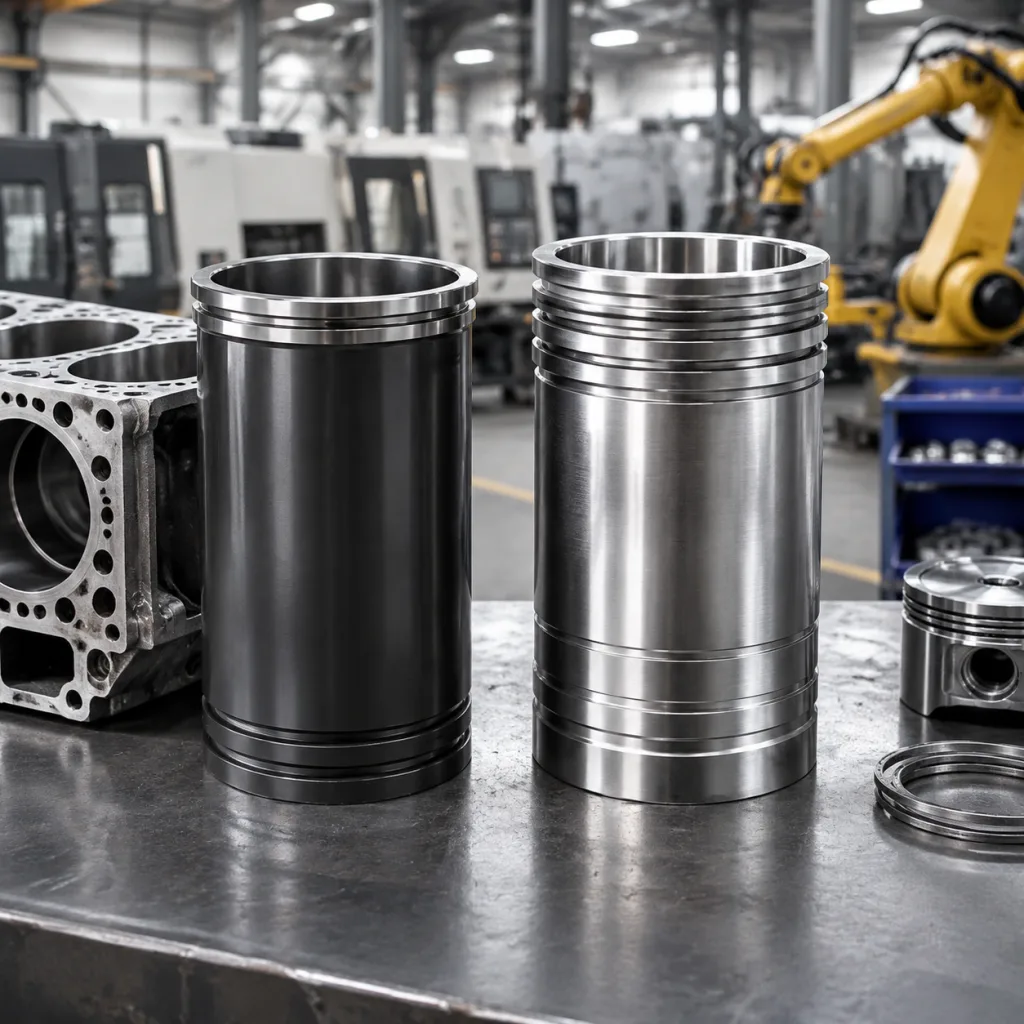
For cylinder liner sourcing, the first filter is dimensional compatibility. Compare these items before discussing price or packaging:
Inner diameter, outer diameter, and installed height
Flange OD, flange thickness, and shoulder profile
Wall thickness and interference fit range
Material grade and heat-treatment condition
Surface finish and geometry limits
Coating or plateau-honing requirement, if specified
Use the OE drawing or a controlled sample measurement sheet to verify the actual fit envelope, not just the catalog description. As a practical procurement target, buyers should usually ask for bore tolerance, OD tolerance, and installed height tolerance on the same inspection report, with measurement resolution to at least 0.01 mm and roundness/cylindricity values where the engine program is sensitive to seal integrity. A typical purchasing review should also confirm the interference fit window with the machinist or reman line, because a 0.02 mm shift in press fit can change installation force and coolant sealing behavior. If the keyword search is tied to a named brand reference, use the OE number only as a fitment cross-reference, not as an endorsement. Buyers should also confirm whether the part is wet or dry, because coolant sealing requirements and installation methods differ substantially.
Cylinder liner vs INA alternative: side-by-side view
The table below shows the decision points procurement teams usually review when comparing a direct liner option with an INA alternative listed for the same engine family.
</tr></thead><tbody> </tbody></table>The table does not imply that one option is always better. The right choice depends on the engine variant, machining condition, and whether the buyer needs a stocked replacement or a controlled production supply. In practice, buyers comparing a cylinder liner vs INA alternative should also check MOQ and service-level risk together: a lower unit price can be offset by a 500 to 1,000 piece MOQ, while a slightly higher quoted price may win when the supplier can hold 7 to 15 days of production lead time and commit a stable replenishment schedule. For high-run programs, ask for tiered pricing at 100, 500, and 1,000 unit breaks so the landed cost can be compared on the same basis.
Technical checks that matter in production
A liner that fits on paper can still fail in service if process control is weak. Buyers should request the following technical data before approval:
Material specification and chemistry report
Hardness range and heat-treatment method
Dimensional inspection report with sampling plan
Concentricity, roundness, and cylindricity data
Surface roughness values for the working bore
Corrosion protection or packaging specification
Where applicable, ask for validation aligned to internal test plans and published standards such as IATF 16949:2016, ISO 9001:2015, REACH (EC) No 1907/2006, SAE J2527, or ECE R-83 when emissions-related application context is relevant. For a production approval, a practical baseline is to request a first-article inspection package with 5 to 10 measured parts per lot, plus Cp/Cpk evidence if the supplier claims process capability on the critical diameters. On the bore surface, buyers often specify Ra in the 0.2 to 0.8 µm range depending on ring package and engine duty cycle, while the finished OD and flange features should be reported against the drawing with no ambiguity about datum selection. Driventus can support buyers with traceability, batch control, and documentation suitable for supplier onboarding.
When to use custom manufacturing
Custom manufacturing is justified when the listed alternative does not fully match the engine block or rebuild specification. Typical cases include obsolete applications, mixed aftermarket inventories, oversize repair programs, or block repairs with a non-standard interference fit.
Driventus offers custom manufacturing for buyers who need controlled dimensions, private-label packing, or application-specific revisions. In a custom program, buyers can define the bore, OD, flange thickness, installed height, material, and coating package up front, then align the inspection plan to a target tolerance stack before sampling begins. For example, a remanufacturer may need a 0.03 mm tighter OD control than the catalog part, or a specific wall thickness band to preserve block rigidity after machining. For programs that require multiple related parts, our catalog and engine components pages help teams review adjacent items such as pistons, rings, gaskets, and water pumps in the same sourcing cycle.
Sourcing notes for procurement teams
A clean sourcing file reduces returns and line stoppages. Before approval, ask suppliers for:
OE cross-reference and engine code confirmation
Sample approval with measured reports
MOQ, lead time, and replenishment schedule
Country of origin and HS code support
Packaging method for corrosion-sensitive parts
Warranty terms and claims process
For buyers in distributor and repair-chain channels, the main risk is not only the part itself but also revision drift between shipments. A controlled supplier should be able to explain how revisions are identified, when tooling changes are released, and how incoming inspection is supported. In commercial terms, it is worth asking for a quotation that separates unit price, tooling or setup charge, sample cost, and freight basis, because those numbers can change the true buy decision more than the piece price alone. As a rule of thumb, buyers planning recurring orders should request a 30-60 day validity window on the quote, a clear MOQ threshold, and a stated lead time for both stock and made-to-order supply. Review the supplier quality system before placing volume orders.
Frequently asked questions
No. Interchangeability depends on bore size, flange geometry, wall thickness, and the engine block machining condition. Always verify the OE cross-reference and measure the physical sample before approval. For production use, confirm the critical dimensions against the drawing and require a measured sample set from the actual batch, not just a catalog listing.
Ask for dimensional inspection data, material specification, traceability records, packing detail, and the supplier’s quality documentation. For regulated programs, request evidence of IATF 16949:2016 and ISO 9001:2015 control. Buyers should also request MOQ, quoted lead time, price breaks, and a revision-control statement so purchasing can compare landed cost and supply risk on the same basis.
Yes. If the listed part does not match your rebuild specification, Driventus can support controlled revisions through our OEM service process. Start with a drawing, sample, or OE reference and [request a quote](/contact.html). For custom work, send the target bore, OD, flange, installed height, annual volume, and acceptance tolerance so we can confirm feasibility and commercial terms quickly.
If you are comparing applications, drawings, or bulk supply terms, send your OE reference and target quantity through [request a quote](/contact.html).