Cylinder Liner Ram Supplier: Sourcing Guide for Buyers
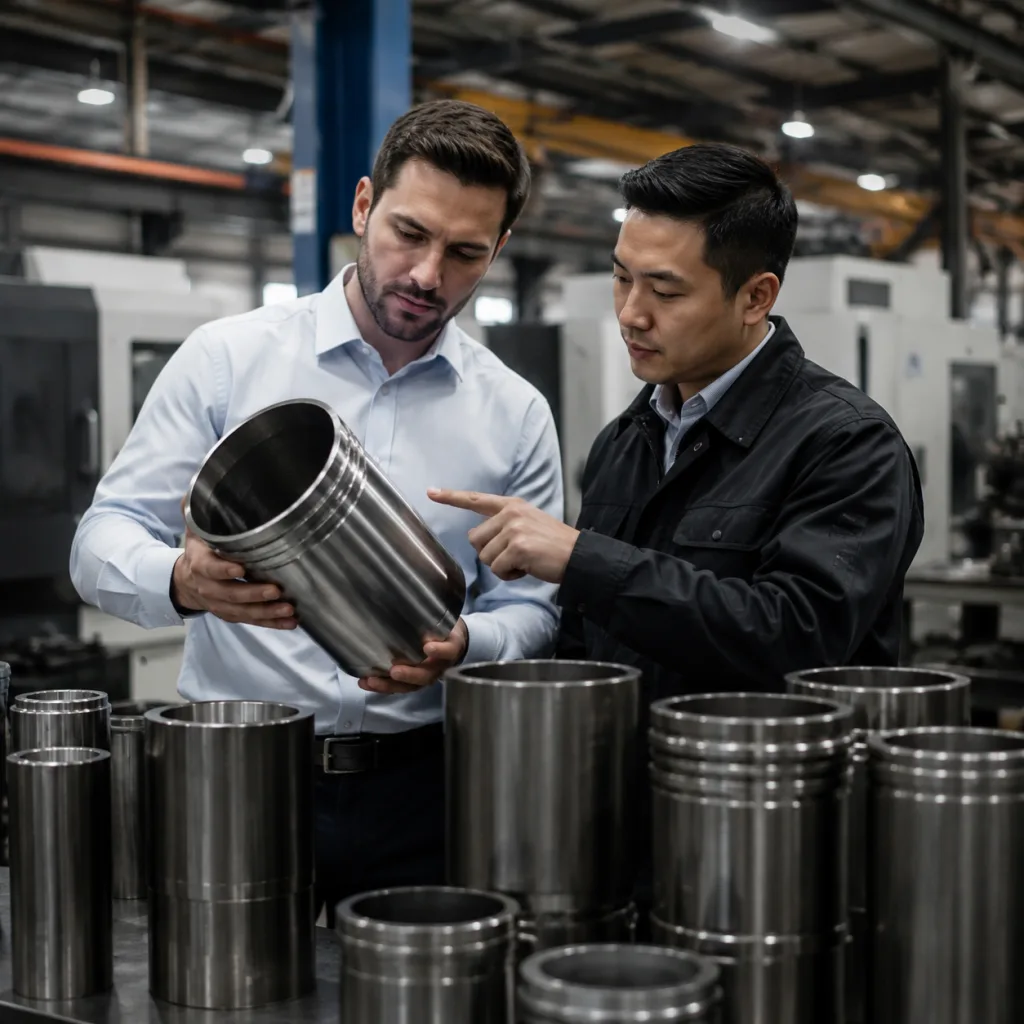
Buying cylinder liners is a procurement decision, not a catalogue exercise. The right supplier must deliver stable metallurgy, controlled machining, and repeatable inspection data from batch to batch. For B2B buyers in the EU, UK, US, Canada, Australia, and Brazil, that means asking for material traceability, dimensional records, and proof of process control before price talks begin. Driventus Auto Parts manufactures engine and powertrain components in Taizhou, Zhejiang, and exports to more than 60 countries. We support aftermarket distributors, OEM and Tier-1 programmes, and multi-location repair chains with cylinder liners produced under IATF 16949:2016 and ISO 9001:2015 systems. Driventus is an independent aftermarket manufacturer; brand names are referenced for fitment only. If you are comparing a cylinder liner ram supplier against local stocking options, this article outlines the sourcing factors that matter: fitment, MOQ, lead time, inspection, and customisation.
What Buyers Should Verify First
A cylinder liner is a wear part, but it still has to meet tight geometry and surface requirements. Before sending drawings or an RFQ, verify the following:
Bore diameter, outer diameter, flange height, and overall length, with nominal values and the allowed tolerance band
Wall thickness and material grade, including alloy or cast iron specification and the required hardness window
Honing condition and surface roughness target, usually stated as Ra or Rz on the drawing
Interference fit requirement in the block, including minimum and maximum press-fit range
Pack quantity, labelling, and export packaging
Traceability by batch or heat number
For procurement teams, these checks reduce the risk of field failures, returns, and rework. They also make supplier comparison easier because quotes can be judged on the same technical basis rather than on price alone. If the drawing is not yet frozen, ask the supplier to confirm which dimensions are controlled by process and which are inspected 100% versus sampled.
Sourcing Criteria That Matter
A reliable supplier should provide more than a sales sheet. Ask for a current quality certificate set, inspection records, and confirmation of whether the part is made to drawing or to sample. For a cylinder liner ram supplier, the strongest quotation is one that ties price to measurable specifications, not just part names.
Sourcing item
What to request
Why it matters
Certification
`IATF 16949:2016`, `ISO 9001:2015`
Confirms controlled manufacturing and document discipline
Compliance
`REACH (EC) No 1907/2006` where applicable; RoHS status if requested by the buyer
Supports EU material compliance reviews and internal approval files
Inspection
Dimensional report, hardness, visual inspection, roundness data for critical sizes
Verifies fit and wear performance
Traceability
Batch marking, heat control, lot records, production date code
Unit price by tier, MOQ, sample charge, tooling charge, Incoterm
Prevents hidden cost surprises
</tr></thead><tbody> </tbody></table>If your programme needs a controlled cross-reference, state the OE number format in the RFQ, for example `OE 06A107065` when applicable. The supplier should confirm dimensional equivalence, not imply manufacturer endorsement. Ask for a written match statement showing dimensions, material, and any deviations from the reference part.
MOQ, Lead Time, and Commercial Structure
For cylinder liner sourcing, commercial terms often determine whether a project is viable. A low unit price can be offset by excessive packaging cost, long approval cycles, or an MOQ that exceeds warehouse demand.
Typical buying questions:
What is the MOQ per part number or per engine family?
What is the standard lead time after sample approval?
Can the supplier hold finished stock for repeating call-offs?
Are mixed-SKU cartons available for distributor orders?
Is tooling amortised separately for custom dimensions?
What price break applies at 300, 1,000, and 3,000 pieces?
Commercial logic buyers can use:
Standard catalogue lines: MOQ is often 100-200 pcs per SKU for stock support, with better pricing at 500+ pcs
Custom dimensions or private label: MOQ is often 300-500 pcs after sample approval, plus any one-time tooling or fixture cost
Sample lead time: typically 7-15 days for existing tooling, 15-30 days for new geometry review
Mass-production lead time: typically 25-40 days after deposit and final spec confirmation, depending on capacity and finishing load
Reorder logic: ask for a holding stock agreement if monthly call-offs are predictable, because this often shortens dispatch time to 3-7 days for stocked SKUs
Driventus supports both repeat-production and custom manufacturing programmes. For standard catalogue items, lead times depend on order size, dimensional complexity, and current capacity. For drawing-based projects, expect an additional validation window for sample sign-off, especially when the liner must match a specific block bore or flange design. You can review our catalog, our quality system, and custom manufacturing before issuing an RFQ. When comparing offers, ask each supplier to quote separately for unit price, packing, sample cost, and freight so the landed cost is visible from day one.
Technical Checks Before Approval
A sourcing engineer should not approve a cylinder liner on appearance alone. The basic validation set should cover dimensional and material evidence, especially when the part will run in a high-load diesel or turbocharged application.
Recommended inspection points
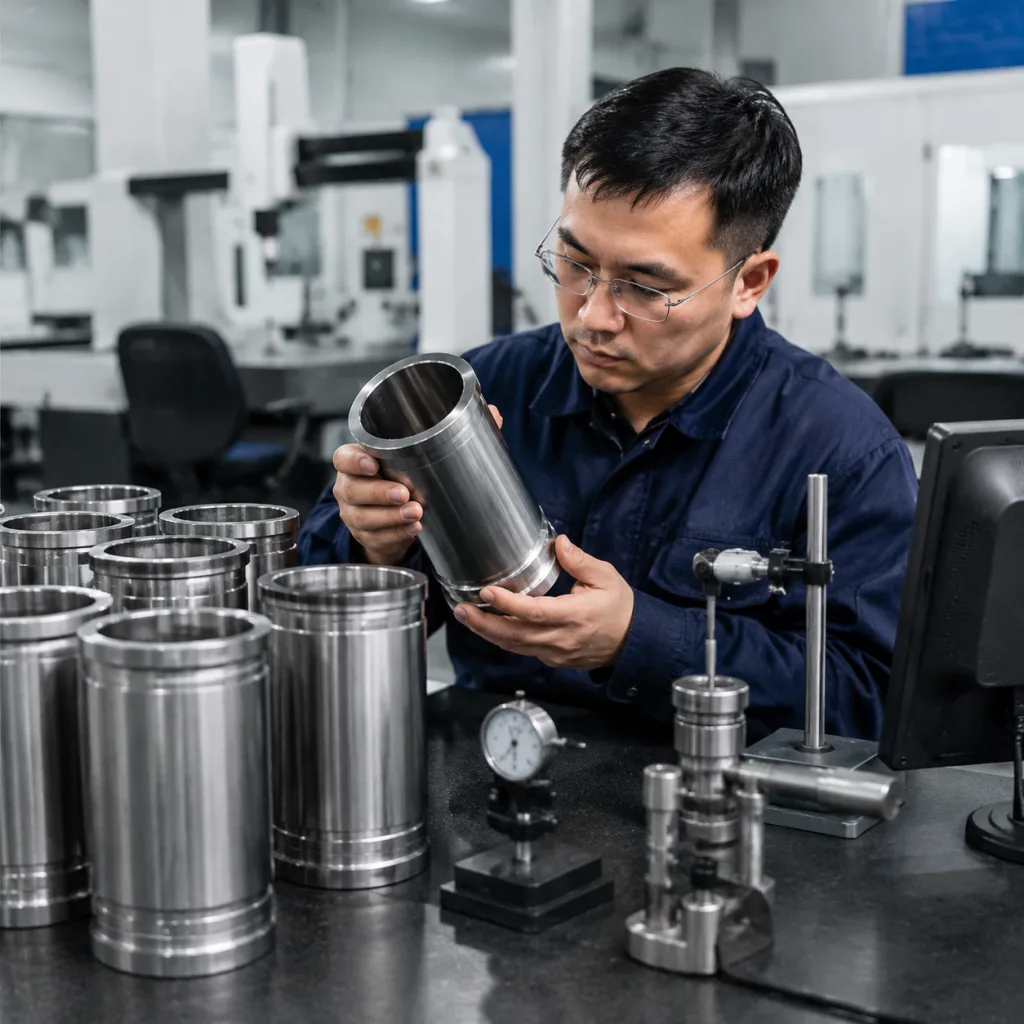
Bore size and roundness, with a typical control target of within the drawing tolerance and often measured to 0.01 mm resolution
Outer diameter and interference range, usually specified in 0.01-0.02 mm bands for press-fit applications
Flange thickness and squareness, checked against the mating face requirement
Length tolerance, commonly controlled to the drawing with end-face parallelism checked where relevant
Surface finish after honing, often specified around Ra 0.4-1.2 μm depending on application
Hardness and microstructure, if specified by drawing
Fit test in the block or test fixture
Visual defect checks for scoring, porosity, cracks, and coating or corrosion issues
Where the programme is sensitive, ask for AQL inspection, first article data, and process capability evidence for key dimensions. For export to regulated markets, buyers often request written confirmation of material conformity and restricted-substance control. If your application includes emission-related engine systems, align the replacement strategy with the relevant engine build data and any customer-specific validation plan. Standards such as `ECE R-83` and test methods such as `SAE J2527` may be relevant to the broader engine programme, depending on the application scope. A practical approval pack should include the drawing revision, inspection method, sample quantity, and acceptance criteria so that both sides sign off the same target.
Why Factory Audit Matters
A factory audit is useful when the part is critical or the annual volume is high. It helps buyers confirm machining control, metrology equipment, packaging discipline, and corrective-action handling. A good audit should review:
Incoming material control
Cylinder boring and finishing operations
Gauge calibration records
Nonconformance segregation
Final inspection and packing flow
Change-control documentation
Operator training and job instruction sign-off
A buyer can use a simple audit checklist: verify that critical gauges are in calibration, check whether in-process SPC records exist for bore and OD, confirm that rejected parts are physically separated, and review the last corrective action report for repeat issues. If the supplier cannot show traceable records for at least one finished lot, treat that as a gap in process control.
This is where Driventus can support buyer due diligence. As a vertically integrated manufacturer in Taizhou, we supply engine components into diversified B2B channels and can provide documentation for procurement review. If your programme requires drawings, samples, or a route from standard part to private-label supply, start with request a quote and specify the target engine family, annual demand, target annual usage by part number, required tolerance class, and compliance requirements. For higher-volume programmes, request a pre-shipment inspection window and agreed photo records so the receiving team can compare cartons, labels, and part markings before goods are booked into stock.
Frequently asked questions
Yes. Driventus supplies aftermarket distributors, OEM and Tier-1 buyers, and repair networks. Programmes are handled against drawing, sample, or catalogue reference, with documentation aligned to the customer’s buying process. For commercial planning, buyers can request MOQ, tiered pricing, and lead-time confirmation by SKU before placing a trial order.
Yes. We offer custom manufacturing for liner geometry, material specification, and packaging requirements. Send drawings, samples, or OE cross-references so we can confirm feasibility and tooling needs. For new dimensions, we normally review the drawing, confirm tolerance capability, and issue a sample schedule before mass production starts.
We can provide quality certificates, inspection data, and export documentation as required. Buyers commonly request traceability, dimensional reports, and compliance statements during supplier qualification. If needed, we can also share sample approval records, packing photos, and batch identifiers so the receiving team can complete an internal audit trail.
If you are qualifying a cylinder liner ram supplier for a new or existing programme, send your spec, target volume, and delivery window through /contact.html and we will respond with a sourcing proposal.