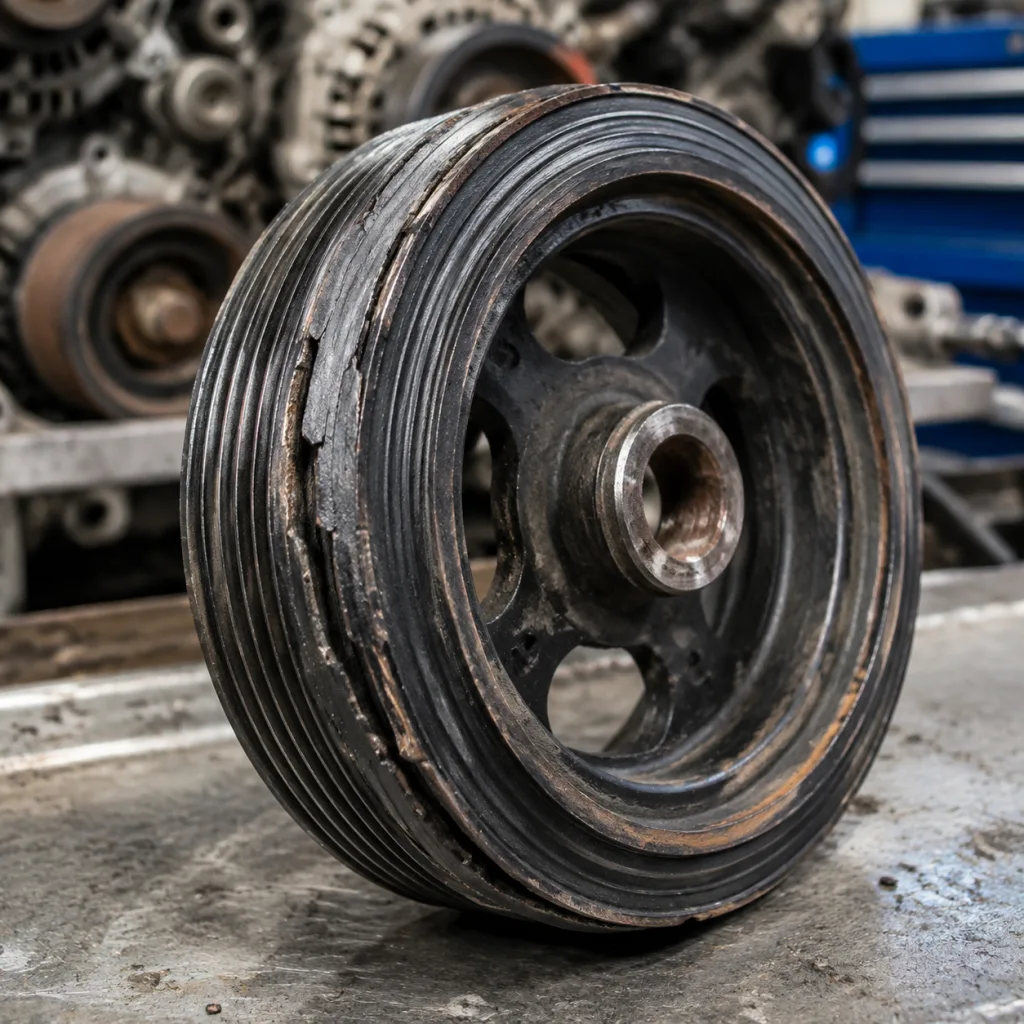
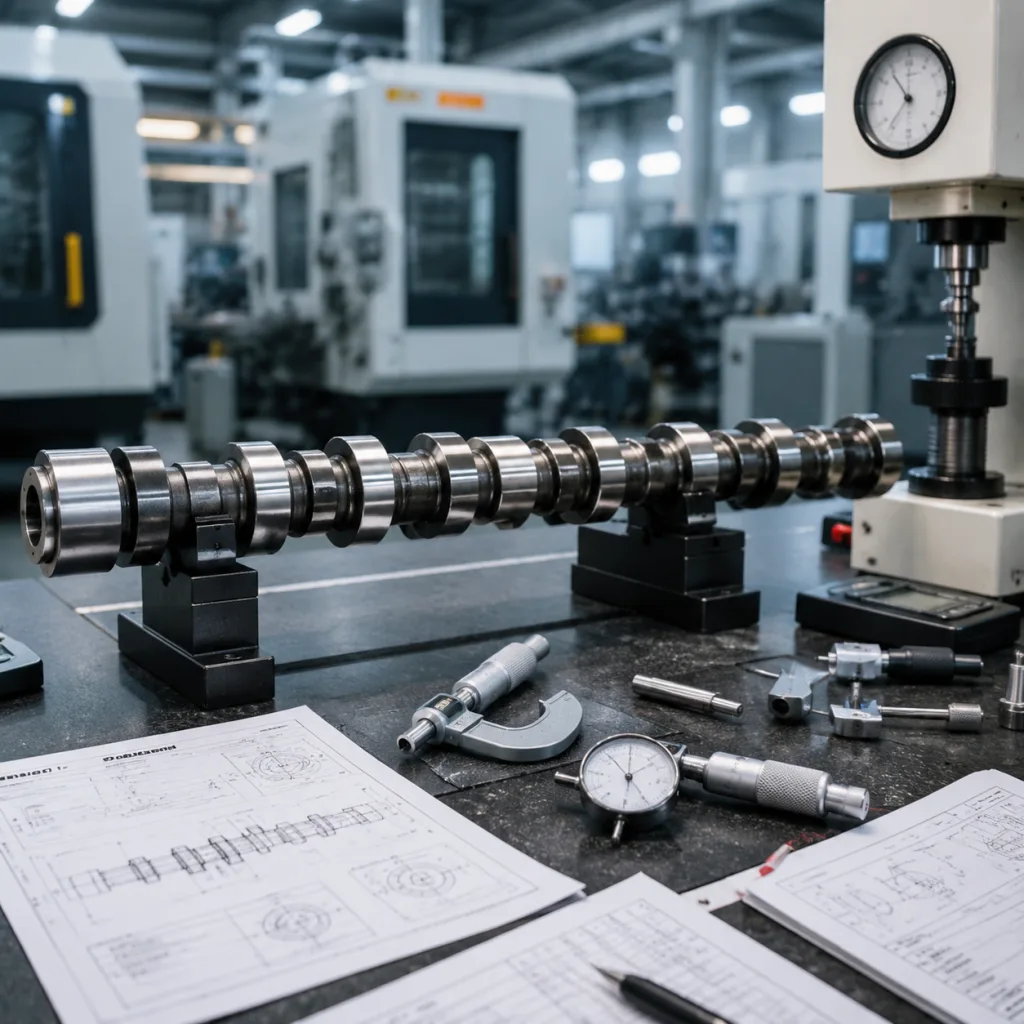
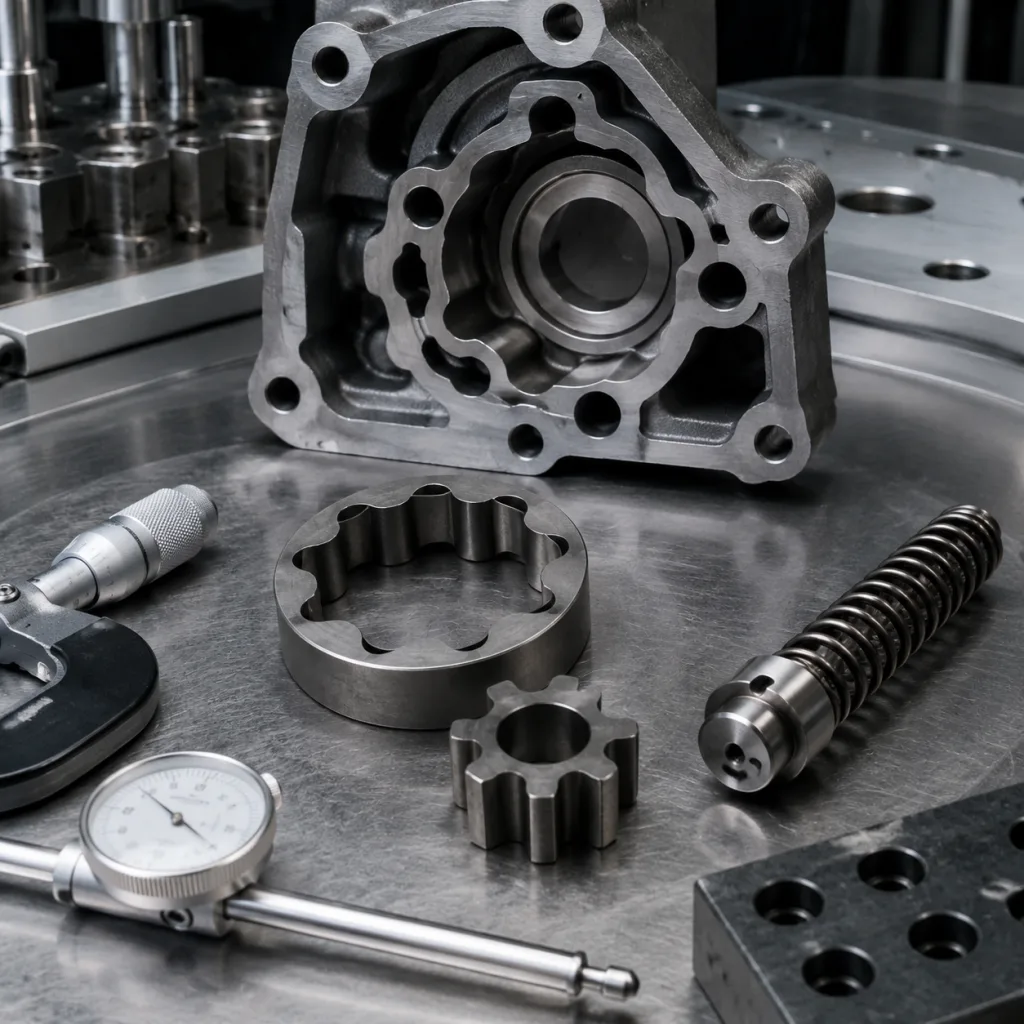
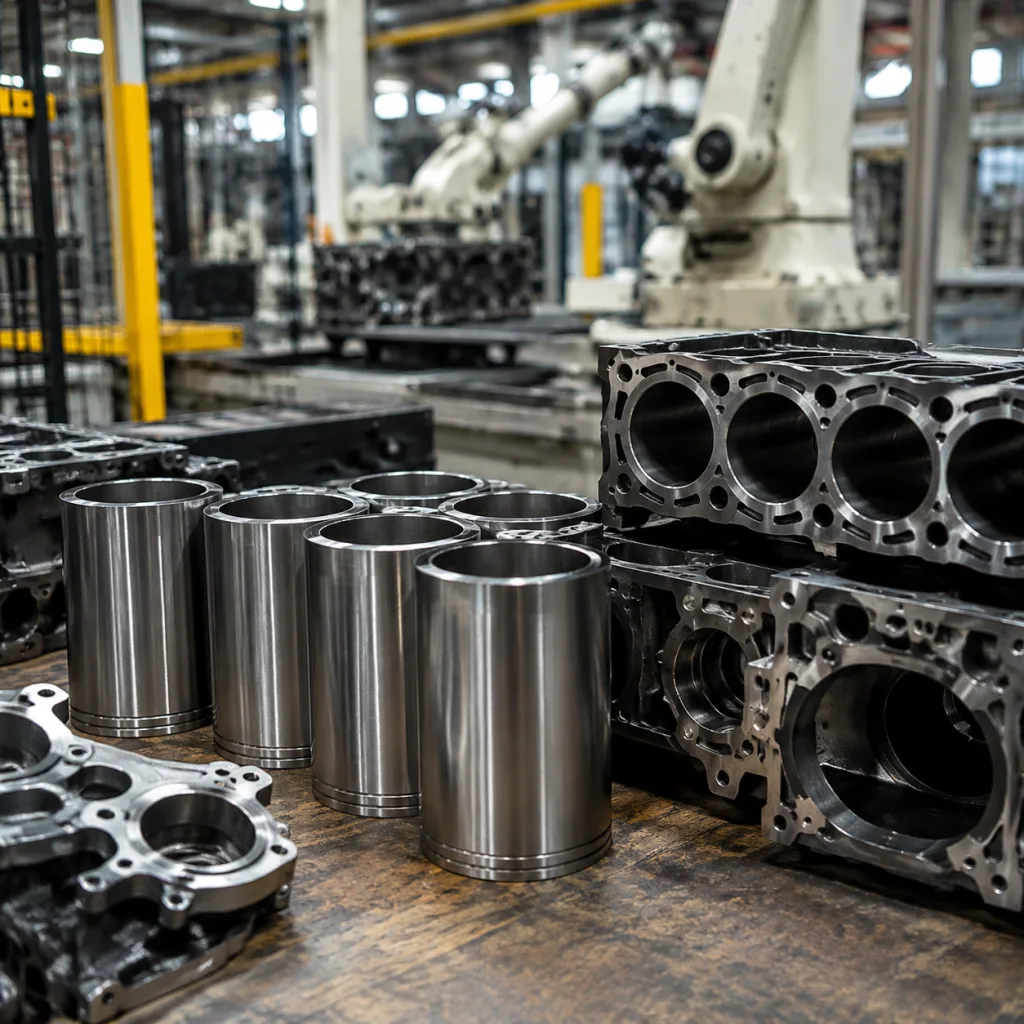
Buyers sourcing a crankshaft pulley Buick wholesale programme need more than a low unit price. The part must match OE dimensions, run true under belt load, and arrive with traceable quality records. For Buick applications, the pulley can affect belt alignment, vibration control, accessory drive life, and harmonic damping, so procurement teams should verify groove count, hub geometry, material grade, balance data, and the measurement method before release. Driventus manufactures engine and powertrain components in Taizhou, Zhejiang, and supplies distributors, OEM and Tier-1 buyers, and repair networks in more than 60 countries. Driventus is an independent aftermarket manufacturer; brand names are referenced for fitment only. For buyers comparing vendors, the strongest sourcing case usually combines dimensional control, repeatable lead times, documented inspection, and certification to IATF 16949:2016 and ISO 9001:2015.
Decision checklist: is the pulley truly buy-ready?
For a crankshaft pulley programme, the first review should focus on fitment and rotating accuracy, not packaging. The part must match the engine family, belt path, accessory layout, and damper requirement. If the vehicle uses an OE cross-reference, confirm the number exactly before RFQ release and ask the supplier to state the reference used for approval.
Fitment data: OE 06A107065 or equivalent reference, groove count, offset, bore, keyway, hub depth, and mounting face depth
Rotational quality: radial runout, axial runout, and dynamic balance record with the stated fixture and RPM method
Material choice: cast iron, steel, or aluminium depending on application load, inertia target, and damping requirement
Surface condition: phosphate, black oxide, e-coat, or other corrosion-control finish with salt-spray expectation
Documentation: batch traceability, inspection report, carton label format, and approval sample retention
A useful procurement threshold is to treat any missing measurement as a risk, not a minor gap. Buyers often ask for runout limits of ≤0.10 mm TIR on critical pulley faces, bore concentricity within ±0.03 mm, and groove pitch controlled to the agreed OE sample or drawing. Driventus is an independent aftermarket manufacturer; brand names are referenced for fitment only. If you need a broader engine parts shortlist, start with our catalog or the engine family overview at /products/engine-components.html.
Where pulleys fail in service
A pulley that is dimensionally close but not controlled will create noise, belt wander, and premature accessory bearing wear. Wholesale buyers usually see the same failure pattern: small errors at the bore or face become vibration once the belt loads the accessory drive.
Parameter
Typical procurement check
Suggested buyer target
Why it matters
Bore diameter
Match to OE drawing
±0.02 mm unless OE sample dictates tighter
Prevents wobble and assembly variation
Axial runout
Measured on fixture
≤0.10 mm TIR
Reduces belt tracking error
Radial runout
Measured at OD
≤0.08 mm TIR
Limits vibration and belt wear
Groove profile
Serpentine or V-belt
Match belt section and profile angle
Ensures belt engagement
Mass and balance
Verified by batch
Balance grade agreed to sample or drawing
Supports smooth engine operation
Face finish
Visual and touch check
No burrs, pitting, or sharp edges
Protects belt life and assembly safety
</tr></thead><tbody> </tbody></table>For buyers running fleet or distribution programmes, request that each pilot lot includes at least 5 pieces for dimensional validation, with one full inspection report per lot and retention samples held at the factory. Where the buyer supplies a sample or drawing, Driventus can build to the target geometry and verify the critical dimensions before shipment. This is especially useful for multi-location repair chains that need the same pulley spec across several markets.
Spec deep-dive: the records that prove control
A wholesale supplier should be able to show how parts are controlled from incoming material to final packing. For automotive buyers, the minimum expectation is a documented quality system, repeatable inspection method, and traceability that lets a claim be isolated by lot, shift, and production date.
Driventus operates under quality system controls aligned with IATF 16949:2016 and ISO 9001:2015. For import managers, that matters because it supports audit readiness, complaint traceability, and consistent lot release.
Typical documents buyers request:
1. Material certificate or internal material trace record tied to heat number or batch code 2. First article or sample inspection data with measured values, not only pass/fail notes 3. In-process and final inspection records showing the control points used for release 4. Packaging specification, carton quantity, master-carton dimensions, and label format 5. Conformance statement against the agreed drawing, OE sample, or approved deviation note
For approval, many buyers also ask for gauge calibration status, measurement equipment list, and the inspection frequency used during mass production. If your programme requires regional compliance support, request confirmation against REACH (EC) No 1907/2006 for relevant material declarations. For brake-dust exposure or emissions-related products this may differ, but for pulleys the key concern is usually material traceability, corrosion protection, and repeatable dimensional control.
Step-by-step RFQ: MOQ, lead time, and audit questions
Wholesale purchasing is usually decided on commercial control as much as on part performance. Before awarding a crankshaft pulley line, ask the supplier to state the minimum order quantity, standard lead time, and change-control process in writing so the commercial model is clear before sample approval.
Recommended buyer questions:
What is the standard MOQ per OE reference, drawing, or finish?
What is the normal production lead time after sample approval and PO release?
Can mixed SKUs be consolidated in one shipment and one packing list?
What inspection data is included with each lot, and is it attached digitally?
Can the factory support a remote or on-site audit, and how soon after request?
A practical sourcing rule is to compare three price points: sample cost, first batch cost, and annual-contract cost. For example, a supplier may quote a higher unit price for a 100-piece pilot lot, a lower price at 500 pieces, and a further reduction at 1,000+ pieces once tooling, packaging, and freight planning are stabilized. Buyers should also ask whether price changes with material grade, coating, carton branding, or tighter runout tolerance, because these adders often affect the landed cost more than the unit quote itself.
Driventus supports custom manufacturing through custom manufacturing for buyers that need private-label packing, alternate finishes, or drawing-based production. For procurement teams managing seasonal demand, a clear forecast often reduces unit cost and protects supply continuity.
When custom beats catalog stock
A custom-built pulley makes sense when the OE part is unavailable, the vehicle population is split across variants, or the buyer needs a packaging change for a regional warehouse network. Custom work is also useful when a customer wants a tighter runout target, a different coating, a specific carton configuration, or a controlled balance requirement for higher-RPM service.
Common triggers for custom production include:
Limited OE availability in the target market
Multiple engine variants sharing similar but not identical mounting features
Requirement for branded cartons and barcode labels
Need for corrosion-resistant coating in humid or coastal regions
Desire to standardise stock across repair branches
Need for a revised tolerance stack to reduce belt noise or improve accessory life
For these projects, send the OE cross-reference, sample photos, measured dimensions, and any drawing notes with the enquiry. Include the target annual volume, forecast split by month, and whether the part needs a trial run before mass production. That allows the factory to confirm whether the existing toolset can be used or whether a new fixture is needed, and it helps the buyer understand whether the commercial model should be based on pilot lot pricing, replenishment pricing, or a long-term blanket order.
Frequently asked questions
Yes. Driventus supplies wholesale quantities for aftermarket distributors, OEM and Tier-1 buyers, and repair networks. Share the OE number, sample, or drawing and we can confirm fitment, MOQ, lead time, and pack configuration.
Buyers can request inspection records, material traceability, packaging details, and a conformance statement. Driventus operates under IATF 16949:2016 and ISO 9001:2015 controls, and can also provide first-article data on request.
Yes. Through custom manufacturing, Driventus can support drawing-based builds, alternate finishes, private-label packing, and quantity-specific pricing for wholesale programmes.
If you are sourcing this part for distribution or fleet supply, send the OE reference, sample photos, drawing, target quantity, and required finish so we can review the options. [Request a quote](/contact.html).