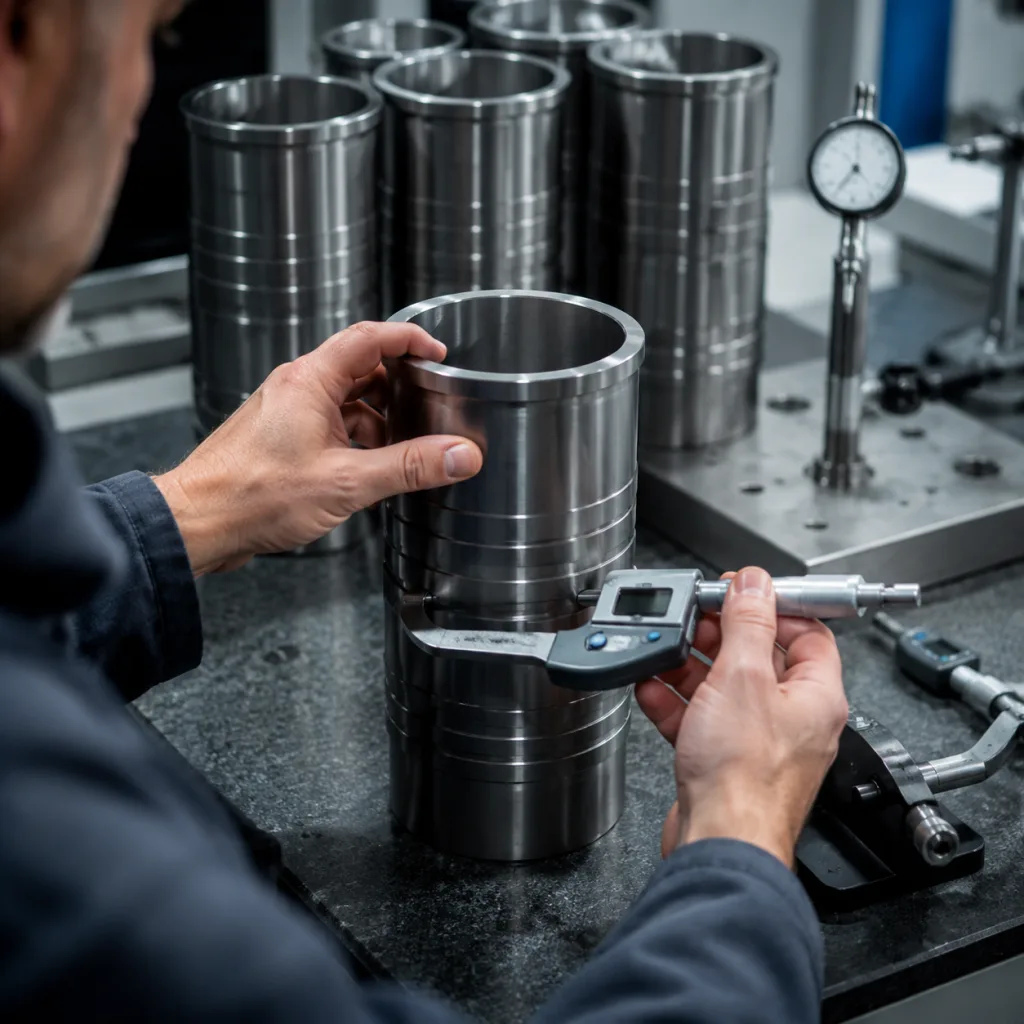
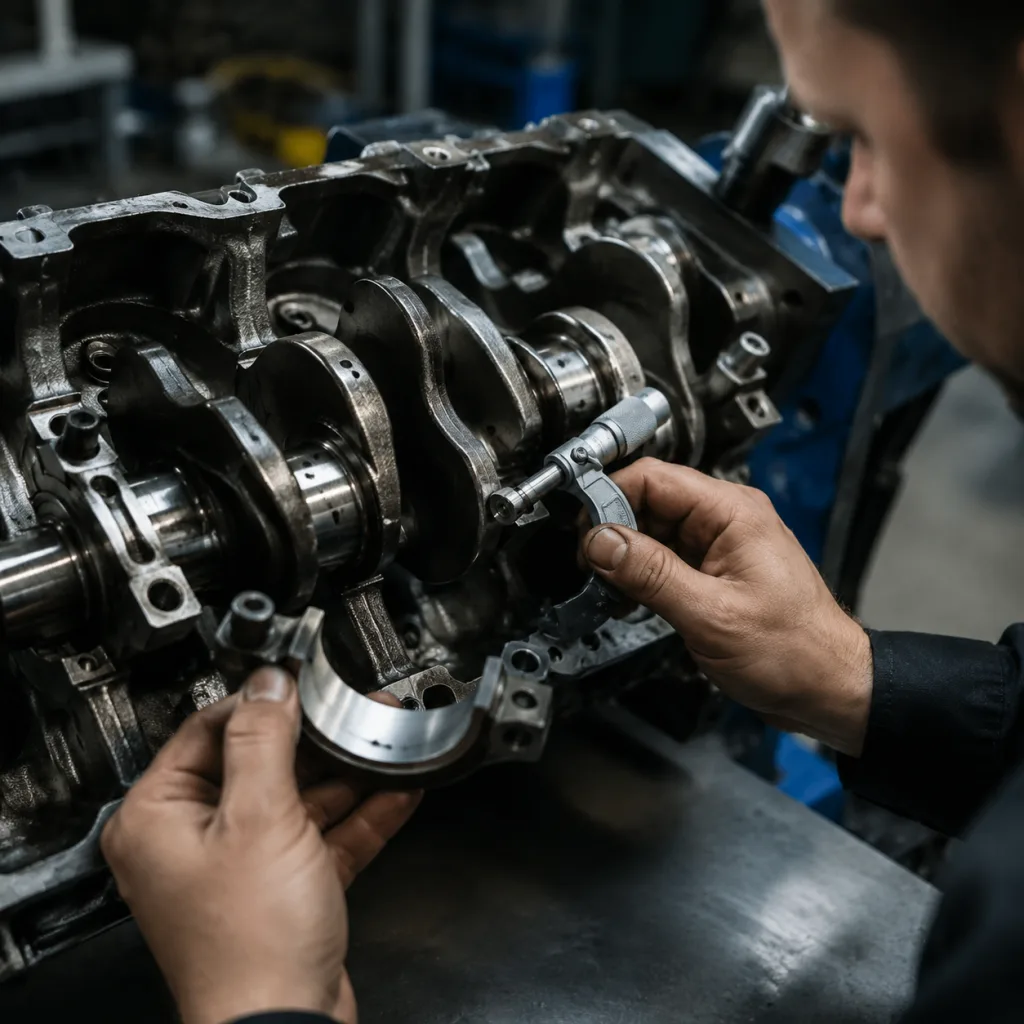
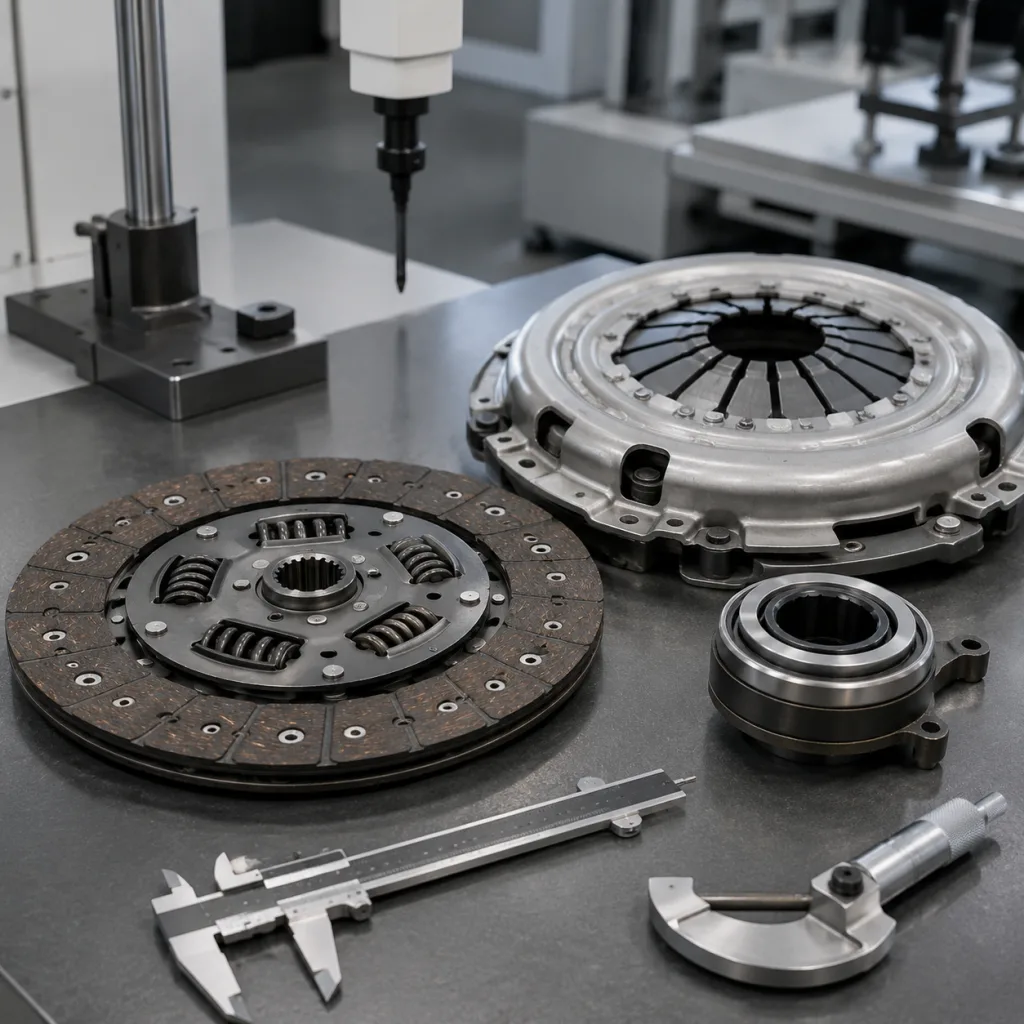
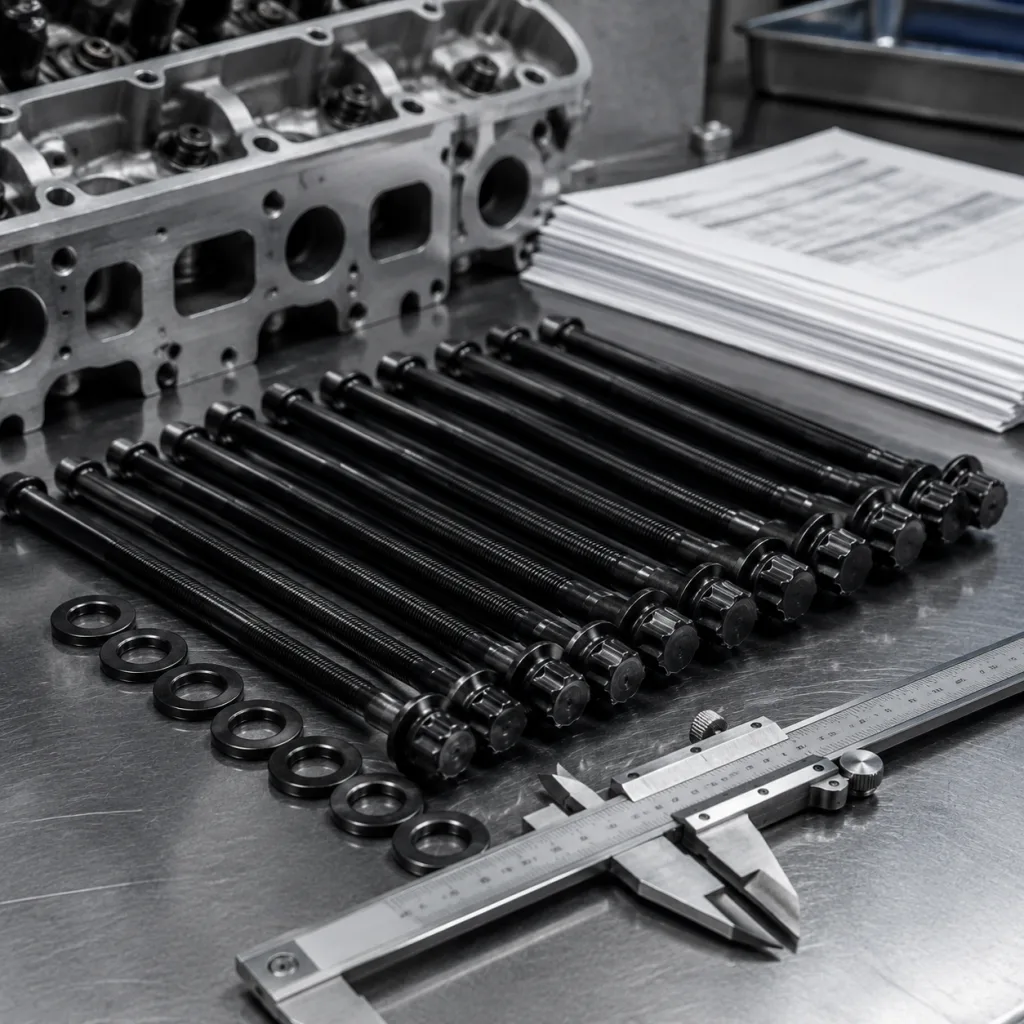
For procurement teams sourcing Opel-fit engine components, the real question is not whether a cylinder liner is cheap. It is whether the part will hold bore geometry, finish consistently, and arrive with the documentation your plant or warehouse actually needs.
Driventus manufactures cylinder liners and related engine components in Taizhou, Zhejiang, for aftermarket distributors, wholesalers, repair-chain programs, and OEM/Tier-1 projects. The focus is B2B supply: controlled production, stable export documentation, batch traceability, and practical communication with sourcing engineers and import managers.
This guide shows how to qualify a cylinder liner Opel OEM supplier, where programs typically fail, how to compare offers without being misled by unit price, and what sample approval should look like before you place volume. Driventus is an independent aftermarket manufacturer; brand names are referenced for fitment only.
Start with the part spec, not the supplier
Before you compare factories, lock down the application. Cylinder liners for Opel-fit programs may be dry, wet, flanged, or semi-finished, and each option changes machining, packaging, and approval requirements.
A useful sourcing file usually answers these questions first:
Which engine family or application range is in scope, without implying vehicle-maker approval
Whether the job is service replacement, oversize repair, or customer-side finish machining
The finished bore size, outer diameter, height, and flange geometry where applicable
The required material grade, hardness range, and surface finish after honing
The inspection format, critical tolerances, and forecast volume by call-off
Whether the buyer needs rust protection, custom labels, or export-ready cartons
If available, OE-style cross-reference data can help confirm interchange and geometry. Use those references for fitment identification only. They are not proof of manufacturer approval.
Most liner problems show up after the first sample passes. The failure often appears later: ring seating is inconsistent, bore wear drifts, installation gets harder, or the lot-to-lot finish changes.
Common failure modes include:
Bore diameter drifting outside drawing limits after repeated batches
Roundness or cylindricity variation that increases blow-by risk
Wall-thickness inconsistency that affects machining margin and thermal stability
Flange height error that prevents proper block seating
Roughness variation after honing that changes oil retention and ring bedding
Rust, chips, or handling damage caused by weak packaging
This is why buyers should ask more than “can you make the part?” They should ask how the factory controls the part over time. Sample approval matters, but process capability matters more.
For repeat orders, the key issue is consistency across the fifth, twentieth, and fiftieth shipment. Ask for lot inspection frequency, gauge calibration intervals, rework rules, and the corrective-action path when a batch misses target.
What the production controls should prove
A credible cylinder liner Opel OEM supplier should be able to show how each critical feature is controlled. Price means little if the liner creates oil consumption, coolant leakage, poor ring seal, or installation scrap.
Control item
Why it matters
How it is checked
Typical control target
Bore diameter
Ring seal and piston clearance
Air gauge, bore gauge, or CMM where required
Per drawing; often ±0.01 to ±0.03 mm on finish bore
Roundness and cylindricity
Blow-by risk and uneven wear
Form measurement or multi-point gauging
Commonly within 0.01 to 0.02 mm on critical bores
Wall thickness
Thermal stability and machining margin
Ultrasonic or section measurement
Often controlled within ±0.05 to ±0.10 mm
Flange height and width
Block seating and clamp load
Vernier, height gauge, fixture check
Typically ±0.02 to ±0.05 mm on seating features
Surface roughness
Oil retention and ring bedding
Roughness tester after honing
Commonly Ra 0.20 to 0.40 μm, depending on ring design
Hardness
Wear resistance and machinability
Rockwell or Brinell test
Material-dependent; cast iron liners are often HB 180 to 240
Visual finish
Cracks, chips, corrosion
100% visual inspection before packing
Zero visible cracks, chips, or rust at pack-out
</tr></thead><tbody> </tbody></table>The supplier should also explain the actual control cadence, not just the target values. Buyers get better results when the factory shares inspection frequency by lot, acceptance criteria for rework, and the gauge-maintenance schedule.
Quality records to request before approval
A serious supplier should be ready for both commercial qualification and technical review. Driventus operates under IATF 16949:2016 and ISO 9001:2015 certified management systems. Those standards do not replace part validation, but they do support process control, traceability, corrective action, and document discipline.
Typical approval records include:
Company profile and manufacturing scope
IATF 16949:2016 and ISO 9001:2015 certificates
Process flow chart and control plan
Incoming material inspection records
Dimensional inspection report for samples
Material certificate and hardness test result
Surface roughness report where honing is supplied
Packaging specification and drop-test approach if required
Corrective action format, such as 8D reporting
Traceability structure showing heat number, lot code, inspection date, and final pack date
For regulated export markets, buyers may also request material declarations aligned with REACH (EC) No 1907/2006. Cylinder liners are not emissions-system components, so standards such as ECE R-83 should not be treated as direct product approval standards. The correct check is dimensional conformity, material compliance, and process capability against the buyer’s drawing or agreed specification.
More detail on Driventus procedures is available through our quality system.
Use this comparison test when you shortlist suppliers
A price-only comparison usually produces false winners. Cylinder liners are precision wear parts, so the cheapest quote can become the most expensive warranty line.
Compare each supplier on the same set of questions:
Does the quotation confirm drawing tolerance, material, and finish status?
Is the factory actually controlling casting, machining, honing, inspection, and packing?
Are MOQ, lead time, sample timing, and payment terms stated clearly?
Are export cartons, rust prevention, and test reports included or extra?
Can the supplier support mixed shipments with other engine components?
How quickly does the team respond to engineering questions and corrective actions?
A practical move is to request three numbers from every supplier: piece price at MOQ, piece price at forecast volume, and lead time at confirmed order quantity. That gives procurement a cleaner view of real competitiveness.
If your program also includes pistons, gaskets, pumps, or turbochargers, Driventus can consolidate multiple engine-component lines through one export channel. That does not remove the need for part-by-part approval, but it can simplify shipping, documentation, and repeat ordering.
MOQ, lead time, and export terms in practice
Commercial terms work best when they match the production route. Existing aftermarket references usually allow lower MOQ and shorter lead time. New tooling, custom machining, special alloy requirements, or private-label packaging usually push both higher.
Supply scenario
Typical MOQ
Typical lead time after confirmation
Notes for buyers
Existing catalog liner
200–500 pcs
30–45 days
Good for distributor replenishment; sample sign-off may finish in 7–10 days if already in production
Mixed engine-component order
Negotiable by shipment value
35–50 days
Useful when liners ship with related parts to lower freight cost
Private-label packaging
500–1,000 pcs
40–55 days
Artwork approval, carton test, and label verification may add 3–7 days
New drawing or custom liner
1,000+ pcs or project-based
60–90 days
Usually includes tooling, samples, and validation review
OEM/Tier-1 development
Project-based
Agreed by APQP timing
May require PPAP-style documentation and a gated timing plan
</tr></thead><tbody> </tbody></table>Import managers should also look beyond price. Carton strength, palletization, rust prevention, labeling accuracy, and mixed-container planning often determine whether the shipment is easy or painful to receive.
A typical export pack may use VCI paper, partitioned inner trays, a master-carton weight target below 20 kg for manual handling, and pallet corner protection to reduce transit damage. If the buyer needs dedicated geometry, branded packaging, or project-specific documentation, Driventus can discuss custom manufacturing before quotation.
A practical sample-approval sequence
Sample approval should be structured. A visual sample alone is not enough for cylinder liners because small errors in bore geometry, flange seating, or surface finish can show up only after installation.
Use this sequence:
1. Confirm the application, drawing, or cross-reference scope. 2. Agree the critical dimensions and tolerance limits. 3. Confirm the material grade, hardness range, and heat-treatment route if applicable. 4. Produce initial samples from the intended production route. 5. Submit dimensional, material, hardness, and visual inspection records. 6. Complete buyer installation or bench checks. 7. Freeze packing, labeling, and inspection frequency before mass production. 8. Approve the acceptable sample size, reject criteria, and resubmission timing.
For OEM/Tier-1 programs, buyers may request PPAP-style submissions aligned with their internal Advanced Product Quality Planning process. Driventus can support control plans, process flow documents, dimensional reports, material records, and sample submission packages when agreed at quotation stage.
The supplier should also define containment when a lot fails. Clear quarantine rules, batch traceability, response timing, and re-inspection steps reduce commercial risk when issues appear during incoming inspection.
Frequently asked questions
Yes. Driventus supplies Opel-fit cylinder liners for B2B aftermarket and project-based programs, subject to application confirmation, drawing review, MOQ, and sample approval. Brand names are used only for fitment identification.
Typical documents include IATF 16949:2016 and ISO 9001:2015 certificates, process flow, control plan, dimensional report, material certificate, hardness record, surface roughness data where applicable, and packaging specification.
Yes. Custom liner projects can be reviewed when the buyer provides drawings, material requirements, annual volume, inspection criteria, and target timing. Tooling, samples, MOQ, and validation documents are confirmed before order placement.
If you are qualifying a cylinder liner Opel OEM supplier for distributor, repair-chain, or OEM/Tier-1 sourcing, share your drawing, application list, or sample requirement. Contact Driventus to [request a quote](/contact.html)