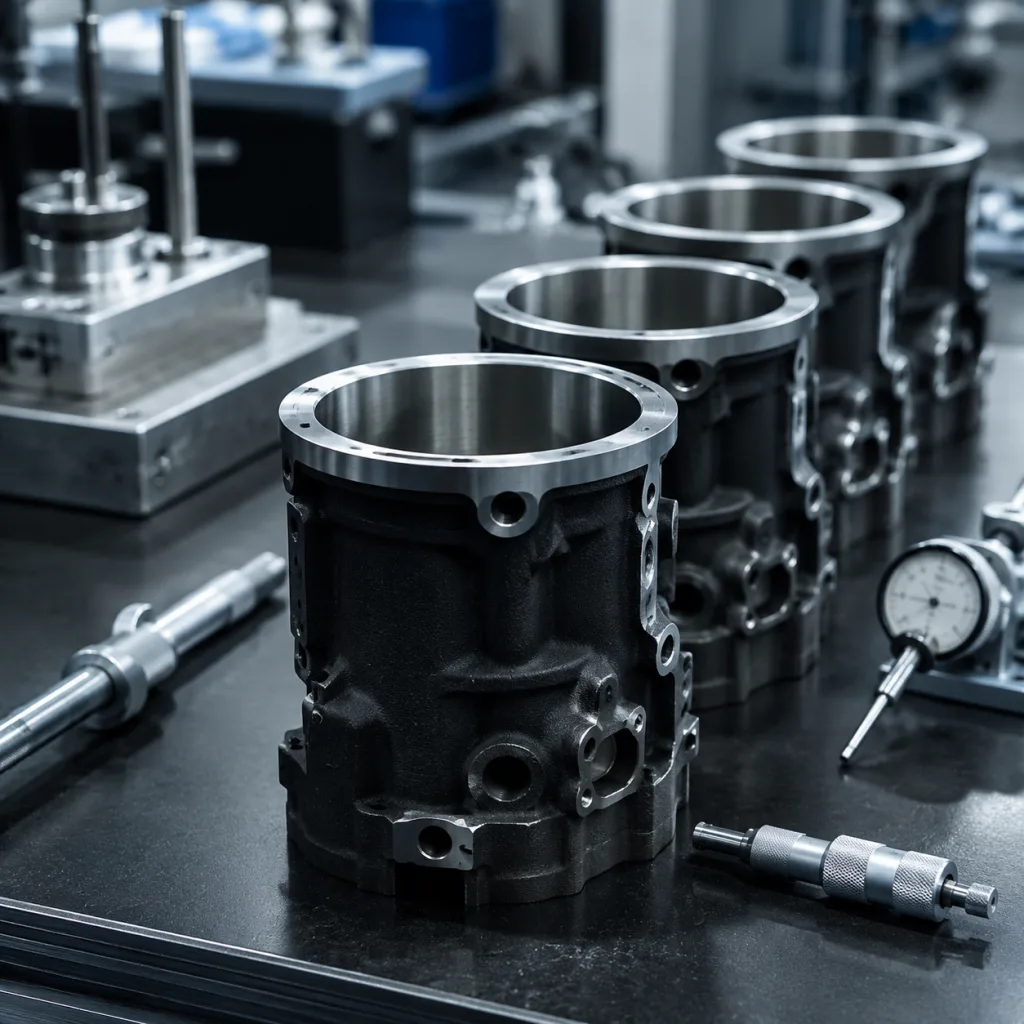
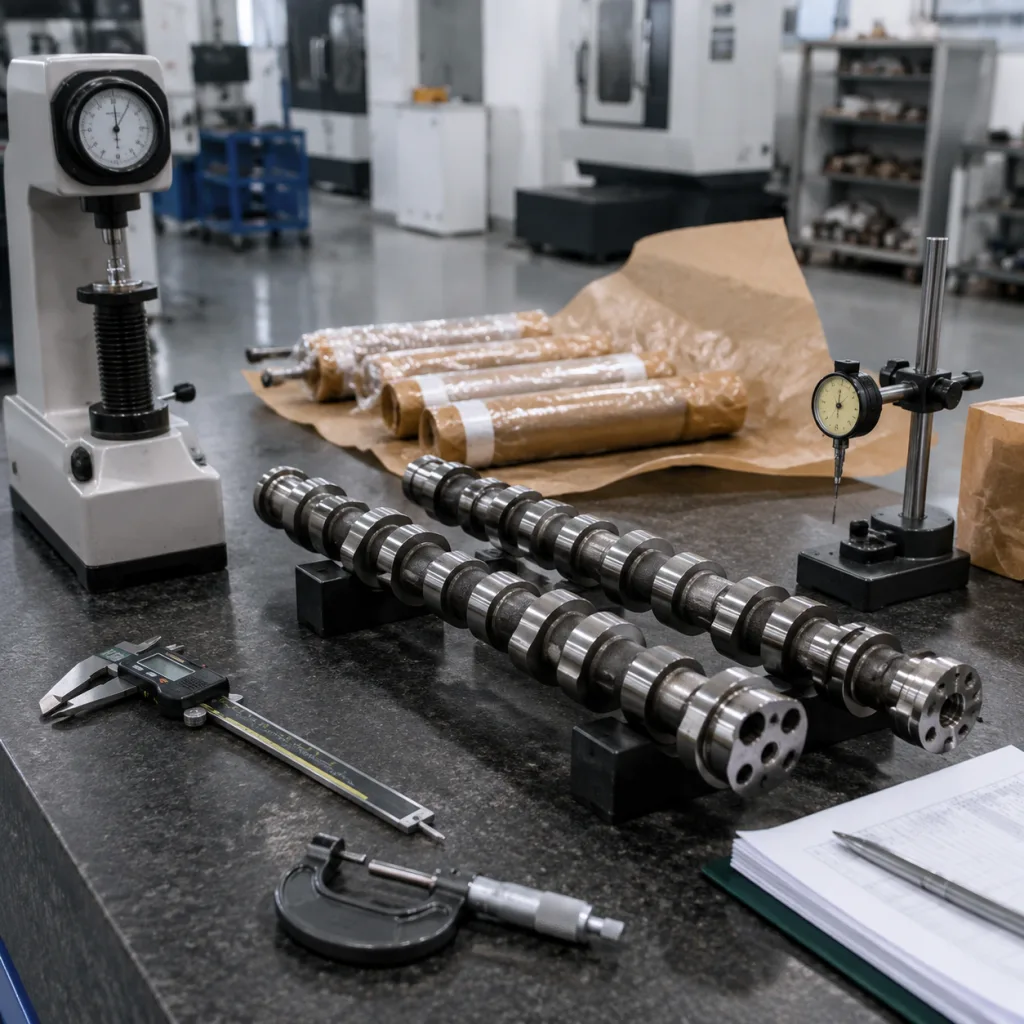
Buying a cylinder liner Hyundai manufacturer China option is less about finding the lowest quote and more about avoiding fitment mistakes, surface-finish issues, and lot-to-lot variation. For Hyundai engine applications, the real test is whether the liner holds bore geometry after pressing, matches the block stack-up, and arrives with the documentation procurement teams need for audit and import review. Driventus supplies engine and powertrain components from Taizhou, Zhejiang, with export experience in 60+ countries and a quality management system aligned to IATF 16949:2016 and ISO 9001:2015. Driventus is an independent aftermarket manufacturer; brand names are referenced for fitment only. This guide focuses on the checks that matter before release: dimensions, material, process control, validation, and commercial terms.
Start with fitment, not price
If the liner does not match the block, everything else is noise. A low unit price becomes expensive fast when protrusion drifts, the bore goes out of round, or the liner fails after the first rebuild cycle.
What to verify before RFQ release:
Engine code and exact application data
Wet or dry liner type
Bore diameter and allowable tolerance
Flange thickness, outer diameter, and overall height
Deck protrusion target and acceptance band
Material spec and corrosion protection requirement
Packaging method for storage and mixed-SKU shipment
Ask for the drawing, or at least a confirmed reference part, before you ask for price. If the supplier cannot explain how roundness, taper, and surface roughness are controlled, your receiving team inherits the risk.
RFQ details to include:
Nominal bore size with critical tolerance calls
Liner OD, ID, flange OD, and height
Cylindricity and roundness limits
Surface finish target after honing
Sample quantity and approval milestone
PPAP-style or first-article submission needs
When the application is not fully defined, request a first-article sample against an approved reference part and freeze the tolerances before production release.
What a capable factory should prove
A Hyundai cylinder liner programme should be treated as a controlled manufacturing process, not a commodity buy. The useful question is not “can they make it?” but “can they repeat it across lots?”
Item
What it shows
Why it matters
`IATF 16949:2016` certificate
Automotive quality discipline
Supports serial-production control
`ISO 9001:2015` certificate
Documented quality system
Confirms basic process structure
Incoming material report
Alloy traceability
Reduces lot variation risk
Final inspection sheet
Critical dimensions and runout
Confirms release against drawing
Corrosion protection spec
Transit and storage protection
Lowers warehouse rejection risk
Packing list by SKU
Order accuracy
Helps distributors and chains
</tr></thead><tbody> </tbody></table>Driventus operates as a vertically integrated manufacturer, which helps reduce handoffs between casting, rough machining, finish machining, and inspection. For custom dimensions or non-standard features, see OEM services. For broader part availability, use our catalog and engine components.
Audit points worth checking:
Heat number stays linked through machining and packing
Rough machining establishes OD and flange geometry before finish sizing
Finish machining controls ID, height, and seat faces on calibrated fixtures
Honing or finish sizing is checked against ring-package requirements, not only nominal size
Final inspection uses go/no-go tools, micrometers, bore gauges, and surface-roughness checks
Each lot is identified on the carton and, when requested, on the part or inner bag
Commercial proof to request in writing:
First-article sample timing
Serial production lead time
MOQ by part number
Mixed-SKU carton policy
Escalation path for drawing revisions and deviation requests
Where liners usually fail
Cylinder liners tend to fail for the same reasons over and over: weak material, poor machining control, inadequate finish, or a bad installation assumption. That makes the buyer’s job clearer. Define the failure modes up front, then make the supplier show how each one is controlled.
Common failure modes:
Bore wear from incorrect hardness or poor microstructure
Loss of sealing from wrong protrusion or flange variation
Cracking from wall-thickness inconsistency or installation damage
Poor ring seating from finish outside the required roughness band
Coolant leakage from burrs, edge damage, or sealing-surface defects
Warranty confusion from missing lot traceability
Typical specification ranges buyers ask for:
Material: centrifugal cast iron or alloy cast iron with controlled graphite structure
Hardness: often around `HB 180–250`, depending on wear target
Wall thickness tolerance: frequently `±0.05–0.10 mm` on critical sections
Concentricity between OD and ID: often `0.02–0.05 mm` where stack-up is sensitive
Surface finish after machining: set to the ring-seat requirement in the drawing
Installation checks to confirm:
Press-fit interference is enough to hold the liner through thermal cycling
Protrusion remains stable after torque-down and gasket compression
Coolant-side sealing surfaces are free from burrs
Final piston-to-bore clearance still works after the rebuilder’s last machining step
Match the commercial terms to your buying model
A good supplier is one you can replenish without drama. If your programme is stable, batch planning matters more than chasing the smallest possible line-item discount.
Commercial points to confirm:
MOQ by part number and mixed-carton order
Standard lead time for stocked and made-to-order items
Sample lead time for validation runs
Volume price breaks
Export packing format and palletisation
Customs documents, including commercial invoice and packing list
Driventus supports aftermarket distributors, OEM / Tier-1 suppliers, and repair chains that need repeat supply rather than one-off spot buys. If you are consolidating a programme, early agreement on forecast, labeling, and carton structure can lower total landed cost more than a small unit-price move.
How to read the quote:
`EXW` helps compare factory pricing but excludes inland and export handling
`FOB` is easier for overseas buyers who want to benchmark freight separately
Sample pricing may be higher because setup and inspection are spread across fewer pieces
MOQ can change with packaging style; individual bagging usually costs more than bulk cartons
Lead time should be split into material prep, machining, inspection, and packing
Practical buying rule:
New part number: request `1–5` validation samples first
Repeating SKU: buy forecasted batches covering `60–90` days when freight supports it
Before paying the final balance, lock the acceptance criteria so rework does not delay shipment
Validate before you release production
Do not approve a new source on paper alone. A dimensional report is helpful, but a liner is a wear component that lives under heat, pressure, and coolant exposure. It needs a real validation step.
Recommended validation sequence: 1. Check incoming dimensions on a calibrated CMM or bore gauge 2. Verify press fit and deck protrusion in the intended block family 3. Check ring seating and bore finish after hone 4. Inspect for porosity, cracks, and machining burrs 5. Review corrosion behaviour after storage simulation 6. Retain one sample for warranty reference
Validation pack to request:
Dimensional report on the first `5` to `10` samples, or per APQP requirement
Material test certificate with heat-number linkage
Visual inspection report for cracks, burrs, and edge condition
Surface roughness readings on the finished ID
Packaging photos showing corrosion prevention and label accuracy
Deviation note if any result sits near the tolerance limit
If your programme needs application-specific tooling or drawing control, request a quote and share the engine code, sample, or technical drawing. Driventus can review fitment before production release, which is useful when the same part must work across several aftermarket channels.
Release logic:
Approve only when the sample matches the print and the stack-up still works in the block
Hold when the supplier cannot explain a deviation with process evidence
Trial the first batch in a controlled service or rebuild group before full rollout
Keep a golden sample to settle future disputes on wear, fit, or coating appearance
Frequently asked questions
Yes. Driventus supplies B2B buyers including distributors, wholesalers, repair chains, and OEM-linked accounts. Fitment is confirmed against application data, and brand names are referenced for fitment only.
We can provide quality and inspection documents aligned to IATF 16949:2016 and ISO 9001:2015, plus material and packing records where required. Final release documents depend on the part number and programme scope.
Yes. Through our OEM service, we can review custom heights, flange details, and tolerance requests. Share drawings or samples so we can confirm feasibility before quotation.
If you are consolidating supply or validating a new source, send your drawing, sample, or OE reference and we will review fitment and commercial terms. Start here: /contact.html