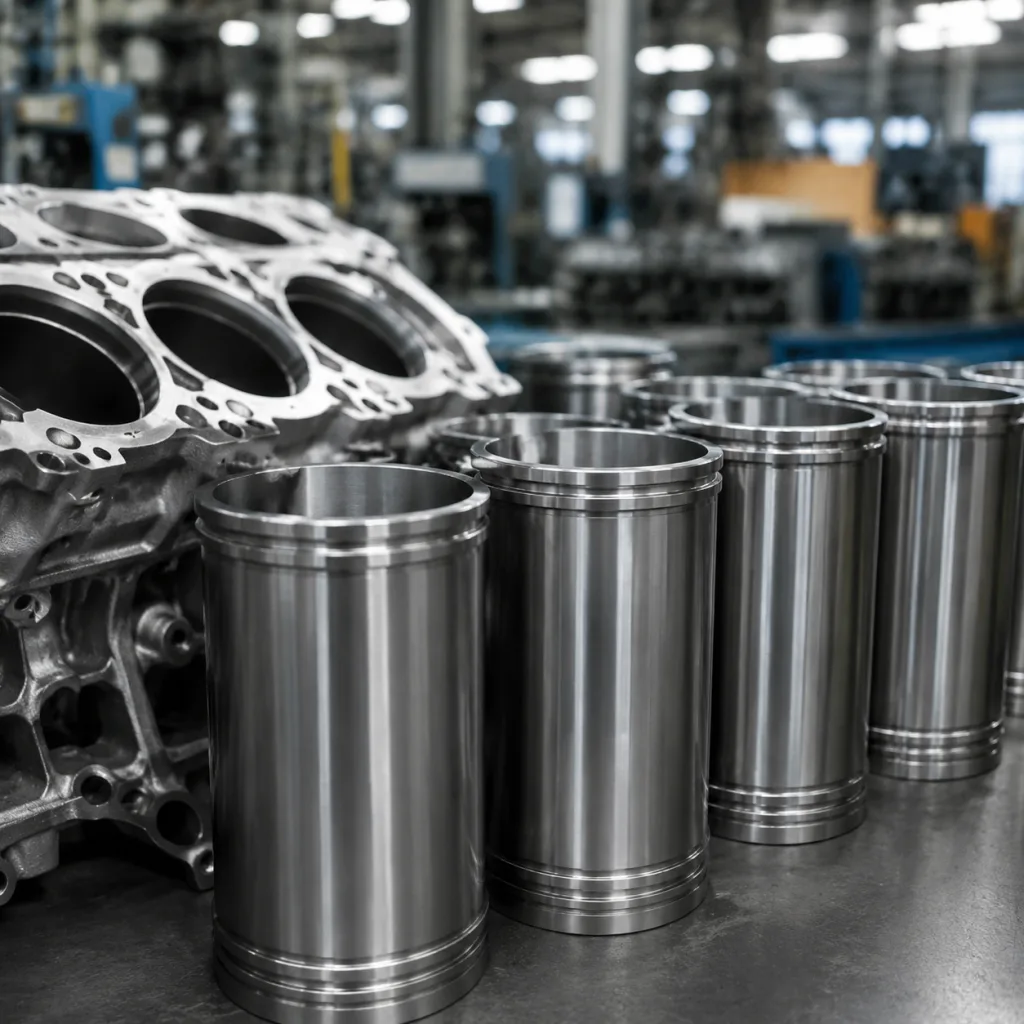
Procurement teams sourcing a cylinder liner Buick manufacturer China option usually need three things at once: dimensional consistency, stable supply, and documented quality control. For Buick applications, the first step is to match the bore, outer diameter, flange geometry, material grade, and machining state to the engine family, then confirm whether the liner is dry or wet and whether it is intended for repair, remanufacture, or production use. Driventus supplies engine components from Taizhou, Zhejiang, with export experience in 60+ countries and systems certified to IATF 16949:2016 and ISO 9001:2015. Driventus is an independent aftermarket manufacturer; brand names are referenced for fitment only. For buyers comparing suppliers, the practical questions are lead time, MOQ, inspection method, and whether custom machining is available for OE cross-references such as OE 06A107065 when a programme requires a verified match. That is the focus of this guide.
Before You Quote: Fitment Checks That Matter
For procurement, the main risk is not the part name. It is the dimensional definition behind the part.
Before RFQ release, confirm these points:
Engine family and application: passenger car, SUV, light-duty commercial, or reman programme
Installation condition: rough machined, finish machined, or honed to final size
Surface finish target on bore and OD, especially for interference-fit designs
Heat treatment, honing allowance, and coating if specified
Packaging standard, VCI rust prevention, and carton stack/load limits for export shipment
A supplier should be able to quote against a drawing, sample, or OE cross-reference. If the engine programme uses a known reference such as OE 06A107065, confirm the measurement basis and the acceptance criteria before sampling. For broader sourcing across powertrain parts, see our catalog and engine components.
To keep sourcing actionable, ask for a filled-out specification sheet with these minimum fields: nominal OD, OD tolerance, bore diameter tolerance, length tolerance, flange height tolerance, roundness, concentricity, and surface roughness. For many Buick-fit programs, buyers also request a first-article sample measured on at least 5 pieces, then a pilot lot of 50-200 pieces before release to mass order.
Spec Deep-Dive: Materials, Tolerances, and Controls
Cylinder liners are simple parts to specify and difficult to control at scale. The buyer should ask for the nominal dimensions, the tolerance band, and the inspection method used on each critical feature.
Typical production targets for a machined cast-iron liner are often defined as follows, unless the drawing states otherwise:
Item
Typical specification target
Typical buyer check
Why it matters
Bore diameter
±0.01 mm to ±0.03 mm after finish machining
Micrometre / air gauge
Controls piston clearance and oil film
Outer diameter
±0.01 mm to ±0.02 mm on press-fit sleeves
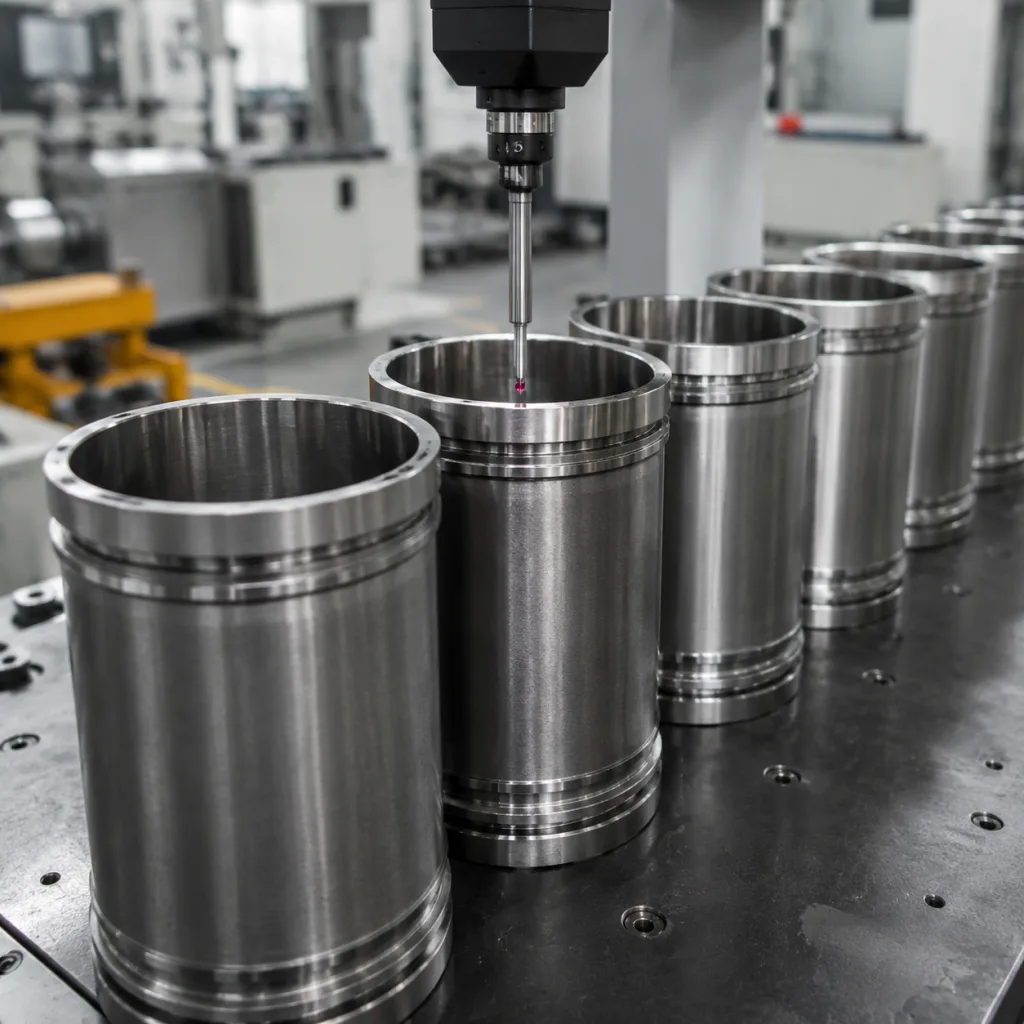
Gauge ring / CMM
Controls press fit or sleeve retention
Length
±0.03 mm to ±0.10 mm
Vernier / CMM
Affects deck height and sealing
Flange height
±0.02 mm to ±0.05 mm
CMM / height gauge
Supports correct deck projection
Concentricity
≤0.02 mm to ≤0.05 mm
CMM / roundness tester
Reduces blow-by risk
Roundness / cylindricity
≤0.01 mm to ≤0.03 mm
Roundness tester
Improves ring seating consistency
Surface roughness Ra
0.2–0.8 μm after honing
Profilometer
Supports ring seating and wear life
Hardness
Often 180–260 HB for cast-iron variants, per drawing
Rockwell or Brinell
Indicates wear resistance
</tr></thead><tbody> </tbody></table>Published system standards matter because they define process control, not just final dimensions. Driventus works under IATF 16949:2016 and ISO 9001:2015, and export programmes may also need material declaration support for REACH (EC) No 1907/2006. For customers requesting validation documents, ask for incoming inspection records, in-process dimensional logs, and final inspection reports tied to lot number. A practical purchase order should also define sampling: for example, 100% visual inspection, 100% critical-dimension gauging, and AQL-based audit inspection on shipment lots.
When comparing quotes, make sure the supplier states whether the quoted price includes finish honing, phosphate or anti-rust coating, and individual bagging. Those choices change both cost and lead time.
Decision Point: MOQ, Lead Time, or Tooling Risk?
A cylinder liner programme from China is usually competitive when the buyer can consolidate volumes and lock the specification early. The real decision is usually whether the project is ready for a repeatable supply chain, or still in a sampling phase.
Use this sequence:
1. Confirm drawing or sample with dimensional report. 2. Approve first article samples. 3. Place a pilot order for validation. 4. Convert to repeat purchase with agreed lot control.
Commercial planning usually works better when the RFQ asks for three separate numbers: sample cost, pilot lot price, and annual-volume price. That lets the buyer see whether setup charges are being spread correctly.
Indicative sourcing logic for a custom liner programme is often as follows:
MOQ: 100-300 pcs for an existing tool and stable machining route; 500-1,000 pcs if new tooling or a new casting pattern is needed
Sample lead time: 7-15 days for a stock machining setup; 20-35 days if tooling adjustment or a new inspection fixture is required
Pilot order lead time: 20-35 days after sample approval for a small controlled batch
Repeat production lead time: 30-45 days is common for standard export programs; longer if heat treatment, special coating, or third-party inspection is added
Price breaks: 1x sample rate, then step-down pricing at 300/500/1,000 pcs, with the lowest unit cost usually tied to container-scale volumes
Lead time depends on casting availability, machining capacity, and any heat treatment or honing step. Buyers should also ask how the supplier manages anti-rust treatment, carton strength, and container loading. A good factory will explain capacity by process, not just by calendar days. If you need a sourcing discussion around custom dimensions, groove changes, or package marking, use custom manufacturing to align the part with your programme requirements.
Driventus supports B2B customers that need aftermarket distribution, OEM / Tier-1 supply, or multi-location repair chain replenishment. For these channels, consistency and documentation usually matter more than one-off unit price. A buyer can reduce supply risk by locking the drawing revision, approved sample number, inspection method, carton spec, and replenishment lead time into the PO or supply agreement.
Validation Step: Prove the Liner in the Engine
A sample that fits is not enough. The buyer should validate the liner in the intended block and piston set before release to production or distribution.
Recommended checks:
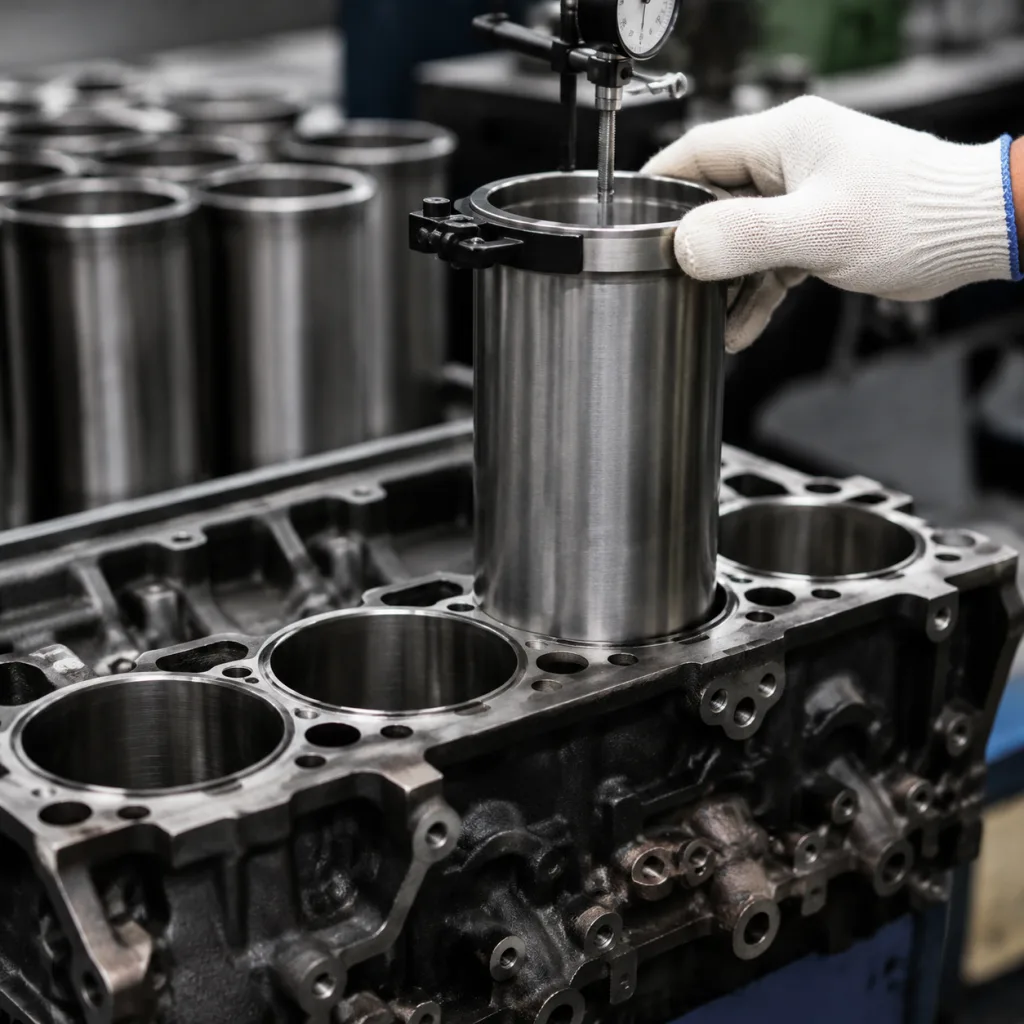
Dry assembly fit in the cylinder block
Interference fit verification where applicable
Bore geometry after installation
Deck projection or recess measurement
Cooling and sealing checks for wet liner designs
Cross-check against the matching piston ring pack
Short endurance or dyno test when the programme requires it
A practical validation plan usually includes both dimensional and functional gates. For example, buyers commonly require the following before PO release:
10-piece dimensional sample review from each cavity or machining line
3-5 installed-test assemblies to confirm fit after press-in or drop-in installation
Bore measurements before and after thermal cycling, where applicable
Surface finish checks before final acceptance, especially on honed bores
Packaging drop and vibration checks for export cartons if the shipment will move by sea or mixed freight
For surface durability and wear resistance, some programmes may request aligned test methods such as SAE J2527 for coating or durability comparison, or programme-specific corrosion and exposure testing where relevant. For emissions-related fitment on regulated applications, buyers should align the vehicle-level system with the applicable requirements, including ECE R-83 where relevant to the broader engine package. The point is simple: validate the liner as an installed component, not only as a loose machined part.
Factory Audit: What Separates Stable Supply from Guesswork
Factory audit checks reduce sourcing risk more effectively than repeated email confirmation. For a cylinder liner supplier, the audit should focus on process stability, traceability, and measurement discipline.
Audit checklist:
Casting and machining flow
Calibration status of gauges and CMMs
Heat treatment control records
Lot traceability from incoming material to packed cartons
Nonconformance handling and corrective action closure
Export packing and label control
Change management for tooling or specification updates
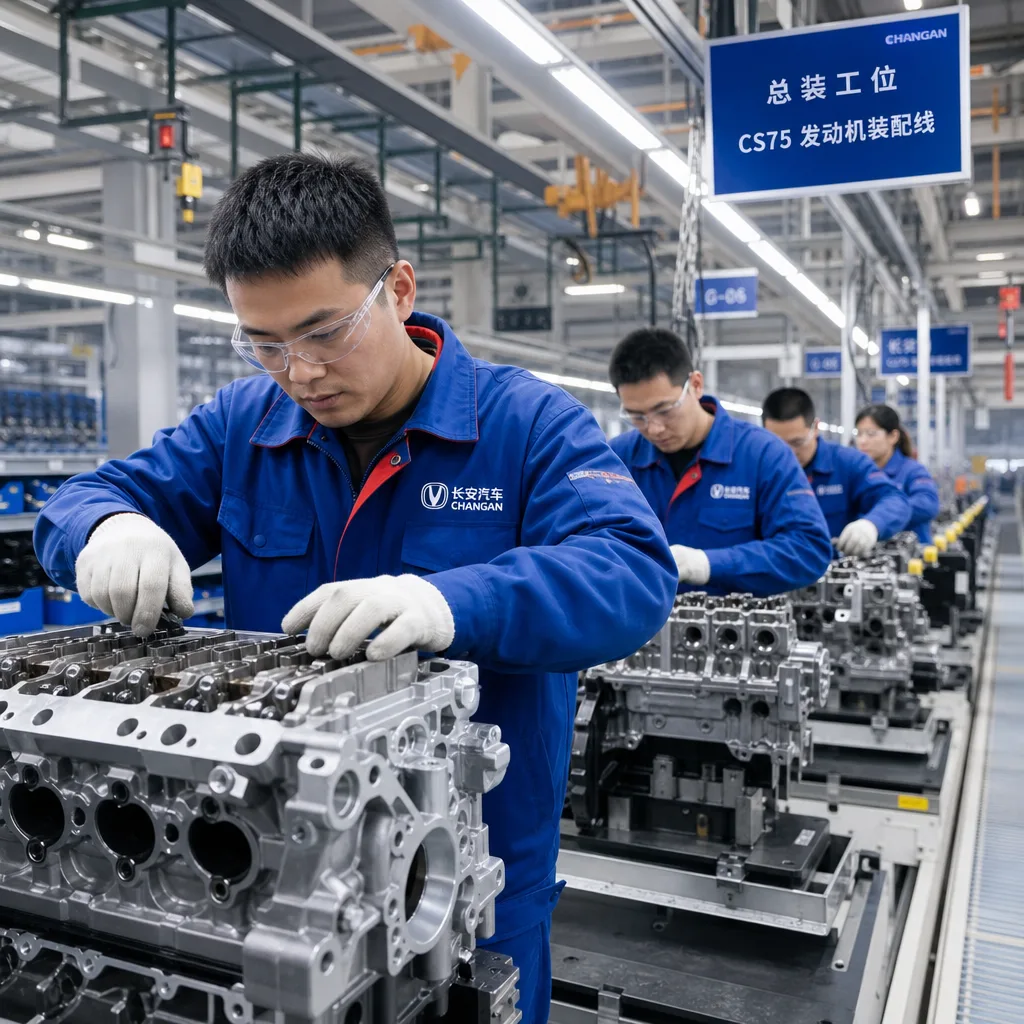
A useful audit goes beyond document review and checks actual shop-floor control points: incoming chemistry verification, tool-change records, gauge calibration dates, and scrap/rework segregation. Buyers should also ask how the plant segregates mixed vehicle applications, because many liner projects fail when parts with similar outer dimensions are packed under the same label.
Driventus is based in Taizhou, Zhejiang, and exports to 60+ countries. Buyers can request documentation through our quality system, including certification scope, inspection flow, and traceability practices. For programmes that require a formal sourcing package, the cleanest path is to send drawing, sample, annual volume, target market, and desired annual call-off schedule in one request. That lets the factory quote accurately and flag any machining or finishing constraints before tooling starts. It also helps the buyer compare true landed cost, because the quote can separate unit price, packaging cost, tooling amortization, and inspection fees.
Frequently asked questions
Yes, if the buyer provides the OE reference, drawing, or sample for verification. We check dimensions, material, and fitment data before quoting. Driventus is an independent aftermarket manufacturer; brand names are referenced for fitment only.
Typical documents include material specifications, dimensional inspection reports, lot traceability, and certification evidence for IATF 16949:2016 or ISO 9001:2015. Export customers may also request REACH-related material declarations. Buyers can also request sample dimensional sheets, control-plan excerpts, and final-gauge records for the approved lot.
Yes. Custom machining is available when the programme needs a specific OD, flange profile, length, or surface finish. Send the drawing or sample through the quote process so we can confirm feasibility and lead time. If needed, we can also quote the part in stages: sample, pilot lot, and repeat production, so the buyer can compare cost at each volume tier.
If you are sourcing liners for aftermarket, OEM, or remanufacture programmes, send your drawing or OE reference and we will review feasibility, pricing, and timing. Start here: /contact.html