Buyers searching for cylinder head Toyota wholesale supply are rarely looking for a simple price list. They need verified application data, stable casting quality, controlled machining, export-ready packaging, and a supplier that can support repeat purchasing without creating fitment risk. For procurement teams, the most common problems are dimensional drift, inconsistent valve seat machining, deck flatness outside tolerance, coolant leakage, and weak traceability across production batches. Driventus supplies engine and powertrain components from Taizhou, Zhejiang, supported by IATF 16949:2016 and ISO 9001:2015 quality systems. We export to more than 60 countries and work with aftermarket distributors, OEM and Tier-1 channels, and repair networks. Driventus is an independent aftermarket manufacturer; Toyota and other brand names are referenced for fitment identification only. This guide explains what to confirm before placing a wholesale order, which quality controls matter, and how to compare stock supply with a dedicated programme for a specific engine family.
What wholesale buyers should verify first
For cylinder head Toyota wholesale sourcing, the first priority is accurate application data. A low unit price is not useful if the head does not match the engine code, market variant, or machining specification. Start by confirming the engine family, cylinder count, valve layout, combustion chamber design, cam arrangement, and OE reference where available.
A practical buyer checklist:
Engine family and exact application year range
OE cross-reference, such as an OE 11101-xxxxx style reference or a validated number from your own catalogue data
Bare head or assembled head requirement
Valve train specification, including valves, springs, retainers, seals, and cam caps where applicable
Machining state: rough casting, semi-finished, or fully machined
Required inspection documents, such as CMM report, pressure test record, hardness record, and material certificate
Packaging and label format for warehouse handling and distribution
Target order volume, replenishment frequency, and delivery terms
If the application is intended for European or UK distribution, confirm REACH (EC) No 1907/2006 expectations for chemical compliance across the supply chain. For aftermarket buyers, fitment control and documentation are more important than brand wording. Driventus is an independent aftermarket manufacturer; brand names are used only to identify compatible applications.
Dimensional control and materials that affect fit
Cylinder heads are precision components. Small deviations can lead to head gasket failure, oil migration, coolant leakage, compression loss, overheating complaints, or premature valve train wear. The most important controls are dimensional and metallurgical, not cosmetic.
Control item
Typical buyer concern
What to request
Deck flatness
Head gasket sealing and compression stability
Flatness report measured with calibrated equipment
Valve seat geometry
Compression, airflow consistency, and valve sealing
Seat angle records and concentricity data
Guide bore size
Valve wear, oil control, and stem clearance
Bore diameter checks by cavity or batch
Surface finish
Gasket compatibility and sealing performance
Ra / finish data for machined surfaces
Casting integrity
Cracks, shrinkage, or porosity
Pressure test, visual inspection, and X-ray where specified
Heat treatment / hardness
Long-term durability and resistance to distortion
Material and hardness records
Cam bore alignment
Camshaft rotation and oil film control
Alignment or bore measurement records where applicable
</tr></thead><tbody> </tbody></table>For buyers serving workshops, wholesalers, and regional distributors, repeatability matters as much as first-piece approval. A cylinder head that fits correctly in one sample batch but varies during later machining can create returns, labour claims, and customer dissatisfaction that quickly erase margin. Ask how the supplier controls fixtures, tooling wear, calibration, inspection frequency, and batch traceability under IATF 16949:2016 and ISO 9001:2015 procedures.
How Driventus supports wholesale supply
Driventus is organised for B2B supply rather than retail one-off sales. That changes the commercial and technical process: procurement teams need predictable lead times, clear order visibility, export documentation, and standardised quality checks that support repeat programmes.
We support wholesale cylinder head programmes with:
Production from our vertically integrated engine-component base in Taizhou, Zhejiang
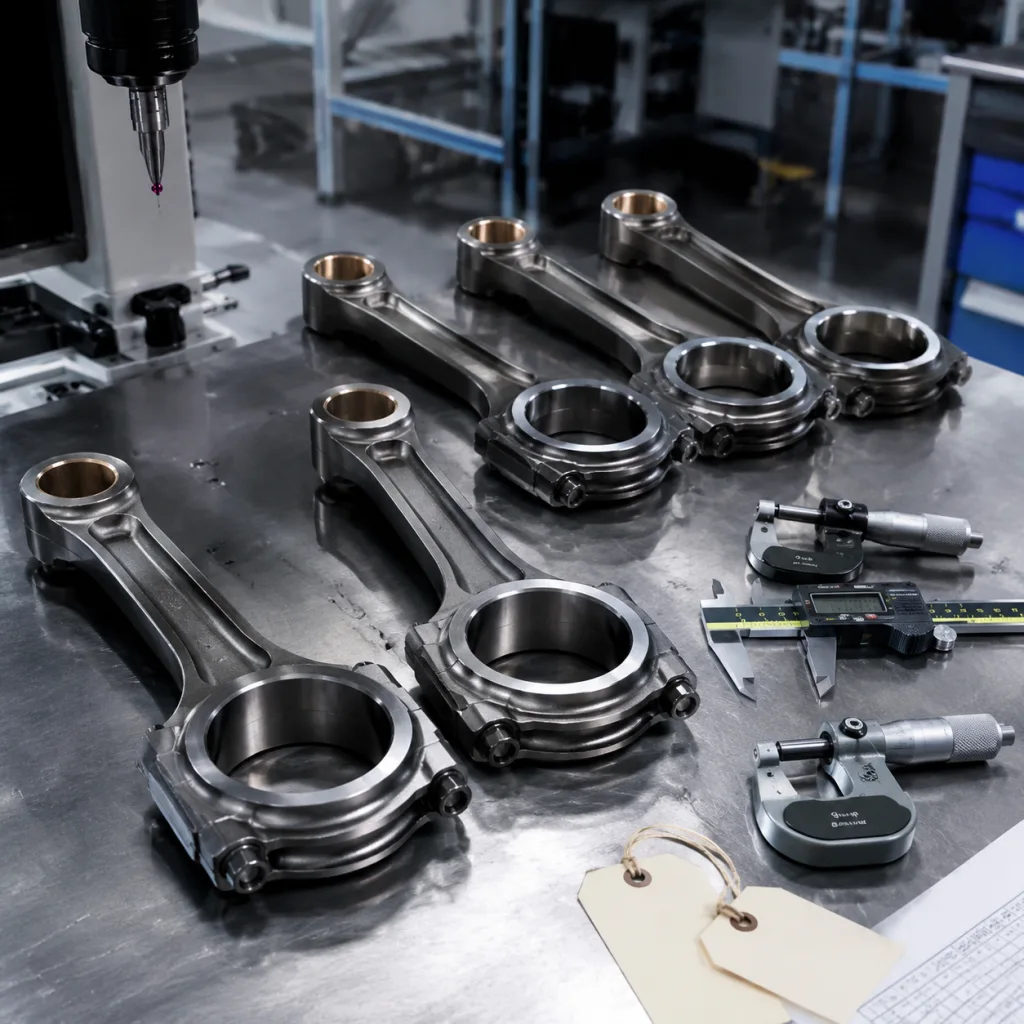
Controlled machining and inspection for critical sealing surfaces and fitment dimensions
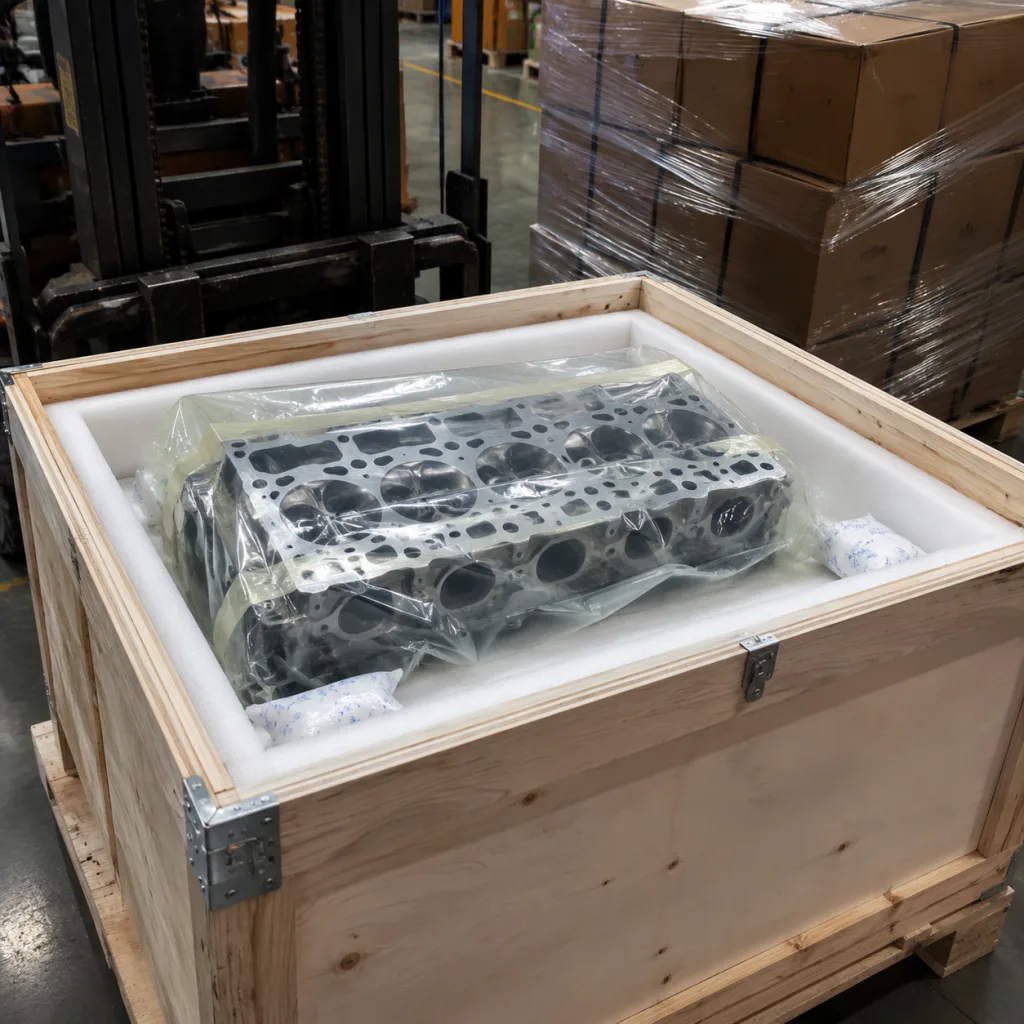
Export packaging for palletised sea freight, container loading, and mixed-SKU consolidation
Batch traceability for recurring orders and after-sales review
OE cross-reference matching based on buyer-provided data
Support for stock orders, forecast-based replenishment, and project-based supply where applicable
For buyers reviewing related engine parts at the same time, see our catalog and the broader engine components range. When a purchasing programme covers multiple components for the same engine family, consolidation can reduce landed cost, simplify inbound receiving, and improve stock planning across warehouses.
Commercial terms buyers should confirm before PO release
A wholesale cylinder head programme should be evaluated like any other controlled industrial part. Unit price is only one element of total landed cost. Freight efficiency, packaging damage, sample approval, documentation, and warranty handling can have the same impact on profitability as the quoted part cost.
Confirm these points before issuing a purchase order:
1. MOQ per reference and whether mixed MOQ is allowed across related variants. 2. Sample approval process and whether first-article inspection data will be provided. 3. Standard lead time for stock items and made-to-order references. 4. Packaging specification, including carton strength, pallet height limits, moisture protection, and label content. 5. Warranty scope for machining defects, casting leakage, wrong specification, and transport damage. 6. Documentation set: commercial invoice, packing list, country of origin, and agreed quality records. 7. Incoterms, payment terms, and shipment consolidation options for multi-SKU orders.
For long-run programmes, custom manufacturing may be appropriate if you need a specific valve configuration, port geometry, machining allowance, casting revision, or private-label packaging. A qualified supplier should state clearly which characteristics are standard catalogue features and which require project development, tooling review, or engineering approval.
Validation testing that reduces returns
Validation is where technical claims become usable purchasing data. For cylinder heads, the test plan should reflect the engine risk level, target market, order volume, and whether the part is being supplied as a bare casting, machined head, or assembled unit.
Common validation checks include:
Pressure testing for coolant jacket leakage
Dimensional inspection of deck face, combustion chamber, valve guides, valve seats, and cam bores
Surface flatness and roughness measurement on gasket contact areas
Visual inspection for porosity, cracks, sharp edges, and machining burrs
Thread and plug-hole verification where applicable
Trial assembly or fitment review against reference engine data where available
For high-volume export accounts, buyers may also request thermal cycling, endurance comparison, additional metallurgical checks, or customer-specific sign-off samples. Published references such as SAE J2527 are more common in corrosion and durability contexts for adjacent components, while cylinder-head programmes are usually governed by buyer test plans, internal OEM-style procedures, and the supplier’s quality manual. The key is to agree the inspection matrix, acceptance criteria, and document format before production starts.
Review the supplier’s quality system to understand how inspection, calibration, corrective action, and nonconformance handling are controlled.
When to choose stock supply versus a dedicated programme
Not every buyer needs a custom development project. Stock supply is suitable when the engine family is stable, demand is spread across several customers, and the purchasing goal is fast replenishment. A dedicated programme is a better fit when specification control, labelling, documentation, or long-term supply planning is more important than immediate availability.
Choose stock supply if:
You need a faster turn time for distributor replenishment
The application is common, mature, and well documented
Standard machining and export packing are acceptable
You are testing market demand before committing to a larger programme
Choose a dedicated programme if:
The part has multiple sub-variants by market, emissions family, or production year
You need private-label packaging, custom labels, or warehouse-specific barcodes
You require project-level documentation for OEM, Tier-1, or major distributor use
Annual volume supports tighter specification control and production planning
If you are planning a new sourcing route or comparing suppliers, start with a concise technical pack and request a quote. Include engine code, OE cross-reference, drawings or sample photos if available, target annual volume, packaging needs, and destination market. For buyers needing part-level adaptation, custom manufacturing can align casting, machining, inspection, and packaging requirements with the programme.
Frequently asked questions
Yes. Driventus supplies B2B wholesale orders with fitment matched to the buyer’s engine data and OE cross-reference. We support recurring orders, export packaging, and technical verification before shipment. Brand names are used for fitment identification only.
Request dimensional inspection data, pressure test results, batch traceability, and material or hardness records where applicable. For regulated markets, also confirm REACH-related supply chain compliance and agree the document format before production.
Yes. Through our OEM and project support, we can discuss custom machining states, labelling, private-label packaging, and export packing for defined programmes. Share the part data, target annual volume, destination market, and any inspection requirements first.
If you are sourcing cylinder head Toyota wholesale for stock replenishment or a defined programme, send your application data, OE cross-reference, destination market, and target volume to compare options and lead times. Start here: /contact.html